







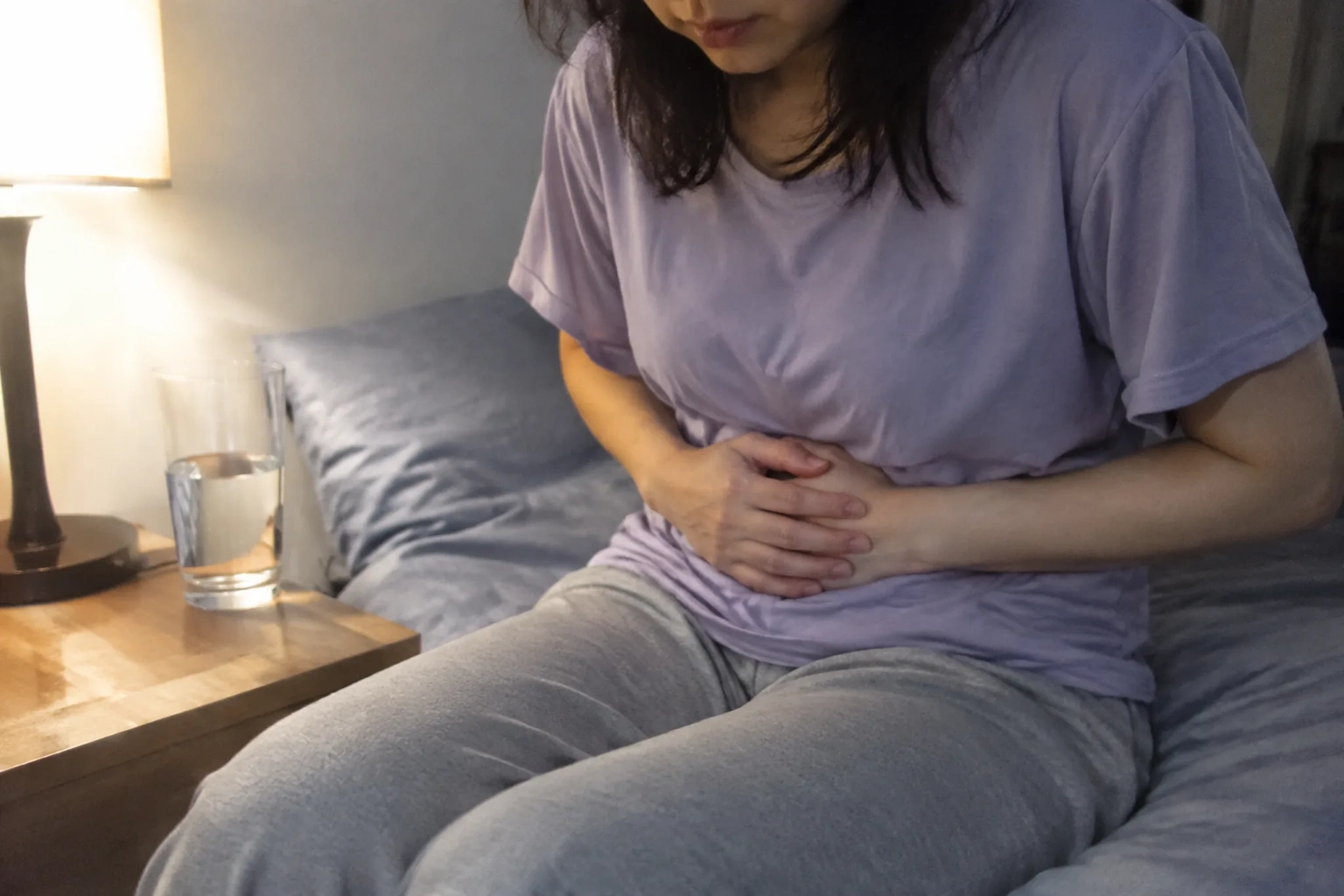
Abdominal bloating is the sensation of pressure, fullness, or visible distension in the belly that comes and goes with meals, hormones, stress, and the ordinary rhythm of digestion. It is uncomfortable. It is rarely dangerous on its own. And it is common enough that most adults have a working relationship with it, even if that relationship is mostly resignation.
The at-home care part is where things get interesting. A person can spend a great deal of money on remedies, and much of what helps is plain, cheap, and slightly boring. The trick lies in knowing which ordinary habit addresses which flavor of discomfort.
Bloating arrives in at least three distinct costumes, and treating them as one thing wastes effort.
Three kinds of pressure that get called the same word
The first is gas pressure. It builds from swallowed air or from fermentation in the gut, feels sharp or crampy, and often moves. The second is water retention, a heaviness that sits lower and feels more like a fullness than a bubble. The third is sluggish transit, a backed-up sensation with a dull, spread-out quality and a tendency to worsen through the day.
Each one responds to different levers. A person who drinks a large glass of water with a carbonated beverage and then wonders why the belly feels tight is dealing with a different problem than someone whose bloating tracks with a monthly cycle. The at-home toolkit should be sorted the same way.
What the body is doing when the waistband feels tight
Gas in the gut has to go somewhere. Most of it is absorbed or expelled, and the process is unremarkable until it isn't. Carbonated drinks add gas directly. Chewing gum, drinking through a straw, and eating quickly pull air down with every swallow. On the fermentation side, certain carbohydrates reach the large intestine without being fully digested, and gut bacteria turn them into gas as a byproduct.
Water retention works differently. Sodium pulls fluid into tissues, and hormone shifts can do the same. A salty dinner on a warm evening can leave the belly and fingers feeling puffy by morning, and the effect fades as the body rebalances. This kind of bloating is real, but it is also temporary and somewhat predictable once a person starts paying attention to the pattern.
Sluggish transit is the least glamorous of the three. Fiber helps, but the type and the pace matter. A sudden jump in fiber intake, especially from raw vegetables and beans, can produce more gas before the gut adapts. The fix is gradual change, not a heroic bowl of bran.
The fifteen-minute walk that beats most supplements
Movement is the closest thing to a universal at-home tool, and it is underused. A gentle walk after a meal speeds the passage of gas and helps the gut do its mechanical work. Fifteen minutes at an easy pace is enough. The point is not exercise; it is helping the intestines move things along with the help of gravity and the abdominal muscles.
The timing matters more than the intensity. A walk right after eating, when the stomach is full and the gut is starting to work, does more for gas pressure than a strenuous workout hours later. A person who feels bloated at 9 p.m. after dinner often finds that a short loop around the block at 7:30 changes the whole evening.
This is also the cheapest intervention available. No pill, no tea, no subscription. A pair of shoes and a route that takes fifteen minutes.
Eating slower, chewing more, and the air that comes with speed
Swallowed air is a real contributor to upper-abdominal pressure, and the main fix is mechanical. Eating quickly, talking while chewing, and drinking large volumes through a straw all increase the air that enters the stomach. Slowing down reduces it.
A practical version: put the fork down between bites. Not for every bite, and not as a rule to be graded, but often enough to change the pace. Meals eaten in five minutes tend to produce more discomfort than the same food eaten in fifteen.
Chewing matters too. The stomach has no teeth. Food that arrives in large pieces takes longer to break down and gives the gut more work to do. A person who chews thoroughly often finds that the same meal produces less gas, not because the food changed but because the process did.
Carbonation, straws, and the gum habit
Carbonated water is a pleasant drink and a direct source of gas. Anyone prone to bloating may want to notice the relationship between a sparkling drink and the way the belly feels an hour later. Some people tolerate it fine; others do not, and the only way to know is to pay attention.
Chewing gum is a subtler culprit. The chewing motion itself encourages air swallowing, and sugar alcohols in many gums can ferment in the gut. A person who chews gum through the afternoon and feels distended by evening has a simple experiment available: skip the gum for a few days and see what changes.
Straws belong in the same category. Drinking through a straw pulls in air along with the liquid. It is a small effect per sip, but it adds up over a day of hydration.
The fiber question, handled with patience
Fiber is the most recommended and most mishandled remedy. It helps with sluggish transit, but a sudden increase can make gas worse before it gets better. The gut bacteria that ferment fiber need time to adjust, and the adjustment period can be a week or two of increased bloating.
The practical approach is to increase fiber slowly, keep water intake high, and favor soluble sources such as oats, psyllium, and peeled fruit over a sudden pile of raw vegetables. Insoluble fiber from bran and raw greens is useful, but it is not the place to start if the goal is less discomfort rather than more.
Hydration deserves equal billing. Fiber without water can be constipating. A person who adds a fiber supplement and skips the water has made the problem harder, not easier.
Salt, hormones, and the puffy week
Water retention bloating is real and follows a different logic. High-sodium meals hold fluid. Hormone shifts around a menstrual cycle change how the body handles sodium and water. The result is a soft, heavy fullness that does not move and does not respond to gas remedies.
For this kind, the levers are different. Reducing sodium for a day or two helps. Potassium-rich foods, such as bananas, potatoes, and leafy greens, support the body's fluid balance. Gentle movement helps the lymphatic system and circulation. Time does most of the work.
Recognizing the pattern is half the battle. A person who tracks the belly for a month often finds that the worst days line up with salty restaurant meals or a particular point in the cycle. That knowledge turns a mysterious discomfort into a predictable one.
Heat, posture, and the shape of a chair
A warm compress on the abdomen can ease the muscle tension that accompanies gas pressure. It is not a cure, but it is comforting, and comfort has value when the belly is tight and the evening is long. A hot water bottle, a warm towel, a bath: all reasonable.
Posture matters more than most people expect. Slouching compresses the abdomen and slows the passage of gas. Sitting upright, especially after a meal, gives the gut room to work. A person who eats at a desk and then folds forward into a laptop has created a physical bottleneck.
The chair matters too. A seat that presses into the belly, such as a tight waistband or a low-slung sofa, adds external pressure to an already full abdomen. Loose clothing after a meal is a small kindness with a measurable effect on comfort.
When at-home care should hand off to a doctor
Most bloating is ordinary and self-limiting. Some is not. Persistent bloating that does not vary with meals, weight loss, blood in the stool, severe pain, or a belly that stays distended for weeks deserves medical attention. These signs do not mean something terrible is happening, but they mean the at-home toolkit has reached its limit.
The same is true for bloating that interferes with eating or daily life. A person who avoids meals or social events because of discomfort has crossed from ordinary annoyance into something worth investigating.
This is not a scare tactic. It is a boundary. The home remedies in this piece handle the common cases. The uncommon cases need a clinician, and knowing which is which is part of good self-care.
A pantry shelf that actually earns its space
Peppermint tea is a reasonable addition. It soothes the smooth muscle of the gut and has a long folk history for exactly this purpose. Fennel seed, chewed or steeped, is another traditional option. Ginger tea helps with nausea and general gut comfort. None of these are miracles, and all of them are cheap.
Probiotics are a more complicated purchase. Some strains show modest benefit for some people, and the evidence is mixed. A person curious about them should treat it as an experiment with a defined timeline, not a permanent subscription. If nothing changes in a few weeks, the money is better spent on groceries.
Simethicone, an over-the-counter anti-gas agent, helps some people and does nothing for others. It is worth a try for gas-type pressure, and it is not worth much for water retention or sluggish transit. The mistake is expecting one product to solve three different problems.
The experiment that beats the supplement aisle
The most useful at-home tool is a simple record. For two weeks, note what was eaten, when the belly felt tight, and what kind of tight it was. Gas pressure, water retention, and sluggishness each leave a different signature, and the pattern usually becomes obvious within a week or two.
That record does more than any single remedy. It turns a vague complaint into a set of specific triggers, and specific triggers can be managed. A person who discovers that the bloating follows the afternoon gum or the sparkling water at lunch has found a solution that costs nothing and works immediately.
The belly is a responsive organ. It reacts to speed, to salt, to air, to movement, to the shape of a chair. At-home care is mostly the art of removing the small frictions that add up. The walk after dinner. The fork set down between bites. The glass of water alongside the fiber. The loose waistband at 8 p.m.
None of it is dramatic. All of it is available tonight, in the ordinary rooms of an ordinary house, without a prescription or a subscription. The belly settles when the small things stop working against it.





















