



Bone mass peaks somewhere around age 30. That single sentence, buried in physiology textbooks and printed in small type on the back of calcium supplement bottles, is the whole reason the thirties deserve their own conversation. The skeleton has spent roughly three decades building itself up, and then it quietly changes the terms of the deal. From the early thirties onward, the body stops adding to the bone bank and starts making small, unglamorous withdrawals. Nobody feels this happening. There is no ache, no signal, no morning where the collarbone announces it has peaked.
Most health writing treats bone as a concern for the menopause years or for the very old, when fractures become common and hips start failing. The thirties get skipped, sandwiched between the fertility conversations of the late twenties and the cardiovascular warnings of the forties. This is a mistake of framing. The thirties are the last decade in which the bone bank can be meaningfully topped up before the withdrawal phase begins in earnest. What happens in these ten years sets the starting balance for the next forty.
The Quiet Math of Peak Bone Mass
Bone is living tissue, and it turns over constantly. Old bone is broken down by cells called osteoclasts, new bone is laid down by osteoblasts, and the two processes run in parallel for most of a life. In childhood and the teens, construction outpaces demolition. By the late twenties the two rates roughly balance. By the mid thirties, demolition starts to win, slowly and then less slowly.
The peak bone mass a person reaches is influenced by genetics far more than any single food or exercise. That part is not fully controllable, and pretending otherwise is unkind. But the peak is also nudged by what the skeleton is asked to do in the years leading up to it: the loads it carries, the nutrients available, the hormonal environment. The thirties are the last stretch of that nudge window. After that, the conversation shifts from building to slowing loss.
A useful way to picture it: bone behaves less like a fixed structure and more like a savings account with a generous employer match that expires on a certain birthday. The match stops. The withdrawals continue.
Why the Skeleton Cares About Load, Not Just Motion
Walking is good for the heart and lungs. It is a weak stimulus for bone. The skeleton responds to strain, and strain means load that is higher than what the bone is used to, applied in directions the bone does not usually feel. A leisurely stroll applies modest forces through the hips and spine, roughly comparable to body weight, which the bone has long since adapted to.
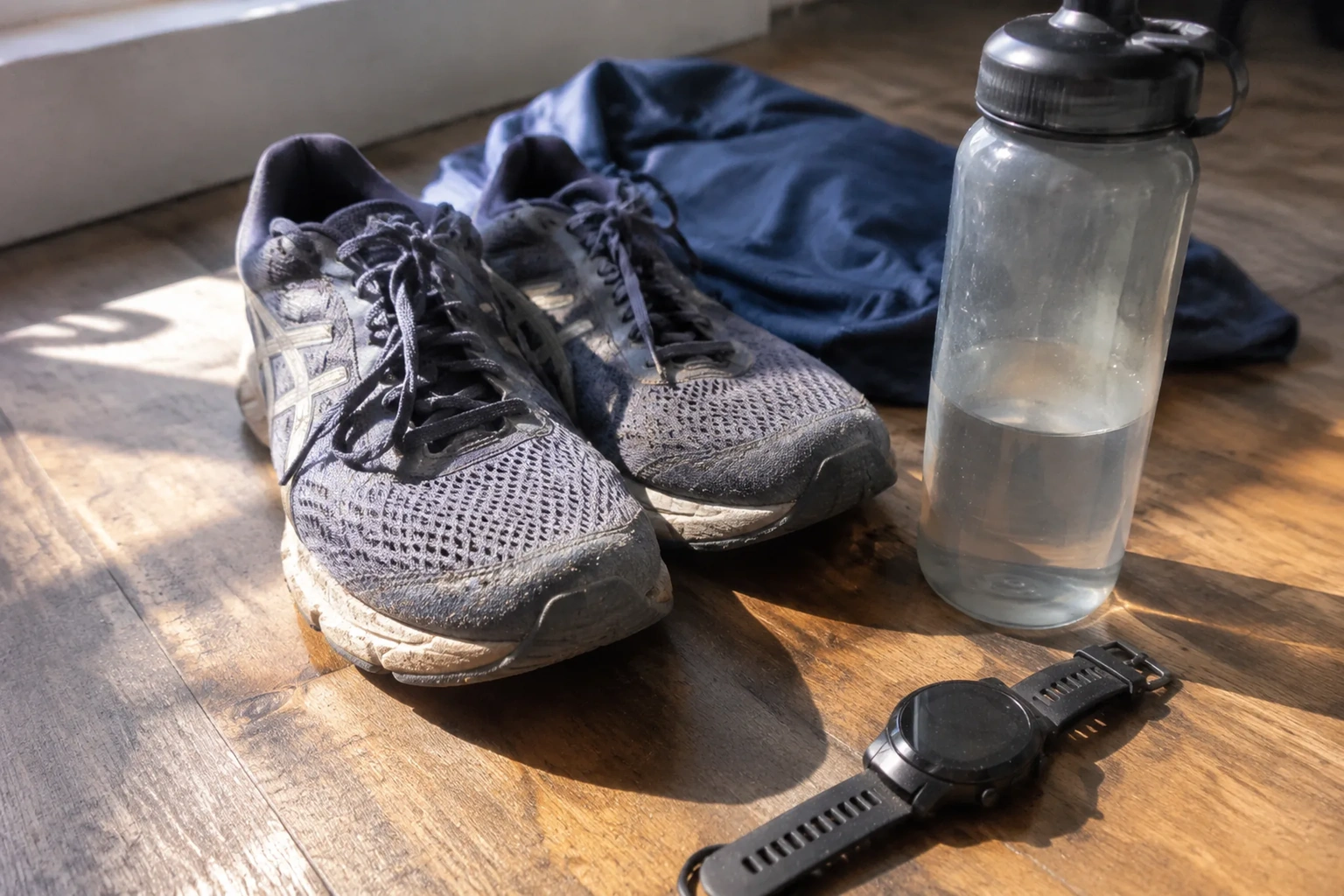
What wakes bone up is impact and resistance. Jumping. Hopping. Lifting something heavy enough that the last two repetitions are genuinely hard. Carrying a loaded pack up a hill. Changing direction quickly. These send brief, high-magnitude signals through the skeleton, and the bone responds by reinforcing the places that took the hit. The response is local: bone laid down where the strain occurred, not sprayed evenly across the body. This is why the specific activity matters.
A person in their thirties who lifts weights twice a week, jumps rope for five minutes, or plays a sport with sprinting and stopping is asking far more of the skeleton than a person who walks 10,000 steps a day and considers the matter settled. Both are healthier than a sedentary life. Only one of them is having a real conversation with their bones.
The Nutrients That Actually Move the Needle
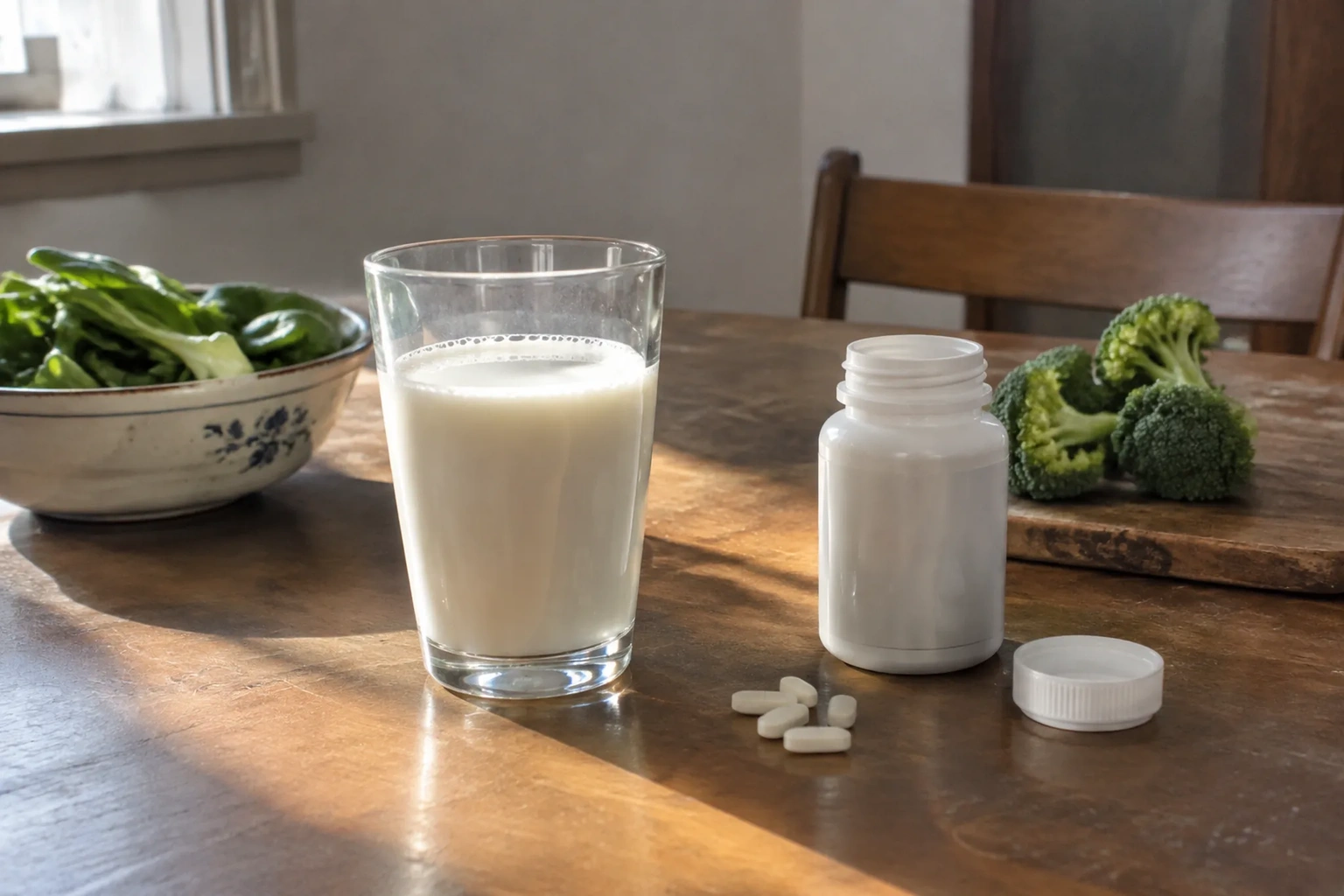
Calcium gets the marketing, but it is a building material, not a foreman. Without vitamin D, the body cannot absorb calcium efficiently from the gut, and it will pull what it needs from the skeleton instead. Without adequate protein, the collagen scaffold that mineral is deposited onto gets thin. Without vitamin K2 and magnesium, the machinery that directs calcium into bone rather than into soft tissue runs poorly.
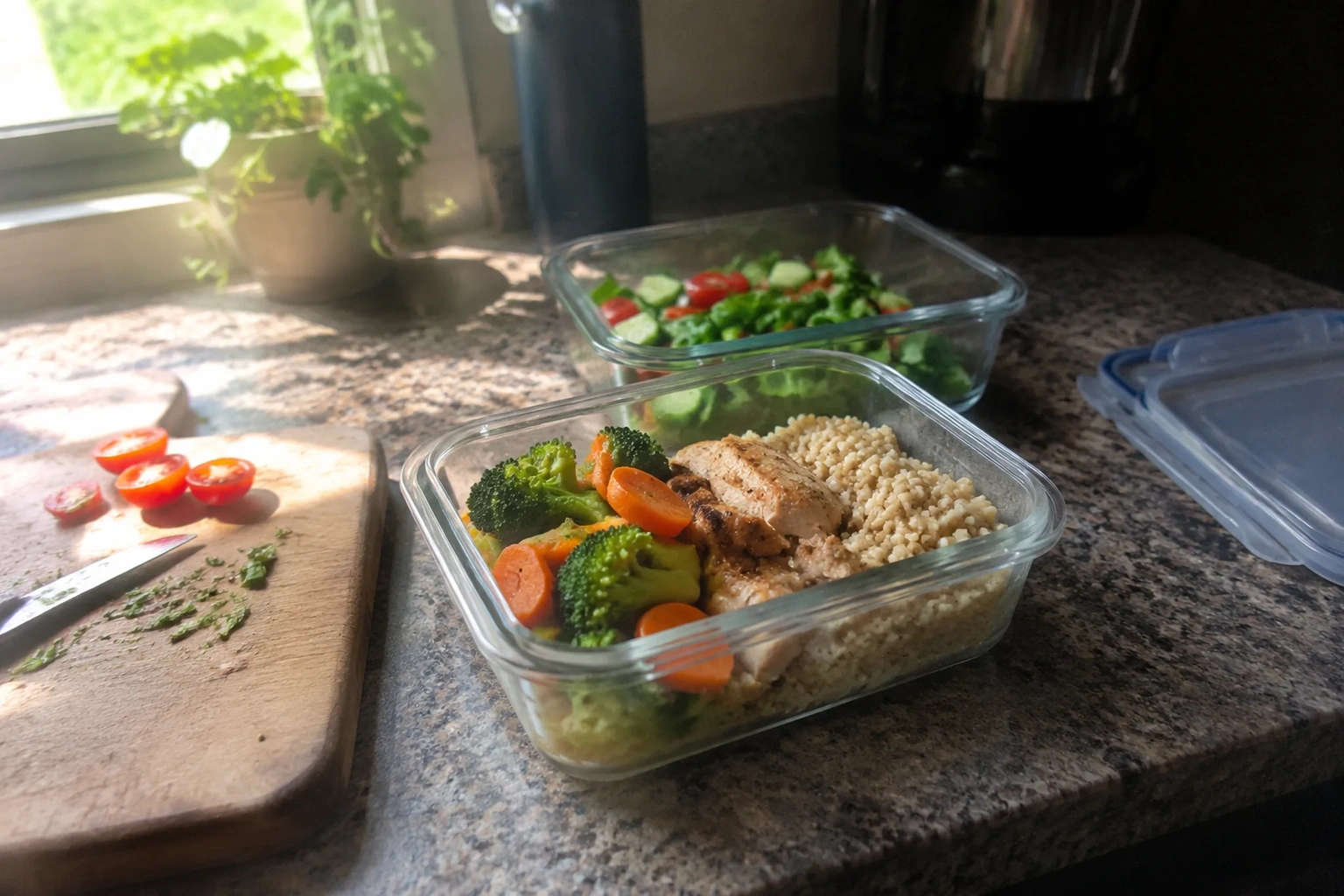
The practical version for most people in their thirties: a diet that includes dairy or fortified plant milks, leafy greens, beans, and enough total protein to support muscle maintenance. Oily fish once or twice a week. Eggs. Sun exposure when the season allows, with a realistic acknowledgment that many people in northern latitudes or indoor jobs are functionally deficient in vitamin D for much of the year and may need a supplement. That last point is worth raising with a doctor rather than guessing at a dose.
What does not help: megadosing calcium in the belief that more is better. The gut absorbs a limited amount at a time, and excess is excreted or, in some cases, deposited where it does not belong. Large single doses are less useful than smaller amounts spread across meals.
The Habits That Quietly Drain the Bank
Smoking is the most reliably damaging habit for bone. It impairs the cells that build new bone and reduces the absorption of calcium from the diet. The effect is cumulative and shows up decades later as lower bone density and higher fracture risk. Quitting at any age helps, but the thirties are a particularly good decade to stop, because the damage has not yet had time to compound.
Heavy alcohol intake works against bone in several ways at once, interfering with vitamin D metabolism, disrupting hormones that regulate bone turnover, and increasing the risk of falls. The occasional glass is not the issue. The pattern of several drinks most nights is.
Then there is the quieter one: prolonged periods of low body weight or disordered eating, especially in women, which can suppress estrogen and pull the brake on bone formation. This is one of the more underdiscussed bone risks in the thirties, partly because the visible signs are subtle and partly because the conversation tends to focus on fertility rather than the skeleton. A missed period in a person who is not pregnant is worth taking seriously for reasons that extend well beyond reproduction.
What a Sedentary Desk Job Does to the Spine
Eight hours in a chair, followed by an evening on a sofa, is a load pattern the spine was not designed for. The discs between vertebrae rely on movement and changes in posture to draw in fluid and nutrients; prolonged static sitting leaves them undernourished and compressed. Over years, this shows up as stiffness, then as postural changes, then as the kind of low-grade back pain that becomes a permanent background hum.
The fix is not a standing desk alone. Standing still all day has its own problems. What the spine wants is variety: sitting, standing, walking, reaching, lifting, twisting, in rotation. A person who gets up every 45 minutes, takes the stairs, and does a few minutes of loaded carrying or rowing a couple of times a week is doing more for their spine than someone who bought an expensive ergonomic chair and never left it.
The Case for Lifting Heavy in the Thirties
Resistance training is the single most effective bone stimulus available without a prescription. It loads the skeleton in multiple directions, it builds the muscle that keeps a person upright and catches them when they stumble, and it improves balance. The thirties are an ideal decade to build a strength habit, because the strength gained here carries forward and because the technical skill of lifting takes time to develop.
The counterargument, heard often, is that lifting is a young person's game or that heavy weights are dangerous. In practice, supervised progressive resistance training is one of the safer forms of exercise, and the risk of injury from never loading the skeleton is far larger than the risk of a well-taught squat. A person who has never lifted can start in their thirties with bodyweight movements, then add load gradually. The point is not to chase a personal record. The point is to keep the bone under enough strain that it has a reason to stay dense.
When to Ask for a Bone Density Scan
Routine bone density screening is generally recommended for older adults, not for everyone in their thirties. But there are exceptions worth knowing. A history of multiple fractures from minor falls, long-term use of corticosteroids, a diagnosis of an eating disorder, early menopause, or a strong family history of osteoporosis are all reasons a clinician might order a scan earlier than the standard schedule. The scan itself is quick and low-radiation.
The trap is assuming that because the standard schedule starts later, the thirties are a decade with nothing to check. For most people that is true. For a subset, a conversation with a doctor about risk factors is worth having now rather than in twenty years, when the options are narrower.
The Decade That Sets the Starting Line
Consider two people who reach age 40 with different skeletons. One spent the decade lifting twice a week, eating enough protein, getting sun when possible, and not smoking. The other spent it at a desk, skipped meals, and drank most evenings. At 40, neither feels anything different. The bone density difference between them might be a few percent, invisible on a day-to-day basis.
Now push both of them to 70. The first started the withdrawal phase from a higher balance and lost bone more slowly because the muscle and balance built in the thirties reduced the falls that cause fractures. The second started lower and lost faster. The gap that was a few percent at 40 has become the difference between a hip that holds and a hip that breaks after a stumble on a wet pavement.
That is the whole argument for paying attention in the thirties. The skeleton is not asking for heroics. It is asking for a few hard efforts a week, enough protein and vitamin D to support the work, and the absence of the habits that quietly erode what has already been built. The window does not stay open indefinitely. The bone bank does not send a statement when the balance starts to fall.