







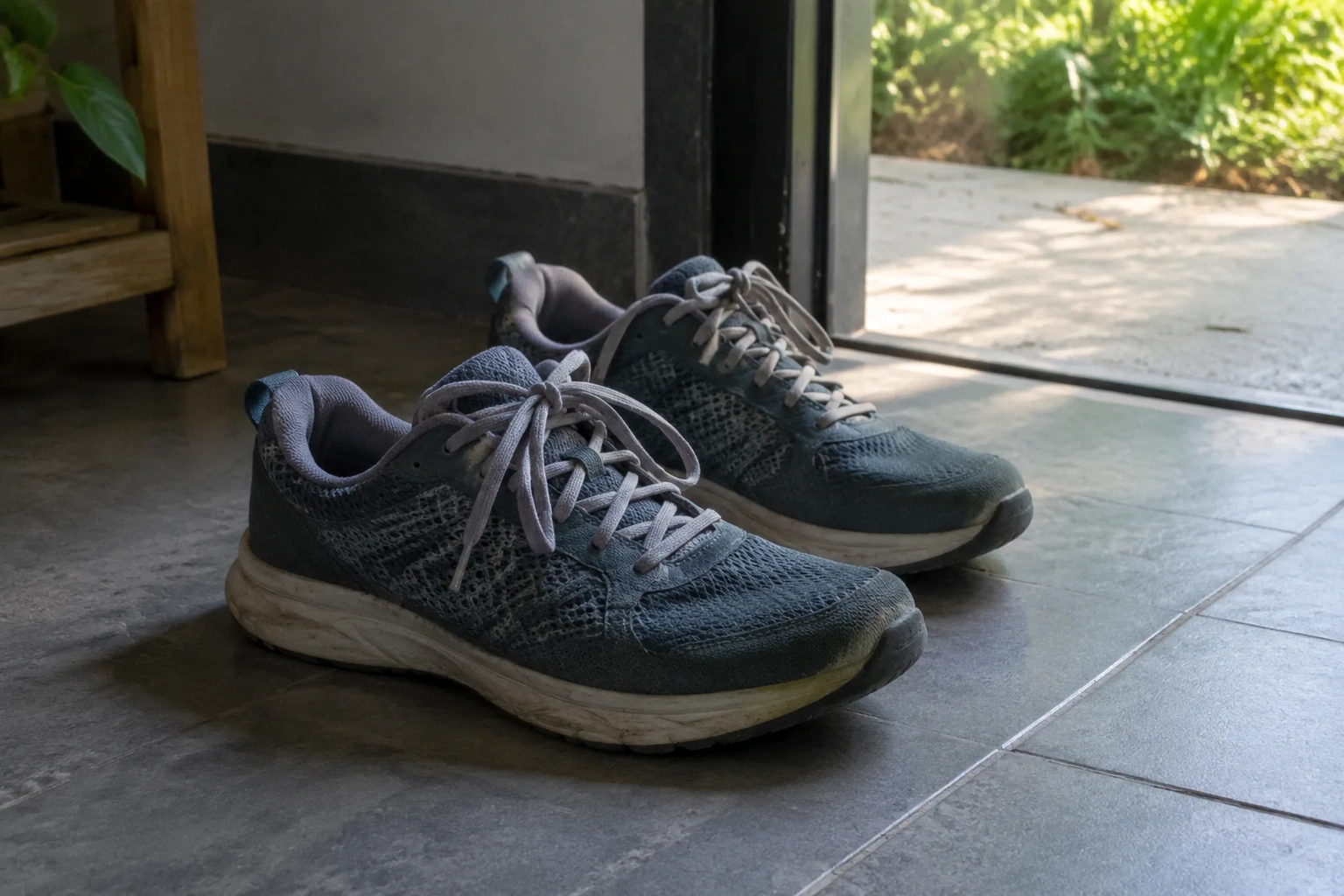
Walking shoes occupy a strange place in the athletic footwear market. Running shoes get the research budgets and the magazine reviews. Hiking boots get the technical specifications and the brand heritage. The shoe built for everyday walking, the one worn to a train platform, around a warehouse floor, through a neighborhood loop of two or three miles before dinner, tends to be sold as a compromise: supportive enough, cushioned enough, priced between the two. That framing misses what daily walking actually asks of footwear. The gait cycle is different, the cumulative mileage adds up, and the shoe has to disappear into a morning routine rather than announce itself as gear.
The average adult takes somewhere in the range of several thousand steps on an ordinary weekday, more on a weekend errand run, and those steps land on concrete, asphalt, tile, and linoleum. None of these surfaces absorb force. The shoe does all the absorbing. A walking shoe that fits well and matches a person's foot mechanics can make that accumulation feel like nothing; a poor one announces itself by mile three, then keeps announcing itself at the arch, the heel, the outside edge of the big toe.
Why walking shoes differ from running shoes
Walkers land with a heel strike and roll forward through the whole foot, spending a longer stretch in contact with the ground than a runner does. The forces are lower in peak but far more frequent. A shoe for daily miles benefits from a slightly wider base and a more gradual heel-to-toe transition than a racing shoe, and it rarely needs the aggressive rocker geometry that sells running shoes to competitive athletes.
The midsole foam tells a similar story. Running shoe marketing pushes lighter and softer every season, and some of that softness has crept into walking lines. A very soft midsole feels wonderful in the first hundred steps and can leave the arch doing more work by the end of the day. Firmer foams, or a firmer layer stacked under a softer top layer, tend to hold up better over the long haul of a daily routine.
The fit check that happens before the first step
Most walking shoe problems start at the fit, not in the foam. The heel should sit locked without slipping; a finger's width of space ahead of the longest toe leaves enough room for the foot to lengthen as the day progresses. That lengthening is real. Feet spread and flatten slightly under load, which is why a shoe tried on in the morning can feel tight by late afternoon. Shoe shopping in the evening, or at least accounting for the difference, prevents a surprising number of returns.
Width matters more than most shoppers expect. A shoe that pinches at the widest part of the forefoot will keep pinching, and the foot will compensate by rolling inward or shifting weight to the outside edge. Several reputable brands offer genuine wide sizing rather than just extra volume in the upper. For anyone who has spent years in a shoe that felt "a little tight but fine," a true wide fit often resolves nagging toe and bunion-area discomfort within a week.
The heel counter, the stiff piece at the back, deserves a squeeze. It should flex a little but not collapse. A soft heel counter lets the foot roll off the platform and contributes to that unstable, wobbly sensation some walkers notice on uneven pavement.
Cushioning, stability, and the middle ground
A person with neutral mechanics and an average foot can walk in a wide range of shoes comfortably. The choice comes down to preference: a plush, tall stack for standing-heavy days, a lower, firmer profile for a brisk pace. Someone who overpronates, rolling the arch inward on each step, tends to do better with a shoe that has a firmer medial post or a wider, denser section under the arch. The guidance is general, and persistent pain or a diagnosed condition belongs with a clinician or a specialty fitter, but the basic logic holds.
The mistake common to both groups is treating cushioning as a single dial. A shoe can be soft in the heel and firm under the forefoot, which suits the walker who lands hard on the heel and pushes off with the toes. It can be firm throughout, which favors a longer stride. What a shoe should never do is feel like it is fighting the foot's natural path.
The outsole is where daily miles are paid for
Walking on pavement grinds through outsoles faster than trail use grinds through lugged rubber. A daily-mile shoe needs a dense, flat-ish outsole with a decent rubber layer under the heel and forefoot, and a pattern that grips wet concrete without trapping pebbles. Deep lugs belong on trails; on a sidewalk they wear unevenly and feel lumpy underfoot.
Carbon rubber compounds in high-wear zones are the practical standard. A blown rubber forefoot can feel livelier and lighter, and many good walking shoes combine the two, putting the harder compound where the heel strikes and the softer one under the ball of the foot. The outsole is also the first place a shoe shows its age. Once the tread under the heel is smooth, the cushioning above it has usually degraded too, even if the upper still looks new.
How long a walking shoe actually lasts
Foam midsole materials break down from repeated compression long before the outsole wears through, and the loss is gradual enough that wearers rarely notice until a fresh pair feels dramatically better. A rough working range for a shoe used for daily walking is somewhere around several hundred miles, less for a heavy walker on concrete, more for a lighter one mixing surfaces. Keeping two pairs in rotation extends the life of both, because foam recovers given a day off between wears.
That rotation advice sounds like a sales tactic and is not. A single pair walked five or six days a week never fully rebounds, and the compression set accumulates. Two pairs swapped every other day outlast one pair used continuously by a comfortable margin.
The break-in question
Most modern walking shoes need little or no break-in. A shoe that causes pain in the store is unlikely to become comfortable later; the upper may stretch slightly, but the midsole and outsole do not change shape to accommodate a foot. The old advice to "tough it out for a week" belongs to a different era of leather boots. A short walk around the block or a few hours of errands is a reasonable trial for a new pair before committing to a long outing.
Leather and suede uppers do soften over time; knit and engineered mesh uppers generally do not. A person who wants the structure of leather should expect a short adjustment period. A person in a knit shoe should get the fit right at purchase, because the material will hold roughly the shape it started with.
Walking shoes that double as everyday shoes
For most people, the walking shoe is also the shoe worn to the office, the grocery store, and the school pickup line. That changes the calculus. A shoe with a loud colorway or an aggressive technical look may be a fine trainer and a poor daily companion. Neutral colors, clean lines, and a low profile tend to get worn more often, which is the whole point of a shoe built for daily miles.
The upper's breathability matters for the same reason. A person walking a mile to a train in warm weather, then sitting in a meeting, wants a shoe that does not turn into a sauna. Mesh panels and moisture-wicking linings help. Removable insoles are a small but useful feature, both for replacing worn inserts and for accommodating a custom orthotic without buying a larger shoe.
What to check in the last five minutes of a fitting
Walk on a hard floor, not carpet. Carpet hides instability and softens the landing in a way pavement will not. Watch the heel: if it lifts out of the shoe on each step, the fit is too loose or the lacing is too slack. Press a thumb into the midsole under the arch and under the ball of the foot; the two zones should feel different if the shoe is built for a walking gait, and the arch should not compress to nothing.
Finally, try the shoe with the socks that will actually be worn. Thin dress socks and thick wool socks change the fit by half a size or more. A walking shoe bought for a specific routine should be tested in the conditions of that routine, down to the sock drawer.
None of this is exotic. The right shoe for daily miles is usually the one that fits the foot without pinching, sits on a midsole firm enough to last a season of concrete, and looks unremarkable enough to be worn without a second thought. The shoe that gets worn every day is the one that quietly does its job, mile after mile, until the tread under the heel goes smooth and it is time to start again.





















