







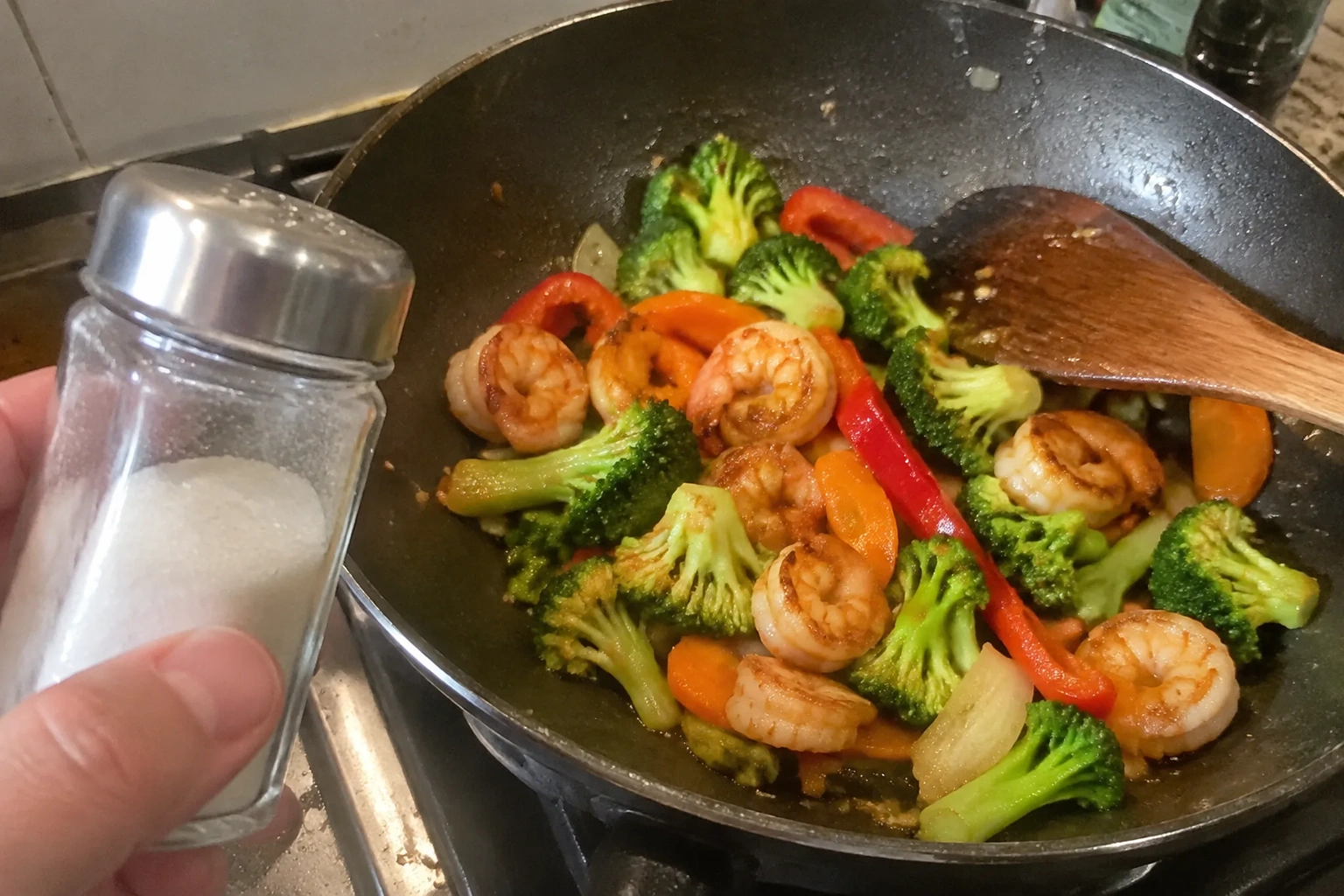
Salt is the one ingredient in the kitchen that does two jobs at once. It makes food taste like more of itself, and it makes food taste like salt. Most home cooks, told to cut back, hear only the second half of that sentence and start bracing for a month of flat, sad dinners. The bracing is the problem. A pot of soup with half the salt it wants is not a lesser version of the same soup; it is a different, thinner thing, and everyone at the table can tell.
The fix is not to grit teeth through bland food until the palate adjusts. The fix is to build flavor in layers so the salt has less work to do. Salt is a shortcut to depth. Take away some of the shortcut and the depth has to come from somewhere else: from heat, from acid, from aromatics, from the Maillard browning on a piece of meat, from a squeeze of lemon at the end. Cooks who lean on these tools can cut salt by a third or more and no one notices, because the food is busy tasting like something.
Why a pinch of salt punches so far above its weight
Sodium ions do something specific to the tongue. They suppress bitterness and amplify sweetness and savoriness, which is why a bland tomato sauce can go from dull to alive with a two-finger pinch. Salt also changes texture: it draws water out of vegetables, tightens proteins, and makes starches taste rounder. None of that is optional. A cook who removes salt entirely is removing a mechanical function, not just a seasoning.
That is the reason the standard advice to "just use less salt" so often fails. It treats salt as a habit to break rather than a job to reassign. The job still needs doing. Something else has to show up for work.
Acid is the first substitute, and the most underused
A squeeze of lemon over a finished plate does more for perceived saltiness than an extra pinch of salt ever will. The tongue reads brightness and salt as cousins; a hit of acid makes the whole dish feel seasoned. This is why restaurant food often tastes saltier than it is. The kitchen is finishing with vinegar, citrus, or a pickled element, and the diner's brain logs the result as "well seasoned."
A few workable moves: a splash of red wine vinegar into a pot of bean soup at the end, a wedge of lime next to roasted sweet potatoes, a spoonful of sauerkraut or pickled onion on a sandwich that would otherwise need more cheese. The acid has to go in late. Add it early and it cooks off or mellows into the background, which defeats the purpose.
One caution. Acid and salt are not interchangeable at the start of cooking. Salt belongs in the pot early so it can penetrate. Acid usually belongs at the end so it stays loud. The two work on different timetables.
Brown the food harder than feels comfortable
Roasted vegetables, seared meat, toasted nuts, and caramelized onions all develop hundreds of flavor compounds that plain boiling or steaming never produces. Those compounds read as savory and complex, and they fill in the gap left by missing salt. A sheet pan of cauliflower roasted at high heat until the edges go dark brown tastes seasoned. The same cauliflower steamed until tender tastes like nothing, and no amount of salt fixes it.
The practical version: preheat the pan properly, dry the food before it goes in, give it room, and let it sit undisturbed until it releases. Most home cooks pull food off the heat a full two shades lighter than they should. The deep brown crust is where the flavor lives, and it costs nothing in sodium.
Aromatics do the savory work salt used to do
Garlic, onion, ginger, scallion, cumin, smoked paprika, black pepper, dried chile, and a bay leaf in the pot all register as flavor before the tongue ever gets to salt. A pot of beans cooked with onion, garlic, bay, and a dried chile tastes complete with a fraction of the salt a bare pot would need. The aromatics are not decoration; they are structural.
The mistake is treating spices as a dusting at the end. They need heat and fat to bloom. A teaspoon of cumin dropped into a dry pan for thirty seconds, then followed by oil, tastes twice as strong as the same cumin stirred into a finished dish. Toast whole spices when possible. Grind them fresh. The difference is not subtle.
Umami-rich ingredients carry salt's load
Mushrooms, tomatoes, Parmesan, anchovy, soy sauce, miso, and fish sauce all deliver glutamates, the compounds behind the sensation of savoriness. They also happen to contain sodium, so they are not a free pass, but a little of them goes a long way. A single anchovy fillet melted into a pot of beef stew disappears completely and leaves behind a meatiness that would otherwise require a heavy hand with the salt shaker.
Dried mushrooms are the quiet hero here. A handful of porcini or shiitake soaked in hot water and chopped into a braise adds a deep, almost beefy flavor. The soaking liquid, strained, is even better. Neither tastes like mushrooms in the finished dish. Both make the dish taste like it was cooked with more care than it was.
Salt at the end, not throughout, when the dish allows
Here is a counterintuitive tactic that works for salads, grain bowls, and anything assembled cold. Hold the salt until the very end, then use a flaky finishing salt in a small amount. Coarse flakes hit the tongue in bursts rather than dissolving invisibly, so a quarter teaspoon of Maldon scattered over a sliced tomato reads as more salt than a full teaspoon of table salt stirred in. The perception is real, and it lets a cook cut total sodium while keeping the food tasting seasoned.
This only works on the surface. Salt stirred into a pot needs time to distribute and penetrate, so finishing salt is a tool for the plate, not the saucepan. Used correctly, it is the cheapest trick in the low-salt playbook.
The hidden salt problem is in the pantry, not the shaker
Most of the sodium in a home-cooked meal never touches the salt shaker. It arrives in a can of broth, a jar of pasta sauce, a package of bacon, a block of cheese, a loaf of bread, a bottle of salad dressing. A cook who carefully measures a quarter teaspoon of salt into a stew built on salted commercial broth has been fooling themselves. The broth was the salt.
The fix is to read labels once, on the handful of items bought every week, and swap the worst offenders. Unsalted butter. Low-sodium broth, or better, homemade stock. Canned tomatoes with no added salt. Dry beans instead of canned. Each swap removes sodium that was never doing any flavor work in the first place, which frees up the salt budget for the places it actually matters.
What the palate does after two weeks
There is a real physiological adjustment, and it happens faster than most people expect. Taste receptors for salt adapt within a couple of weeks of reduced intake. Food that tasted under-seasoned on day three tastes normal by day fourteen, and food that used to taste fine starts tasting aggressively salty. The adjustment is the reason a gradual reduction beats a cold-turkey one. Cut salt by a quarter, hold there for two weeks, then cut another quarter. The palate follows the kitchen.
The cooks who fail at this are usually the ones who try to jump straight to a third of their normal salt in one week and then spend every dinner complaining that the food tastes wrong. It does taste wrong. The tongue has not caught up yet. Give it time and it will.
The chicken soup test
A useful benchmark is a simple pot of chicken soup. Cook it the old way, with a heavy hand on the salt, and note how it tastes. Then cook it again with a third less salt, but add a Parmesan rind to the pot, squeeze half a lemon in at the end, and brown the chicken pieces hard before they go into the water. The second pot will taste richer and more finished than the first, and a person eating it blind will not guess it has less sodium. That is the whole method in one pot.
Salt still belongs in the kitchen. It just deserves fewer solo performances and more backup singers: acid, browning, aromatics, umami, and a finishing flake scattered at the last second. A cook who builds those in can cut the salt by a third and serve food that tastes like more, not less.





















