







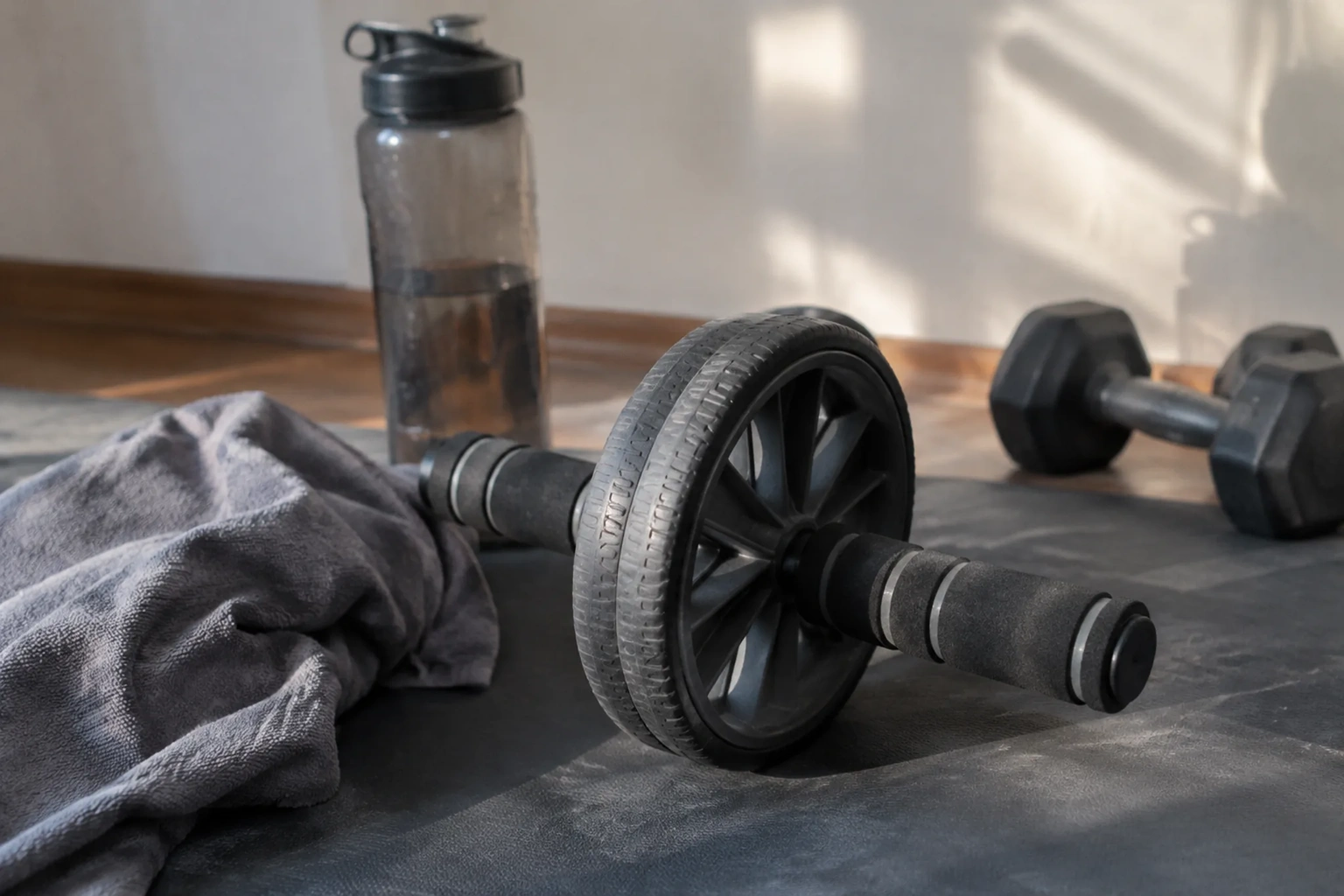
A gym member spends forty minutes on a mat doing crunch after crunch and still cannot explain why the lower back aches on the drive home. Another loads a barbell with more weight than the previous month and watches the hips sag toward the floor on the third repetition, then adds another plate anyway. Core training has become one of the most practiced and least examined habits in the average fitness routine, a category of exercise where effort and result routinely part company.
The problems tend to cluster. A handful of mistakes account for most of the wasted time, the nagging aches, and the stubborn plateaus that send people looking for a new program when the old one was never built correctly to begin with.
Treating the Core as a Six-Pack Instead of a Cylinder
The abdominal muscles that show up in photographs form only the front wall of a structure that wraps the torso like a corset. The obliques run along the sides. The transverse abdominis sits underneath, deep and horizontal. The erector spinae run up the back alongside the spine. The glutes and the diaphragm attach at the top and bottom of the same system.
Training only the visible front wall leaves the rest of that cylinder untrained. A person can hold a respectable set of crunches and still lose control of the pelvis the moment a heavy grocery bag pulls one shoulder toward the floor. The muscles that resist rotation, resist side bending, and hold the trunk steady under load get almost no attention in a routine built around spinal flexion.
The fix is unglamorous. A single set of side planks, a few rounds of dead bugs, and a farmer's carry with a heavy weight in one hand will train more of the cylinder than a hundred crunches. None of them look impressive. All of them transfer to lifting, carrying, and standing upright for long stretches.
Chasing Repetitions When the Spine Has Already Lost Position
Watch a group of people perform a plank and count how many hips drop after the first twenty seconds. The clock keeps running, the face stays determined, and the lower back quietly takes over the work the abdominals were supposed to do. The set gets finished. The intended muscles got maybe half the stimulus.
Core training rewards position over volume. A plank held for twenty-five seconds with the ribs stacked over the pelvis and the glutes engaged does more than a two-minute hold that sags into the lumbar spine halfway through. The same principle applies to hollow holds, leg raises, and any movement where the pelvis can tilt out of alignment under fatigue.
A practical rule: when the shape breaks, the set ends. That might mean sets of fifteen seconds instead of sixty. It might mean fewer repetitions than the person next to the mat. It also means the work lands on the muscles that were meant to receive it, and the lower back stops filing complaints.
Loading the Spine Before Bracing the Trunk
A deadlift begins long before the bar leaves the floor. It begins with a breath, a brace, and a deliberate stiffening of the whole torso. Skip that sequence and the spine becomes the weak link in a chain that includes the hips and the legs, which are far stronger and far more willing to do the work.
Many lifters treat the brace as an afterthought, something that happens naturally once the weight gets heavy. It does not. The ability to create intra-abdominal pressure on demand is a skill, and like any skill it improves with deliberate practice. A few minutes of breathing drills before a session, done on the floor with a hand on the belly and a hand on the ribs, will teach the pattern faster than another set of heavy squats performed with a soft midsection.
The payoff shows up in the ordinary moments too: lifting a suitcase into an overhead bin, picking up a toddler, hauling a bag of soil out of the car. The brace becomes automatic, and the back stops paying for the neglect.
Confusing Soreness With Progress
The day after a hard core session, the abdominals feel tender to the touch and the laugh reflex becomes a small event. That soreness is real, and it is also a poor scorecard. Muscles adapt to the stimulus they receive, and soreness fades as the body gets used to the work, even when the training stays exactly the same.
The better measure is capacity. Can a person hold a side plank for longer than last month? Has the hollow hold grown steadier? Does a heavy carry feel less like a negotiation with the grip and more like a walk? These questions track progress in a way that a dull ache the next morning never will.
Chasing soreness also pushes people toward novelty for its own sake. A new exercise every week feels productive and produces fresh discomfort, but it never gives any single pattern enough repetitions to become automatic. The core responds to consistent, progressive loading, not to a rotating cast of circus tricks.
Training the Core Only on Core Day
The trunk stabilizes the body during every compound movement. A heavy squat, a set of pull-ups, a loaded carry, a hard effort on a rowing machine: each one demands that the midsection hold position while the limbs do their work. Treating core training as a separate twenty-minute block at the end of the week ignores the fact that the best core work is often already happening under a barbell.
This does not mean every session needs a dedicated abdominal circuit. It means paying attention to the trunk during the lifts that are already on the schedule. A squat performed with a braced midsection trains the core. A squat performed with a soft one trains the spine to tolerate poor position under load. The exercise is the same. The outcome is not.
A useful habit: before each heavy set, take a breath, set the ribs down, and feel the whole torso stiffen. That single cue, repeated across a training week, does more for trunk strength than a stack of mats and a timer.
The Sit-Up Habit That Refuses to Die
The sit-up persists because it is simple, familiar, and easy to count. It also loads the spine in flexion under repetition, which is exactly the position many backs tolerate poorly. For a person with a healthy spine and a moderate number of repetitions, the risk is modest. For someone with a history of lower back trouble, a high-volume sit-up routine is a gamble taken without a good reason.
Alternatives that train the front of the trunk without repeated spinal flexion are easy to find. Dead bugs, hollow holds, and stability ball rollouts all challenge the abdominals to resist extension rather than create it. They are harder to perform correctly and less satisfying to count, which may explain why the sit-up keeps its place in so many routines despite better options sitting right beside it.
Ignoring the Breath That Holds Everything Together
The diaphragm sits at the top of the core cylinder, and it does more than move air. It contributes to intra-abdominal pressure, the internal bracing that protects the spine under load. A person who breathes shallowly into the chest during a heavy lift loses a large part of that protection without noticing.
Breathing drills look almost too simple to matter: lie on the floor, place one hand on the belly and one on the ribs, and breathe so the lower hand rises first. Five minutes of that before a workout, repeated for a few weeks, changes how the trunk behaves under weight. The breath becomes the foundation of the brace, and the brace becomes the foundation of every lift.
It is also the cheapest core training available. No equipment, no gym membership, no mat required. Just a floor and a few minutes of attention.
Rotating Through Exercises Too Fast to Adapt
Programs that change every few weeks feel exciting and sell well. They also prevent the body from adapting to any single stimulus long enough to produce a real change. A person who does a different core routine every session never gets good at any of them. The plank stays shaky. The hollow hold stays short. The carry stays a struggle.
Pick three or four movements and repeat them for six to eight weeks. Add a few seconds to the hold, a few meters to the carry, or a small amount of weight to the movement. The progress will feel slow and unremarkable, and it will also be real. That is the trade.
The most common core training mistake, in the end, is treating the midsection as a separate project with its own rules. It is the center of every other movement, and it deserves the same patience and attention as the lifts that get the spotlight. A person who braces before the bar leaves the floor, holds position until the shape breaks, and repeats a handful of unglamorous movements for months will build a trunk that shows up when it matters. The rest is decoration.





















