







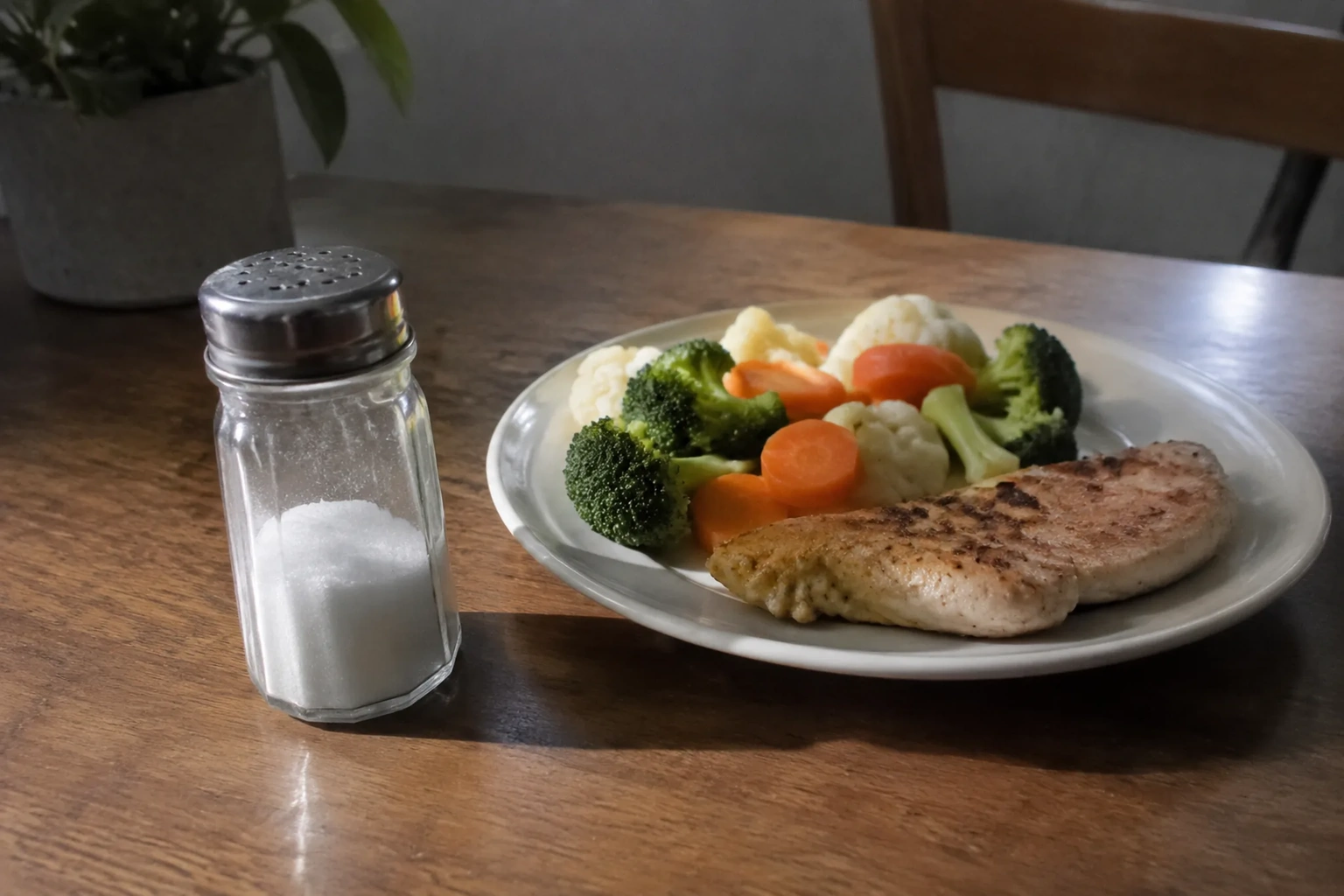
Salt is the one ingredient that home cooks defend with surprising heat. Ask someone to cut back and the first objection arrives before the sentence finishes: food will taste like nothing. That fear is reasonable, because most people have eaten a low-sodium meal that tasted like wet cardboard and quietly decided the whole project was a mistake. The mistake was the method, not the goal.
Cutting sodium gradually works because taste is adaptive. The tongue recalibrates over weeks, not hours. The trick is to lower the salt in ways the mouth does not immediately register as loss, while raising everything else that makes a dish taste full. A cook who rips out half the salt on day one gets a bland meal and a rebellion. A cook who shaves off a little at a time, in the right places, keeps the meal intact and lets the palate catch up.
Why the tongue stops noticing after a few weeks
Salt perception is partly a matter of habit. The tongue does not have a fixed salt meter; it has an expectation. Someone who has eaten aggressively salted food for years has trained the palate to expect a certain baseline, and anything below it reads as flat. Change the baseline slowly and the expectation follows. This is the general understanding among people who study taste, and it matches what anyone who has cut back for a month will report: the food that used to taste normal now tastes almost too salty.
The practical implication is that the transition period matters more than the final number. A sudden drop produces a week of miserable meals and a relapse. A gradual drop, spread over six to eight weeks, produces meals that taste fine the whole way down. The palate does the work in the background while the cook keeps the food good enough to keep eating.
There is a real limit to this. Some salt is doing structural work in a dish, and removing it without replacement leaves a hole. The goal is to find which salt is structural and which is just habit, then cut the habit first.
The salt that is doing nothing for the dish
Most home kitchens carry salt in two forms: the salt added at the stove and the salt already inside ingredients. The second kind is where the easy cuts live, because it arrives without anyone tasting it as salt. A jar of commercial pasta sauce, a can of beans, a loaf of sandwich bread, a handful of olives, a slice of deli turkey, a stock cube: these carry sodium that the cook never consciously adds and rarely accounts for.
Cutting there is close to painless. Rinse canned beans and the sodium drops noticeably without changing the texture. Swap a salty stock cube for a low-sodium broth, or use water plus a little wine and a bay leaf. Choose the bread with the lower sodium number on the label, which is usually the one baked fresh rather than the one designed to sit on a shelf for two weeks. Drain and rinse olives, or use fewer and chop them finer so the flavor spreads.
None of these moves makes dinner taste worse. Most people cannot tell the difference in a finished dish. The savings add up quietly across a week of meals, and the palate never registers a loss because the cook never took salt away from the surface of the food.
The finishing salt that earns its place
The salt added at the end of cooking is different. A pinch of flaky salt on a roasted vegetable or a sliced tomato lands directly on the tongue and registers immediately. That salt is doing real work, and cutting it entirely is the fastest way to make food taste flat. The move is to keep it, use less of it, and use a salt with a bigger flake so each pinch covers more surface.
A coarse flake salt dissolves slower and crunches, which means the tongue notices it more per gram. A small pinch of flaky salt scattered over a plate reads as more salt than the same weight of fine table salt stirred into a sauce. The cook gets the hit without the volume. This is one of the few places where spending a little more on a better salt pays for itself, because the same dish needs less.
The salt stirred into the pot during cooking is the harder category, and it is where gradual cuts actually happen.
Shaving salt from the pot without flattening the sauce
Salt in a sauce does two jobs. It seasons, and it sharpens the edges of other flavors so they read more clearly. Take it away and a tomato sauce tastes like cooked tomatoes rather than a tomato sauce. The fix is not to keep the salt; it is to give the sauce something else to sharpen it. A squeeze of lemon at the end, a splash of vinegar, a few grinds of black pepper, a pinch of red pepper flakes: acid and heat both make the tongue pay attention in a way that mimics some of what salt does.
A cook cutting back on sodium should build the habit of tasting before salting and asking what the dish is missing. Often it is acid, not salt. A soup that tastes dull frequently needs a squeeze of lemon or a spoonful of vinegar more than another pinch from the salt cellar. Learning to reach for the lemon first is the single most useful skill in this whole project.
Umami does similar work. A little tomato paste, a splash of soy sauce (which is salty, so use it deliberately), a spoonful of miso, a few dried mushrooms, a piece of Parmesan rind dropped into a simmering pot: these add depth that the tongue reads as richness. A dish with good umami needs less salt to taste complete.
The gradual approach means changing the pot salt by small increments, maybe a quarter teaspoon less per batch, and compensating with acid, umami, and aromatics. Over a few weeks the pot salt drops and the dish still tastes full.
The aromatics that carry a dish when salt steps back
Onions cooked slowly until they collapse and sweeten. Garlic added at the right moment. Toasted cumin or coriander seeds ground fresh. A cinnamon stick in a braise. Fresh herbs stirred in at the end rather than at the start. These are the load-bearing flavors that make a low-salt dish taste like a real meal rather than a health food compromise.
The mistake many cooks make when cutting salt is to cut flavor along with it, serving plain steamed vegetables and plain grilled chicken and wondering why dinner feels like a punishment. The correction is to go the other direction: more aromatics, more acid, more heat, more texture. A roasted cauliflower with cumin, lemon, and a little chili flake tastes seasoned even with a fraction of the salt.
Texture matters too. A dish with crunch, creaminess, or chew registers as more interesting on the tongue, and interest reads as flavor. Toasted nuts, crispy shallots, a scatter of fresh herbs, a drizzle of good olive oil: these are not garnish. They are part of how the meal tastes without salt.
Reading labels without becoming obsessed with them
Sodium numbers on packaging are confusing on purpose. The label lists sodium in milligrams per serving, and the serving size is often smaller than what a person actually eats. A soup that lists 480 mg per cup is closer to 960 mg in a bowl. A frozen dinner that looks moderate on the front panel can carry most of a day's sodium in one tray.
The useful habit is not to memorize numbers but to compare two similar products on the shelf and pick the lower one. Between two jars of salsa, two loaves of bread, two brands of stock, the difference is often large and the taste difference is small. Over a month of shopping, those choices lower the household baseline without any meal feeling deprived.
The other useful habit is to look at the ingredient list for the words that mean sodium: monosodium glutamate, sodium bicarbonate, sodium nitrate, disodium inosinate, and the various sodium phosphates. These appear in processed foods and cured meats and add up in ways the front of the package never mentions. A person who cooks mostly from whole ingredients is already ahead of the game, because the sodium in a raw chicken breast or a fresh tomato is low and the sodium in a chicken nugget or a jar of marinade is not.
How the transition looks across two months
Weeks one and two: swap the salty pantry items for lower-sodium versions and rinse the canned goods. Change nothing else. The food tastes the same and the cook builds confidence.
Weeks three and four: shave a quarter teaspoon off the pot salt in each recipe, and add a squeeze of lemon or a splash of vinegar at the end of cooking. Taste before salting. Reach for acid first when a dish tastes flat.
Weeks five and six: cut the pot salt by another quarter teaspoon, and lean harder on aromatics and umami. Use a flaky finishing salt in a smaller pinch. Notice that the food tastes normal, because the palate has caught up.
Weeks seven and eight: the cook is now cooking at a noticeably lower sodium level and the meals taste complete. The palate has recalibrated. A dish that once tasted right now tastes a little salty, which is the signal that the change has stuck.
What to do on the night a dish tastes flat
It happens, usually in week three, when the palate is still expecting the old baseline and the pot salt has dropped. The temptation is to reach for the salt cellar and undo the progress. The better move is a short checklist: acid, fat, heat, texture, aroma. A squeeze of lemon. A drizzle of olive oil. A pinch of chili. A handful of toasted breadcrumbs or crushed nuts. A shower of chopped parsley or basil. Most flat dishes are missing one of these, and adding it fixes the dish without adding sodium.
If the dish still tastes flat after all five, then it genuinely needs salt, and a pinch should go in. The point of gradual cutting is not to eliminate salt. It is to make sure the salt in the meal is doing work rather than arriving by habit. A cook who tastes, checks the five levers, and then salts deliberately is cooking at a lower sodium level and a higher level of attention at the same time. The meals get better as the salt goes down, which is the outcome that makes the change last.





















