







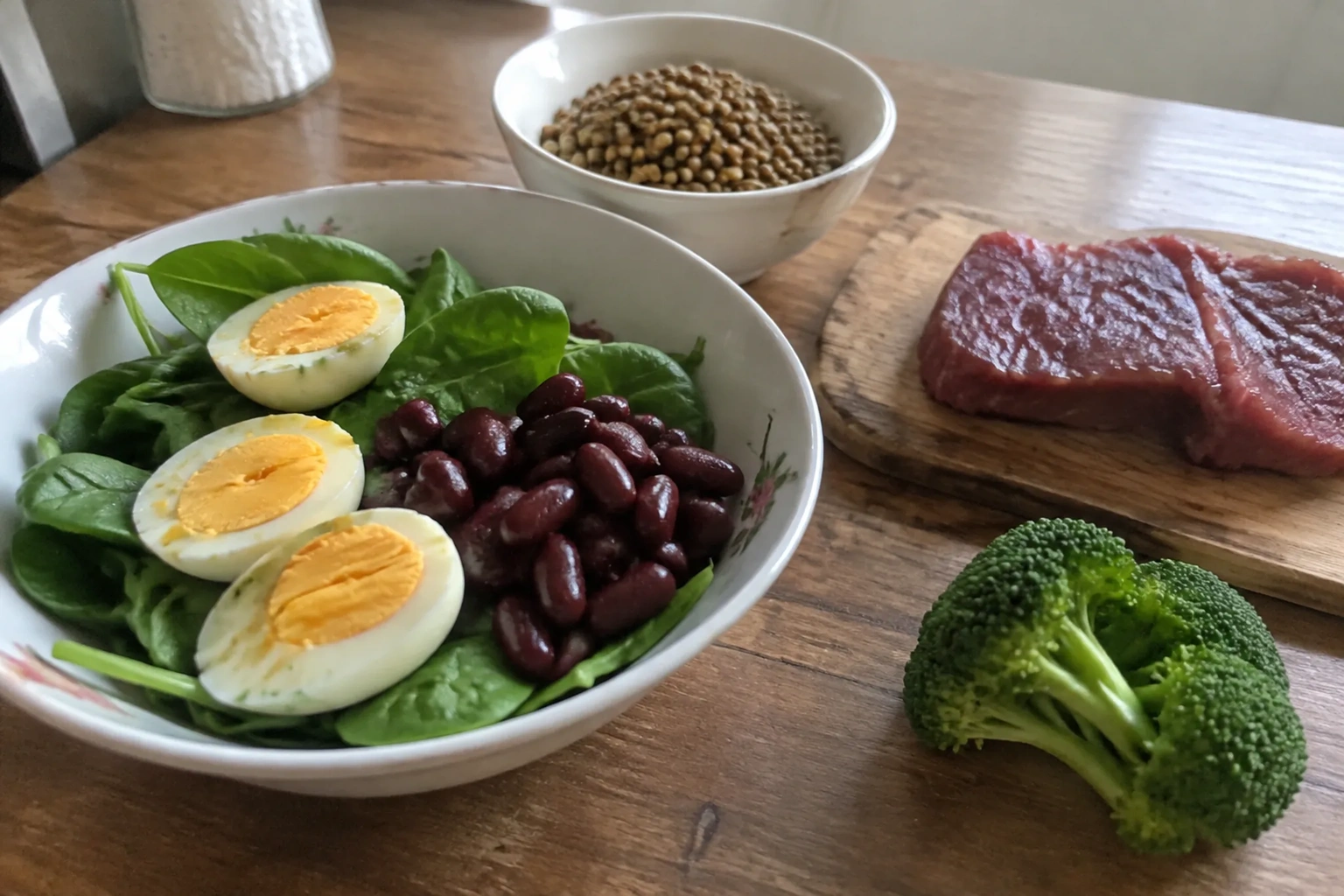
Half a cup of cooked lentils carries about 6.6 milligrams of iron. That number sits on a USDA nutrient sheet, dry and unremarkable, and it explains almost nothing about why a bowl of lentil soup at noon can keep a person sharp until dinner while a pastry and coffee at the same hour sends them face-down into a keyboard by two. Iron is the quiet machinery inside the energy story. It rides on hemoglobin, the protein in red blood cells that hauls oxygen from the lungs to every working muscle and firing neuron. Skimp on it and the whole system runs on a thinner fuel mix. The tiredness that follows is not dramatic. It is a slow dimming, the kind people blame on bad sleep or long hours or the weather.
Most adults in wealthy countries get enough iron to avoid outright deficiency, which is a different and more serious condition. But enough to avoid a diagnosis and enough to feel steady through a long afternoon are two different thresholds. Women who menstruate lose iron every month and sit closer to the edge. So do endurance runners, vegetarians who have not thought carefully about pairing, and anyone who drinks tea or coffee with every meal. The gap between adequate and optimal is where the interesting eating happens.
The two irons are not the same iron
Dietary iron arrives in two forms, and the body treats them very differently. Heme iron comes from animal tissue, mostly red meat, poultry, and fish, and the gut absorbs somewhere between 15 and 35 percent of it. Non-heme iron comes from plants and fortified foods, and absorption runs closer to 2 to 20 percent depending on what else is on the plate. That wide range is the whole game. A spinach salad and a steak can list similar iron on paper and deliver wildly different amounts to the bloodstream.
The practical upshot: plant sources are worth eating, but they reward a little strategy. The same food can be a modest contributor or a real one depending on its companions.
Beef liver, and the reason it rarely appears on menus
A three-ounce serving of beef liver holds roughly five milligrams of iron, nearly all of it heme, plus a wallop of vitamin B12 and copper. Gram for gram it is one of the densest iron foods available. It is also the food most people quietly refuse to cook. The texture goes grainy if it is overcooked by thirty seconds, the smell fills a kitchen, and the flavor is mineral and loud. Liver rewards confidence and punishes distraction.
A milder route exists. Chicken liver pâté, whirled smooth with butter and thyme and spread on toast, delivers the same heme iron without the organ-meat confrontation. Two tablespoons on a slice of sourdough makes a starter that quietly does the work of a steak.
Lentils, and the vitamin C trick that doubles their value
Lentils are the workhorse of plant iron. A cup of cooked lentils lands around 6.6 milligrams, and they cook in twenty minutes with no soaking. The catch is that non-heme iron needs help crossing the intestinal wall. Vitamin C is that help. Eating lentils alongside tomatoes, peppers, lemon juice, or a handful of parsley can meaningfully lift absorption, sometimes by two or three times in a single meal.
This is why a lentil salad with roasted red peppers and a lemon dressing is a smarter lunch than plain lentil soup, even though the soup lists identical iron. The pairing is doing real work. It is also why a squeeze of citrus over a bowl of beans is not a decorative flourish.
The tea and coffee problem nobody mentions at breakfast
Tannins and polyphenols in tea and coffee bind iron in the gut and carry it out before it can be absorbed. A strong cup of black tea with a meal can cut iron uptake by more than half. Coffee does something similar. This is not a reason to give up either drink. It is a reason to put an hour or two between the mug and the meal.
Breakfast is where this bites hardest. A bowl of fortified cereal with milk and a cup of coffee is a common morning, and the coffee quietly cancels a chunk of the cereal's iron. Moving the coffee to mid-morning, or swapping in orange juice at the table, changes the arithmetic without changing the menu much.
Spinach is famous and overrated; the real greens are elsewhere
Spinach carries a reputation it does not quite earn. A cup of cooked spinach holds around 6.4 milligrams of iron, which sounds impressive until the oxalates are counted. Spinach is loaded with oxalic acid, which locks up much of its own iron and blocks absorption from other foods on the same plate. The body gets a fraction of what the label promises.
Swiss chard and collard greens have less iron on paper but far fewer oxalates, so more of it actually arrives. Broccoli and bok choy are modest but reliable. The lesson is that a nutrient table is a starting point, not a verdict. Cooking greens also lowers oxalate levels somewhat, so a long braise of chard with garlic and lemon is a better iron delivery system than a raw spinach salad.
Pumpkin seeds and the snack that earns its place
An ounce of pumpkin seeds, roughly a small handful, carries about 2.5 milligrams of iron. That is not a headline number, but the format matters: seeds are portable, they need no cooking, and they scatter easily over yogurt, oatmeal, or a salad. A person who keeps a jar on the desk and eats a handful mid-afternoon is quietly adding iron to a day that might otherwise have none.
Dark chocolate earns a smaller mention for the same reason. An ounce of 70 percent cocoa holds a couple of milligrams, and it pairs naturally with the nuts and dried fruit that make up a decent trail mix. The catch is portion size. The iron is real; the sugar that comes with it is a different conversation.
Cast iron skillets and the slow leak of iron into food
Cooking in a seasoned cast iron pan adds iron to food, particularly when the food is acidic and the pan is young. A tomato sauce simmered in cast iron can pick up several milligrams over the course of an hour. The effect fades as the seasoning thickens, and it is not a substitute for eating iron-rich foods, but it is a free nudge in the right direction.
The pan is also the kind of detail that separates a deliberate eater from a passive one. Same sauce, same ingredients, different pan, slightly different nutrient profile. Small edges compound.
What a steady-energy plate looks like in practice
Consider a dinner of seared steak with a side of lentils and roasted red peppers. The steak brings heme iron that absorbs easily. The lentils bring plant iron. The peppers bring vitamin C that lifts the lentil iron. No tea or coffee on the table. That single meal does more for iron status than a week of spinach smoothies.
Or a weekday lunch of chickpea and roasted vegetable salad with a lemon-tahini dressing and a few pumpkin seeds scattered on top. Chickpeas sit around 4.7 milligrams per cup, the lemon adds the vitamin C, and the seeds top it off. It is a lunch that does not put a person to sleep at three in the afternoon, which is the whole point.
The iced tea that often accompanies such a lunch is the one thing to move. Push it to an hour after the meal and the iron stays. This single habit shift costs nothing and is easier to sustain than any supplement regimen.
The case against chasing iron with supplements first
Iron supplements are not harmless. They cause constipation, they compete with zinc and calcium for absorption, and in people who do not actually need them they can push iron stores too high, which carries its own risks over time. A person who feels tired should get ferritin and hemoglobin checked before swallowing pills. Food-first is the better default, and for most people it is enough.
There is a real place for supplements, particularly for people with diagnosed deficiency or heavy menstrual losses. That place is a doctor's office, not a grocery aisle impulse buy. The foods above are the everyday foundation; the pills are a correction for a specific problem.
The steak dinner that beats the spinach smoothie
A person can eat all the right foods and still run low if the timing and pairing work against them. Tea with every meal, coffee at breakfast, spinach salads with no citrus, and a diet heavy on plant iron with no heme to anchor it. None of these is a mistake on its own. Stacked together, they quietly drain the tank.
The fix is not a supplement bottle or a new diet. It is a handful of small decisions: a squeeze of lemon over the lentils, coffee moved to mid-morning, a cast iron pan for the tomato sauce, a chicken liver pâté on the weekend table, pumpkin seeds in a jar by the keyboard. The energy that follows is not a spike. It is the flat, steady hum of a body that has what it needs to keep the lights on all afternoon.





















