







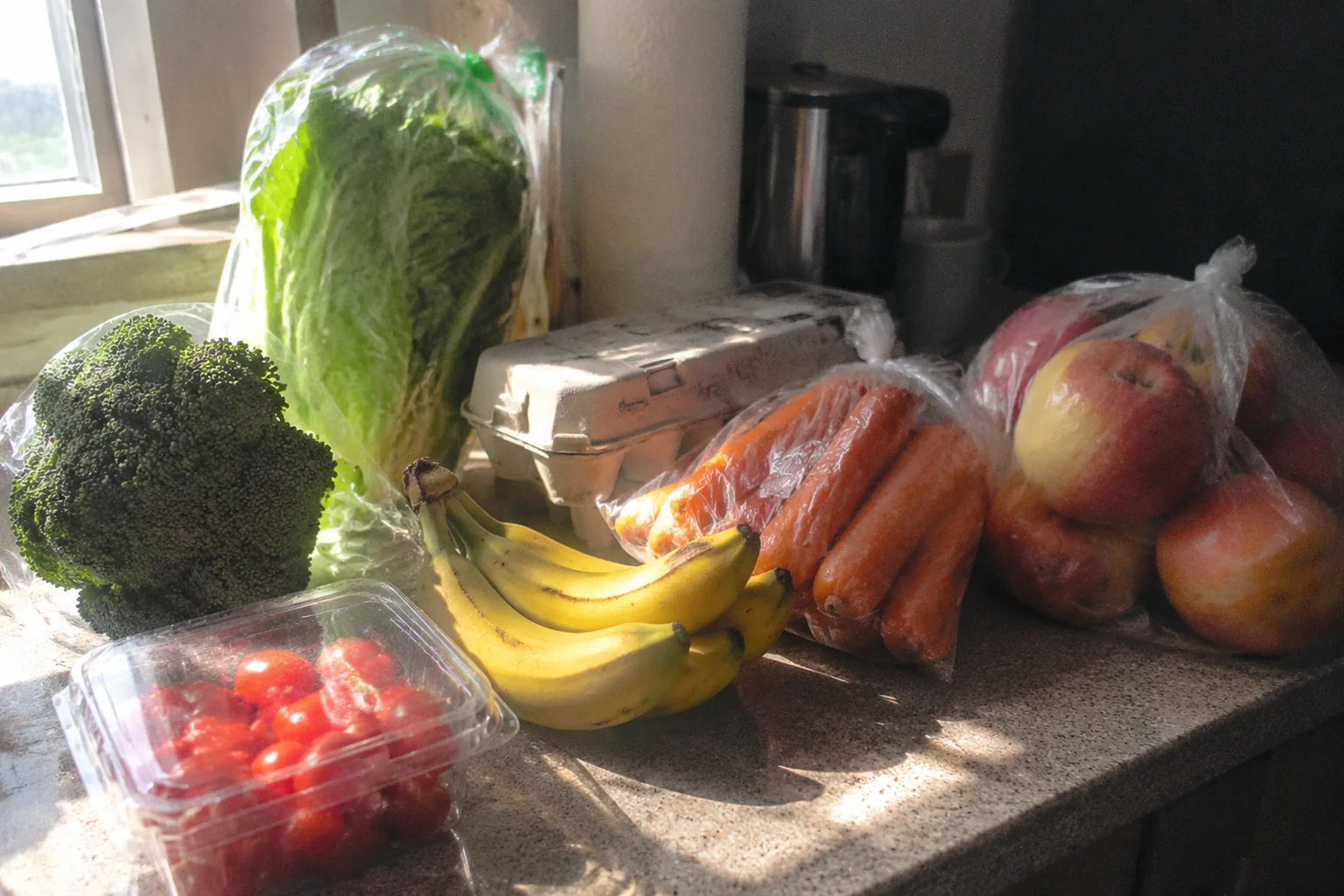
One onion can cost less than a dollar and ruin a week. Buy a single large yellow onion for a solo kitchen and the odds are decent that half of it goes soft in the crisper drawer before the next grocery run, which means the real price of that onion was higher than the sticker said. The math of cooking for one is full of these quiet losses, and they compound faster than most people expect.
Solo grocery shopping rewards a specific kind of thinking: buying ingredients that survive, that multitask, and that scale down without leaving a shelf of orphaned leftovers. The goal is a cart that produces several real meals without a graveyard of half-used containers. That takes planning, but not the punishing kind. It mostly takes knowing which categories stretch and which ones quietly drain a budget.
The freezer is the solo cook's best ally
Fresh produce is where single households bleed money. A head of celery, a bunch of parsley, a bag of carrots: all of them are priced for families and sold in quantities that spoil before one person can work through them. The freezer changes that calculus completely. Frozen spinach, frozen peas, frozen broccoli, and frozen berries keep for months and can be portioned by the handful.
Frozen vegetables also carry a quiet advantage over their fresh counterparts in the middle of winter: they are picked and frozen at peak ripeness, so a bag of peas in February often tastes better than the fresh peas that traveled a thousand miles to get there. For a solo cook, that is a double win. Less waste, better flavor, and no deadline pressure to eat the whole bag this week.
The one caveat is texture. Frozen broccoli turns limp when steamed, so it belongs in stir-fries, soups, and casseroles where a little softening goes unnoticed. Frozen spinach is nearly indistinguishable from fresh once it is cooked down. Frozen berries work in oatmeal and smoothies and muffins. Buy the ones that hold up in the dishes a person actually cooks.
Staples that carry a week of meals
The backbone of a solo kitchen is a short list of shelf-stable ingredients that can anchor multiple meals without spoiling. Rice, dried pasta, oats, canned beans, canned tomatoes, and eggs cover an enormous range of dishes. A bag of rice lasts months. A can of beans is a meal component for under two dollars. Eggs are the most versatile protein per dollar in the store.
The trick is buying these in sizes that make sense for one person. A ten-pound bag of rice is a bargain per ounce, but it takes up cabinet space and can attract pests if it sits too long. A five-pound bag is usually the better call for a single household. The same logic applies to pasta: two or three shapes is plenty, and the boxes keep for a year.
Canned goods deserve more respect than they get. A can of crushed tomatoes, a can of chickpeas, and a box of pasta can become a real dinner with almost no effort. A can of black beans, some rice, and a few spices make a filling bowl. These are not sad compromise meals. They are the foundation of a kitchen that can produce food on a Tuesday night without a trip to the store.
Buying meat in family packs and repackaging at home
The meat counter is where solo shoppers often overpay without realizing it. A single chicken breast costs more per pound than a family pack of four, and the smaller package is usually the one that gets bought. The fix is simple: buy the larger pack, divide it into single portions at home, and freeze what will not be used within a couple of days.
This takes about ten minutes and a stack of small freezer bags. A family pack of chicken thighs becomes four or five separate meals. A pound of ground beef becomes two portions. The savings are real, often a dollar or more per pound, and the portioning solves the leftover problem at the same time. The same approach works for pork chops, sausages, and fish fillets.
Whole chickens are another underused option for a solo cook. A four-pound bird can produce a roast dinner, several days of sandwiches, and a pot of stock from the carcass. That is a lot of meals from one purchase, and the stock alone is worth the effort. The catch is that it requires a block of time on the front end, which is why it tends to get skipped.
The case for smaller loaves and single-serve dairy
Bread is a classic solo trap. A standard loaf is too much for one person to finish before it goes stale, and the freezer is the obvious answer: slice it, bag it, and toast from frozen. But there is also a case for buying smaller loaves, rolls, or pita, which can be used up in a few days without any freezer logistics. The price per ounce is higher, and the waste is lower.
Dairy follows the same pattern. A quart of milk is often the smallest size available, and it can turn before a single person drinks it all. Half-gallons, pint containers of cream, and small tubs of yogurt are worth the higher unit price for the reduced waste. Buying the large container and watching half of it spoil is not a savings.
Cheese is the exception worth buying in larger blocks. A block of cheddar or Parmesan keeps for weeks in the refrigerator, grates into almost anything, and costs far less per ounce than the pre-shredded bags. The bags are convenient, but they are also more expensive and often coated in anti-caking agents that affect how the cheese melts. A block and a box grater is the better deal.
Frozen fish and shrimp as weeknight protein
Fresh fish is expensive and perishable, which makes it a poor fit for a solo kitchen unless it is being cooked the same day. Frozen fish fillets and frozen shrimp solve both problems. A bag of frozen shrimp can be thawed in minutes under cold water and added to pasta, stir-fries, or tacos. Frozen salmon fillets cook from frozen in a hot oven with almost no prep.
The quality gap between fresh and frozen fish is smaller than most people assume, especially for shrimp and for fillets that are frozen at sea. The price gap is significant. A bag of frozen shrimp costs less per pound than the fresh case and can be portioned out over several meals. That combination makes it one of the better solo grocery buys in the store.
Building a pantry that earns its shelf space
A solo pantry should be small and functional. The temptation is to stock it like a family kitchen, with multiple oils, a dozen spices, and specialty condiments that get used once. The better approach is to start with a short list and add only what gets used up. Olive oil, salt, pepper, garlic powder, cumin, and a vinegar cover most everyday cooking.
Spices are a particular trap. A jar of cumin costs a few dollars and lasts a year, but buying ten jars at once means most of them will lose their punch before they are finished. Buy spices one or two at a time, and replace them when they stop smelling like anything. A small pantry that gets rotated is worth more than a large one that sits untouched.
The same logic applies to condiments. A bottle of soy sauce, a jar of mustard, and a jar of mayonnaise cover a lot of ground. Specialty items like tahini or fish sauce are worth buying only when a specific recipe calls for them, and only if there is a plan to use the rest. Otherwise they become expensive shelf decoration.
Shopping less often and wasting less food
The most effective solo grocery strategy is to shop less often. A weekly trip tends to produce a cart full of fresh food that spoils before it is eaten. A trip every ten days or two weeks, built around frozen and shelf-stable ingredients with a smaller fresh component, reduces both waste and spending. The freezer and the pantry do the heavy lifting.
This also changes the way a person plans meals. Instead of buying for specific recipes, the approach becomes buying for categories: a protein, a vegetable, a starch, and a flavor base. From those categories, meals get assembled based on what needs to be used up. It is a more flexible way to cook, and it fits the reality of a single household better than a rigid meal plan.
The last piece is a small one: keep a list on the refrigerator of what is in the freezer. A bag of shrimp or a portion of chicken thighs that gets buried in the back is money wasted. A short list, updated when something goes in or comes out, makes the freezer useful instead of a place where food goes to be forgotten.
There is a version of solo grocery shopping that feels like a constant series of small losses: the half onion, the stale bread, the cheese with a spot of mold. The version that works looks almost the same on the surface but costs less and wastes less, and it comes down to a handful of choices made at the store. Buy the frozen peas. Buy the family pack and freeze half. Buy the block of cheese and grate it. The cart gets smaller, and the meals get better.





















