







Heart disease remains the leading cause of death worldwide, a fact that has become so familiar it barely registers anymore. The usual response to that statistic is a prescription for a different life: a new gym membership, a diet overhaul, a commitment to meditation. Grand gestures, all of them, and all of them prone to collapse by the second week of February.
The more useful truth sits in the small, unglamorous movements that fill an ordinary Tuesday. The heart is a muscle, and like any muscle it responds to what gets asked of it, repeatedly and without drama. A body that climbs stairs instead of waiting for the elevator, that walks to the corner store, that stands up during a phone call, is quietly building a stronger cardiovascular system without ever calling it exercise.
This is not a plea for sneaking workouts past oneself. It is a look at the specific, everyday moves that support the heart, the ones that never make it into a fitness plan because they are too ordinary to seem worth naming.
The case for the stairs over the elevator
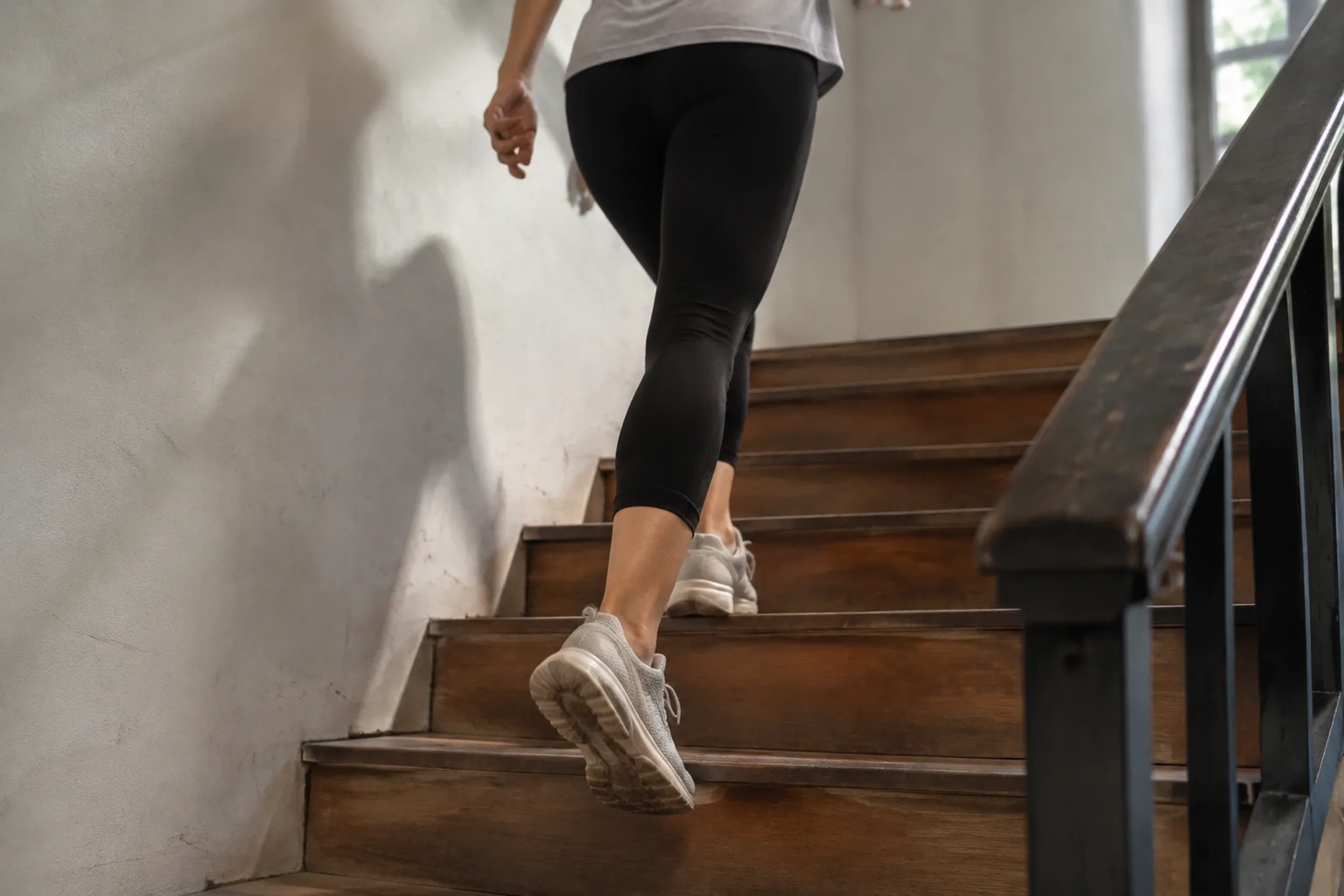
Every staircase is a free piece of gym equipment that most people walk past. Two flights of stairs, climbed at a normal pace, ask the heart to work harder than a brisk walk on flat ground. The legs push against gravity, the lungs pull in more air, and the heart pumps faster to meet the demand. Do that a few times a day and the effect accumulates.
The objection is always the same: the stairs are inconvenient, the elevator is right there. That is the whole point. The inconvenience is the benefit. A person who takes the stairs to a third-floor office four times a day has added a small but real training stimulus to a day that would otherwise involve almost none.
There is a specific detail worth noticing. The heart responds best to brief bursts of effort, the kind that leave a person slightly breathless for a minute or two. Climbing stairs produces exactly that. It is interval training disguised as a commute.
Walking meetings and the phone call on foot
The modern workday is a masterpiece of stillness. Hours pass in a chair, the heart idling at its resting rate, blood pooling in the legs. A single walk around the block does not undo that, but a habit of walking during phone calls does. Twenty minutes of pacing while talking to a colleague or a client is twenty minutes of light movement that would otherwise be spent motionless.
The same logic applies to the walk-and-talk meeting, now common enough that it no longer raises eyebrows. Two people, a loop around the building, a conversation that would have happened across a desk. The heart gets a gentle push, the mind gets fresh air, and the meeting gets shorter because nobody wants to walk in circles for an hour.
There is a rhythm to walking that suits thinking. The body moves, the blood flows, and the heart settles into a slightly elevated pace that it can hold comfortably. That pace, sustained for twenty or thirty minutes, is the foundation of cardiovascular health, and it can happen entirely on the phone.
Standing up every half hour, and why frequency beats duration
Sitting for long stretches is hard on the heart, though the mechanism is still being studied. What is clear is that breaking up sitting time matters more than the total amount of exercise a person gets. A runner who sits for nine hours a day has a different cardiovascular profile than a runner who sits for four.
The practical move is simple: stand up every half hour. Not for long. Thirty seconds of standing, a stretch, a walk to the water cooler. The heart gets a small reset, the blood vessels get a break from being compressed, and the body remembers it is a body and not a piece of furniture.
There is a detail that makes this easier than it sounds. The trigger can be anything: the end of a document, the start of a new song, the moment a meeting ends. Attach the standing to something that already happens and it stops requiring willpower.
The after-meal walk and the glucose spike
Blood sugar rises after a meal, and the heart works a little harder to manage the surge. A short walk after eating, even ten or fifteen minutes, helps the body process that glucose more efficiently. The muscles take up sugar from the bloodstream, the pancreas does not have to work as hard, and the heart gets a gentle, steady stimulus instead of a sudden demand.
The after-dinner walk has a long history in many cultures, and it survives because it works. It is not a workout. It is a slow amble around the neighborhood, a chance to digest, a moment of quiet before the evening settles in. The cardiovascular benefit is real, but it arrives as a side effect of something pleasant.
Ten minutes is enough. The walk does not need to be brisk. The point is the movement, the shift from sitting to walking, the small demand placed on a heart that has spent the last hour digesting.
Carrying groceries and the forgotten art of load-bearing
Grocery bags are a form of resistance training that nobody counts. Four bags, two in each hand, a walk from the car to the kitchen. The heart pumps harder to supply the working muscles, the grip strengthens, and the body gets a small dose of the load-bearing work that modern life has largely eliminated.
The same goes for laundry, for carrying a child, for hauling a suitcase up a flight of stairs. These are the movements that used to be unavoidable and are now optional. The person who chooses to carry the bags instead of making two trips is choosing a slightly stronger heart.
There is a specific satisfaction in this kind of movement. It is functional, it has a purpose, and it does not require a change of clothes. The heart does not care whether the effort is labeled exercise. It responds to the demand.
The evening stretch and the resting heart rate
The resting heart rate is one of the clearest windows into cardiovascular fitness. A lower resting rate generally means a stronger, more efficient heart. The moves that lower it are not dramatic. They are the accumulation of small efforts, repeated often enough that the heart adapts.
A few minutes of stretching before bed does not directly train the heart, but it does help the body shift into a calmer state. The parasympathetic nervous system takes over, the heart rate drops, and sleep comes more easily. Better sleep, in turn, supports a lower resting heart rate. The relationship is circular and reinforcing.
The stretch itself can be simple: a forward fold, a few slow breaths, a gentle twist. The point is the transition, the signal to the body that the day is over. The heart, like the rest of the body, responds to rhythm.
Housework as a cardiovascular stimulus
Vacuuming, mopping, scrubbing a bathtub: these are activities that raise the heart rate and keep it elevated for twenty or thirty minutes. They are not pleasant, but they count. A person who cleans the house vigorously once a week is getting a workout that would cost money at a gym.
The key is the vigor. A slow, half-hearted sweep does little. A determined push, the kind that involves the whole body, gets the heart working. The distinction matters because it is easy to do housework in a way that barely counts.
There is a certain dignity in this. The heart does not distinguish between a spin class and a serious mopping. It responds to the demand, whatever the context.
The commute as a training ground
The daily commute is a fixed block of time that can be used or wasted. A person who parks farther from the office, or gets off the bus a stop early, adds a ten-minute walk to each end of the day. That is twenty minutes of movement that would otherwise not exist.
The walk does not need to be fast. It needs to be consistent. The heart responds to repetition, to the daily accumulation of small efforts. A commute that includes a walk is a commute that supports the heart.
There is a specific pleasure in arriving at work slightly awake, having moved through the morning air. The heart is already working, the blood is already flowing, and the day has begun with a small act of care.
Why the small moves matter more than the grand plan
The grand plan, the one that involves a new gym and a new diet and a new self, tends to collapse under its own weight. It asks too much, too fast, and it leaves no room for the ordinary days when energy is low and motivation is thinner than expected.
The small moves survive because they are small. They fit into the gaps of a normal day. They do not require a change of clothes or a block of time. They are the stairs, the walk, the standing up, the carrying of bags.
A heart that is asked to work a little, many times a day, grows stronger. That is the whole mechanism. It is not complicated, and it does not require a plan. It requires the willingness to take the stairs when the elevator is right there, to walk when sitting would be easier, to move when stillness is the default.
The person who does this will not notice the change from one day to the next. The resting heart rate will drop by a beat or two over months. The stairs will feel slightly easier. The breath will come a little slower after a flight. These are the quiet signs of a heart that is being supported, one ordinary move at a time.





















