







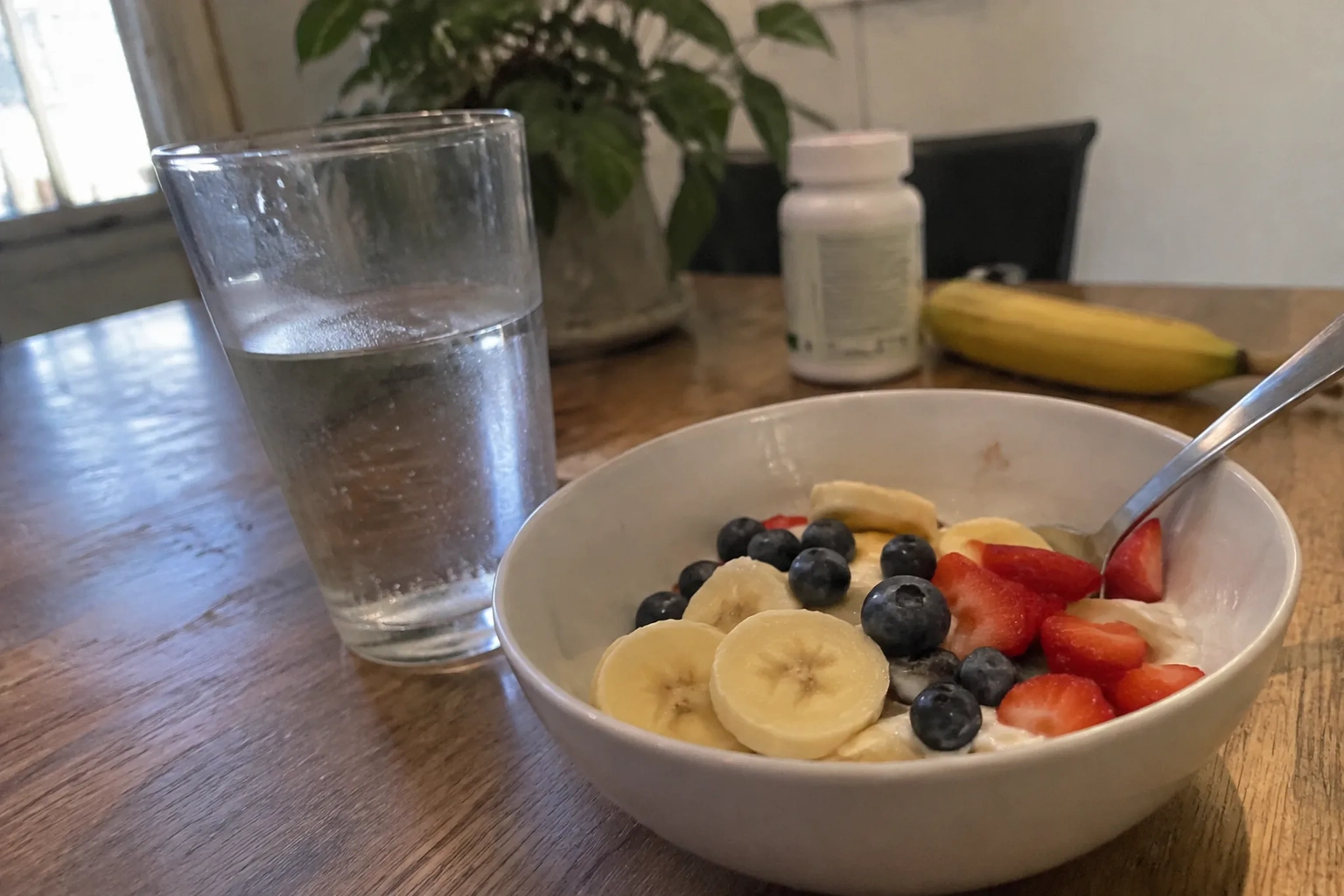
Digestion runs on a schedule whether or not anyone respects it. The stomach releases acid in anticipation of meals, the small intestine sweeps its lining clean between them, and the colon moves waste in slow waves timed to waking and eating. Those rhythms are set by daily habit far more than by any single food choice. A person can eat an immaculate diet and still feel sluggish, bloated, and irregular if the hours around the food are chaotic. The reverse holds too: ordinary meals, eaten on a steady clock, tend to move through with less complaint.
What follows is a set of routines, most of them unremarkable, that support those internal clocks. None of them require a supplement, an app, or a special ingredient. They cost time and attention, which is the expensive part.
Waking at the same hour beats eating the right breakfast
The body's internal clock, the cluster of neurons in the brain that sets daily rhythms, is reset each morning by light and by the timing of the first meal. It does not care much about the content of that meal. It cares enormously about when it happens.
A breakfast eaten at seven on Monday, ten on Tuesday, and skipped on Wednesday leaves the gut guessing. The colon's big morning contraction, the one that produces the urge that sends people to the bathroom shortly after rising, is partly a learned response. Shift the schedule around and the response weakens.
The practical version is boring: pick a window for the first meal and hold it within roughly an hour most days, weekends included. A Sunday brunch that slides to eleven is not a disaster. A week that slides an hour later every day is.
The ten minutes after waking that set the colon in motion
Most people treat the first half hour of the day as a race against a clock. Wake, dress, feed children or a pet, check messages, leave. The body has a reflex waiting to fire in that window, and a rushed morning tends to suppress it.
A glass of water and a few minutes of unhurried movement, even just walking to the kitchen and standing while it goes down, give the reflex room. Warm liquid works somewhat better than cold for many people, though the temperature matters less than the pause. The point is not hydration as a wellness slogan. It is that the gastrocolic reflex responds to the stomach being filled and to the body being upright, and a person who bolts out the door never gives it the chance.
Anyone who has ever traveled knows how quickly this routine collapses. Hotel rooms, early flights, and unfamiliar bathrooms dismantle it in a day. Rebuilding it after a trip takes about as long as it took to lose, which is the argument for protecting it at home.
Eating on a clock rather than on a whim
The gut has a housekeeping wave, a long slow sweep of the small intestine that clears leftover debris and bacteria between meals. It runs during fasting periods, and it gets interrupted every time food arrives. Constant grazing, the kind that has a person nibbling at a desk from nine in the morning until four in the afternoon, keeps that sweep from ever completing.
The fix is not a strict fasting regimen. It is leaving real gaps between eating occasions. Three meals with four or five hours between them, and nothing but water in the gaps, gives the intestine the empty stretch it uses. A person who snacks every ninety minutes is effectively running a kitchen that never closes and never cleans.
This is where most modern eating patterns fight the body directly. The office drawer of crackers, the afternoon pastry, the handful of nuts at the keyboard: each is small, and each resets the clock.
Sitting down, and staying down, for the length of a meal
Eating while walking, driving, or standing at a counter changes how much air gets swallowed and how quickly food goes down. Hurried eating is one of the more reliable contributors to bloating and gas, because it delivers both unchewed food and excess air to a system that has to deal with both.
A meal eaten seated, without a screen, at a pace that takes at least fifteen or twenty minutes, does more for comfortable digestion than most dietary swaps. The mechanism is simple: chewing breaks food into smaller pieces, saliva begins breaking down starch, and the stomach gets a chance to signal fullness before the plate is empty.
There is a social cost to this. Eating slowly at a work lunch can feel awkward. Eating alone at a desk without a phone can feel unbearable for the first week. Both pass.
Walking after dinner, not exercising after dinner
A gentle walk after the evening meal speeds the stomach's emptying and takes advantage of the fact that the body is already primed to move food along. Ten or fifteen minutes at an easy pace is enough. The mistake is turning this into a workout: a hard run twenty minutes after a large meal diverts blood flow to the legs and leaves the gut working with less.
The walk also serves a second purpose, which is to separate dinner from the horizontal position. Lying down soon after eating makes reflux more likely, and reflux at night is both more common and more damaging than the daytime version. A short loop around the block, dishes done first, gives the stomach a head start before the body goes flat.
Fiber built up slowly and paired with water
Fiber is the most recommended and most mishandled part of digestive health. Adding a large amount quickly, whether from supplements or a sudden enthusiasm for beans, produces exactly the bloating and gas that people were trying to fix. The gut bacteria that ferment fiber need weeks to adjust to a higher load.
The routine that works is unglamorous: increase fiber by a small amount every week or two, drink enough water alongside it, and accept some adjustment discomfort as normal. Fiber without water can make constipation worse rather than better, because the added bulk needs fluid to move. A person who doubles their vegetable intake on a Monday and drinks the same amount of water as before will spend the week uncomfortable and conclude, wrongly, that vegetables do not agree with them.
A bathroom routine that does not involve a phone
The colon responds to routine. Going at roughly the same time each day, ideally after the morning meal when the reflex is strongest, trains the body to expect the opportunity. Ignoring the urge because a meeting is starting, or because the bathroom is inconvenient, teaches the opposite.
Ten minutes on the toilet with a phone is a different problem. Prolonged sitting with the legs unsupported puts pressure on the wrong places, and the scroll keeps a person there far longer than the body needs. Feet flat on the floor or on a low stool, no screen, and a limit of a few minutes is the unremarkable version of this habit. The point is not to force anything. It is to give the body a predictable window and then leave.
The evening cutoff that protects the next morning
Late dinners push everything back. A meal eaten at nine in the evening is still being processed at midnight, when the gut would prefer to be quiet. The result is poorer sleep, more reflux, and a morning that starts without the usual urge because the system is still catching up.
Leaving three hours between the last real meal and lying down is the standard advice, and it holds up. For people whose schedules make that impossible, shifting the largest meal to midday and keeping the evening one light accomplishes much of the same thing. The appetite for a heavy dinner is largely habit, and it fades after a couple of weeks of lighter evenings.
What the routines do not fix
None of this substitutes for medical care. Persistent changes in bowel habits, pain, blood where it should not be, or unexplained weight loss are reasons to see a doctor, not to add more fermented foods. Routine supports a system that is fundamentally working. It does not repair one that is not.
The larger point is that digestion is less a matter of what a person eats than of how the day is arranged around eating. The gut thrives on predictability: light in the morning, meals at steady hours, movement after dinner, a quiet night. A supplement can be added to a chaotic schedule and will do very little. A regular schedule, built from small and unremarkable decisions, does most of the work before any food choice is made.





















