







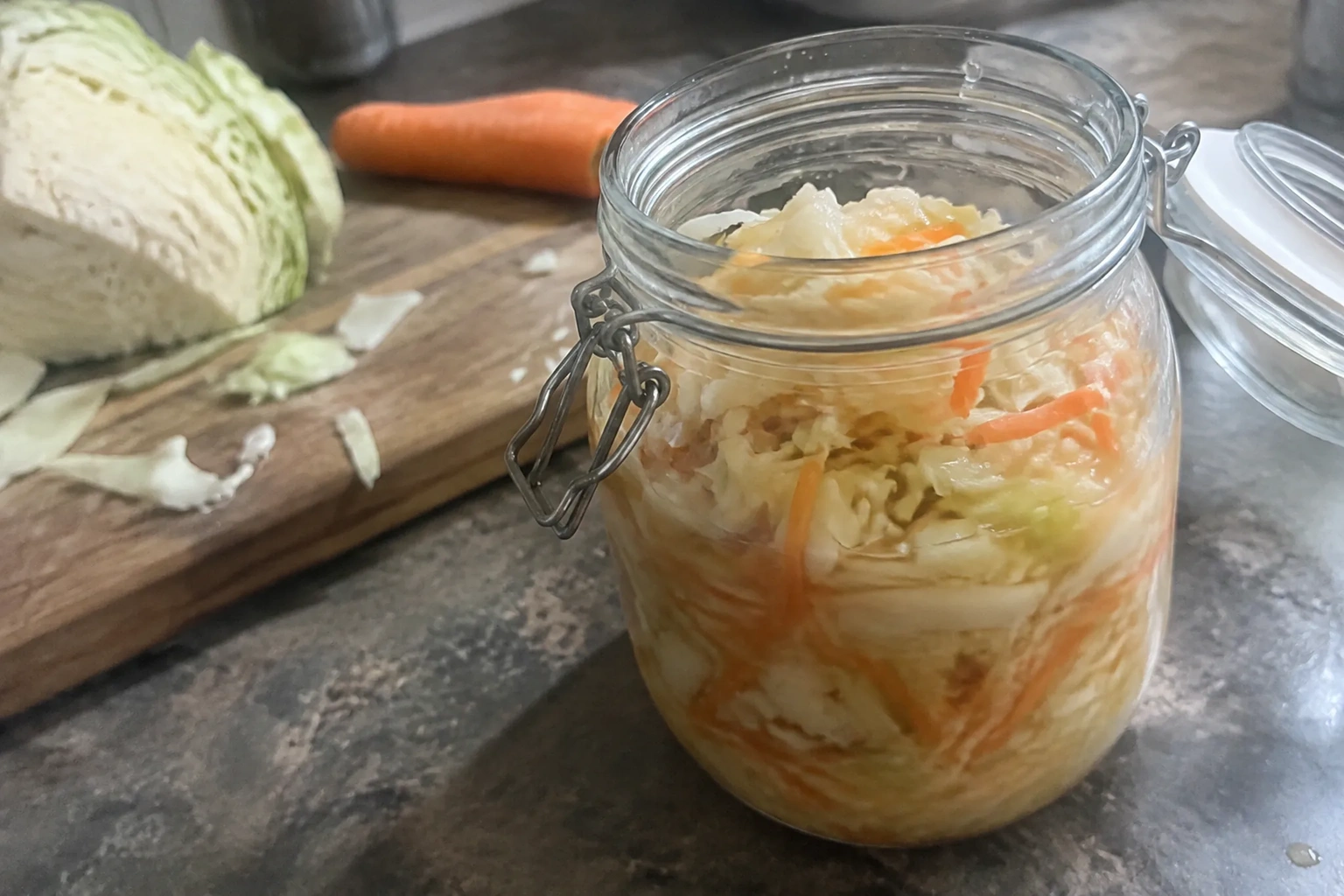
Sauerkraut in a plastic bag from the supermarket is a strange product. It sits there, pale and limp, tasting mostly of salt and vinegar, and calls itself fermented. The live version, made in a jar on a counter, is a different thing entirely: crisp, sour in layers, a little fizzy at the edges. The gap between those two experiences is why so many people assume fermentation belongs to people with patience, crocks, and a spare closet.
It does not. Fermentation is one of the oldest and cheapest ways to handle food, and the version that fits into ordinary weeknight cooking requires almost nothing: salt, a jar, a vegetable, and a few days of waiting that cost no labor at all. The barrier is mostly reputation. Fermenting has been dressed up as a hobby for enthusiasts, when it has spent most of human history being what people did when they had too much cabbage in October.
What follows is a practical case for keeping a jar or two going, not as a project but as a habit, and for using what comes out of them in meals that were going to be cooked anyway.
The Salt-to-Vegetable Ratio That Does Most of the Work
Nearly every vegetable fermentation starts with the same arithmetic. Weigh the prepared vegetable, then measure salt at roughly 2 percent of that weight. A kilogram of shredded cabbage takes about 20 grams of salt, which is a little over a tablespoon of fine sea salt. A small batch, say 500 grams, takes 10 grams. This is the whole recipe for the base.
The salt does two jobs at once. It pulls water out of the vegetable, creating the brine that will cover everything, and it suppresses the bacteria that would cause rot while leaving the lactic acid bacteria alone to do their work. Get the ratio roughly right and the process is remarkably forgiving. Get it far too low and the batch turns soft and smells wrong. Get it far too high and fermentation stalls, producing something salty and inert.
Digital kitchen scales cost less than a decent bottle of olive oil and remove the guesswork entirely. That is the one piece of equipment worth buying. Everything else, jars, weights, lids, can come from what is already in the kitchen: a clean mason jar, a zip-top bag filled with brine as a weight, a cabbage leaf pressed on top.
Cabbage Is the Easiest Place to Start and the Hardest to Ruin
Green cabbage shredded fine, salted, and massaged for a few minutes until it goes glossy and starts to release water is the classic entry point because it is nearly foolproof. Pack it tightly into a jar, press it down until the liquid rises above the solids, weigh it down, and leave it at room temperature. Within two or three days the brine turns cloudy and small bubbles appear. Within a week it tastes like sauerkraut. Within three weeks it tastes like good sauerkraut.
The single most common failure is cabbage that floats above the brine and grows a fuzzy film. Keeping the vegetable submerged is the entire game. A outer cabbage leaf folded over the top and tucked under the shoulders of the jar, with a small glass weight or a bag of brine on top of it, solves this in seconds.
Temperature matters more than most instructions admit. A jar on a warm kitchen counter in summer may be ready in four days; the same jar in a cool pantry in winter may take two weeks. The ferment is not on a schedule. Tasting it is the schedule.
Carrots, Radishes, and Green Beans Need Nothing But Brine
Whole or chunked vegetables that do not release much water of their own get a different treatment: a brine poured over them. Dissolve about 2 percent salt by weight in water, pack the vegetables into a jar with whatever aromatics appeal (garlic cloves, dill, a few peppercorns, a dried chili), and cover completely. Carrots fermented this way turn tangy and stay crunchy. Radishes lose their raw sharpness and pick up a pleasant bitterness. Green beans, fermented for a week or so, taste like the best pickled bean nobody sells.
This is where fermentation starts to feel less like a project and more like a way of keeping the vegetable drawer honest. A bag of carrots going soft at the back of the fridge can be peeled, chunked, and submerged in brine instead of thrown out. The cost is a few minutes and some salt. The return is a jar of something that improves sandwiches and salads for weeks.
What to Do When a Jar Goes Wrong
Some outcomes are normal and some are not, and the difference is worth knowing before the first batch. A white, powdery film on the surface is kahm yeast, harmless but unpleasant tasting; it can be skimmed off, though a persistent bloom usually means the batch should be discarded. Bubbles, cloudy brine, and a sour smell are all signs of healthy fermentation.
Fuzz that is green, black, or pink, a smell of rot or sewage, or vegetables that have gone slimy and soft are failures. The safe course is to throw the batch out and start again, which costs very little. Fermentation is not a discipline that rewards stubbornness.
The other thing worth knowing is that the process is not sterile and does not need to be. A clean jar, clean hands, and submerging the vegetables are enough for a home batch. The instinct to boil everything first is understandable and mostly counterproductive, since it kills the bacteria the ferment depends on.
Fermented Foods Belong on the Plate, Not in a Health Claim
There is a strong temptation to sell fermentation on the strength of its microbes, and the internet has done exactly that. The honest position is narrower: fermented vegetables are a pleasant, shelf-stable way to eat more vegetables, and the live cultures they carry are generally considered beneficial, though the science on specific health outcomes is still developing and the claims made for them often run well ahead of the evidence.
That is fine. The reason to keep a jar of sauerkraut going is that it makes a plain plate of eggs, rice, or roasted vegetables taste better, and it does so with a vegetable that might otherwise have been thrown away. The health angle is a bonus at best, and a marketing line at worst.
Three Ways Ferments Earn Their Place at Dinner
The first is as a condiment with acid and crunch. A spoonful of fermented cabbage or carrots on a bowl of rice, a plate of eggs, or a cheese sandwich does what a pickle does, only with more complexity. It cuts through fat and adds a sour note that vinegar alone cannot match.
The second is as an ingredient cooked into something. Fermented cabbage cooked with sausage and a little apple is a one-pan dinner that tastes like it took more effort than it did. Fermented carrots chopped fine and folded into a grain salad add a tang that raw carrots never deliver.
The third is as a garnish that changes a dish. A few fermented green beans sliced thin over a bowl of soup, or a spoonful of the brine whisked into a vinaigrette, gives an ordinary meal a sharpness that reads as deliberate. The brine itself is useful and should not be poured down the sink.
A Jar in the Fridge Is the Whole Practice
Once a batch reaches the sourness a person likes, it goes in the refrigerator, where fermentation slows to a crawl. A jar of sauerkraut in the fridge keeps for months and improves for weeks. A jar of fermented carrots keeps even longer. The habit, once established, is mostly one of refilling: when a jar empties, the next batch goes in, and the counter has something working on it again.
The equipment list is short enough to be unremarkable: a scale, a few jars, something to weigh the vegetables down. The time cost is a few minutes of chopping and salting, and then days of doing nothing. The result is a shelf of vegetables that taste better than what they started as, cost less than the supermarket version, and turn a boring Tuesday dinner into something with a little more edge. For people who have been meaning to try fermentation and keep putting it off, a single head of cabbage and a tablespoon of salt is the whole invitation.





















