







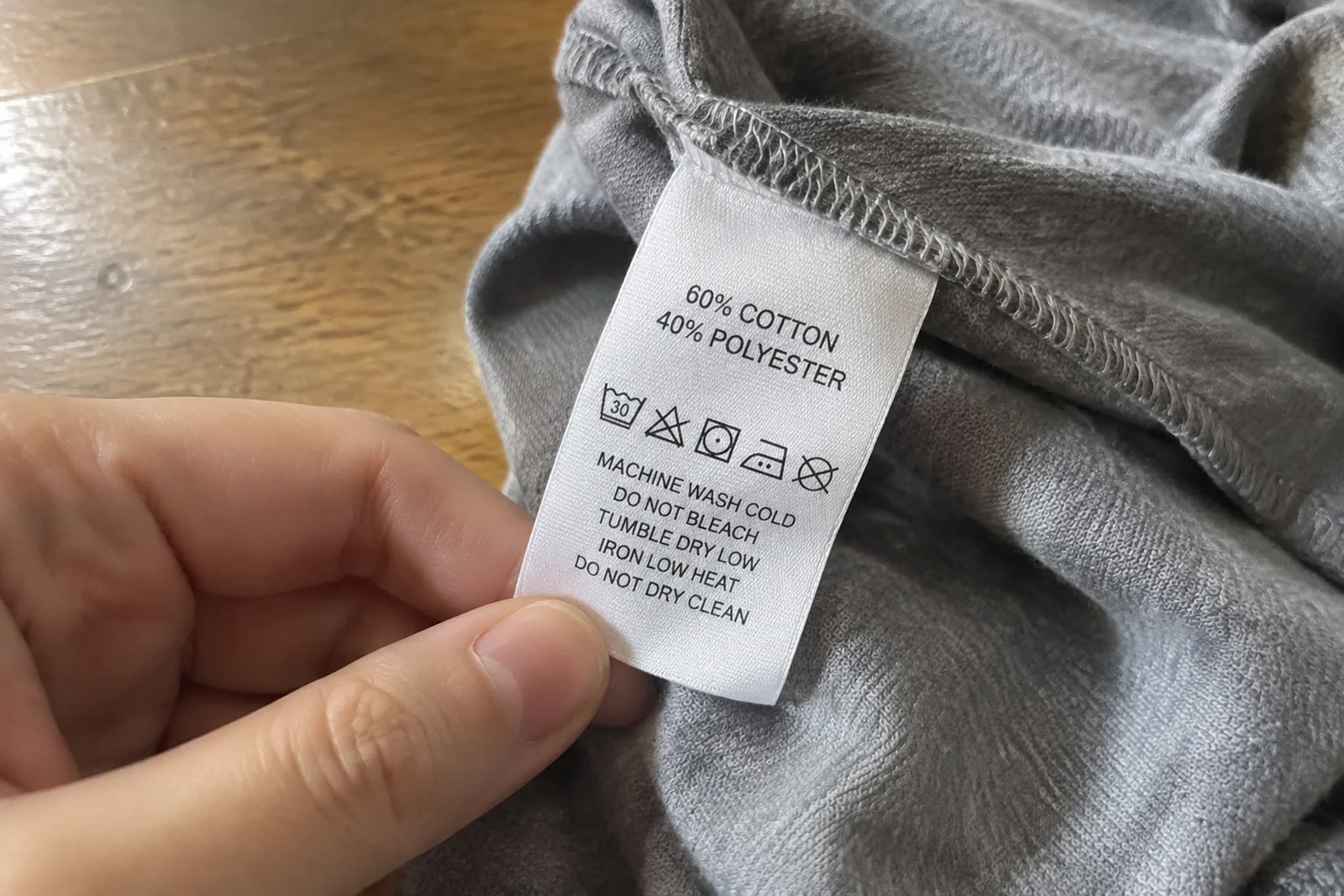
Fabrics carry a number on the tag: 100% cotton, 60% polyester, 40% rayon. Nothing on that tag explains what the fiber does once it is on a body, which is the only information most people actually need. The number tells a shopper what the shirt is made of. It says nothing about whether the shirt will hold its shape through a summer commute, whether it will pill under the arm after a month, or whether it will feel cold against the skin on a February morning. Decoding fiber labels means learning to read past the percentage and toward the behavior those percentages predict.
The place to start is the fiber's origin, because origin predicts almost everything downstream. Fibers come from plants (cotton, linen, hemp), from animals (wool, silk, cashmere), from a chemical vat (polyester, nylon, acrylic), or from dissolved wood pulp (rayon, modal, lyocell, which the trade calls regenerated cellulose). Four families, four sets of tendencies. A label that reads 95% cotton and 5% elastane behaves like a plant fiber with a rubber band added. A label that reads 95% polyester and 5% elastane behaves like plastic with a rubber band added. Same number on the tag, different garment entirely.
The Plant Fibers and Their Thirst
Cotton is the fiber most people could identify blindfolded, and its defining trait is that it drinks. A cotton shirt absorbs moisture readily, which is why it feels cool and dry at the start of a hot day. That same thirst is why a soaked cotton tee clings and stays heavy after a run, and why cotton towels take hours to dry on a humid bathroom rail. Cotton also wrinkles because the fibers have little natural elasticity; creases form and stay where the fabric folds.
Linen, from the flax plant, behaves like cotton's stiffer cousin. It absorbs moisture even faster and dries faster, and it creases within minutes of being worn. A linen shirt that looks crisp on the hanger will look lived-in by mid-morning, and that is the fiber working as designed. Linen's coarse initial hand softens with repeated washing, which is why a linen shirt bought stiff can become the softest thing in a closet after two summers. Hemp sits close to linen: durable, absorbent, slightly rough at first, and increasingly common in blends that use a little cotton or lyocell to smooth the hand.
Wool, Silk, and the Animal Exception
Wool is the fiber that behaves least like its reputation. The common assumption is that wool is hot, scratchy, and reserved for winter coats. Merino wool in a light knit is none of those things in practice: it insulates when cold, breathes when warm, and resists odor because the fiber's structure makes it inhospitable to the bacteria that cause smell. A merino base layer can be worn for several days of hiking before it needs a wash, which is a genuine functional difference from cotton, not a marketing claim.
The catch is that wool felts and shrinks when agitated in hot water, so a wool garment labeled machine washable usually carries a treatment or a blend that tempers the fiber. Silk is the other animal exception: strong for its weight, smooth against the skin, and famously fussy about water and heat. A silk blouse that survives a washing machine is rare; most silk wants hand washing or dry cleaning, and the label's care instructions matter as much as the fiber percentage.
What the Synthetic Percentages Actually Buy
Polyester is the workhorse of the synthetic family, and its strengths are durability, color retention, and wrinkle resistance. A polyester shirt looks the same after fifty washes as it did after five, which is why uniforms and hotel bedding lean on it. The trade-off is breathability: standard polyester does not absorb moisture, so sweat sits on the skin, and the fabric can feel clammy in heat. Modern athletic polyester is engineered with channels and finishes that move moisture to the surface, which improves the feel without changing the underlying chemistry.
Nylon is stronger and slightly more absorbent than polyester, which is why it appears in outerwear, hosiery, and swimwear. Acrylic imitates wool at a lower price and pills more readily; a cheap acrylic sweater is the classic example of a garment that looks promising in the store and tired after a season. Elastane, sold under brand names like Lycra and Spandex, appears at small percentages, typically 2 to 10 percent, to add stretch. A label reading 98% cotton and 2% elastane describes a cotton shirt with a bit of give at the seams; a label reading 90% polyester and 10% elastane describes a much stretchier, much less breathable garment.
Rayon, Modal, Lyocell: The Labels That Confuse Everyone
Regenerated cellulose fibers sit in an awkward middle. Rayon is made by dissolving wood pulp and extruding it into fibers, and it behaves like a soft, drapey cousin of cotton. Viscose is the same family under a different trade name. The problem with conventional rayon is that it loses strength when wet, so a rayon dress washed in a machine can stretch and distort; many rayon garments carry dry-clean labels for that reason. Modal and lyocell (often sold as Tencel) are newer versions of the same idea, produced with less wasteful processes and generally more durable. Lyocell in particular has a cool, smooth hand and drapes well, which makes it a common choice for summer dresses and relaxed trousers.
A shopper who sees 70% rayon and 30% polyester on a label is looking at a garment engineered for drape and softness with a bit of durability added. The same shopper seeing 70% cotton and 30% linen is looking at a garment engineered for breathability with a bit of structure. Both labels add up to 100. They describe two different wardrobes.
Blends Are the Norm, and the Order Matters
Most garments sold today are blends, and the label lists fibers in descending order by weight. A shirt labeled 60% cotton, 40% polyester is more cotton than polyester, but a 40% polyester share is enough to change how the garment wrinkles and dries. The first number on the label is the dominant fiber and predicts the dominant behavior; the rest are modifiers. Reading the order is more useful than reading the headline percentage, because a 55/45 blend and a 95/5 blend of the same two fibers can feel like entirely different fabrics.
Blends exist for a reason. Cotton-polyester mixes wrinkle less and dry faster than pure cotton. Wool-nylon mixes wear longer at the elbows and cuffs. Linen-cotton mixes crease a little less than pure linen. The label is a recipe, and the percentages are the proportions. A shopper who learns to read the recipe can predict the meal.
Care Symbols Say More Than the Percentage
The care symbols on the tag are the fiber's instructions for survival, and they often reveal more than the fiber content itself. A wool sweater labeled "hand wash cold, dry flat" is telling the wearer that the fiber will felt and stretch if treated like cotton. A rayon dress labeled "dry clean only" is warning that water will weaken the fiber. A polyester athletic top labeled "machine wash warm, tumble dry low" is confirming that the fiber can take abuse. The symbols are not boilerplate; they are the manufacturer's admission of what the fiber cannot handle.
One practical habit: check the care label before buying, not after the first wash goes wrong. A garment that requires dry cleaning carries a hidden cost per wear that can double its effective price over a couple of years. A garment that survives a home wash cycle is cheaper than its sticker price suggests. The fiber percentage tells a shopper what the garment is; the care symbols tell what it will cost to keep.
The Label That Says "Performance" or "Moisture-Wicking"
Marketing language on a hangtag is not regulated the way the fiber content is, and a shirt labeled "moisture-wicking" can be 100% polyester with a surface treatment that washes out after twenty cycles. The fiber content panel is the reliable part of the tag; the performance claims are the part to treat with suspicion until the garment has been worn and washed a few times. A shopper comparing two athletic shirts should read the fiber panel first: a polyester-elastane blend with a high elastane percentage will stretch and recover; a pure polyester knit will hold its shape less well over time.
There is also a category of garment where the fiber content is almost irrelevant to the label's purpose: the "sustainable" or "organic" claim. Organic cotton is still cotton, with the same thirst and the same wrinkle behavior; the certification speaks to how the fiber was grown, not how the shirt will perform. A shopper who wants a breathable summer shirt should read the fiber percentage and the weave, and treat the organic seal as a separate, additional consideration.
A Short Reading Method for the Aisle
The practical method takes about fifteen seconds per garment. Read the first fiber on the label and decide which family it belongs to. Read the modifiers and estimate what they add: stretch, durability, drape, or wrinkle resistance. Read the care symbols and decide whether the upkeep fits the intended use. Then check the weave or knit by feel: a loose knit breathes more than a tight one regardless of fiber, and a twill weave drapes differently from a plain weave.
The final check is the one most shoppers skip: hold the garment up to the light and look at how the fabric behaves at the seams and stress points. A thin cotton shirt with visible strain at the shoulder seam will fail there first, no matter what the percentage says. A wool blend with a tight, dense knit will hold its shape through a winter of wear. The label predicts the fiber's tendencies; the construction decides whether those tendencies get a chance to matter.
None of this requires memorizing chemistry. It requires learning to read four families, one order, and a set of care symbols, and then trusting the fabric in hand over the hangtag copy. The percentage is a starting point. The garment itself is the answer.





















