







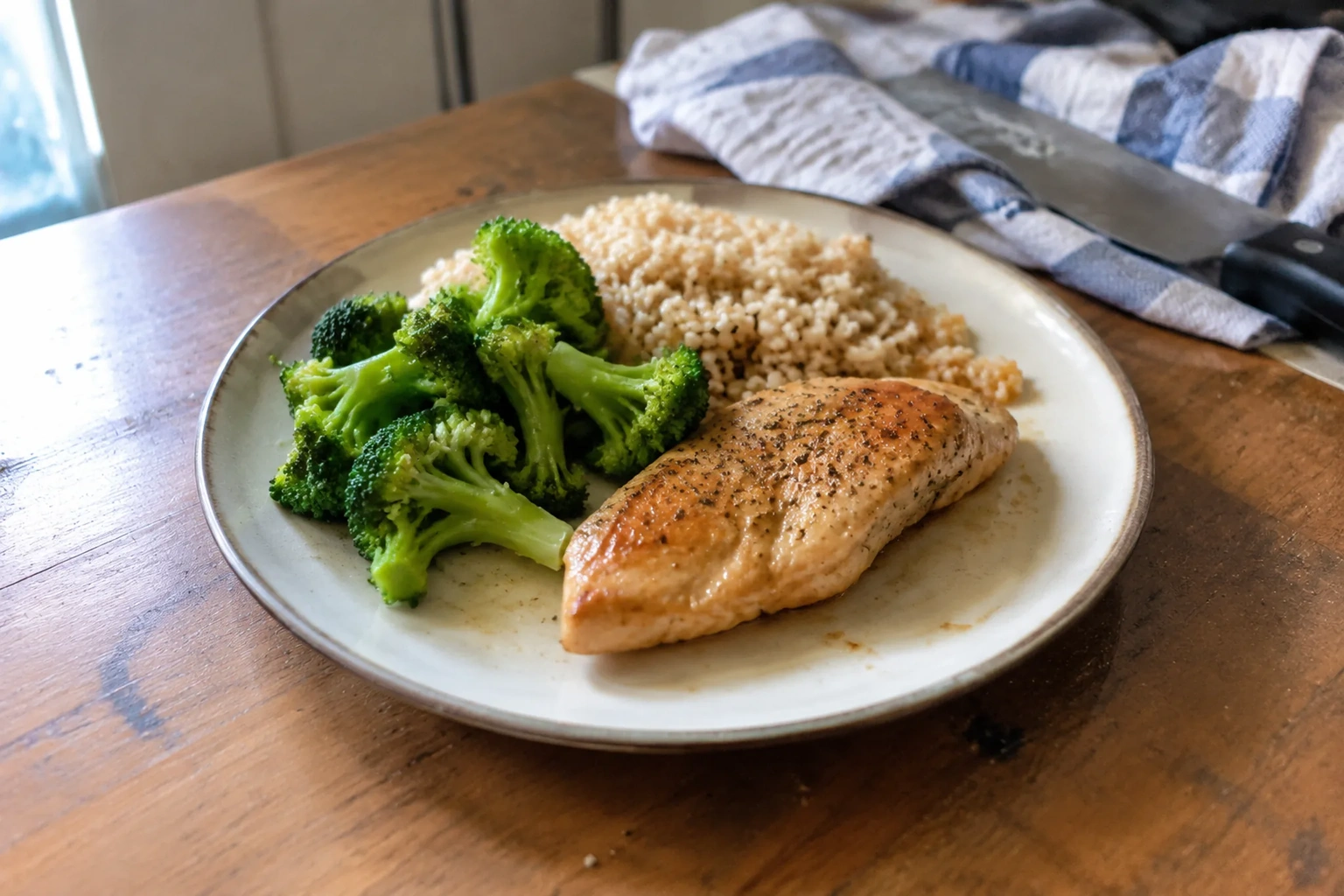
Five ingredients is a strange number to defend. It is small enough that a certain kind of cook will sneer at it as a gimmick, and large enough that another kind of cook will feel vaguely cheated, as though a real dinner ought to require at least eight items and a shopping list. But the number has a way of forcing decisions. With five ingredients, there is nowhere to hide a bad tomato behind a sauce, and no room for the eighth spice that nobody can taste. The constraint does the thinking.
Most weeknight cooking fails for a boring reason: too many moving parts. A recipe calls for eleven things, four of them get bought once and forgotten, and the whole enterprise collapses into takeout by Wednesday. A five-ingredient frame, applied honestly, cuts that failure off at the root. It also produces food with a clearer point of view, because every element that survives has to earn its place on the plate.
What counts as an ingredient matters more than the number itself. Salt, pepper, and a neutral cooking fat are generally treated as free. A squeeze of lemon is not free. Neither is a clove of garlic, a knob of butter, or a handful of herbs. The stricter reading is the more useful one, because it is the small flavor additions, not the olive oil, that inflate a dish past the point where anyone can taste what is happening.
The Pantry Items That Do Not Count, and Why
Salt belongs outside the count because it is a mineral adjustment, not a component. The same goes for black pepper and for whatever fat the pan needs. If a recipe is written for five ingredients and lists salt as one of them, it is cheating, and the dish will usually taste like it. The count should measure the things that give the food its identity.
A working five-ingredient pantry is short and unglamorous: good salt, a pepper grinder, olive oil, a neutral oil, butter, garlic, lemons, and a hard cheese. None of these are ingredients in the counted sense. They are the grammar the dish is written in. Keeping them stocked means the actual shopping list for any given meal can stay genuinely short.
Pasta With Garlic, Olive Oil, Chili, and Parsley
This is the dish that proves the whole argument, and it takes about twelve minutes. Four counted ingredients: spaghetti, garlic, dried chili flakes, flat-leaf parsley. The pasta water does the rest of the work, emulsifying with the oil into something that coats every strand instead of pooling at the bottom of the bowl.
The technique is where people go wrong. Garlic sliced thin and cooked gently in olive oil over low heat, never allowed to brown past pale gold, because burnt garlic is bitter and ruins the entire pan. A ladle of starchy pasta water added at the end, off the heat, tossed hard until the sauce turns opaque and clings. Parsley stirred in last, raw, for a green bite against the heat of the chili.
There is a version of this dish in nearly every Italian kitchen, and it survives because the ratio of effort to reward is almost absurd. It also teaches the central skill of five-ingredient cooking: restraint with heat. The garlic needs low, slow attention. The chili needs to bloom in the oil without scorching. Nothing here is forgiving of impatience.
Roasted Salmon With Lemon, Capers, and Butter
Fish is where the five-ingredient approach pays the largest dividend, because good fish is expensive and easily overwhelmed. Four counted items: a salmon fillet, a lemon, a spoonful of capers, and a knob of butter. The oven does the rest at around 200 degrees Celsius, roughly twelve minutes for a fillet an inch thick.
The capers matter more than their size suggests. They bring salt and acid in the same bite, which is exactly what a rich fish needs, and they crisp slightly at the edges in the hot oven. The lemon gets sliced thin and laid under and over the fillet, so the flesh steams in citrus rather than sitting in its own fat. Butter goes on top in the last three minutes, melting into a quick pan sauce that needs nothing else.
What makes this dish feel finished is the browning on the lemon slices and the slight char on a few stray capers. Those small dark edges read as care. A fillet pulled from the oven pale and uniform tastes like a hospital tray by comparison, even with the same four ingredients.
The Chickpea, Spinach, and Cumin Skillet
For a meatless dinner that still feels like a meal rather than a side dish, a can of chickpeas does most of the work. Four counted ingredients: chickpeas, baby spinach, ground cumin, and a lemon. The chickpeas get drained, dried on a towel, and fried hard in olive oil until their skins blister and crack, which takes longer than most people expect, closer to eight minutes than three.
Cumin goes in once the chickpeas are properly browned, stirred for thirty seconds until fragrant, because ground spice added too early burns and turns acrid. The spinach goes in last, in handfuls, wilted down in under a minute. Lemon juice off the heat at the very end, and a generous pinch of salt. The whole thing costs less than four dollars and takes twenty minutes.
The trick is the drying step. Wet chickpeas steam instead of fry, and steamed chickpeas are limp and sad. A clean kitchen towel and two minutes of patting down is the difference between a dish with crunch and texture and a bowl of soft beige mush. It is the least glamorous instruction in the recipe and the one that matters most.
Why Fewer Ingredients Taste More Like Themselves
A tomato with nothing on it but salt and heat tastes like a tomato. A tomato buried under oregano, basil, garlic, balsamic, and a dusting of parmesan tastes like a seasoning blend that happens to contain tomato. The five-ingredient rule is a way of protecting the main ingredient from the cook's own enthusiasm. Most home cooks over-season, not under-season, and the habit comes from a fear that simple food will read as lazy.
The opposite is true. A plate of three things done precisely reads as confident. A plate of eleven things reads as anxious. The cook who can serve a perfect roast chicken with nothing but salt, lemon, and thyme is making a stronger statement than the one who serves it under a complicated pan sauce, and every guest at the table knows it without being able to say why.
The Ingredient That Gets Cut, and What It Reveals
When a five-ingredient recipe gets tested and something has to go, the casualty is almost always the garnish. The chopped herb, the toasted seed, the shaved cheese on top. These are the things cooks add to make a dish look finished in a photograph, and they are the things that contribute least to how it actually tastes. Cutting them is usually painless.
The harder cut is the second aromatic. The onion that goes in alongside the garlic. The celery that rounds out a base. These are the ingredients that make a dish taste "complete" in the way a restaurant dish does, and losing them is where five-ingredient cooking starts to feel austere. The solution is not to add them back but to pick one aromatic and use it properly, browning it fully instead of sweating it half-heartedly.
A Week of Five-Ingredient Dinners, Honestly Counted
Monday: the pasta. Tuesday: the salmon with a green salad on the side, which adds two counted ingredients (lettuce, vinaigrette) and pushes the plate to six, so the salad gets dressed with nothing but lemon and oil from the pantry shelf. Wednesday: the chickpea skillet with flatbread. Thursday: a pot of white beans simmered with a parmesan rind and a bay leaf, finished with olive oil and black pepper, which counts as three.
Friday is where the discipline gets tested, because Friday wants something that feels like a reward. A steak, salted hard and seared in a cast iron pan, finished with butter and a smashed garlic clove, counts as three. A pile of frozen peas cooked in the same pan with a little of the butter counts as one more. Four ingredients, fifteen minutes, and it reads as a proper end-of-week dinner.
The shopping list for that week fits on a single index card. That is the real argument for the constraint, and it has nothing to do with culinary philosophy. Fewer ingredients means a shorter list, a faster shop, less waste at the end of the week, and a fridge that does not fill up with half-used jars that get thrown out on Sunday night. The savings in money are real but secondary. The savings in attention are the point.
Where the Rule Breaks Down
Five ingredients cannot make a curry, a stew, or a braise with any real depth, and pretending otherwise is dishonest. Those dishes earn their complexity through layering, and layering takes time and a longer list. A five-ingredient chili is a thin, sad thing, and no amount of technique rescues it. The constraint works best for quick, high-heat, single-pan cooking, where the goal is a sharp flavor rather than a rounded one.
It also fails with baking, where the chemistry is unforgiving and every ingredient is structural. A five-ingredient cake is possible but the margin for error is tiny, and the result is usually a plain thing that needed a little more. The rule is a tool for a specific job, not a philosophy for the entire kitchen, and treating it as the latter produces food that is technically compliant and quietly depressing.
What the constraint does well is reset expectations. After a week of cooking this way, a recipe with twelve ingredients starts to look like a warning sign rather than an invitation. The cook begins to ask what each item is doing there, and the answer is often "not much." That question, asked repeatedly, is worth more than any single dish the rule produces.
The Salt Cellar as the Sixth Ingredient
If there is one item that deserves a permanent exemption from the count, it is a good flaky salt, kept in a small bowl by the stove rather than a shaker in a cupboard. The difference between a dish seasoned at the start of cooking and one finished with a pinch of flaky salt at the table is the difference between food that tastes correct and food that tastes alive. The crystals hit the tongue unevenly, in small bursts, and that unevenness is the whole effect.
Most home cooks under-salt, and the five-ingredient frame makes that failure more visible, because there is nothing else on the plate to distract from it. A bland tomato is a bland tomato. A bland piece of fish with capers is a tragedy, because the capers were doing their job and the salt was not. The cell by the stove is a small habit with an outsized return, and it costs almost nothing to start.
There is a particular satisfaction in a pan with four things in it, all of them browning at the right rate, none of them fighting for space or attention. The cook stands at the stove with a towel over one shoulder and nothing to do but watch. That is the meal the five-ingredient rule is really after, and it is the reason the number is worth defending, even against the cooks who sneer.





















