







Bowel movements that arrive on a schedule and require almost no effort are the exception in most adult lives, not the rule. The quiet drift toward sluggishness, the sense that things move through more slowly than they used to, tends to show up long before anyone decides to do something about it. And the signals that digestion sends when it wants more fiber are rarely dramatic. They are small, repetitive, easy to dismiss as a bad week or a busy month.
The case for fiber is well established. Most adults eat somewhere in the range of half the recommended daily amount, which is a sizable gap to close. But the argument here is narrower: the body tends to flag that gap in ways that are easy to read once a person knows what to look for. These are the messages worth paying attention to before they become a problem.
The three-day stretch without a bowel movement
Normal frequency varies widely between people, from several times a day to a few times a week. The number matters less than the change. A person who reliably went every morning and now finds the pattern stretching to every second or third day is receiving a fairly direct message. The gut slows when the bulk of a meal is too easily absorbed, leaving too little residue to push things along.
There is a distinction worth holding onto between a busy week and a pattern. Travel, stress, and a stretch of poor sleep can all interrupt regularity, and those interruptions tend to resolve. A drift that lasts a month, where the same slow pattern repeats regardless of how the week went, is the body asking for a change in what it is being fed.
Straining, and the feeling that things are incomplete
Effort is a clue. When a bowel movement requires real pushing, when the sensation afterward is one of unfinished business, the stool is likely too hard and too small. Fiber holds water in the digestive tract, which softens and adds bulk. A diet heavy in refined grains, meat, and dairy, with few whole fruits, vegetables, or legumes, produces exactly the kind of stool that requires work.
This is where a person can quietly adapt without noticing. A few minutes of pushing becomes the new normal, then ten minutes, then the habit of bringing a phone in as a distraction. The body adapts to the discomfort, and the discomfort stops registering as a signal. That adaptation is the trap.
The bloating that arrives in the late afternoon
A certain amount of abdominal fullness after a large meal is ordinary. The pattern that suggests a fiber shortfall is different: a belly that is flat in the morning and visibly distended by early evening, tight enough to make the waistband of a skirt or pair of trousers uncomfortable. The sensation comes and goes with meals and is often worse after a lunch built around white bread, pasta, or rice.
The mechanism is not mysterious. Low-fiber meals move through the system more slowly. When the transit time lengthens, fermentation and gas build up in the lower gut, and the pressure shows on the outside. Adding fiber gradually can ease the pattern, though a sudden large jump in intake will briefly make the bloating worse before it gets better. Slow is the operative word, over weeks rather than days.
The mid-morning crash after a carbohydrate breakfast
Blood sugar spikes and crashes are not only a fiber story, but fiber is a central character. A breakfast of white toast, a pastry, or a bowl of instant cereal delivers carbohydrate quickly, with little to slow its absorption. The result is a fast rise in blood glucose, a fast fall, and the familiar hunger and fatigue that hit an hour or two after eating.
Fiber, particularly the soluble kind found in oats, beans, apples, and barley, slows the rate at which sugars enter the bloodstream. A breakfast that includes it tends to hold steady for longer, and the crash that used to arrive mid-morning becomes less pronounced. The clue is the timing of the hunger. A person who eats at seven and is ravenous by half past nine is being told something about the composition of the meal, not the size of it.
Cravings that circle back within an hour of eating
The feeling of having eaten a full meal and still wanting something else, often something sweet or crunchy, is a related signal. Meals that are low in fiber and high in refined carbohydrate clear the stomach quickly and leave the hunger hormones unsettled. The meal was technically sufficient in calories but not in staying power.
The practical fix is not to eat less but to change the composition. Adding a cup of lentils, a serving of black beans, or a large pile of roasted vegetables to a meal changes how long it takes to eat, how full the stomach feels, and how slowly the energy is released. The craving that used to arrive at half past the hour tends to push back.
A stool that sinks, floats, or breaks apart
The appearance of the stool is a surprisingly informative diagnostic. A stool that is thin and fragmented, like small pellets, points toward slow transit and low bulk. One that floats persistently and looks greasy can suggest fat malabsorption, which is a separate issue worth a doctor's attention. The most useful clue for fiber is the pellet form, often described as small, hard, and difficult to pass.
Fiber adds water and bulk, which changes both texture and shape. Within a week or two of a consistent increase, most people notice a stool that holds together, passes easily, and needs less effort. That change is one of the more reliable signs that the adjustment is working.
The sudden need to urinate more after a high-fiber meal
This one is less obvious. Soluble fiber forms a gel in the gut, and that gel pulls water into the digestive tract. For some people, a large fiber-rich meal is followed by an uptick in urination within an hour or two. It is not a cause for concern, but it is a marker that the fiber is doing its water-binding work. The effect tends to settle as the body adjusts.
This signal matters mostly as a reminder about hydration. Fiber without adequate water can backfire, producing harder stools than before. A person adding fiber to the diet needs to add water alongside it, roughly an extra glass or two over the course of the day.
The small, nagging headache that shows up on low-fiber days
The link between digestion and headaches is not fully mapped, but the pattern is common enough to note. Days when the diet slips toward refined foods, skipped vegetables, and irregular meals often bring a dull afternoon headache that resolves with a proper meal. Some of this is blood sugar, some is hydration, and some appears to be the general sluggishness that follows a heavy, low-fiber meal.
This clue is soft, and it should be read as one signal among several rather than a diagnosis. But for people who already track their eating, the correlation between low-fiber days and low-grade headaches is often clear enough to be useful.
What the fiber gap actually looks like in a week of meals
The recommended daily intake for most adults sits around 25 to 30 grams, though the precise figure varies by age and sex. A typical day of toast, a sandwich on white bread, a chicken breast with a small side of vegetables, and a bowl of pasta lands somewhere in the neighborhood of 10 to 12 grams. That is the gap in concrete terms: roughly half of what the body expects.
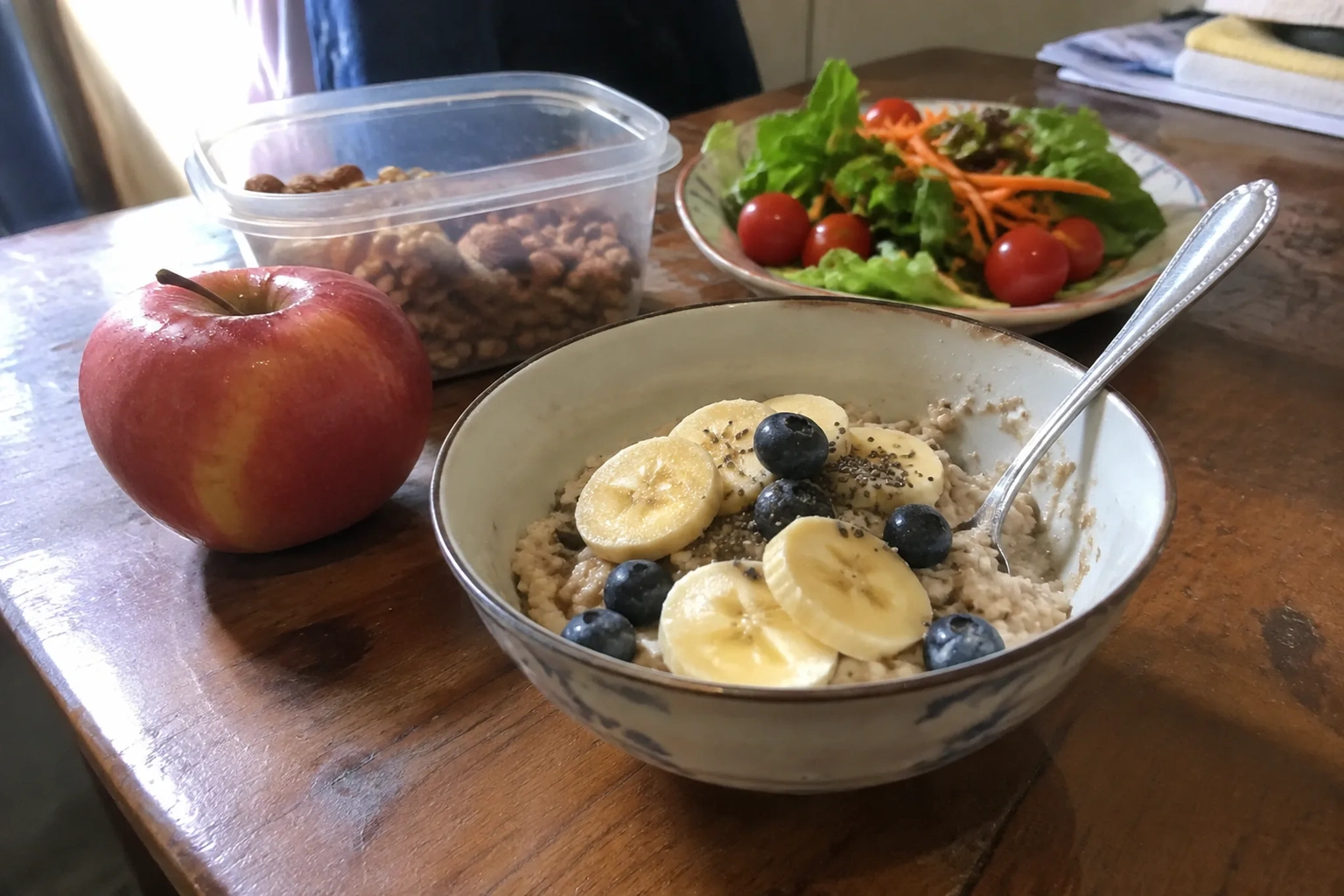
Closing it does not require a dramatic overhaul. A half cup of cooked black beans adds around 7 grams. A cup of raspberries adds 8. A serving of oatmeal adds 4. An apple with the skin on adds 4 or 5. A cup of cooked lentils adds 15. Three or four small additions across a day close the gap without changing the shape of the meals.
The mistake people make is trying to fix the whole week in one meal. A sudden load of 40 grams of fiber after months at 12 produces gas, cramping, and a firm decision to never eat beans again. The gut needs a few weeks to adjust to higher fiber intake, and the adjustment is gradual. Adding one new fiber source every few days gives the system time to adapt.
When the signals point somewhere else
Not every digestive complaint is a fiber shortfall. Blood in the stool, unexplained weight loss, persistent pain, or a change in bowel habits that lasts more than a few weeks deserve a conversation with a doctor. The clues in this piece are the gentle, recurring ones that respond to dietary change. Symptoms that do not respond, or that come with other warning signs, need a different kind of attention.
The useful discipline is to treat the small signals as information rather than noise. A pattern of slow mornings, a bloated afternoon, a mid-morning crash, and a craving an hour after lunch, taken together, tells a fairly coherent story. The body is asking for more of what it is not getting. The answer, in most cases, is a bowl of beans, a piece of fruit, and a little patience while the gut catches up.





















