







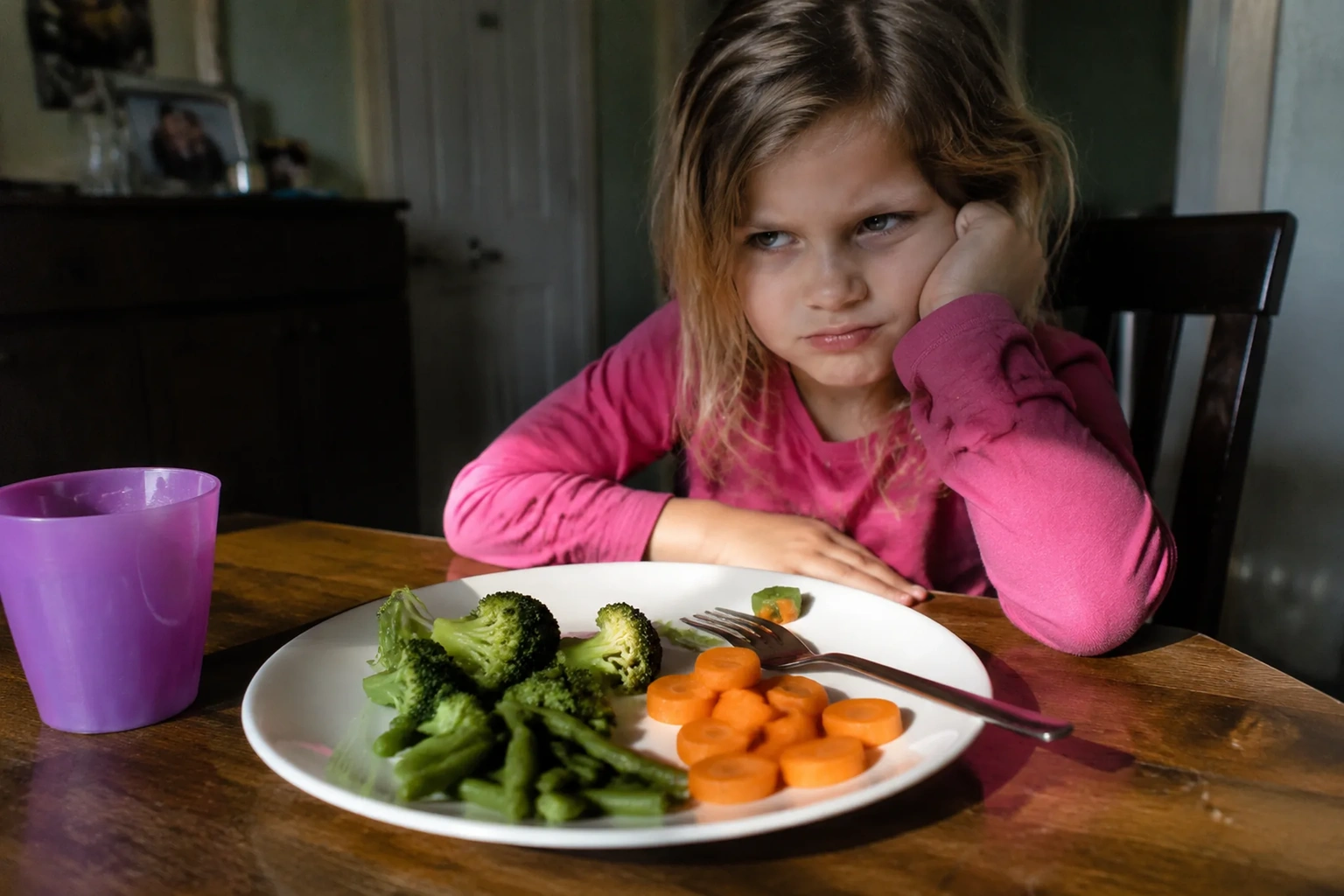
Broccoli has a compound in it, a sulfurous thing called sulforaphane, that tastes bitter to roughly a quarter of the population and essentially flavorless to the rest. The same vegetable, the same dinner table, two children, and one is gagging while the other shrugs and asks for more. Parents who have spent years assuming their kid is being dramatic about greens should consider the possibility that the kid is telling the truth.
The dinner battle over vegetables is usually framed as a discipline problem, a test of wills in which the parent must hold the line and the child must eventually surrender. That framing guarantees a bad outcome for everyone involved. It also misses the actual mechanics of why children refuse vegetables, which are tangled up in genetics, texture sensitivity, timing, and the simple fact that a plain steamed carrot is a fairly grim thing to put in front of a hungry person.
A better approach starts with a demotion. Vegetables at dinner have been promoted to a position they cannot possibly hold: the daily proof that a parent is doing the job right. That is too much weight for a floret of cauliflower to carry.
The Bitter Problem Is Real and Unevenly Distributed
Bitterness detection is not a moral failing. The ability to taste certain bitter compounds is heritable, and children tend to be more sensitive to it than adults, which is part of why a food that seemed fine at 30 was unbearable at 6. The sensitivity often dulls with age, but the timeline runs in years, not weeks. A parent who waits for a child to outgrow a dislike by next Tuesday is waiting for something that will not arrive.
This matters because the standard advice, to keep offering the vegetable and stay neutral, is correct in the long run and useless on any given evening. Repeated exposure does work, but it works on a scale of months. Meanwhile there is a Tuesday dinner to get through.
The practical response to bitterness is to change the vegetable's chemistry before it reaches the plate. Roasting at high heat does this. Brussels sprouts caramelize, cabbage turns sweet and crisp at the edges, and the sulfurous edge softens into something closer to nutty. Broccoli florets roasted until the tips go dark brown and almost crunchy taste like a different vegetable entirely. The same vegetables boiled or steamed too long go the other direction: mush plus sulfur, which is the flavor memory that drives kids away for years.
Salt helps more than most parents expect. A pinch on vegetables before they hit the table does more for palatability than a lecture about vitamins ever will.
Texture Refusal and the Mushy Carrot Problem
Conversations about picky eating tend to collapse flavor and texture into one category, but they are separate problems with separate solutions. A child who will eat raw carrot sticks but not cooked carrots is often a texture refuser. The same child who licks the seasoning off a potato chip and discards the chip is telling the adults something about mouthfeel.
Cooking vegetables to the point where they retain some structural integrity solves a large share of this. Green beans should squeak slightly when bitten. Carrots should resist the tooth. Zucchini should not slump into a puddle of green water. The overcooked vegetable is a double failure: worse texture and worse flavor, which trains a child to expect the worst from anything green on the plate.
Serving vegetables raw, cut into strips or wedges, sidesteps the whole issue for some kids. Raw bell pepper, cucumber, snap peas, cherry tomatoes, and carrots all hold up on a plate and offer a satisfying snap. A small dish of them set out before dinner, while the rest of the meal is still being finished, gets eaten surprisingly often by children who claim to hate vegetables, largely because nobody is watching and the stakes are zero.
The Pre-Dinner Window Does Most of the Work
That pre-dinner dish is worth treating as a strategy rather than an accident. A hungry child waiting for dinner will eat almost anything within reach that requires no commitment. Vegetables set out in small quantities, in a low bowl, without commentary, get eaten because they are there and the alternative is nothing.
The key is to say nothing. No announcement, no encouragement, no "try the pepper." The moment a parent points at the bowl, the bowl becomes a test, and tests are things children refuse on principle. Put the vegetables down and walk away.
This is also the moment to introduce the less familiar vegetables: radishes, jicama, raw fennel, sugar snap peas. A child who has never seen a purple radish may try it out of curiosity. A child who has been told repeatedly to eat broccoli is not curious about broccoli anymore.
Sauce Is a Legitimate Tool
There is a school of parenting thought that holds vegetables should be served plain so children learn to appreciate them on their own merits. This is a lovely idea that has probably ruined more dinners than it has saved. A child who will eat a whole plate of broccoli because it is dragged through a yogurt and lemon dip is eating broccoli. The dip is doing a job.
Ranch dressing gets a bad reputation, but a homemade version with buttermilk and herbs is not meaningfully worse than the vegetables it accompanies, and it gets them eaten. Hummus works for raw vegetables. A little melted cheese over roasted cauliflower is a fine trade. Soy sauce and sesame oil on green beans, olive oil and flaky salt on roasted carrots, a spoonful of pesto stirred into peas: none of these are cheating.
The one caution is portion control on the sauce itself. A child who eats a tablespoon of dip per green bean has effectively made a meal of dip. Serving the sauce in a small ramekin, with a refill policy that involves a second serving of vegetables, keeps the ratio reasonable without turning dinner into a negotiation.
The Negotiation That Works and the One That Does Not
Bribery gets a bad reputation, and the research on rewards for eating vegetables is genuinely mixed, with some studies suggesting that offering a reward for trying a new food can make children like that food less over time. The version of bribery that reliably backfires is the dessert contingent: eat three bites of broccoli and there is ice cream. That structure teaches that broccoli is a punishment to be endured and ice cream is the reward, which is exactly the wrong lesson.
What works better is a policy so boring it barely qualifies as negotiation. The rule is that the vegetable is served and it stays on the plate, and the child decides whether to eat it. No coaxing, no bargaining, no commentary on the uneaten portion. A parent who can hold this line for a few months will find that the child's resistance loses its fuel. The fight was often the point.
This is harder than it sounds. It requires a parent to watch a child eat nothing green for weeks and say nothing about it. The payoff is a dinner table where vegetables do not carry emotional weight, and a vegetable that carries no emotional weight is one a child might eventually try out of pure indifference.
Involving Children in the Cooking Changes the Math
A child who has snapped the ends off green beans, tossed them in oil, and spread them on a sheet pan is far more likely to eat a few at dinner, partly because the food is now a product of their own work and partly because the cooking process removes the mystery. The same effect shows up with a child who picks tomatoes off a vine in a backyard pot or chooses a vegetable at the market without a parent hovering.
The involvement needs to be real, not decorative. Handing a child a colander and asking them to rinse something is a chore. Letting them decide how the zucchini gets cut, whether the carrots are roasted or raw, and which seasoning goes on top gives them a stake in the outcome. A child who has argued for smoked paprika over cumin is invested in the result.
Gardening, even on a windowsill, has the same effect. A cherry tomato plant in a pot on a balcony produces a handful of tomatoes over a summer, and those tomatoes get eaten by children who would not touch a supermarket tomato, for reasons that have nothing to do with flavor and everything to do with ownership.
A Note on What to Stop Buying
The frozen vegetable aisle is not the enemy, but the mushy frozen mixed vegetable medley of childhood memory is. Some frozen vegetables are excellent (peas, corn, edamame), and some are mealy and watery when reheated (green beans, broccoli, cauliflower). Buying fresh for the ones that suffer in the freezer is worth the extra cost if it keeps a child from developing a permanent aversion based on a bad texture memory.
Canned vegetables deserve the same scrutiny. Canned green beans are a textural catastrophe and teach children that green beans are soft and gray. Canned tomatoes, canned chickpeas, and canned pumpkin are fine and useful. The distinction is worth making.
Calcium and Iron Are the Vegetables a Child Might Actually Eat
Parents who are worried about nutrition often narrow the vegetable list to the ones with the best reputation, which is a mistake. A child who eats a cup of peas, half a cucumber, and a handful of cherry tomatoes has gotten a reasonable amount of fiber, vitamin C, and potassium without touching a single piece of kale. The most nutritious vegetable in the world is worth nothing if it stays on the plate.
Corn counts. Peas count. Potatoes, with the skin, count more than most people give them credit for. Avocado counts, technically. The goal is a child who eats vegetables without a battle, and the path there runs through the vegetables a particular child will actually eat, not the ones a magazine article says they should.
Which brings the whole thing back to the bowl of raw vegetables on the counter before dinner, the roasted tray with the dark crispy edges, and the dip in the ramekin. A parent who sets those out and then says nothing at all is running a quiet experiment. Most nights nothing happens. Then one evening a child reaches for a snap pea without being asked, and the dinner battle ends not with a victory but with a shrug, which is the only ending that ever really sticks.





















