







Whole wheat bread carries roughly twice the fiber of white bread, and most people can taste the difference before they can name it. The white slice is airy and sweet. The brown one has a bit of chew, a faint nuttiness, and a tendency to dry out faster on the counter. That small trade, made once a week at the grocery store, moves about ten grams of fiber into the average household's diet over seven days. No supplement, no powder, no regimen. Just a different loaf in the same bag.
Fiber sits low on the list of things people feel motivated to chase. It has no immediate buzz, no visible result, no ritual. A person can eat a high-fiber day and feel nothing at all; a person can skip fiber for a week and notice almost no change. That lag is why the standard advice to "eat more fiber" fails so reliably. It asks for a decision without offering a payoff.
The swaps that work are the ones that cost almost nothing in taste, time, or money. They hide inside meals a person already eats. The goal is not a new diet but a slightly different version of the one on the table now.
The breakfast bowl that adds five grams without a recipe
Oatmeal is already a fiber food, but the standard instant packet is mostly oats that cook in ninety seconds, and those oats have been processed into something soft and quick. Old-fashioned rolled oats take about five minutes on the stove or two in the microwave and carry more fiber per serving. The swap costs three extra minutes in the morning and roughly nothing at the register.
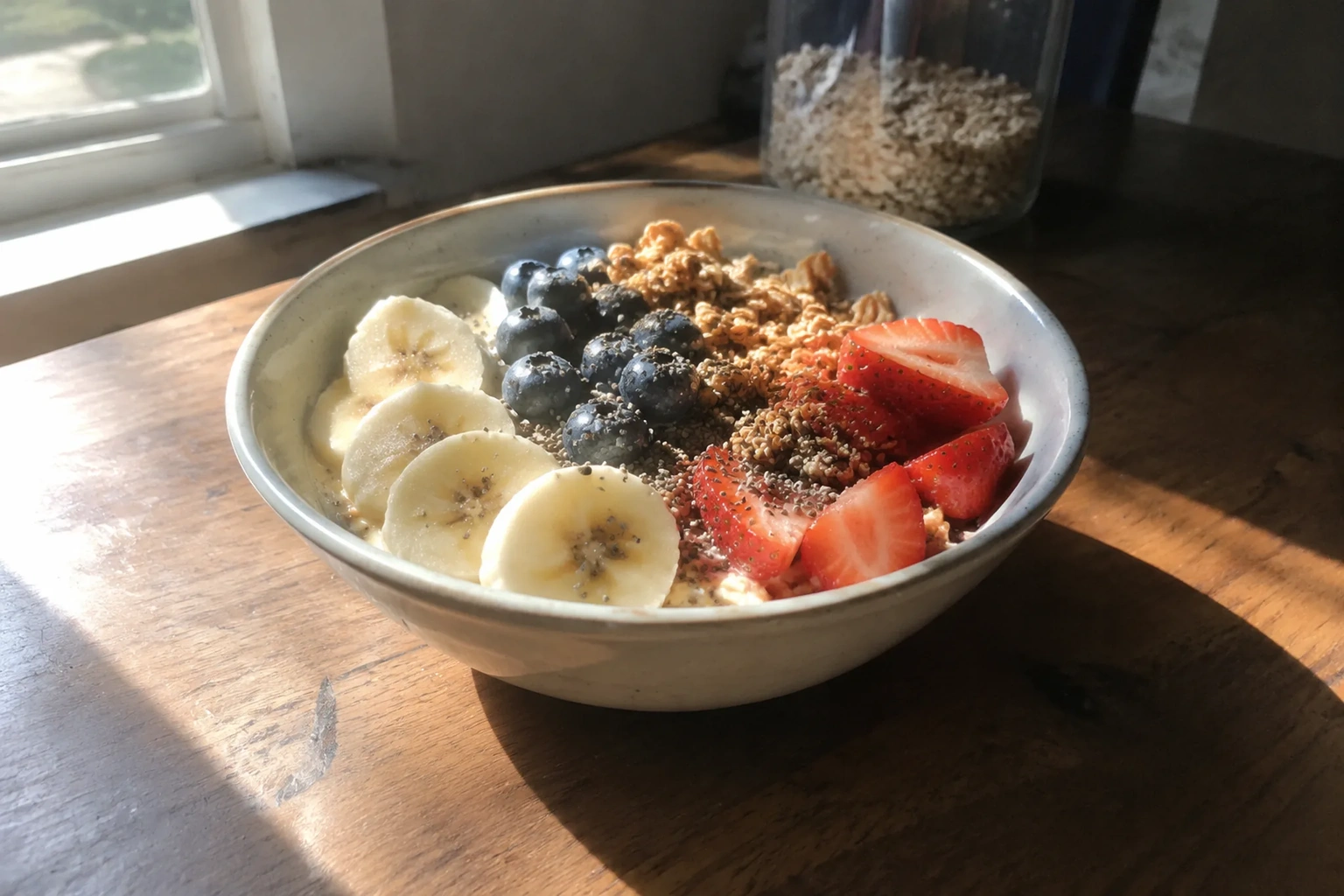
A better lever sits at the topping stage. A quarter cup of raspberries adds around two grams of fiber. A tablespoon of ground flaxseed adds about two more. A handful of walnuts pushes another gram or two into the bowl. None of these changes the base dish. They sit on top, they taste good, and the total lands somewhere near eight or nine grams before the coffee is poured.
The mistake most people make is treating breakfast as a fixed meal. It is the easiest meal to modify because it is the most repetitive. A person who eats the same bowl five mornings a week can change one ingredient and move the weekly fiber total by fifteen grams without ever thinking about it again.
Beans in the pot, not on the side
A half cup of cooked black beans holds around seven grams of fiber. That is more than most people get from an entire lunch. The problem with beans is not the number. It is the mental category. Beans live in the "side dish" or "vegetarian meal" slot for a lot of cooks, and that slot comes with extra work.
The swap that sticks is dumping a can of beans into ground beef or turkey while it browns. A pound of meat plus a can of drained black beans makes the same taco filling or the same chili, feeds two more people, and adds fiber to a meal that already exists in the rotation. The can costs about a dollar.
Lentils do the same job in soup. A cup of cooked lentils carries about fifteen grams of fiber, and they dissolve into a pot of vegetable soup in a way that picky eaters rarely notice. They thicken the broth, they take the place of some of the potatoes, and they cost less per pound than almost any other protein in the store.
The texture question matters here. People who say they dislike beans are usually describing a memory of undercooked or poorly seasoned beans. A can of beans rinsed and added to a hot pan with cumin, salt, and a little fat loses that chalky edge. The swap works best when the beans are treated as part of the dish rather than an addition to it.
The fruit that stays on the counter
A medium pear carries about five and a half grams of fiber. An apple with the skin on carries around four and a half. A cup of strawberries carries three. The fiber in fruit lives mostly in the skin and the flesh, which is why juice is a poor substitute: the pressing removes almost all of it and leaves the sugar behind.
The practical issue with fruit is location. Fruit kept in a crisper drawer at the bottom of the refrigerator becomes a science experiment. Fruit kept in a bowl on the counter gets eaten. This is not a metaphor about willpower. It is a fact about friction. The bowl on the counter is the swap.
Dried fruit deserves a mention because it travels well and keeps for months. A quarter cup of dried figs carries about four grams of fiber; the same amount of dried apricots carries around two and a half. The catch is portion size. Dried fruit is easy to overeat because it is small and sweet, and the fiber comes bundled with a dense hit of sugar. A small handful is the useful unit, not the whole bag.
Rice and pasta, browned by one grade
White rice has had its bran and germ removed, which strips out most of its fiber. Brown rice keeps both and carries about three and a half grams per cooked cup against white rice's less than one. The swap changes the texture: brown rice takes longer to cook, has a firmer bite, and absorbs sauce differently. It also keeps better in the refrigerator, which matters for anyone who cooks a batch on Sunday.
Pasta follows the same logic. Whole wheat pasta carries roughly three times the fiber of the standard semolina version. The flavor is earthier and the texture is slightly rougher, so it works best with a sauce that has some body: a tomato sauce with olive oil, a pesto, a ragù. It works poorly with a thin butter sauce, which leaves the roughness exposed.
There is a middle path for households that resist the full switch. Blending half white and half whole wheat pasta in the same pot gets most of the fiber gain with less of the texture change. The same trick works with rice. The point is not purity. The point is a slightly better bowl that still gets eaten.
Nuts and seeds as a finishing move
An ounce of almonds carries about three and a half grams of fiber. The same weight of pistachios carries around three. Chia seeds are denser still: two tablespoons hold close to ten grams. These numbers look small next to a can of beans, but they arrive in places where fiber otherwise never shows up.
The swap is mechanical. A small jar of nuts sits next to the stove. A spoonful goes on the salad, the yogurt, the roasted vegetables, the bowl of soup. The fiber accumulates across meals that would otherwise contribute nothing. A person who adds a tablespoon of chia to a smoothie and a handful of almonds to a lunch salad picks up roughly five grams without changing anything else.
The catch is calories. Nuts are dense, and a generous pour from the jar can quietly add several hundred calories to a day. The useful measure is a small handful or a spoon, not a bowl. The fiber benefit holds at that size; the calorie cost does not run away.
The vegetable that keeps its skin
Potatoes get a bad reputation that has little to do with fiber. A medium baked potato with the skin on carries about four grams, and most of that sits in the skin itself. Peel the potato and the number drops sharply. The swap is simply to stop peeling: scrub the potato, cut it into wedges, toss it with oil and salt, and roast it with the skin intact.
The same principle applies across the produce aisle. Cucumbers, apples, pears, carrots, and zucchini all carry fiber in their skins. A cook who peels everything out of habit is throwing away a portion of the fiber in every vegetable on the cutting board. Leaving the skin on is faster, cheaper, and adds texture.
There are exceptions. Thick-skinned squash and older root vegetables can be tough or bitter. The habit to break is the automatic peel, not the considered one.
What the swaps add up to over a week
Run the arithmetic on a plausible week. Brown bread instead of white at breakfast: ten grams across the week. Rolled oats with berries and flax five mornings: another twenty-five. A can of beans split across two dinners: fourteen. A pear on the counter eaten three times: sixteen. Brown rice at two dinners: five. A spoon of chia and a handful of almonds most days: twenty. Skin-on potatoes once: four.
The total lands near ninety grams of added fiber across seven days, which works out to roughly thirteen grams a day on top of whatever the baseline diet already provides. Most adults get somewhere between fifteen and twenty grams a day against a commonly cited target of twenty-five to thirty. These swaps close most of that gap without a single new recipe.
The honest caveat is pace. Jumping from a low-fiber diet to a high one in a single week tends to produce bloating and cramping, because the gut bacteria that ferment fiber need time to adjust. Adding one swap at a time over several weeks is the gentler route, and drinking enough water matters more as fiber intake rises. Fiber without water can make digestion harder, not easier.
The loaf that gets bought again
None of these swaps requires a new shopping list, a supplement, or a subscription. They require a slightly different hand reaching for a slightly different item on the same shelf. The brown loaf instead of the white. The can of beans in the cart. The bag of pears on the counter instead of in the drawer.
The test of a swap is whether it survives the second week. A person who buys the whole wheat bread once and then reverts has gained nothing. A person who buys it again because the sandwich tasted fine has gained ten grams a week for as long as the habit holds. That is the whole game: small changes that are boring enough to keep.





















