







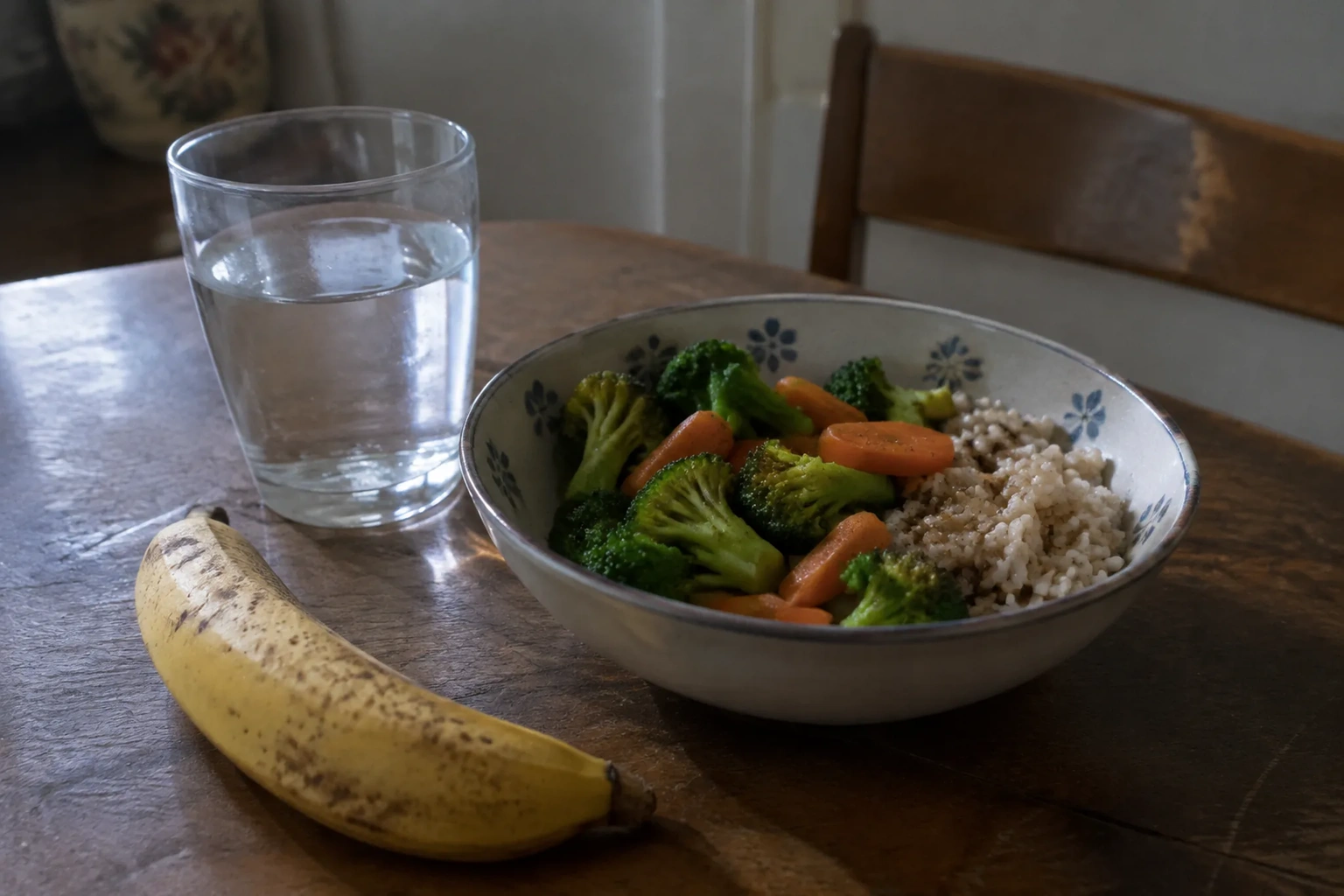
By the time a person reaches sixty, the gut has been running the same basic operation for six decades. It has processed somewhere north of twenty tons of food, survived a few courses of antibiotics, accommodated travel, stress, and the occasional regrettable buffet. And it has done all of this quietly, because the gut is not a squeaky wheel. It complains late, and it complains softly.
Digestion slows in ways that are easy to miss. The stomach empties a little more slowly. The colon's muscle contractions lose some of their snap, which is why constipation becomes a common complaint in later decades. The community of bacteria living in the lower tract, the microbiome, shifts in composition, with some of the more protective strains thinning out. None of this is a disease. It is the ordinary arithmetic of aging, and it responds well to a handful of steady habits, provided they are actually steady.
What follows is not a cleanse, a supplement stack, or a seven-day reset. Those exist because they sell. The habits that matter here are unglamorous, they take months to show their work, and they are the ones a person can still be doing at eighty.
Chewing Is the First Stage of Digestion and the Most Neglected
Mechanical breakdown starts in the mouth, and it is the only stage of digestion under conscious control. Teeth wear down over a lifetime. Dentures and fillings change how a person chews. A sore tooth teaches the jaw to favor one side, and the meal gets swallowed in bigger pieces than it should.
The practical fix is boring and effective: slow the pace of a meal deliberately. Put the fork down between bites. Aim for a meal that takes twenty minutes rather than eight. A person who eats quickly at fifty often eats even faster at seventy, because the hunger signals that once said "stop" arrive later than they used to. Chewing thoroughly gives those signals time to land, and it also spares the stomach a load of work it is less equipped to handle.
Dental care belongs in a gut article. Loose or painful teeth push a person toward soft, processed food, which is often low in fiber, which feeds the constipation problem. A checkup every six months is cheaper than the cascade.
Fiber Has to Arrive Gradually, or the Gut Punishes the Effort
Fiber is the single most useful lever for a sluggish gut, and it is also the one most likely to backfire when a person starts suddenly. A bowl of bran cereal on a Monday after a lifetime of white bread can produce bloating and gas that send the experiment straight to the bin.
Add fiber in small increments across several weeks. A half cup of cooked lentils added to a soup. A pear with lunch. Oats at breakfast three mornings a week, then five. The gut's bacterial population adjusts to new substrates slowly, and a gradual ramp lets it adapt without a revolt.
Variety matters more than volume. Soluble fiber, the kind in oats, barley, apples, and beans, forms a gel that softens stool and feeds beneficial bacteria. Insoluble fiber, found in wheat bran, nuts, and vegetable skins, adds bulk and speeds transit. A person who eats only one kind gets half the benefit. Rotating through beans, whole grains, fruit, and vegetables covers both.
Fluids are not optional alongside fiber. Fiber without water is a traffic jam. A person adding fiber while drinking two glasses of water a day is setting up a worse problem than the one being solved. Water with meals, water between meals, and more of it in hot weather.
The Microbiome Responds to Diversity, Not to a Single Miracle Food
Fermented foods have earned a genuine reputation, and the research on them is promising without being conclusive. Yogurt with live cultures, kefir, sauerkraut, kimchi, miso, tempeh. A small serving most days appears to support the bacterial community, and the effect seems to depend on variety across the week rather than devotion to one product.
The bigger lever is plant diversity. Different plant foods feed different bacterial strains, and a person eating thirty different plants across a week is giving the microbiome a broader pantry than someone eating the same five vegetables in rotation. Herbs count. Nuts count. Beans count. A handful of mixed seeds on morning porridge is a quiet act of diversity.
None of this requires exotic ingredients. Cabbage, carrots, onions, garlic, oats, apples, and lentils, bought at any ordinary grocery store, cover a surprising amount of ground. The expensive powders and capsules sold as microbiome support are largely untested against a diet that simply includes more plants.
Regular Mealtimes Steady the Whole System
The gut has a clock. Digestive enzymes, bile release, and the migrating motor complex, the wave of contractions that sweeps the small intestine between meals, all follow a daily rhythm. Eating at erratic hours, which is easy to do in retirement when no office schedule imposes structure, blunts that rhythm.
Three meals at roughly the same times each day, with a gap of several hours between them, gives the gut the predictable cadence it works best on. The migrating motor complex needs those gaps to do its housekeeping, and constant grazing keeps it from running. A person who snacks from morning to night is genuinely disrupting a cleaning cycle that the body runs between meals.
This is one of the harder habits to keep, because it requires planning and a little discipline. It is also one of the cheapest, since it costs nothing and asks only for consistency. A person who eats breakfast at seven, lunch at noon, and dinner at six has done more for digestive rhythm than any supplement on the pharmacy shelf.
Movement Works on the Gut From the Outside In
Walking after a meal is old advice, and it holds up. Gentle movement stimulates peristalsis, the muscular waves that push contents through the digestive tract. A fifteen-minute walk after dinner, unhurried, is enough to matter. It also helps with the bloating that follows a large meal, and it costs nothing.
Strength training earns a place here too, though the connection is less direct. Muscle mass declines with age, and the core and pelvic floor muscles that support abdominal pressure and bowel function weaken along with it. Squats, step-ups, and simple core work help maintain the musculature that a person uses, often unconsciously, every time they bear down.
Standing up and moving around the house between meals beats sitting for long stretches. Sedentary hours slow the gut, and the effect is noticeable. A person who spends the morning in a chair and then wonders why the afternoon is uncomfortable has a straightforward answer available.
Antibiotics and Antacids Both Leave a Mark on the Gut
Antibiotics save lives and also flatten the bacterial community. A course of them can reduce diversity for weeks or months, and repeated courses in later life leave a deeper imprint. This is not a reason to refuse an antibiotic a doctor prescribes. It is a reason to take them only when they are actually needed, and to skip the ones prescribed for a cold that is viral and will not respond anyway.
Acid-suppressing medications deserve a similar caution. They are effective for reflux and ulcers, and they are also among the most overprescribed drugs on the market. Stomach acid is a first line of defense against swallowed pathogens and a key part of protein digestion. Long-term use without a clear reason is worth a conversation with a doctor rather than a reflex refill.
After a course of antibiotics, a few weeks of fermented foods and a fiber-rich diet gives the microbiome a better chance to rebound. There are no guarantees, and the research on probiotic supplements is mixed, but food-based recovery is low-risk and reasonable.
Warning Signs That Deserve a Doctor Rather Than a Dietary Fix
Most gut changes with age are ordinary and manageable. A few are not. Blood in the stool, unexplained weight loss, a new and persistent change in bowel habits, or pain that wakes a person at night all warrant prompt medical attention. These are the signs that should not be filed under "getting older" and treated with more fiber.
Colon cancer screening is the other piece of this. Guidelines vary by country and by personal risk, and the schedules have shifted over the years. A person who has not discussed screening with a doctor in the past few years should. The test is unpleasant and the preparation is worse, and it is also one of the few cancer screens that genuinely catches disease early enough to change the outcome.
A Week of Ordinary Food, in Practice
What this looks like in a real kitchen, stripped of theory: oats with milk and a spoon of ground flax on most mornings. A handful of nuts at mid-morning. Lunch built around beans or lentils two or three times a week, with vegetables alongside. A piece of fruit in the afternoon. Dinner at a consistent hour, followed by a walk around the block. A small bowl of plain yogurt a few evenings a week. Water on the counter, within reach, refilled without ceremony.
That is a week that would not impress anyone at a wellness retreat. It is also a week that a person can still be living at eighty-two, which is the only test that matters. The gut rewards patience and repetition and punishes enthusiasm that burns out by February. A half-dozen small habits, kept for years, will outperform any dramatic overhaul abandoned by spring.
The body has been keeping this bargain since the first meal. It asks only that the other side of the table does its part with a little consistency, and it will keep the machinery running long past the point where most people stop thinking about it.





















