







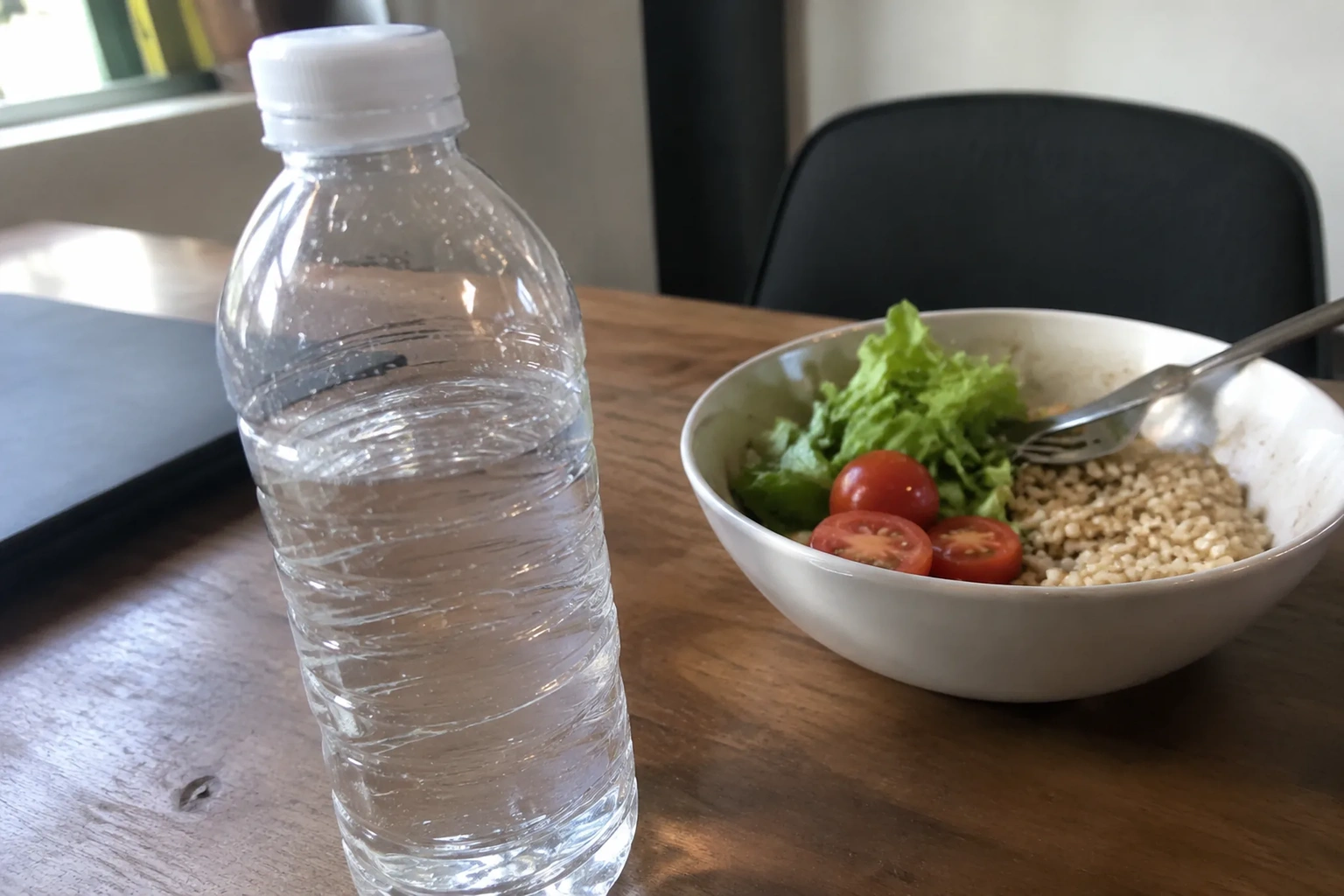
Water is the most boring thing in the kitchen and the most consequential. A person can go weeks without food and only days without it, and yet the advice most people get about hydration and digestion arrives in the form of a laminated poster in a waiting room: eight glasses, eat fiber, avoid caffeine. That poster has been wrong about the details for decades, and it has taught a generation to think about water as a chore rather than a rhythm. The gut does not want a quota. It wants timing, temperature, and a little attention paid to what happens between swallows.
Digestion is a wet process from the first bite. Saliva starts breaking down starch before food reaches the stomach, and that saliva is mostly water. The stomach itself coats its lining in mucus so acid does not eat through it, and that mucus is a water-based gel. The small intestine absorbs nutrients through a watery medium, and the colon pulls water back out to form a stool that holds together. Every stage depends on fluid being present in the right amount at the right moment, which is why the conversation about hydration and digestion should start with what the body is actually doing rather than with a bottle count.
The stomach does not appreciate a flood at mealtime
There is a persistent belief that drinking water with meals dilutes stomach acid and stalls digestion. The body is not that fragile. The stomach adjusts its acid production and empties at its own pace, and a normal glass of water with dinner does nothing to impair that. What does change the experience is volume and speed: a liter of ice water chased down in ninety seconds, on top of a heavy meal, produces the sloshing, distended feeling that gets blamed on the water itself. The water is fine. The delivery was the problem.
Sipping steadily through a meal, a few ounces at a time, keeps the stomach comfortable and helps food move along without that leaden sensation. Warm water or a plain room-temperature glass tends to sit more easily than an icy one for people whose stomachs are sensitive, though this varies enormously from person to person. The useful habit is small and frequent, not large and ceremonial.
Fiber without water is a trap
The single most common mistake in the pursuit of better digestion is adding fiber while neglecting fluid. A person reads that beans, oats, and leafy greens are good for the gut, doubles the intake, and then wonders why the following week feels like a slow-motion traffic jam. Fiber is a sponge. Soluble fiber in particular absorbs water and swells, and without enough liquid to swell into, it moves through the colon like dry cement. The bloating and cramping that follow get blamed on the fiber itself, when the fiber was only half of the equation.
The practical fix is unglamorous. Increase fiber gradually, over weeks rather than days, and increase water alongside it. A bowl of oatmeal in the morning is a fine start, but it wants a glass of water near it, and the rest of the day needs to carry that forward. People who eat a high-fiber diet and drink plenty of fluid tend to describe their digestion in neutral terms, which is the highest praise the gut ever gets.
The morning glass and the two-hour window
Mornings are where hydration and digestion intersect most visibly. Overnight, the body loses water through breathing and sweat, and a person wakes mildly dehydrated without feeling thirsty. The first glass of the day, before coffee and before food, is the easiest win available. It rehydrates the system and gives the colon a gentle signal that the day has started, which is why so many people report a reliable morning bowel movement after a glass of warm water. The mechanism is partly the gastrocolic reflex, a normal wave of gut activity triggered by the stomach filling, and partly simple rehydration after a dry night.
There is also a timing window worth respecting around exercise and meals. A hard workout pulls blood away from the gut and toward the muscles, and digestion slows accordingly. Drinking a large volume right before a meal or a run tends to produce discomfort, while drinking modestly in the hour before and after works with the body rather than against it. None of this requires a stopwatch. It requires noticing how the stomach feels when water arrives in a rush versus a trickle.
Coffee, tea, and the old diuretic myth
The idea that coffee dehydrates has been repeated so often it has become folklore. A cup of coffee does have a mild diuretic effect, but the fluid in the cup more than offsets it, and moderate coffee drinking contributes to daily fluid intake rather than subtracting from it. The same holds for tea. Where coffee earns its reputation as a digestive troublemaker is elsewhere: it stimulates the colon, sometimes urgently, and for people with a sensitive gut or acid reflux, a cup on an empty stomach can produce jittery discomfort. That is a caffeine and acidity story, not a dehydration story.
Carbonated water sits in a similar gray zone. The bubbles can help some people burp and feel less bloated, and they can make others feel distended within minutes. There is no universal answer. The useful approach is to treat fizzy water as a food to be tested rather than a medicine to be trusted, and to notice which way the gut votes.
What the urine test actually tells a person
Urine color remains the cheapest hydration gauge available. Pale straw suggests adequate fluid; dark amber suggests the body is conserving water. It is not a precise instrument, and it can be skewed by vitamins, beets, and certain medications, but as a daily glance it beats counting glasses. Thirst is a second signal, and it is more reliable than the old advice suggests, though it fades with age and gets blunted during illness and intense exercise.
The eight-glasses rule has no strong scientific basis and never did. Fluid needs vary with body size, climate, activity, and diet, and a person who eats a lot of fruit and vegetables and drinks soup is already taking in substantial water. The number to aim for is not a fixed count but a steady rhythm: a glass on waking, a glass with each meal, a glass before and after movement, and a little more in heat. That pattern usually lands people in a reasonable range without any arithmetic.
When water alone stops working
Plain water is not always the right answer. After heavy sweating, prolonged exercise, or a bout of vomiting or diarrhea, the body loses electrolytes along with fluid, and drinking large volumes of plain water can leave a person feeling washed out rather than restored. In those situations, a drink with some sodium and a little carbohydrate helps the intestine absorb water more efficiently. This is the actual logic behind oral rehydration solutions, which have saved more lives than most drugs on the shelf and remain one of the quiet triumphs of twentieth-century medicine.
For everyday life, though, most people do not need a sports drink. They need to spread their fluid intake across the day instead of gulping it in two panicked bursts. The gut handles steady input far better than it handles a flood, and the difference shows up in comfort, regularity, and how the afternoon feels.
A rhythm that survives a real Tuesday
The best hydration routine is the one a person can actually keep on a day when the meeting runs long and the commute is delayed. A bottle on the desk that gets refilled once before lunch and once before three o'clock. A glass of water set beside the coffee maker. A mug of warm water in the morning, if that is what the stomach prefers. A reminder that the goal is not a number but a feeling: a body that is not sluggish, a gut that is not complaining, a head that is not foggy by mid-afternoon.
Digestion rewards consistency more than intensity. The person who drinks a sensible amount throughout the day, eats fiber with enough fluid to carry it, and pays attention to how the stomach responds to temperature and timing will out-comfort the person who chugs a liter at noon and wonders why lunch sits like a stone. Water is not a supplement or a challenge. It is the medium in which the whole digestive system operates, and the work is simply to keep that medium steady.
On a recent weekday, someone in an office kitchen filled a glass, drank it, filled it again, and set it by the sink before heading back to a desk. That small act, repeated without ceremony, is the entire practice. The gut does not need a program. It needs the glass to keep appearing.





















