







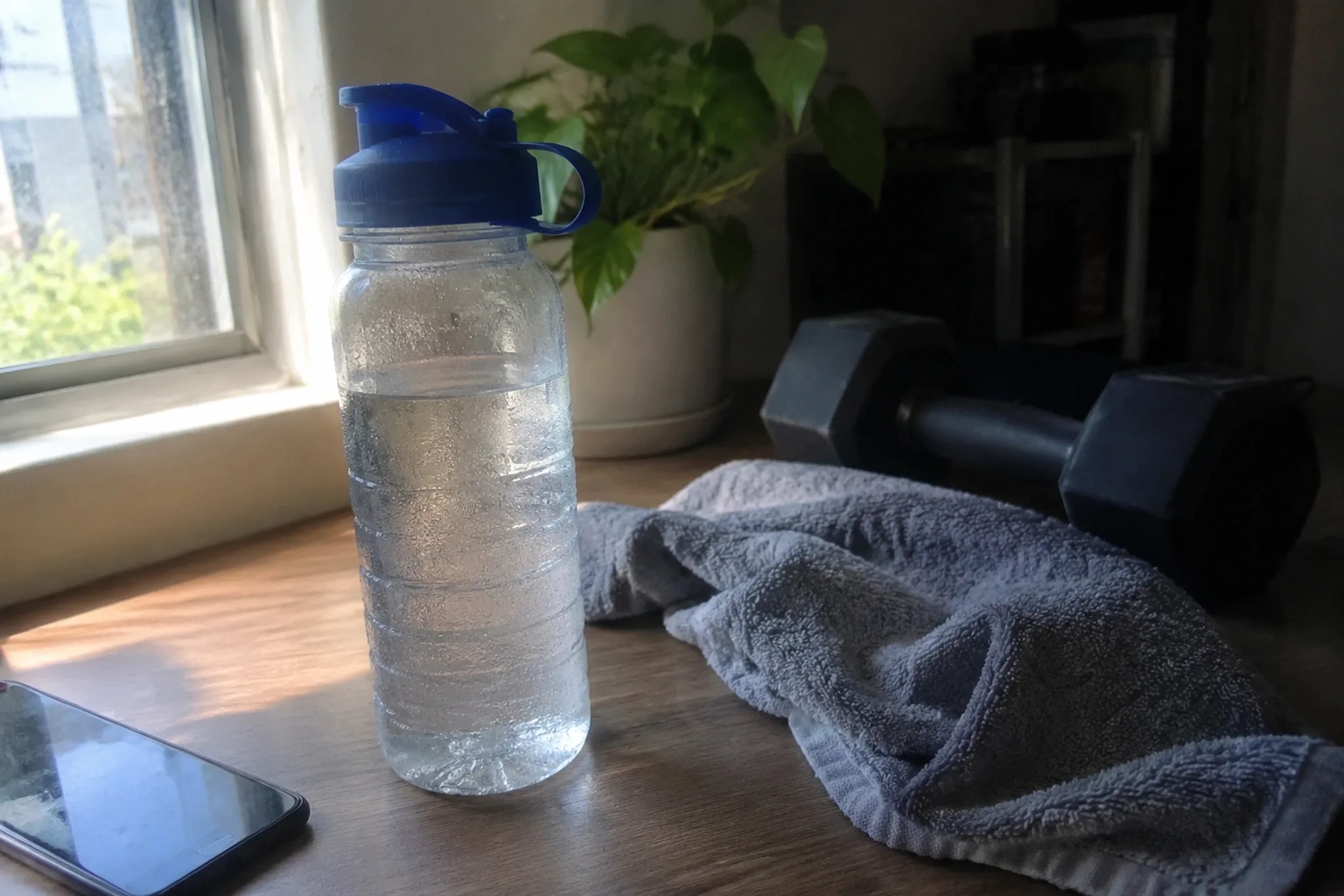
Nobody drinks enough water. That claim gets repeated so often, in so many gyms and running clubs and office kitchens, that it has stopped meaning much. The body handles mild dehydration with a shrug, and the eight-glasses-a-day rule was never drawn from evidence in the first place. Water needs move with temperature, effort, body size, and how much salt left the skin. A person logging long hours outdoors in August has a different problem than a desk worker who takes a lunchtime walk. Both deserve a plan built for what they actually do.
The eight-glass rule came from nowhere
The familiar advice traces to a loose recommendation from the mid-twentieth century that has been repeated, mistranslated, and inflated ever since. The original framing included water from food, from coffee, from soup, from fruit. Most of a normal diet already supplies a meaningful share of daily fluid before anyone fills a glass. Treating the figure as a target to hit on top of meals quietly doubles the real intake.
This matters for active days because the eight-glass number gives no guidance at all about timing or volume around exercise. A long trail run on a warm morning can lose a liter or more through sweat before the halfway point. A yoga class in a cool studio might cost almost nothing. Same rule, wildly different consequences.
Thirst arrives late, and that is fine
The old warning was that thirst is a lagging signal, that by the time a person feels dry they are already in trouble. There is a kernel of truth in it for hard efforts in heat, where significant fluid loss can build before the sensation registers. For most ordinary activity, though, thirst tracks need closely enough to trust.
The practical move is to drink before an effort starts, not to wait for a dry mouth once it is underway. A cup of water with breakfast, another before lacing up shoes, and a bottle within reach during the session covers the vast majority of cases. The body's own signals handle the rest.
Reading sweat rate without a lab
Sweat losses vary enormously between people doing the same workout in the same weather. A heavy sweater can drip through a shirt while a training partner stays dry. The number that matters is individual, and it can be estimated with a bathroom scale and a notepad.
Weigh in before a typical session, ideally with minimal clothing, then again afterward before drinking anything. Each pound lost corresponds to roughly a pint of fluid. A person who drops two pounds across an hour of cycling has a sweat rate near a quart an hour, and that figure should shape how much gets carried on longer rides. Repeat the test in cool and hot conditions, because the number shifts with the weather.
This single measurement does more for hydration planning than any generic chart. It turns a vague worry into a number a person can pack for.
Electrolytes earn their place on long, hot efforts
For a forty-minute jog or a moderate gym session, plain water is enough. The body holds adequate sodium and potassium for short efforts, and the marketing around sports drinks oversells what most workouts require.
Past roughly an hour of steady sweating, especially in heat, the picture changes. Sweat carries sodium, and replacing volume with pure water alone can leave a person feeling flat and headachy even when they have drunk plenty. A pinch of salt in a bottle, a salty snack, or a commercial electrolyte mix restores the balance. The taste should be mild; heavily sweetened drinks tend to sit badly during hard effort.
There is a real risk at the extreme end. Drinking large volumes of plain water faster than the kidneys can clear them can dilute blood sodium to dangerous levels, a condition endurance athletes occasionally encounter. The habit to avoid is frantic over-drinking during long events. Steady sipping, with some sodium in the mix, keeps the balance safer.
Caffeine and alcohol shift the math slightly
Coffee gets a bad reputation for drying people out. The diuretic effect is real but modest, and the fluid in the cup more than offsets it. A morning coffee counts toward daily intake for most practical purposes. Heavy drinking of strong coffee all day may nudge losses up a little, but the effect is smaller than folklore suggests.
Alcohol is a different story. A few drinks the night before a long hike or a morning run leave a person starting behind, with a higher baseline loss and a duller sense of thirst. The fix is unglamorous: water alongside the drinks, and a full glass before bed.
Cold weather hides the need
Winter activity fools people. Sweat evaporates quickly in dry cold air, and the layers that keep a body warm also trap moisture out of sight. A skier or a winter cyclist can finish a two-hour session noticeably down on fluid without ever feeling the damp shirt that would signal it in summer.
Cold also dulls thirst. The body's drive to drink weakens in low temperatures, so intake falls even as losses continue. Carrying a bottle that stays unfrozen, or a flask of warm drink, and sipping on a schedule rather than on thirst covers the gap.
Urine color as a rough gauge
Pale straw is the shade to aim for. Dark amber suggests the tank is low and worth topping up. This is a crude instrument, easily skewed by vitamins, beetroot, or the first urine of the morning, which runs darker for everyone. Used loosely across a day, it gives a quick read without any equipment.
The caution is against overcorrecting. Chasing clear, colorless urine all day leads to excessive drinking and, in rare cases, the sodium dilution problem noted earlier. The goal is pale, not invisible.
A bottle within arm's reach beats a perfect plan
The most carefully calculated hydration schedule collapses if the water is in a bag or a locker. Friction is the enemy. A bottle on the desk, in the bike cage, at the edge of the court, or clipped to a pack gets drunk from. One that requires a trip to a fountain does not.
Flavor helps too. A slice of lemon, a splash of juice, or a mild electrolyte tab makes a bottle more inviting on a day when plain water feels like a chore. This is not indulgence; it is a small lever that raises intake without effort.
Rehydrating after the effort counts as much as during
Many active people drink carefully through a workout and then forget the hours that follow. The body continues to rebalance for a while after exercise ends, and the window right after is a good time to replace lost volume. A glass of water with a meal, plus a little extra sodium from food, does most of the work.
For a long event, weighing in afterward and drinking roughly a pint and a half for each pound lost, spread over the next few hours, restores the deficit without flooding the system. The scale, again, is the tool that makes this concrete rather than guesswork.
The number on the scale after a long ride
A cyclist finishing a three-hour summer ride steps off the bike, strips off a sweat-soaked jersey, and steps on the bathroom scale. The reading is two and a half pounds lighter than the morning weigh-in, despite having drained a bottle along the way. That number, not a rule from a magazine, is the real starting point. It says the ride cost roughly forty ounces of fluid, and the recovery plan writes itself: a pint now, another with dinner, a little salt on the food, and a check of urine color before bed. The scale will read the same tomorrow if the job is done right.





















