




Swimming earns its reputation honestly. A body suspended in water bears roughly a tenth of its usual load through the hips and knees, and the shoulders can move through a full arc without the ground ever pushing back. For anyone whose joints complain on pavement, that is close to a miracle. It is also, for most people, inconvenient: the pool is a bus ride away, the lanes are crowded at six in the morning, and the whole enterprise requires a locker, a towel, and a willingness to be wet in public.
So the practical question for tender joints is not which cardio is gentlest in the abstract. It is which gentlest option a person will actually do three times a week for a year. The answer shifts depending on what hurts, how much space is available, and whether the joint in question tolerates standing at all. What follows is a working map of the realistic options, sorted by the kind of load they place on knees, hips, and ankles.
The case for water, and why it is not the whole answer
Pool work remains the gold standard for load reduction. Walking in chest-deep water cuts the effective weight through the legs to a fraction of dry-land body weight, and the water's resistance smooths every direction change. Aqua jogging, deep-water running with a flotation belt, lets a person mimic a running stride with no foot strike at all. Joints that ache on stairs often feel quiet after twenty minutes of that.
The catch is access and tolerance. Chlorinated pools irritate some people's skin and airways. Warm therapy pools, the ones kept around 92 degrees Fahrenheit, feel wonderful for stiff joints but are scarce and often booked by rehabilitation programs. A cold lap pool at 78 degrees can leave sore knees feeling tighter for the first ten minutes. And the social friction is real: lap swimming at a public pool means sharing a lane with someone doing butterfly, which is its own kind of joint stress.
Water deserves first mention because it sets the benchmark. Everything else on this list is measured against how close it gets to that near-weightless feeling while remaining doable on a Tuesday evening at home.
Elliptical machines and the art of the floating stride
The elliptical trainer was designed around exactly this problem. Both feet stay on pedals that travel in a fixed arc, so there is no impact phase, no moment where body weight slams into a heel. The stride mimics walking or running while the machine holds the feet in contact the whole time. For knees that swell after a walk around the block, that difference is significant.
The variable that matters most is ramp angle. A flat ramp keeps the hip and knee angles small; a steep ramp turns the machine into a stair climber and loads the kneecap heavily with every stroke. Anyone with patellofemoral pain, the ache around and under the kneecap, should start near level and resist the urge to crank the incline for a "better workout." Resistance is the safer dial to raise.
Gyms are the obvious venue, but compact under-desk ellipticals exist for home use, and they are humbler than they sound. Twenty minutes of low-resistance pedaling while reading is a genuine cardio session for a deconditioned body. The motion is small and repetitive, which some hips dislike, so a short trial matters before committing to a machine that will otherwise become a coat rack.
Recumbent bikes and the question of hip angle
An upright stationary bike is fine for many knees but punishing for some hips, because the seated position folds the hip to a sharp angle and the pedaling stroke drives the joint through a narrow range under load. The recumbent bike, with its bucket seat and pedals out front, opens that hip angle considerably. Cyclists recovering from hip replacement are often steered toward recumbent models for precisely this reason.
Seat position does most of the work. Too far forward and the knee hyperextends at the bottom of the stroke; too close and the knee stays bent past ninety degrees at the top. The rough guide is that the leg should be almost straight, with a slight bend, when the pedal is farthest away. A physical therapist or a good bike fitter can set this in five minutes, and it is worth the appointment.
Recumbent bikes also solve the balance problem. A person with an unstable knee or a painful ankle can sit down, clip in or rest on flat pedals, and pedal without worrying about falling. That safety margin is why they show up so often in cardiac rehab rooms, where the average patient is not twenty-five.
One caution: the reclined posture can irritate the lower back in people who slump. A small lumbar cushion behind the curve of the spine changes the whole experience. The bike is not the problem; the slouch is.
Walking, adjusted rather than abandoned
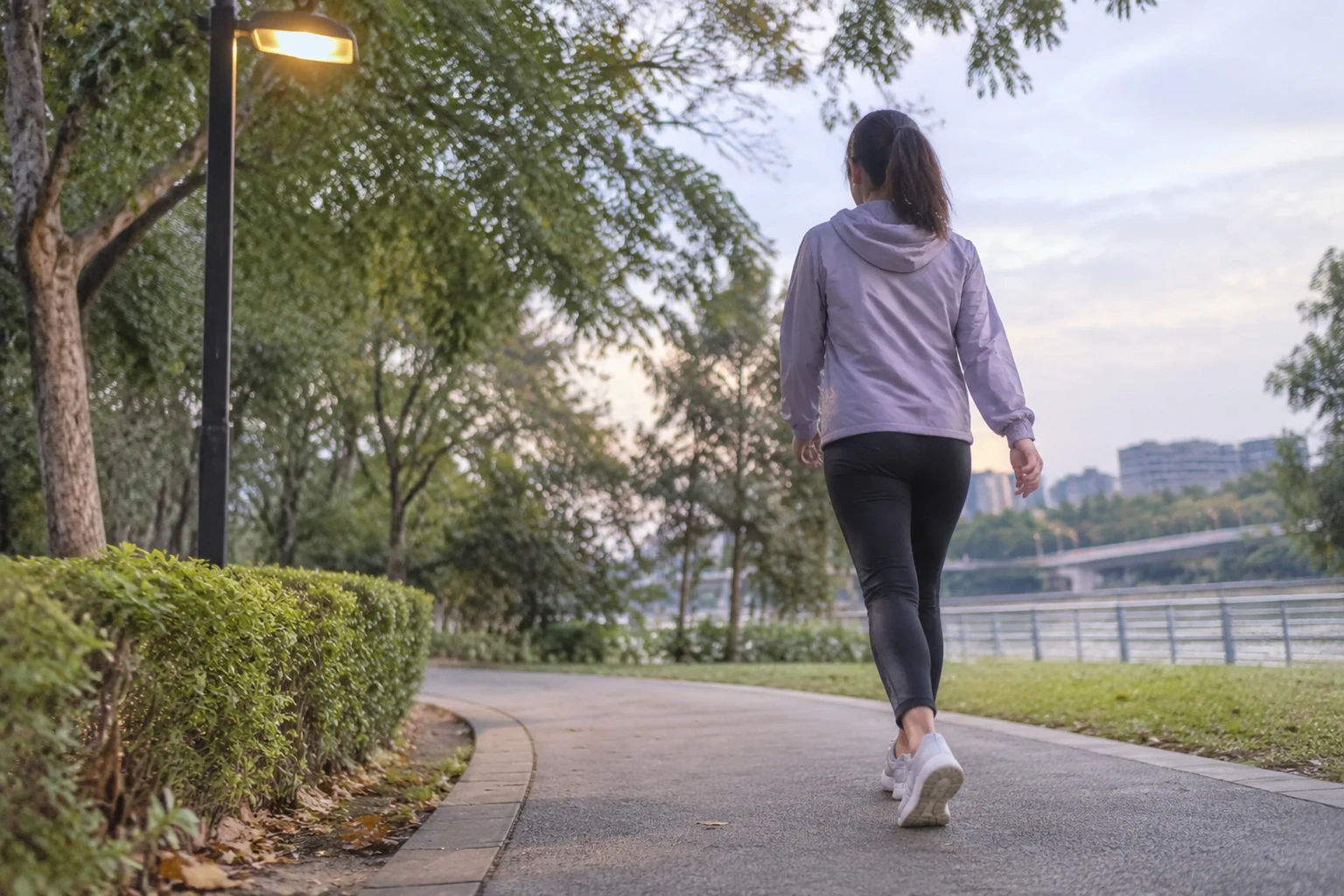
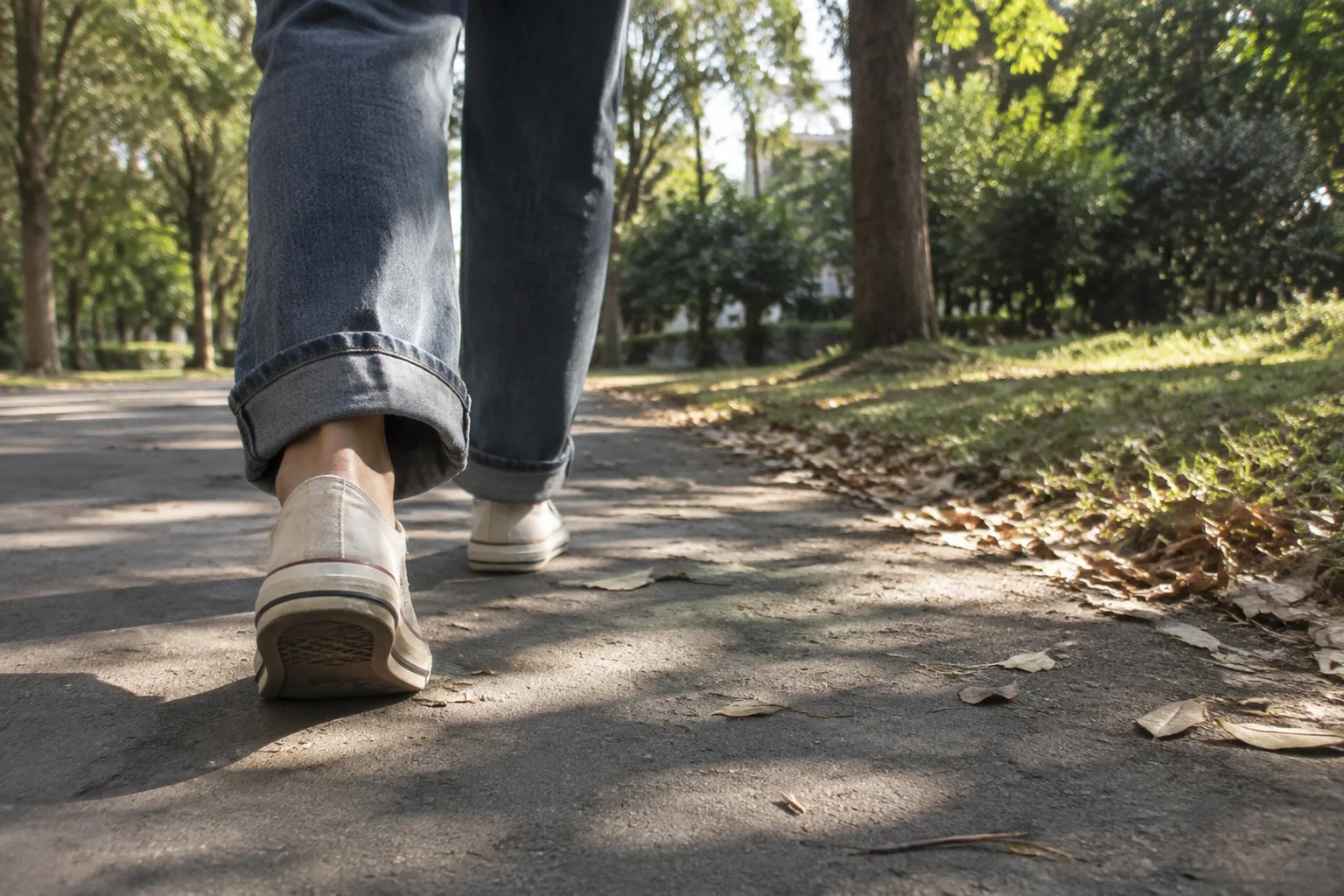
Walking is the most accessible cardio there is, and for tender joints the trick is not to quit it but to change the terms. A ten-minute walk on flat, forgiving ground beats a thirty-minute march on concrete. A track at a local high school, a packed dirt trail, a treadmill set to a slight incline with the handrails lightly held: all of these soften the load compared with a sidewalk.
Speed matters less than people assume. A brisk walk that gets the heart rate up and a slow walk that covers the same distance stress the joints quite differently. For an inflamed knee, the slower pace with a shorter stride is often the only version that does not cause a flare the next day. Shortening the stride reduces the peak force through the kneecap noticeably.
Poles help more than their reputation suggests. Nordic walking, using two lightweight poles to push off, spreads some of the propulsive work to the arms and shoulders. The gait becomes more upright and the load per step drops. It looks faintly ridiculous to passersby, which is a small price for knees that stop complaining.
Footwear deserves a sentence of its own. Cushioned shoes with a rocker sole, the kind that curves up at the toe, roll the foot forward and reduce the demand on the ankle and forefoot. A pair of those worn only indoors on a treadmill will outlast a pair worn on gravel.
Rowing machines and the seated full-body option
A rowing machine offers something rare: a whole-body cardiovascular effort performed entirely seated. The legs drive, the core stabilizes, the arms finish, and the spine stays supported through most of the stroke. There is no impact, no balance demand, and no standing. For a person with painful ankles or feet, that combination is hard to beat.
The catch is technique and knee flexion. The catch position, at the front of the stroke, folds the knees deeply, sometimes past ninety degrees, which can aggravate a cranky kneecap or a meniscus tear. Sliding the foot stretcher forward or limiting the forward reach at the catch reduces that fold. A short, shallow stroke is a legitimate way to row.
Lower back tolerance varies enormously. Rowing asks the spine to hinge under load, and some backs love it while others protest within five minutes. The only reliable test is a cautious ten-minute trial at low resistance, followed by a day of listening to the body's response.
What the research says about joint load, in plain terms
The general understanding in sports medicine is that cyclic, low-impact movement helps arthritic joints by keeping cartilage nourished and surrounding muscles strong. Cartilage has no blood supply of its own; it depends on the mechanical pumping that comes from movement to draw in nutrients. That is the physiological argument for gentle, regular motion rather than long stretches of rest.
Impact forces are the variable that separates the options. Running generates ground reaction forces several times body weight with each footfall. Walking produces a smaller multiple. Cycling, rowing, swimming, and elliptical work eliminate the footfall altogether. The joints still move, still bear some load, but the sharp peaks disappear.
The practical implication is that a person with tender joints can usually tolerate more total minutes of low-impact work than they expect. The limiting factor tends to be muscle fatigue and cardiovascular fitness, not joint pain, once the impact is removed. That is encouraging news for anyone who assumed a diagnosis meant a future of sitting.
How long, how often, and the soreness rule
The standard public health guidance of roughly 150 minutes of moderate activity per week is a reasonable target, arrived at through decades of population data. It is also a target, not a starting line. For a body in the middle of a flare, fifteen minutes of easy cycling three times a week is a fine beginning, and the goal can grow from there.
A useful rule of thumb for tender joints is the two-hour rule. Discomfort that lingers more than about two hours after a session, or that shows up the next morning and worsens with movement, suggests the session was too much. Soreness that fades within an hour and leaves the joint feeling looser than before is a green light.
Alternating modes helps. A person might swim on Monday, use the recumbent bike on Wednesday, and walk on Friday. Different tissues take the load each time, and the variety keeps boredom from ending the routine. Boredom is a bigger threat to consistency than pain is.
The one piece of equipment that changes everything: a chair
For the most tender joints, the humblest option may be the best. Chair-based cardio, sometimes called seated exercise, uses a sturdy chair as the anchor for marching in place, leg extensions, arm circles, and seated step touches. The heart rate rises, the joints move through gentle ranges, and the risk of falling is essentially zero. Classes built around this format exist at senior centers, community pools, and on video platforms, and they are not just for the elderly.
The chair also solves the flare problem. On a bad day, when the knee is swollen and every step is a negotiation, seated movement keeps the cardiovascular habit alive without asking the joint to bear weight. That continuity matters more than any single workout. A person who keeps moving through a flare recovers faster than one who stops entirely, or so the clinical wisdom goes.
The gym membership test, applied honestly
Most of these options require either equipment or water, which means a gym, a pool, or a purchase. The temptation is to buy the machine and hope motivation follows. A more reliable path is to trial each option at a facility before spending. Most gyms offer a day pass, and most pools sell a single-visit ticket. One session on a recumbent bike tells a person more than a month of reading reviews.
There is also the question of what the joint will tolerate on a bad day. A home elliptical is useless if getting to the basement is painful. A pool membership is wasted if the drive is forty minutes. The best option is the one embedded in a routine that already exists: the walk that starts at the front door, the bike in the corner of the bedroom, the pool on the way home from work.
Convenience is not laziness. It is the infrastructure that makes consistency possible. A person who chooses the slightly less ideal option because it fits into an ordinary Tuesday will outperform the person who chooses the perfect option and uses it twice.
A short list for a knee that is currently angry
When a joint is actively flaring, the hierarchy simplifies. Water first, if it is available. Seated movement second, because it asks the least. A recumbent bike at low resistance third. Everything else waits until the swelling recedes and the joint tolerates standing again.
The mistake people make in a flare is treating rest as the default. A few days of complete stillness can leave the joint stiffer and the surrounding muscles weaker, which makes the next attempt harder. Gentle motion, scaled down to what the joint allows, tends to shorten the flare rather than prolong it. The chair in the corner of the living room is a better friend during a bad week than the couch.