







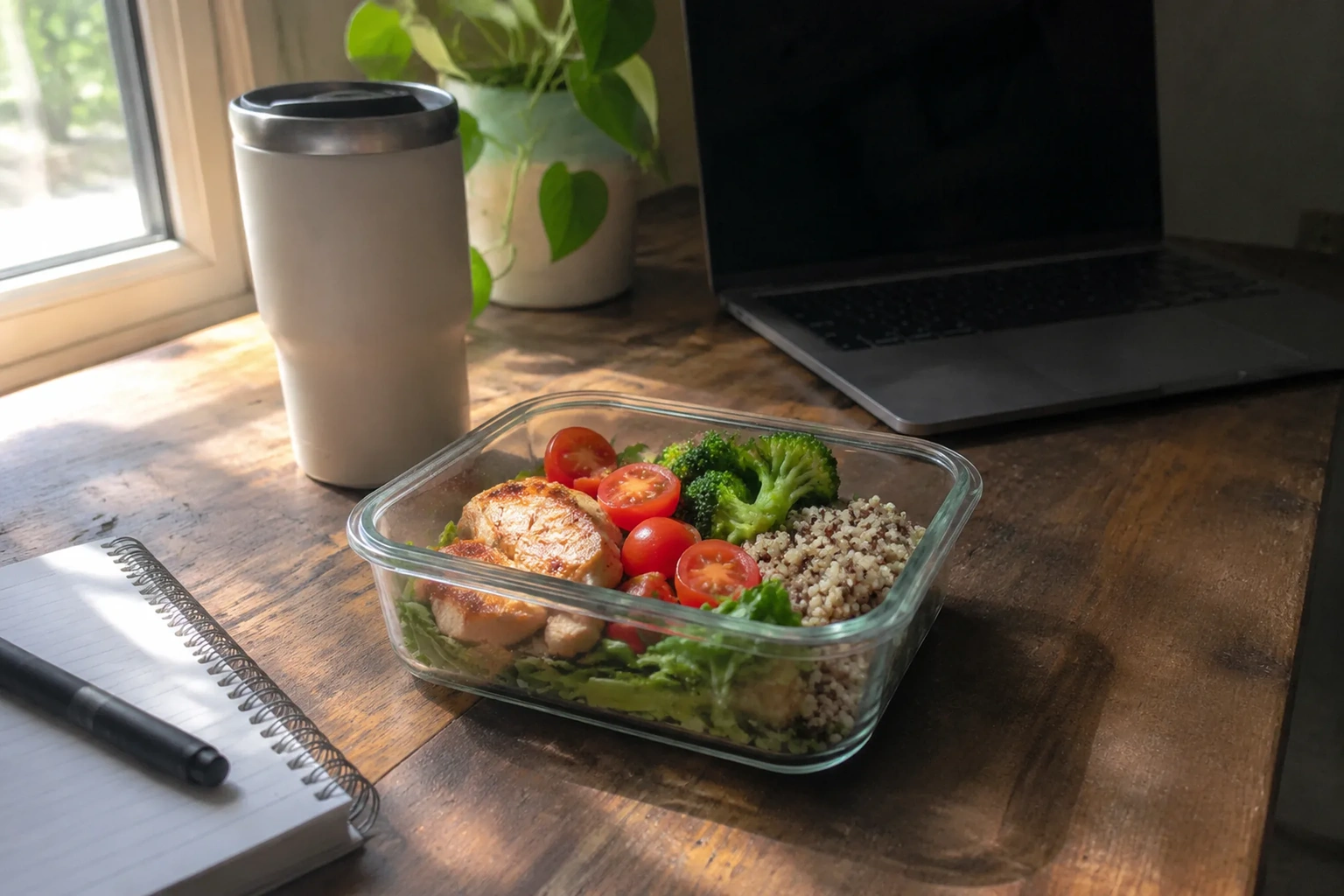
The lunch that ruins a work-from-home afternoon is rarely a bad lunch. It is usually a good one, eaten too fast, at 12:40, in front of a screen that never went dark. By 2:15 the body has gone heavy and the brain has gone quiet, and the afternoon's most demanding task sits there waiting while a person stares at a spreadsheet like it might explain itself.
That slump has less to do with the food being unhealthy than with the shape of the meal. A big plate of pasta eaten in eight minutes flat produces a different afternoon than the same calories spread across a bowl, a side, and a glass of water consumed over twenty-five. The work-from-home day removes every natural brake the office used to provide: the walk to a kitchen, the wait for a microwave, the colleague who asks about the weekend. What is left is a pantry twenty steps from the desk and a calendar with no one to interrupt it.
So the real design problem is not what to cook. It is how to build a lunch that keeps the afternoon usable, and that means thinking about three things at once: the pace of eating, the balance on the plate, and the distance between the plate and the next task.
The plate that keeps the lights on until four
A lunch meant for concentration tends toward protein, vegetables, and a modest amount of something starchy, with enough fat to make it satisfying and enough fiber to slow the whole thing down. The starchy portion matters less than most people assume. A smaller scoop of rice under a larger pile of chicken and greens will hold a person steadier than the reverse, and the difference shows up around 2:30, when the rice-only option has faded and the mixed plate has not.
This is where the standard advice about "balanced meals" earns its keep, though not for the reason usually given. The point is not virtue. The point is that a meal with several components takes longer to eat, and the eating is half the benefit. A bowl of soup and a piece of bread eaten together require more attention, more chewing, and more time than a sandwich bolted down at the counter.
Leftovers are the obvious engine of this, and the best leftovers for a working afternoon are the ones that improve overnight. Braised chicken thighs, a pot of lentils, roasted vegetables that have soaked up their own juices, a grain salad that has married its dressing. These reheat well or eat cold without complaint, and they come with a built-in portion control: a container holds what it holds, and the person who packed it has already made the decision about how much to eat.
Sandwiches are fine if they are built like a meal
The sandwich gets a bad reputation among lunch planners because the default version is bread, meat, and a token leaf, which behaves in the body like a candy bar with salt. A better sandwich follows the same rule as the plate: structure, not filler. Whole-grain bread with real density, a generous layer of protein, something crunchy (cucumber, cabbage, pickled onion), and a spread with enough fat to coat the tongue. Add a side of fruit or a handful of nuts and the sandwich becomes a complete lunch rather than a snack that pretends to be one.
The assembly matters too. A sandwich made at 11:50 and eaten at noon is a different object from one made the night before and refrigerated. The overnight version compresses, and the bread gives up some of its texture. For anyone who packs lunch in advance, the better move is to keep the components separate and assemble at the counter, which takes ninety seconds and produces a lunch that feels made rather than retrieved.
The fifteen-minute cooking problem
Working from home creates a strange fiction about cooking. Because the kitchen is close, the assumption is that there is time to use it, and there often is, but only if the dish is designed for a lunch break rather than a weekend. A two-hour braise is not a lunch; it is an afternoon of distraction. A ten-minute stir-fry of pre-cut vegetables and leftover protein is a lunch, and it produces a hot meal that a reheated container never quite matches.
The dishes that work well here share a profile. They use one pan. They rely on ingredients that keep for a week, like cabbage, carrots, eggs, and frozen peas. And they are forgiving about timing, so that a call running long does not ruin them. Scrambled eggs with spinach and toast. A quick soup of miso, tofu, and whatever greens are wilting in the drawer. A tortilla folded around beans and cheese and browned in a pan. None of these are impressive. All of them are real food, hot, on a plate, in under fifteen minutes.
The trap is the "healthy" frozen meal, which often trades flavor for a calorie count nobody asked for and leaves a person hungry by three. A better frozen option is plain: frozen dumplings, frozen edamame, a bag of frozen shrimp. These are ingredients, and a person can build a lunch around them in the time it takes to boil water.
Eating away from the desk is the whole trick
Ask a room of remote workers about their worst afternoons and a pattern emerges. The meal itself was reasonable. The location was not. A lunch eaten at the desk with one hand while the other scrolls through email keeps the body in the same posture and the mind in the same mode as the morning, and the afternoon never gets a clean start. The brain that never left work never really returns to it either.
A table helps. It does not need to be a dining table; a kitchen counter with a stool will do. The requirements are modest: a surface that is not the desk, a screen that is not visible, and enough time to notice what is being eaten. Twenty minutes is plenty. The people who report the sharpest afternoons are usually the ones who treat lunch as a small event with a beginning and an end, rather than a task to be cleared.
There is a practical side to this too. Eating away from the computer means the crumbs, the spills, and the greasy keyboard stay out of the workspace, which is a small mercy for anyone who has ever tried to remove a coffee ring from a trackpad. It also means the meal ends when the plate is empty, not when the next notification arrives.
What to drink at noon
Coffee is the work-from-home lunch's most common mistake. A second cup at noon produces a short lift and a longer crash, and the crash often arrives at the worst possible hour. Water is better, and a lot of it, because the afternoon fog that people blame on food is sometimes just mild dehydration from a morning of coffee and no water.
For anyone who wants something with flavor, sparkling water with a slice of lemon or lime does the job, and unsweetened iced tea is a reasonable middle ground. The goal is a drink that does not add a second stimulant on top of the first, and does not add sugar that will spike and then drop.
The small prep that pays for itself on Tuesday
The single most useful habit for work-from-home lunches happens on Sunday, and it takes about thirty minutes. Cook one pot of something that will last three days: a tray of chicken thighs, a pot of beans, a batch of rice, a sheet pan of roasted vegetables. Wash and cut a few things that keep well. Boil a half-dozen eggs. None of this is meal prep in the Instagram sense, with identical containers lined up like soldiers. It is just having cooked food in the fridge so that the noon decision is between a few good options rather than between cooking and ordering.
The difference shows up in the middle of the week, when the calendar is full and the energy is low. A person with cooked chicken, a bag of spinach, and a jar of good dressing can make a lunch in four minutes that beats anything delivered. A person without those things orders a sandwich that arrives lukewarm and eats it at the desk, and the afternoon shows it.
The lunch that ends the workday well
There is a version of this advice that treats lunch as fuel, and that framing misses what the meal is doing for a person who works where they live. Lunch is the hinge of the day. It is the moment when the morning's momentum either carries forward or collapses, and the difference is decided by small things: whether the food was hot, whether the plate was real, whether the person sat down, whether the screen went dark for twenty minutes.
A lunch that keeps a person sharp through the afternoon tends to be unremarkable in the best sense. Leftover chicken and roasted vegetables on a plate. A sandwich with real structure, assembled at the counter. A bowl of soup and a piece of bread, eaten at a table with the phone face down. None of these will impress anyone, and that is the point. The meal that does its job quietly is the meal that leaves the afternoon free for the work that actually needs doing.





















