







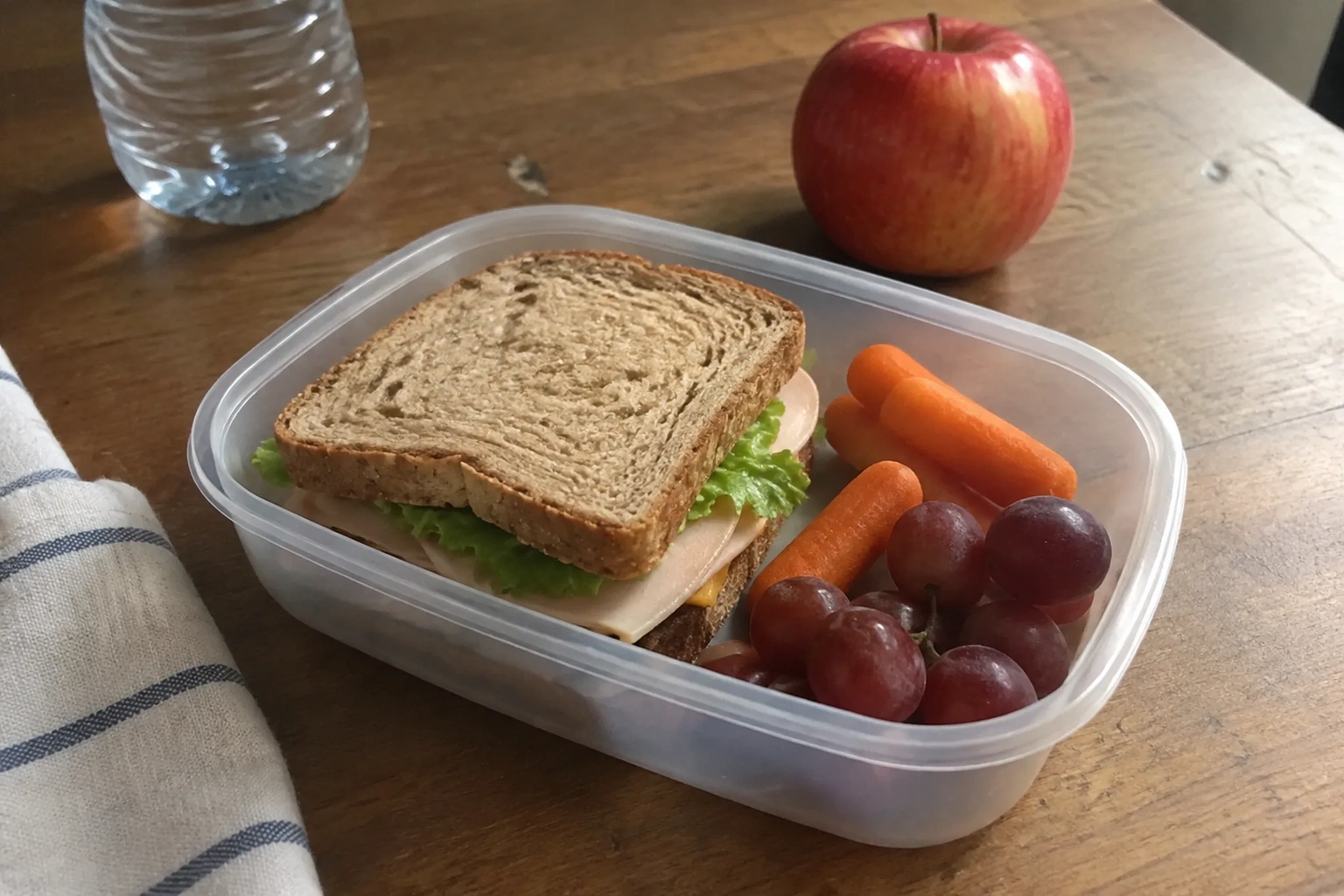
Lunch has a reputation problem. It gets treated as the meal that happens to a person, the one squeezed between obligations and eaten standing up or, worse, skipped entirely in the belief that skipping is somehow virtuous. Breakfast sells itself as the start of something. Dinner carries the social weight. Lunch just sits there at the middle of the day, waiting to be managed.
That neglect has a cost. The hours from roughly one to four in the afternoon are when a great many people need to think clearly, sit through meetings, make decisions, and drive home without their eyelids staging a rebellion. What gets eaten at midday directly influences how those hours go. The case for treating lunch as a working part of the day, with a little planning attached, is not about virtue. It is about having a better afternoon.
A useful lunch does three things at once. It provides enough energy to carry through the afternoon without a hard crash, it avoids the kind of heaviness that makes concentration impossible, and it is simple enough to actually get made on a Tuesday. The third condition is the one most lunch advice ignores, which is why most lunch advice gets abandoned by Thursday.
The crash is real, and its shape matters
Most people have felt the post-lunch slump: the foggy head, the sudden heaviness in the arms, the urge to put a head down on the desk. The common explanation blames a large meal sending blood toward the stomach. That story is tidy and incomplete. What seems to matter more is how quickly a meal pushes blood sugar up and how sharply it then falls.
A lunch built mostly from refined starch, white bread, a sweet drink, a pastry, a big plate of white rice, delivers a fast spike followed by a drop. The hours after that drop tend to feel like wading through wet sand. A lunch that includes protein, some fat, and fiber from vegetables or legumes tends to move through the system more gradually, and the afternoon stays on a more even keel. This is general understanding rather than a precise prescription; bodies differ, and no single ratio suits everyone. But the direction is consistent enough to plan around.
There is a second trap that has nothing to do with blood sugar. A lunch that is too small, a cup of soup and a handful of crackers, can leave a person hungry by two o'clock and raiding whatever sits in the office kitchen. The afternoon then becomes a graze of snacks, each one poorly chosen because it was chosen in hunger. A lunch that is too large creates its own problem: the heavy, sluggish feeling that makes the next meeting a struggle.
Portion matters as much as composition. The target is enough food to feel satisfied, not stuffed. That sounds obvious and is surprisingly hard to calibrate, because the body's fullness signals lag behind the plate.
A template, not a recipe: protein, vegetable, slow starch
The most reliable structure for a steady afternoon fits in one sentence: some protein, a generous amount of vegetable, and a modest portion of a starch that digests slowly. This template travels across cuisines and budgets, which is why it holds up better than any specific recipe. A lunch that honors it can be Mediterranean, Japanese, Indian, or plain Midwestern, and it will still do the job.
Protein is the anchor. Eggs, chicken, fish, beans, lentils, tofu, yogurt, cheese, leftover meat from the night before. A palm-sized portion is a reasonable rule of thumb for most adults, though appetite and body size vary. The point of the protein is to slow digestion and to keep hunger from returning too soon.
The vegetable portion should be larger than most people instinctively serve at lunch. Half the plate is a common guideline and a good one. Raw or cooked, it matters less than the volume. Vegetables add fiber, water, and bulk, which help a person feel full without the heaviness of a starch-heavy meal. A handful of leaves is not half a plate; a bag of pre-washed greens dumped into a bowl is closer.
The starch should be the smallest of the three portions and ideally a whole grain or a legume: brown rice, farro, quinoa, whole wheat bread, beans, sweet potato, oats. These digest more slowly than white bread or white rice, and the difference in how the afternoon feels is noticeable to most people who try it for a week.
The assembly method that survives a real workweek
Lunch ideas fail for a boring reason: they require more decisions than a tired person wants to make at seven in the morning. The fix is to move the decisions earlier, ideally to the weekend, and to reduce them to a small set of repeatable moves.
One approach is to cook a little more at dinner and pack the surplus. Roast a larger tray of vegetables than the evening meal needs, cook extra grains, grill an extra piece of chicken or fish. The next day's lunch then assembles itself from containers in the fridge. This is the least effortful method, because the cooking already happened.
A second approach is the component box: on Sunday, prepare three or four components and combine them differently through the week. A pot of lentils, a tray of roasted vegetables, a batch of hard-boiled eggs, some washed greens, a container of cooked rice. Monday's lunch might be lentils, greens, and rice. Wednesday's might be eggs, roasted vegetables, and a piece of bread. The components stay the same; the plate varies enough to prevent boredom.
A third approach, for the truly time-poor, is the assembled-from-the-store lunch. Rotisserie chicken, a bag of salad, a container of hummus, whole grain wraps, canned chickpeas, pre-cut vegetables. This is not cheating. It is a legitimate strategy, and it beats the vending machine by a wide margin. The only rule is to buy the components rather than the pre-made sandwich, which tends to be starch-heavy and light on everything else.
Five lunches that hold the afternoon together
A grain bowl with chickpeas, roasted peppers, and a lemon-tahini dressing. The chickpeas provide protein and fiber, the vegetables add bulk, and the grain is a modest base. Made in a batch on Sunday, it holds in the fridge for three days. Pack the dressing separately so the grains do not turn to mush.
A lentil soup with a piece of whole grain bread and a handful of spinach stirred in at the end. Lentils are protein and slow starch in one ingredient, which makes them unusually efficient. A pot made on the weekend provides several lunches, and the soup freezes well.
A leftover roast chicken plate with a large salad and a small scoop of farro or brown rice. This is the dinner-to-lunch transfer at its most direct. The chicken can be cold or reheated; the salad should be dressed at the last minute.
Eggs, in whatever form the morning allows. A frittata baked on Sunday with vegetables and a little cheese slices into wedges that travel well. Add a piece of fruit and a few crackers and the lunch is complete. Eggs are among the most reliable proteins for holding off afternoon hunger.
A bean and vegetable wrap with whole grain flatbread. Canned beans mashed with a little olive oil and herbs, layered with greens, tomato, and shredded carrot, rolled tight. This one is assembled in the morning in under five minutes if the components are ready.
The drinks and snacks that quietly undo the meal
A carefully built lunch can be undermined by what comes after it. A sweetened coffee drink, a soda, a large glass of juice, or a pastry at three o'clock reintroduces exactly the blood sugar spike-and-drop the meal was designed to avoid. The afternoon then wobbles for reasons that seem mysterious unless the drinks and snacks are counted.
Water, sparkling water, unsweetened tea, or black coffee are the reliable choices. A piece of fruit in the late afternoon is a reasonable snack and provides fiber alongside the sugar. A handful of nuts or a spoonful of yogurt adds protein. The point is not austerity; it is avoiding the specific pattern of quick sugar followed by a crash that turns the last hours of the workday into a slog.
Eating away from the desk changes what gets eaten
There is a behavioral detail that rarely makes it into lunch advice: where a meal is eaten shapes how much of it is noticed. Lunch at the desk, in front of a screen, tends to be eaten faster and with less attention. The body's fullness signals, which lag by design, get overridden by the pace. A person can finish a meal and feel unsatisfied because the meal was never really registered.
A ten-minute walk to a table, a bench, or a park changes the meal. The food is eaten more slowly. The portion registers. The short walk afterward also helps, and not only for digestion; the change of scene resets attention in a way that the afternoon benefits from.
For anyone whose workplace makes leaving the desk impossible, even a few minutes away from the screen before returning to it can make a difference. The meal and the work need a boundary, however thin.
The lunch that is skipped costs more than it saves
Skipping lunch to save time is a common trade, and it rarely works out. The saved twenty minutes tend to be repaid in the late afternoon with a drop in concentration, a raid on the snack drawer, or an oversized dinner that interferes with sleep. The body does not forget the missed meal; it simply collects the debt later, and the collection is rarely convenient.
The steady afternoon is not a dramatic achievement. It is the accumulated result of a few unremarkable decisions: a lunch with protein and vegetables in it, a portion that satisfies without stuffing, a drink that does not undo the meal, and a few minutes away from the desk to eat it. None of these is difficult on its own. Together they turn the middle of the day from something to be survived into something that carries its own weight.





















