







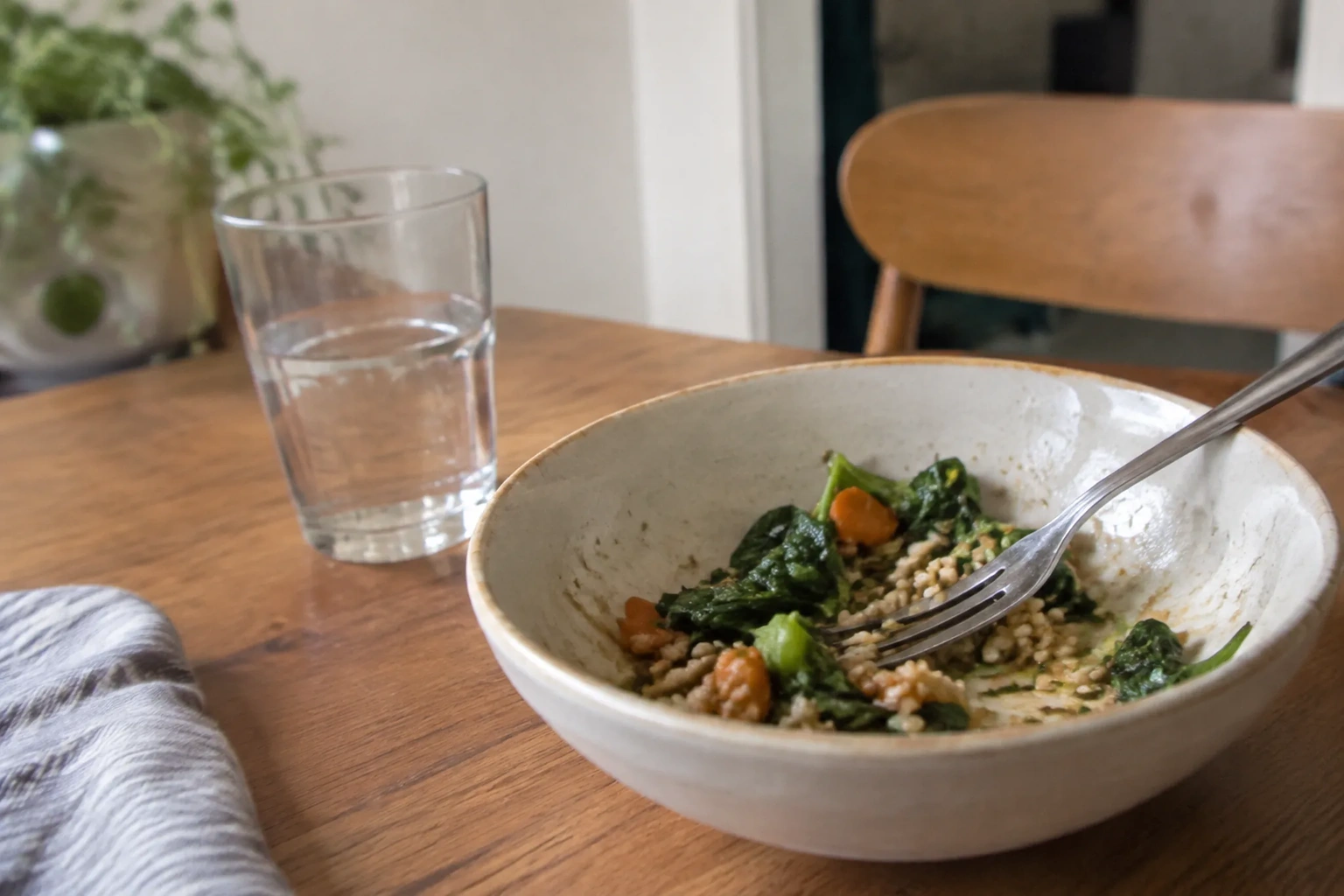
Digestion begins before the first bite, in the hands and the eyes, and it continues through the slow work of chewing. The common assumption holds that digestion is a bodily process that happens to a person, a kind of internal machinery running on its own. A more accurate description is that eating behavior feeds directly into that machinery, and the way a meal is eaten shapes how well the body handles it. Mindful eating is the practical name for that influence.
The term gets used loosely, often as a synonym for eating slowly or for putting the phone away at dinner. Those are pieces of it. The fuller idea concerns attention: noticing hunger and fullness, registering texture and temperature, and giving the body enough time to signal what it needs. For digestion specifically, the payoff shows up in the mechanics of the meal, from how thoroughly food is broken down in the mouth to how calmly the stomach receives it.
Most people who report vague digestive trouble, the bloating and heaviness and occasional reflux that never quite merit a diagnosis, are not eating the wrong foods so much as eating them in a way that outpaces the body's ability to process them. That is the argument here: pace and attention matter as much as the contents of the plate.
The mouth is the first stage, and the most neglected
Chewing is mechanical digestion, and it is the only stage a person controls completely. Teeth break food into smaller particles; saliva adds enzymes that begin breaking down starches and fats. A mouthful swallowed after three or four chews arrives at the stomach as a coarse mixture that the stomach must then work harder to reduce. A mouthful chewed twenty times arrives as a slurry, and the stomach's job becomes correspondingly lighter.
The number is not a rule, and it varies with the food. A bite of soft rice needs less work than a bite of steak. What matters is the habit of noticing the state of the food in the mouth before swallowing, which is the opposite of the common pattern at a desk or in front of a screen, where a fork moves from plate to mouth on autopilot and a meal disappears in six minutes.
There is a second function at work here. Saliva is not just lubricant. It carries enzymes and buffers, and it coats the food so the stomach lining is not hit with sharp or acidic particles directly. Rushed eating skips much of that coating. People who bolt a meal often describe a hot, sour feeling in the chest afterward, and the mechanism is not mysterious: large, under-chewed pieces and insufficient saliva, arriving fast.
Why a hurried meal sits like a stone
The stomach is a muscular bag that churns food with acid and enzymes, and it empties at a rate the body regulates. When a large volume arrives quickly, the stomach stretches, and the stretch signals the nervous system to slow emptying. That is protective, since it prevents a flood of partially digested material from entering the small intestine. The felt result, though, is heaviness and pressure that can last an hour or more.
Air is the other passenger. Eating fast usually means swallowing air along with food, and that air has to go somewhere. Some comes back up as a burp; the rest travels down and contributes to the bloating that many people attribute to a particular ingredient when the real cause was the speed of the meal. A person can eat a modest, familiar lunch in ten minutes and feel worse than after a larger meal eaten over half an hour.
None of this requires a special diet or a supplement. It requires a change in tempo, which is harder than it sounds because tempo is set by circumstance. A lunch break of twenty minutes, a phone propped against a water bottle, a colleague asking a question mid-bite: the conditions of modern eating work against the pace that digestion prefers.
The nervous system has to be in the right mode
Digestion runs on the parasympathetic branch of the nervous system, the calm one. Blood flow shifts toward the gut, secretions increase, and the muscles of the digestive tract move in coordinated waves. Under stress, the body prioritizes the opposite: blood moves to the limbs, the gut slows, and the whole process runs at reduced capacity. A meal eaten while angry, rushed, or answering work messages arrives in a body that is not set up to receive it.
This is why the advice to pause before eating is not ceremonial. A minute of stillness, a few slow breaths, a moment of looking at the plate before starting, all shift the body toward the mode where digestion works. The shift is not instant or total, but it is real, and it is measurable in the difference between a meal that sits well and one that does not.
Mindful eating, in this frame, is a way of signaling safety to the body. It says: this is a meal, not a race, and there is time to process it. The body responds accordingly.
Hunger and fullness are signals that can be relearned
Many people have lost the habit of noticing hunger until it becomes ravenous, and then eating past fullness because the signal to stop arrives late. Fullness is not instantaneous; the stretch receptors and the hormonal signals that say enough take time to register, often fifteen to twenty minutes into a meal. A person who eats quickly can clear a plate before the stop signal arrives, then feel uncomfortably full twenty minutes later.
Eating at a pace that allows those signals to surface is the practical fix. It means putting the fork down between bites, or pausing midway through the meal to check in: is there still hunger here, or has it been satisfied? The answer is often surprising. A person may find that two-thirds of the plate was enough, or that the hunger was never really hunger but boredom or fatigue.
Overeating is a digestive burden in its own right. A stomach pushed past comfortable fullness empties more slowly, and the backlog can contribute to reflux as pressure builds. Portion control is a familiar phrase, but the mechanism that actually controls the portion is attention, not willpower.
Slowing down without turning dinner into a ritual
The stereotype of mindful eating involves a single raisin, held to the light for a full minute. That image does the practice no favors. Most people do not want a meditation session at every meal, and they do not need one. A few adjustments carry most of the benefit.
Eating with utensils rather than fingers slows the pace, since a fork requires a deliberate motion. Setting the utensil down between bites adds a pause without requiring anything to be timed. Drinking water between bites, rather than in a large gulp at the end, both slows the meal and adds moisture that helps the food move. Sitting at a table, even a small one, changes the posture and the pace compared with eating from a container while standing at the counter.
Meals eaten alone are the hardest to slow, because there is no conversation to impose a rhythm. A person eating alone might try a single deliberate pause halfway through, a moment to notice the food and the state of hunger. It is a small intervention, but it breaks the autopilot that causes most fast eating.
None of these changes require buying anything or following a program. They cost a few minutes and a bit of attention, which is the whole currency of the practice.
What mindful eating does not fix
It is worth being clear about the limits. Mindful eating will not resolve a food intolerance, and it will not cure a condition that needs medical attention. Persistent reflux, pain, or changes in bowel habits warrant a doctor, not a slower fork. The practice addresses the behavioral layer of digestion, the part shaped by how a meal is eaten, and that layer is real but not the whole picture.
There is also a risk of turning attention into another source of anxiety. A person who monitors every bite and every sensation can end up more stressed at meals, which defeats the purpose. The aim is a relaxed, curious attention, not a hypervigilant one. If noticing becomes a chore, the practice has tipped over into something else.
The better framing is that mindful eating is a set of small habits that make the body's existing processes easier to run. It does not add anything to the meal. It removes the obstacles, the speed and the distraction and the stress, that make digestion work harder than it needs to.
A lunch eaten at the counter, and the same lunch eaten at the table
Consider two versions of the same meal: a bowl of lentil soup and a piece of bread. In the first version, a person stands at the kitchen counter, spoon in one hand, phone in the other, and finishes in seven minutes. The soup is hot and goes down fast; the bread is torn and eaten in two bites. Twenty minutes later there is a familiar pressure under the ribs, a mild sourness, and a vague sense of having eaten too much even though the portion was modest.
In the second version, the same person sits at the table, phone in another room, and eats the same soup over twenty minutes. The spoon is set down between bites. The bread is chewed rather than torn and swallowed. The meal ends when the bowl is empty and the hunger is gone, which happens before the last few spoonfuls, and the person stops there. The same food, the same body, a different set of signals reaching the stomach.
The difference is not dramatic or immediate for everyone, and some meals will sit heavily no matter how they are eaten. But over a week of meals, the pattern accumulates. The body that receives food slowly and calmly has an easier job than the body that receives it in a rush, and the person living in that body notices the difference in how the afternoon feels. That is the practical case for paying attention at the table: not a philosophy of eating, but a way of letting the machinery do the work it was built to do.





















