







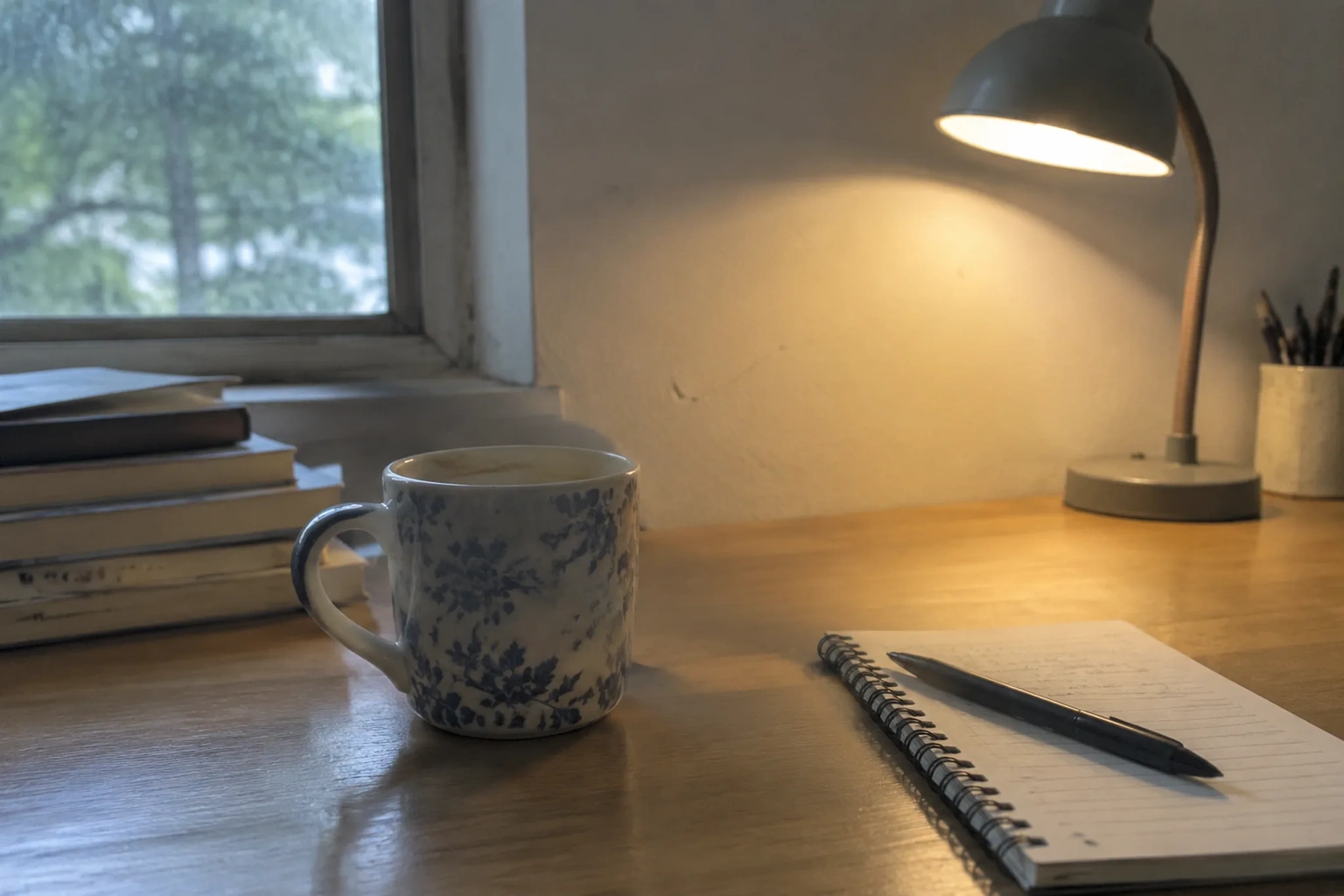
Anxiety in the morning has a texture. It arrives before the day has any content yet, a low hum behind the sternum at 6:14 a.m., a scanning of the ceiling, a mental run-through of everything that could go wrong before the coffee is even on. The habits that soften it are rarely the ones sold as anxiety cures. They are small, physical, and almost embarrassingly unglamorous, and they work because they interrupt the body's own momentum before it hardens into a mood.
The case for paying attention to the first hour rests on something fairly plain. Mornings are when the nervous system sets its baseline: heart rate, cortisol, the felt sense of how safe the day is. A person who wakes and immediately opens email is handing that baseline to whoever wrote the most pressing message overnight. A person who wakes and does almost nothing for fifteen minutes is doing something quietly protective. The habits below are not a program. They are a set of small physical interventions that, done repeatedly, change the temperature of the morning.
The Cold Glass of Water Before Anything Else
Before the phone, before the news, before the mental list. A glass of cold water, drunk standing at the kitchen sink, is one of the least romantic suggestions in this article and one of the most reliable. Thirst after a night's sleep is real, and the body reads mild dehydration as agitation. The cold itself gives the nervous system a clean, unambiguous signal: something concrete is happening to the body right now, in this room.
The habit is not about hydration as a wellness slogan. It is about sequence. Water first means the first act of the day is directed inward and done slowly, instead of outward and done in a hurry. A person who drinks a glass of water before touching a screen has already won a small, unclaimed minute.
Standing at a Window for Ten Minutes Without a Task
This one draws the most resistance, because it looks like wasted time. Ten minutes at a window, no phone, no podcast, no stretching routine with a timer. Just standing, looking out at whatever is there: a parking lot, a row of bins, a neighbor's dog. The temptation is to turn it into a meditation session with an app and a breathing count. Skip all that. The point is undirected attention, which is the opposite of the vigilant scanning that anxiety runs on.
The eyes do something useful here. Gaze that rests on a distant point, rather than flicking across a screen a foot from the face, lets the visual system settle. Some people find their shoulders drop without being told to. Others notice they have been clenching their jaw since the alarm. The window habit works because it gives the body a few minutes in which nothing is required of it, which is rarer than it sounds.
Making the Bed with Deliberate Slowness
A made bed is not a moral achievement. The value of the habit is in the doing, not the result. Pulling the sheet taut, smoothing the duvet, placing the pillow square: each motion is a small proof that the room can be put in order, and that the person doing it can complete something, however minor, before the day has asked anything of them. Anxiety thrives on the sense of an unmanageable backlog. A bed that is made is evidence against it.
The slowness matters as much as the act. A person who makes the bed in nine seconds has performed a chore. A person who takes ninety has performed a ritual, and rituals steady the body in a way chores do not. The difference is attention. The same ninety seconds, done with the mind already at the office, does nothing.
Eating Something Within the First Hour
Skipping breakfast is often reframed as discipline. For many people, it is a subtle act of neglect that makes the whole morning feel shaky and unearned. A body running on empty registers that emptiness as unease, and unease has no content, so the mind supplies some: a worry about the meeting, a reheated grievance, a sense of looming failure. The fix is almost too simple: eat something, even something small, within an hour of waking.
It does not need to be a production. A piece of toast with butter. Yogurt and a handful of nuts. A banana eaten over the sink. The habit is not a dietary prescription and should not be treated as one. It is a way of telling the body that it is being looked after, which is, in the end, the message anxiety most needs to hear and least believes.
The Phone That Stays Face Down Until After the First Task
This is the hardest habit on the list, and the one that pays best. The phone is a machine for borrowing other people's urgency. Opening it in bed, before the body is even fully upright, means the first information the brain receives is someone else's demand, someone else's opinion, someone else's news. The nervous system, still soft from sleep, takes it all at face value. A morning that begins this way is spent catching up to a pace that was never chosen.
A workable rule: the phone stays face down until one non-phone task is finished. The water. The window. The bed. It does not have to be a long exile. Ten minutes of a phone-free morning is enough to change what the first thought of the day is made of, and the first thought has an outsized influence on the ones that follow.
A Short Walk Before the Day Has an Agenda
Not a workout. Not a step count. A walk of eight or ten minutes, out the door and back, before the day has formed an opinion about how it will go. Movement changes the body's chemistry in ways that are well known and still underused: heart rate rises and settles, breathing deepens, the physical restlessness that anxiety feeds on gets somewhere to go. A person who walks before the day begins has already been outside, which is a small but real fact to hold against the feeling of being trapped indoors by obligation.
The route matters less than the repetition. The same loop, walked at the same time, becomes a kind of anchor. The corner with the cracked pavement, the house with the loud dog, the tree that drops something red every September: these become markers of a life being lived in a particular place. Anxiety is often a feeling of being nowhere in particular. A familiar walk puts a person somewhere.
Writing Three Sentences by Hand
Three sentences, longhand, on paper. What is actually happening right now. What is on the mind. What the day needs. The sentences do not need to be insightful or even coherent. The point is the hand moving across the page, which is slower than thought and forces a kind of pacing that the mind cannot manage on its own. Anxiety runs fast. Handwriting runs at the speed of a person, and it drags the nervous system down to its pace.
There is a second effect. Worries that stay in the head are formless and expand to fill the space available. Worries written down are finite, and often smaller than they felt. A person who writes "I am dreading the 11 a.m. call" has already begun to separate the dread from the call, and the separation is half the work.
The Radio on Before the Inner Monologue Starts
For some people, silence in the morning is not peaceful. It is a vacuum that the mind fills with rehearsal and worry. For those people, a low radio or a podcast in the background can be a genuine kindness. The voice of another person, talking about something ordinary, gives the mind a place to rest its attention that is not the inside of its own head. The trick is to choose something calm and unremarkable: a local station, a gardening show, a long interview with someone who is not selling anything.
The habit is not for everyone. Some people need the quiet and find the radio intrusive. The useful question is which kind of morning is more common: the one where silence feels spacious, or the one where silence turns into a room with no exits. The answer changes from week to week, and the habit should change with it.
Getting Dressed as a Transition, Not a Formality
Working from home blurred the line between sleeping and being awake, and a lot of people now spend the first three hours of the day in the clothes they slept in. That is not a moral failing. It is a transition problem. The body uses clothing as a cue, and staying in sleepwear keeps the nervous system in a low-grade limbo that feels like neither rest nor readiness. Getting dressed, even into a clean t-shirt and trousers, gives the morning a seam.
The transition can be small. A shower, a change of clothes, a pair of shoes rather than socks. The point is not to look presentable to anyone. It is to give the day a beginning that the body can feel, so that the anxiety of the morning has somewhere to end and the work of the day has somewhere to start.
A Single Task Finished Before the Inbox Opens
The most protective habit on this list is also the simplest to describe and the hardest to keep. One task, finished, before the inbox opens. It can be tiny: the dishes from last night, a bill paid, a reply to a friend that has been sitting for a week. The task is not the point. The point is the experience of completion, early, before the day has been divided into other people's priorities.
Anxiety in the morning is often a feeling of being behind, and the inbox is the place where that feeling is most efficiently manufactured. A person who finishes one thing before opening it has a small, solid fact to stand on: something was completed today, by me, before anyone asked. That fact does not cure anxiety. It gives it less to work with.
None of these habits require an app, a subscription, or a morning routine that takes ninety minutes and ends with a green smoothie. They require a decision made the night before, when the alarm is set, that the first fifteen minutes of the day will belong to the person waking up rather than to whoever sent the first message. That decision, repeated, is the whole practice.
The morning will still have its texture. There will be days when the water goes un drunk, the phone is opened in bed, and the low hum behind the sternum is there before the coffee is on. The habits are not a guarantee. They are a set of small, physical facts that, done often enough, give the anxious morning something to push against, and a person something to do before the day begins asking.





















