







Fermented rice left to sit overnight, then thinned into a drinkable porridge, is one of the oldest breakfasts on record. Indian households call it pazhamkanji. Japanese kitchens make it as a morning amasake. In parts of China the same idea arrives in a bowl with pickles on the side. None of these traditions needed a gastroenterologist's approval, and none of them were invented last year by a wellness brand. They share a logic that has quietly held up: a morning meal built around soft, fermented, fiber-rich food gives the gut a gentle start rather than a jolt.
That is the frame worth carrying into a modern kitchen. Breakfast has spent a century being industrialized into cereal boxes, juice glasses, and pastry counters, and the gut has paid some of that bill. This piece is about the opposite approach: a handful of breakfasts that are simple to assemble, kind to digestion, and specific enough to become habits. No powders required.
What the gut actually wants in the morning
Overnight, the digestive system has been mostly idle. It has also been doing maintenance: clearing out the small intestine, repairing the gut lining. The first food of the day lands on that freshly serviced surface, and what arrives matters. A breakfast of white toast and orange juice spikes blood sugar, offers almost no fiber, and sends the system into a fast, sharp cycle of insulin response and crash. A breakfast of oats, yogurt, or beans gives the gut something to work with.
The broad consensus, the kind that shows up across dietetics textbooks and public health guidance, points to three things: fiber, fermented food, and a slow release of energy. Fiber feeds the bacteria in the lower gut. Fermented foods contribute live cultures and already-broken-down nutrients. Slow energy keeps the whole system steady for hours. A good gut breakfast hits at least two of the three.
Oats, soaked rather than boiled
Rolled oats soaked overnight in milk or water become something different from cooked oats. The texture turns creamy without heat, and the starch partly breaks down, which can make the bowl easier to tolerate than a hot porridge for people whose stomachs feel tender in the morning. The fiber in oats, mostly beta-glucan, is the kind that gut bacteria ferment into short-chain fatty acids, a process that keeps the lower digestive tract in good repair.
Assembly takes two minutes the night before: equal parts oats and liquid in a jar, a pinch of salt, a spoon of yogurt stirred in if the goal is a fermented boost, and a lid. In the morning the jar comes out of the fridge and gets topped with something with texture: toasted seeds, a spoon of nut butter, a handful of berries. The berries matter more than they seem to; frozen ones thawed overnight release juice that sweetens the whole jar without added sugar.
The trap is making overnight oats too sweet. Honey, maple, and mashed banana all push the bowl toward dessert, and a sugar-heavy breakfast undoes some of the steady-energy benefit. A better move is to lean on cinnamon, a little vanilla, or the natural sweetness of fruit. The bowl should taste like grain and cream first, sweet second.
Eggs on toast, with the toast chosen carefully
Eggs remain the most efficient protein in a morning kitchen. Two of them, scrambled soft or fried in a little olive oil, deliver roughly twelve grams of protein and a fat profile that keeps hunger quiet until lunch. The gut does not object to eggs; the objection many people feel is really about the bread underneath them, or the butter, or the speed at which the whole plate gets eaten.
Sourdough matters here. A long-fermented loaf has already had some of its gluten and starch pre-digested by the starter culture, and many people who find commercial white bread heavy report that a true sourdough sits more easily. The bread should be toasted dark enough to crunch and eaten with something green or acidic on the side: a few leaves, a slice of tomato, a squeeze of lemon. That acidity helps the stomach start producing the acid it needs for the day's digestion.
One detail worth insisting on: eat the eggs before the coffee. Coffee on an empty stomach, especially the strong, fast kind, can trigger urgency in some people and acid reflux in others. Eggs first, coffee after, and the morning runs smoother. This is not a rule for everyone, but it is a cheap experiment with a clear result.
Yogurt, but the plain kind, and with something living in it
Most supermarket yogurt is a dessert in a health costume. The fruit-at-the-bottom tubs carry as much sugar as a soft drink, and the "light" versions trade sugar for sweeteners that some guts handle poorly. Plain, whole-milk yogurt with live cultures is a different food entirely: tart, thick, and genuinely fermented. It contains Lactobacillus strains that survive the trip to the gut in useful numbers, and the lactose has been partly broken down, which makes it kinder to people who struggle with dairy.
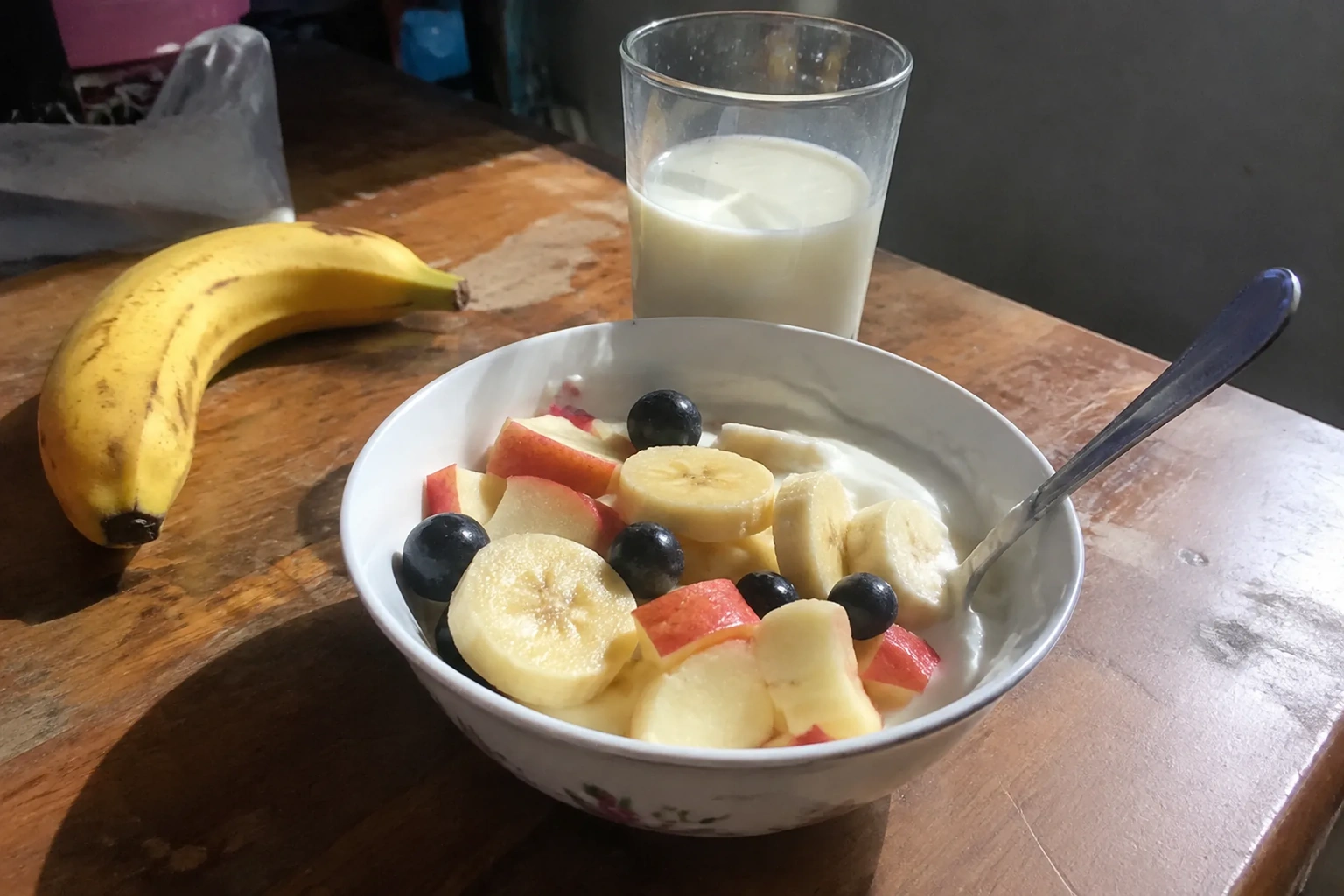
A bowl of it, full-fat and unsweetened, with a spoon of ground flax, a few walnuts, and either fresh fruit or a small spoon of jam stirred through, is a complete gut breakfast. The flax adds fiber and a nutty depth. The walnuts add crunch and fat. The jam is a concession to pleasure, and a small one is fine. Cold yogurt in winter can feel punishing; letting the bowl sit on the counter for ten minutes before eating takes the chill off without warming it into soup.
The case for a savory breakfast
Sweet breakfasts dominate English-speaking kitchens, and the gut does not require them. A bowl of miso soup with a soft-boiled egg and a little rice, or a plate of leftover greens and beans with an egg on top, works as well or better. Miso is fermented, the egg is protein, the greens are fiber, and the whole thing takes under ten minutes if the rice is cooked the night before.
Savory breakfasts also tend to carry less sugar, which means a gentler blood sugar curve and fewer mid-morning crashes. The resistance is cultural, not digestive. A person raised on cereal finds miso at 7 a.m. strange for about three days, then stops noticing. The gut, which has no opinion on flavor, adapts immediately.
Fermented sides that take ten seconds
A spoon of sauerkraut or kimchi next to eggs, or a few slices of quick-pickled cucumber on the side of the plate, adds live cultures and a bright acidity that cuts through fat. These are not garnish. They are the fermented component that rounds out a breakfast built on protein and grain, and they cost nothing in effort because the jar is already in the fridge.
Kefir works the same way in liquid form: a small glass alongside a piece of toast, or blended into a smoothie with frozen berries and a spoon of oats. The texture is thinner than yogurt and the culture count is higher. It is sour enough that some people need a week to acquire the taste, and that is fine. Start with half a glass.
What to skip, and why it is usually about speed
The breakfasts that trouble the gut most are the ones eaten in motion: a pastry in the car, a protein bar at the desk, a coffee standing at the counter. Speed matters as much as ingredients. Eating fast means swallowing air, and swallowing air means bloating and burping by mid-morning. The same plate of eggs and toast, eaten sitting down over ten minutes, sits differently than the same plate eaten standing in four.
Cold cereal with milk is not evil, but most of it is fortified starch with a marketing budget, and it digests fast enough that hunger returns by ten. Fruit juice, even fresh, delivers sugar without the fiber that slows it down, and it is better eaten as fruit. These are not forbidden foods. They are just the ones that ask the gut to do extra work for less return.
Building a morning rotation that survives a bad week
The reason most gut-friendly breakfast plans collapse is not taste. It is decision fatigue on a Tuesday when the fridge is half empty and the meeting starts early. A rotation of three breakfasts, each with ingredients that keep for a week, outlasts any elaborate menu. Overnight oats on Monday and Wednesday. Eggs on sourdough on Tuesday and Thursday. Yogurt with flax and fruit on Friday. Saturday is for the savory bowl. Sunday is for whatever the market offers.
Shop for that rotation once a week and the whole system runs itself. A jar of oats, a dozen eggs, a loaf of real sourdough, a tub of plain yogurt, a bag of flax, and a jar of sauerkraut cover most of the week. Add fruit and a few vegetables and the gut gets its fiber, its cultures, and its protein without a single decision before coffee.
The morning that starts with a warm, soft, fermented bowl and ten quiet minutes at a table does more for digestion than any supplement aisle can match. It also happens to taste good, which is the part the wellness industry tends to forget. The gut is not a problem to be solved with a product. It is a system that responds, reliably and within days, to what gets put in front of it at the start of the day, eaten slowly, from a jar that was filled the night before.





















