







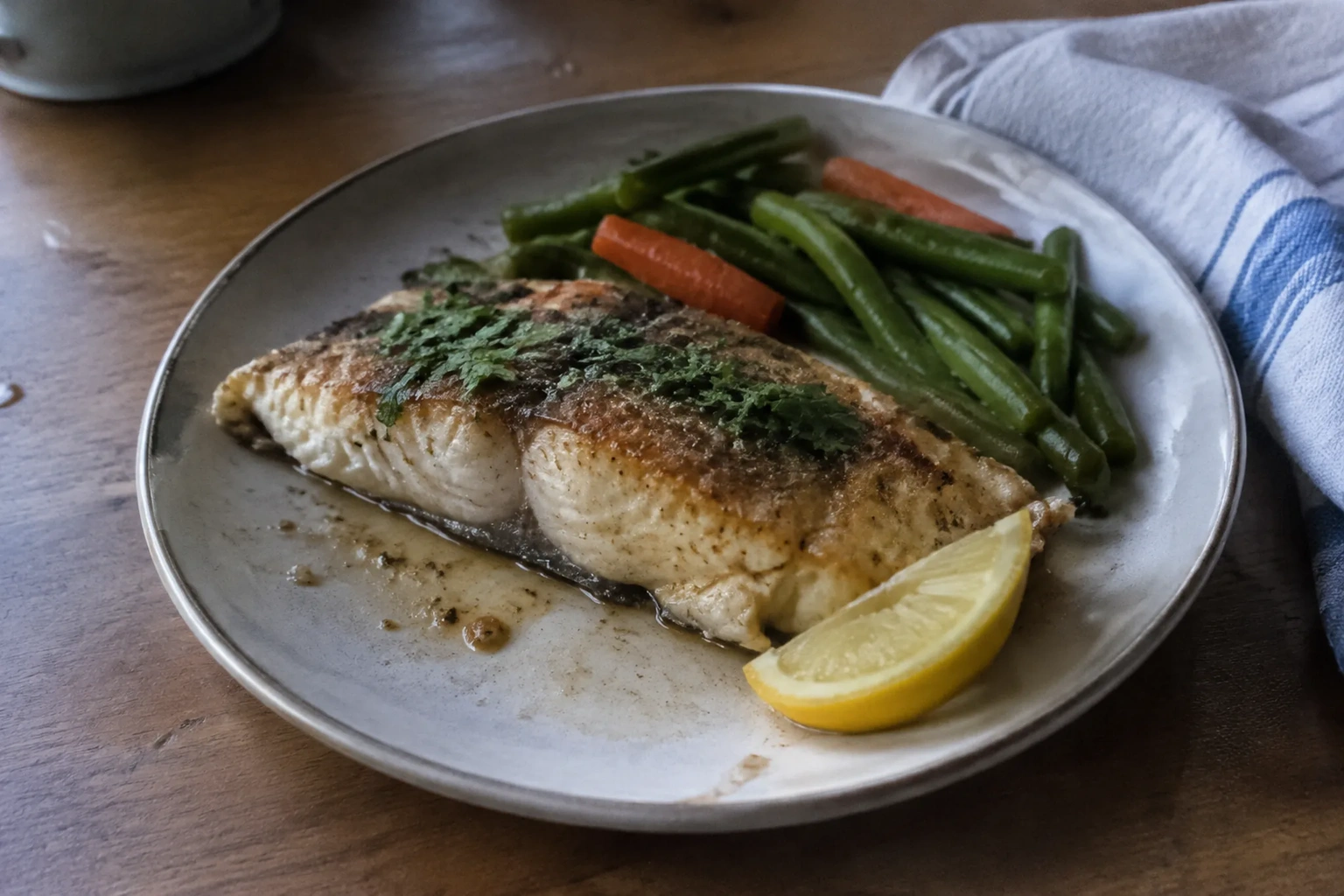
Fish has a reputation problem in home kitchens, and it has almost nothing to do with the fish. The obstacle is confidence. A chicken breast can be overcooked by twenty minutes and still pass. A fillet of cod goes from translucent and silky to dry and cottony in a window of about ninety seconds, and most people discover that window by missing it. The result is a generation of cooks who order fish in restaurants and buy the frozen breaded kind at the supermarket, convinced that the fresh stuff is a professional's game.
It is not. Fish is the fastest protein a home cook can put on a table, and the recipes that teach it best are the ones that ask for almost nothing: heat, salt, fat, and a timer. What follows is a short list of dishes worth learning first, chosen because each one teaches a specific skill that carries over to the next.
Buying the fish matters more than any technique
No recipe rescues a tired fillet. A cook can sear, sauce, and garnish, and the result will still taste like the bottom of a refrigerator. The single most useful habit is learning to judge freshness with the senses before money changes hands.
Smell is the first test. Fresh fish smells of the sea and very little else, faintly mineral, almost like a clean beach. A fillet that smells of ammonia or sour milk has turned and should be left where it is. The second test is touch. Press a finger into the flesh and it should spring back quickly, leaving no dent. If the flesh stays dimpled, the fish is old enough that the proteins have begun to break down, and it will cook up mushy. The third is the eye, if the fish is whole: clear and bulging means fresh, sunken and cloudy means the opposite.
For a beginner, the frozen case at a good grocer is not a defeat. Modern flash-freezing is excellent, and a vacuum-sealed fillet of cod or salmon thawed overnight in the refrigerator will outperform a tired piece from the counter. Thaw it slowly, pat it bone dry, and cook it the same day. The one rule is to skip anything that has already been thawed and refrozen, which is why the frozen aisle is often more reliable than a display case that sits open to the air all afternoon.
Why salmon is the training-wheels fillet
Salmon is the fish to learn on, and the reason is fat. Its flesh carries enough oil that it tolerates a wider margin of error than a lean white fish, and it also announces doneness through color. Raw salmon is translucent and orange-red. As it cooks, the color turns opaque and paler, and that change travels up from the pan side to the top. A cook who watches for the moment the last translucent band vanishes has learned to read fish by sight, which is the single most transferable skill in the whole discipline.
There is also the question of skin. Salmon skin, when it is dry and the pan is hot, crisps into something genuinely worth eating, and the process of pressing the fillet skin-side down and watching the edges turn golden is a lesson in heat management. A cool pan gives soggy skin and steamed flesh. A properly heated pan gives a crackling surface and a fillet that releases itself when it is ready. The pan tells the cook when to flip.
One caution about farmed versus wild. Wild salmon is leaner, cooks faster, and can dry out in the time it takes to set the table. For a first attempt, farmed salmon from a reputable source is the gentler teacher, and its extra fat forgives the two minutes a nervous cook will inevitably lose.
The pan-seared fillet, step by step
The technique that unlocks most of the recipes in this piece is the same one every time. Start with a fillet no thicker than an inch and a half. Dry it thoroughly with paper towels; water is the enemy of browning, and a wet fillet will steam rather than sear. Season both sides with salt a few minutes before cooking, letting the salt draw moisture to the surface so the towel can blot it away.
Heat a heavy skillet over medium-high until a drop of water skitters across the surface. Add a thin film of neutral oil, then lay the fillet in away from the cook's body, skin-side down if it has skin. Do not move it. The protein will release when a crust has formed, usually after three or four minutes, and the sound will shift from a hard sizzle to something quieter as the moisture cooks off.
Flip, then add a knob of butter and a crushed garlic clove if the mood allows, tilting the pan and spooning the foaming butter over the top for another minute or two. The fillet is done when the flesh flakes at the thickest point but still looks slightly glossy inside. A thermometer reading in the low 130s Fahrenheit for salmon, or the mid 140s for a lean white fish, is a reliable guide for anyone nervous about the finger test. Then the important step: rest the fillet on a warm plate for a couple of minutes. Fish continues to cook as it rests, and those two minutes are the difference between delicate and dry.
Cod with butter and lemon, and the lesson of gentle heat
Lean white fish teaches a different lesson: restraint. Cod, haddock, and pollock have almost no fat of their own, so they cannot absorb careless heat. The classic preparation is embarrassingly simple. Season a thick cod fillet, sear it in a little oil for a couple of minutes a side, then lower the heat, add butter and a squeeze of lemon, and let it finish basting in the foaming fat. The fish is ready when it just begins to separate into large flakes. The lemon goes in at the end because its acid sharpens the butter and cuts the richness that the fish itself lacks.
The mistake almost everyone makes here is chasing a hard crust. A cod fillet forced to brown aggressively at high heat will scorch on the outside while staying raw at the center, and the cook will flip it twice, then a third time, and end up with something broken and tough. Gentle heat and patience produce a fillet that is snowy and soft, and the butter does the flavor work that the fish cannot do alone.
A one-pan roast that feeds four without a recipe card
Oven-roasting is the most forgiving method for a beginner, and it scales effortlessly. Heat the oven to 425 degrees Fahrenheit. Toss cherry tomatoes, sliced red onion, and a handful of olives with olive oil, salt, and a pinch of dried oregano on a sheet pan, and roast them for about fifteen minutes until the tomatoes burst and the onions soften. Then nestle thick fillets of a firm white fish among the vegetables, drizzle with more oil, and return the pan to the oven for eight to twelve minutes, depending on thickness.
The fish is done when it flakes at the center and looks opaque all the way through. The vegetables have already done the seasoning, the tomatoes have given up their juice, and the whole thing comes out of the oven looking like something a person planned. This is the recipe to keep in a back pocket for a weeknight when there is no time to think, and it teaches a valuable truth: fish cooks beautifully in the company of other things.
Steaming, the method that hides in plain sight
Steaming gets dismissed as diet food, which is unfair. A fillet steamed over simmering water with ginger, scallion, and a splash of soy and sesame oil at the end is one of the cleanest, fastest fish dishes in any cuisine, and it is nearly impossible to overcook if the cook pays attention. The technique is simple: bring an inch of water to a simmer in a wide pan, set the seasoned fillets on a plate or rack above the water, cover, and steam for six to eight minutes. The flesh turns opaque and firm, and a knife slides through with no resistance.
What makes steaming worth learning is that it removes the variable of browning entirely. There is no crust to chase, no pan to heat, no splatter to fear. The cook simply watches the clock and the color. For anyone who has ever burned a fillet while trying to get a sear, the calm of a covered pot is a revelation.
The fillets to avoid while the skills are still new
Some fish are simply unforgiving, and there is no shame in leaving them to the professionals until the fundamentals are solid. Tuna steaks demand a hard sear and a raw center, which requires confidence and a very hot pan. Mackerel and sardines are oily and fragile and fall apart at the slightest mishandling. Flatfish like sole are thin and delicate and overcook in seconds. And whole fish, however impressive, require cleaning, scoring, and a feel for the bone structure that takes practice.
The fish to seek out instead are the thick, firm, forgiving ones: salmon, cod, halibut, and the various white fish sold as "catch of the day." They are sturdy enough to survive a nervous flip and thick enough that a minute of inattention does not ruin them. A cook who masters these four will find that the intimidating ones become less intimidating, because the same instincts apply. The pan is hot or it is not. The fish is opaque or it is not. The flesh flakes or it does not.
What a first attempt should cost and how long it should take
A beginner should expect to spend somewhere between eight and fifteen dollars a pound for good salmon or cod, less for frozen, and should plan on a total kitchen time of under half an hour from refrigerator to plate. If a recipe asks for a dozen ingredients and an hour of marinating, it is not a beginner's recipe, whatever the book claims. The best first fish dishes are the ones a person can cook on a Tuesday after work, with one pan and a pair of tongs, and still have the kitchen clean before the plates are cleared.
The real measure of progress is not a perfect fillet. It is the moment a cook stops needing the timer, presses a finger to the flesh, and knows. That instinct arrives faster with fish than with almost any other protein, because the feedback is immediate and the margin is honest. The first few fillets may be a little dry. The next few will be better. By the fifth or sixth, the pan will hiss, the skin will crisp, and the fish will be done exactly when it should be.





















