







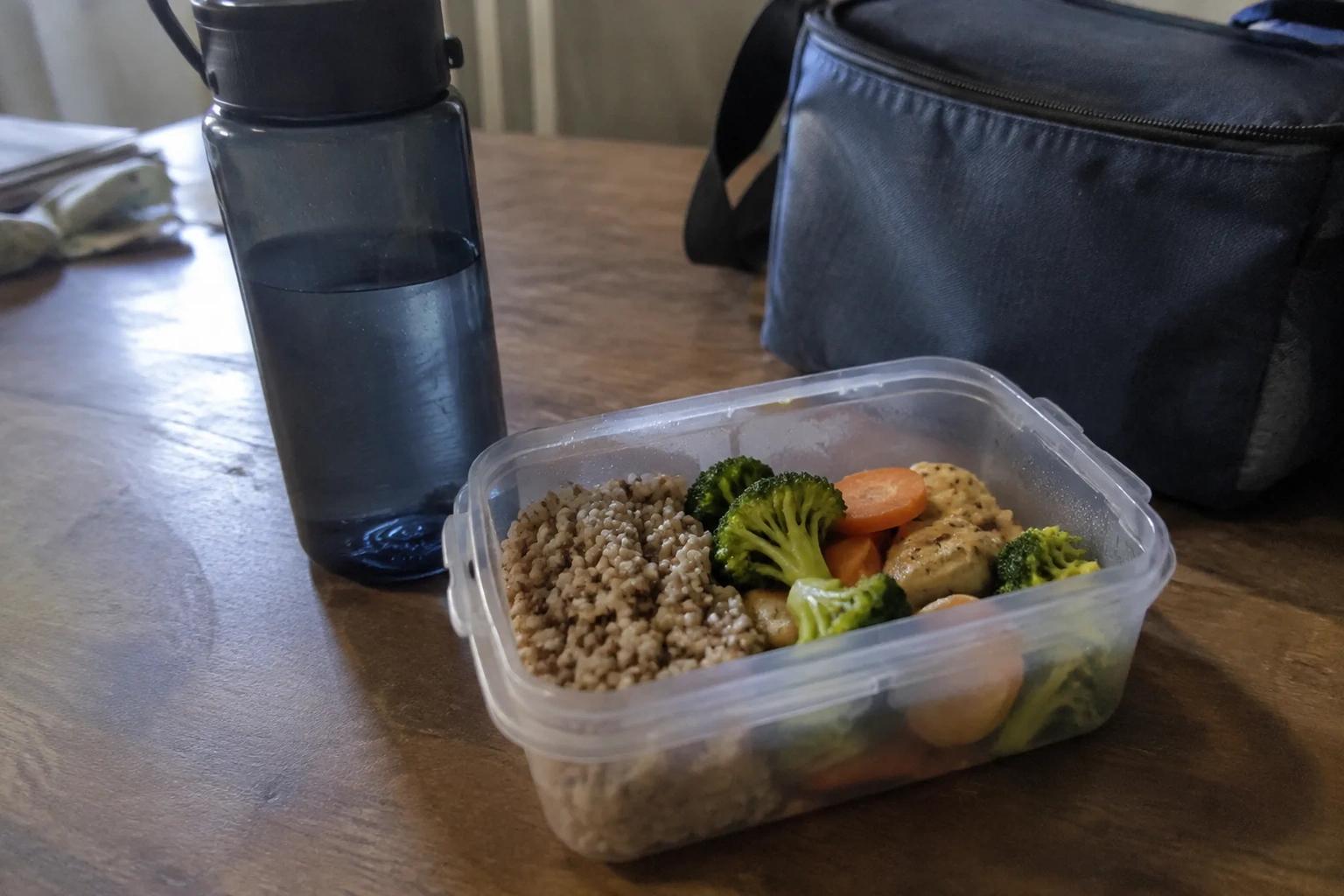
By ten in the morning, a packed lunch has already begun to tell the truth about itself. The bread has softened where it met the tomato. The apple has bruised against the corner of the bag. The yogurt has decided, quietly, to leak. None of this announces itself at the moment of packing, when everything looks tidy and possible. It announces itself later, at a desk or a job site, when the lid comes off and the whole plan sags.
Lunch that holds up until noon is a structural problem before it is a culinary one. The food has to survive four or five hours in a bag, a car, a locker, a drawer, without a refrigerator and without a person's hands on it. That is a longer and harsher trip than most recipes acknowledge. A sandwich that tastes fine at 8 a.m. is a different object by noon, and understanding why is the entire game.
The physics of a sandwich losing its nerve
Moisture moves. That is the single fact that governs most lunch failures. Water in a tomato slice, a pickle, a cucumber, a wet filling will migrate down through bread under the gentle pressure of a stack and the small jostling of a commute. By midday the bottom slice is a damp sheet, and the sandwich has lost its architecture.
The old fix is a fat barrier. A thin coat of mayonnaise, butter, or olive oil on both inner faces of the bread slows the water's path. This works, and it works best with something thick and cold like butter, which sets up in a cool bag and holds a real seal. A person who buttered the bread before adding the ham is not being fussy. That person is doing structural engineering.
The other lever is the tomato's position. Sliced tomato belongs nowhere near the bread until the moment of eating. Pack it separately in a small container, or leave it out and accept a drier, sturdier sandwich. There is no trick that makes a ripe, juicy tomato sit against bread for four hours and leaves both intact. The tomato always wins.
Bread choice decides more than filling ever will
A soft white loaf is a lovely thing fresh and a poor traveler. It compresses under a sandwich's own weight, soaks up moisture quickly, and turns gummy in a cool bag. A denser bread with a real crust, a country sourdough, a baguette, a rustic roll, gives the filling something to lean on and tolerates a few hours of compression.
This runs against the instinct to pick the softest, most child-friendly bread in the house. Soft bread is comfortable at the moment of making. Dense bread is comfortable at the moment of eating. Those two moments are hours apart, and the second one is the one that matters.
There is a limit, though. Bread too crusty will shred the roof of the mouth of anyone eating it at a desk with no knife. The sweet spot is a loaf with a firm crumb and a crust that yields rather than shatters. A baguette left whole and cut at lunch is better than a baguette sliced in the morning, because the cut faces stay dry until the last possible minute.
The cold bag is doing less than people believe
An insulated bag with a small ice pack is worth owning. It slows the growth of anything unwelcome in dairy, meat, and cooked rice, and it keeps fruit from going limp. But it is a delaying tactic, not a refrigerator. A bag sitting in a warm car for three hours is a warm bag with a melting ice pack in it.
The realistic move is to pack cold things cold, straight from the fridge, and to use one large ice pack rather than several small ones, because a large block of ice melts more slowly than the same volume broken up. A frozen bottle of water does double duty: it chills the bag and becomes the drink by early afternoon.
Some foods simply should not ride along without real cold. Cooked rice, cooked pasta, cut melon, and anything with a cream or custard base are the usual suspects. If the bag is not genuinely cold, those are the items to leave at home, not to gamble on.
Separate containers beat clever packing every time
The single most reliable upgrade to a packed lunch is more containers, not better food. A lunch assembled as one integrated unit, dressing on the salad, sauce on the noodles, fruit against the sandwich, is a lunch betting that nothing will shift. Things shift.
Small lidded cups for dressing, a separate box for the wet fruit, a bag for the crackers, a container for the cut vegetables: this looks like more work and takes about ninety extra seconds. The payoff is a lunch that arrives in the state it left. The dressing gets added at the desk. The crackers stay crisp. The apple does not perfume the cheese.
A leakproof container is worth the money. The cheap ones seal well enough for a day in a bag and fail at the seam after a month of washing. A lunch that leaks into a bag ruins the bag and the appetite in the same motion, and that is a cost paid repeatedly.
Which foods actually improve by noon
Some dishes are better at lunch than they were at breakfast, and building around them removes most of the difficulty. Grain salads, lentil salads, and bean salads all want time for the dressing to soak in. A cold pasta salad with an oil-based dressing is at its best three hours after it was made. These are foods that do the work of holding up by getting better.
Roasted vegetables hold well and even improve as they sit. A frittata or a slice of Spanish tortilla travels flat and firm and does not care about temperature within reason. Hard cheese, cured meat, boiled eggs still in the shell, whole fruit with a thick skin, and a good chunk of bread make a lunch that needs no assembly and no refrigeration for a morning.
The opposite list is short and worth memorizing. Cut apples brown. Avocado turns. Leafy greens wilt under dressing. Fried food goes soft and then greasy. Anything with a crisp shell, a fried cutlet, a breaded fillet, a taco shell, surrenders its texture within an hour of contact with its own moisture. These are not foods for a bag.
The case for packing the components, not the dish
A sandwich assembled in the morning is a finished object asked to survive a journey. A sandwich assembled at the desk from parts is a fresh sandwich, and the only cost is a minute of assembly. This distinction reorganizes the whole approach: pack bread, pack filling, pack the wet items, and combine on arrival.
The same logic rescues salads. A jar with dressing at the bottom, sturdy vegetables in the middle, and leaves on top stays crisp until it is shaken and eaten. A green salad tossed at 7 a.m. is a limp pile by noon. Layering is not a presentation trick. It is a time-release mechanism.
This approach asks a little more of the packer and nothing of the eater, which is the right trade. The morning person has the energy and the cold fridge. The midday person has neither. Put the work where the resources are.
What the lunch looks like at the desk
Picture the good version. A firm roll, cut that morning but kept whole, split at the desk and filled with cold roast chicken and a slice of tomato from a small cup. A side of roasted peppers in oil. An orange with a thick peel. A frozen water bottle now half melted and cold to the touch. Nothing has leaked. Nothing has gone soft. The bread still has its crust.
That lunch did not require skill. It required a person to think, at 7 a.m., about what the food would be doing at noon, and to pack accordingly. The sandwich that sags is not a failure of cooking. It is a failure of forecasting, and forecasting is a habit anyone can build.
The habit itself is small and specific: before closing the bag, ask what will move, what will leak, what will soften, and what will warm. Whatever fails that test gets repacked, separated, or left behind. Do that for a week and the lunch that holds up until noon stops being a project and becomes the ordinary result.





















