







Somewhere in the back of a cabinet, behind the holiday sprinkles and a bag of rice that has been open since spring, sits the real dinner. It is probably a can of tomatoes. Maybe a box of pasta, a jar of anchovies, a bag of lentils that cost two dollars. The ingredients that get a household through a Tuesday night are rarely the ones that impressed anyone at the store. They are cheap, shelf-stable, and almost aggressively plain on their own.
What separates a pantry that feeds people from a pantry that merely exists is whether those staples can be combined without thought. A shelf of five unrelated jars still requires a decision. A shelf built around a handful of meals collapses the decision to a single question: which one, and how fast.
The list below is not a shopping guide to the trendiest preserved thing. It is a short set of ingredients that behave well in the same pot, with a few honest words about what each one actually contributes and where it fails.
Canned tomatoes are the backbone, and the brand matters less than the form
Whole peeled tomatoes are the most forgiving can on the shelf. Crushed and diced versions save a step, but diced tomatoes often carry a firming agent that keeps the pieces rigid through long cooking, and the texture never quite breaks down. Whole tomatoes crush in a pot with the back of a spoon and give up their structure in about twenty minutes.
One can, a smashed clove of garlic in olive oil, salt, and enough time on low heat produces a sauce that needs nothing else. That sauce is the base for pasta, for eggs baked in it, for a piece of white fish set on top and covered until it turns opaque. The can is not glamorous. It is the reason dinner exists at 6:40 on a Wednesday.
San Marzano labels get a lot of attention, and the better ones are genuinely sweeter. A cook on a budget can skip the markup and add a pinch of sugar if the sauce tastes sharp. Nobody at the table will audit the can.
Dried pasta is a blank surface, and shape changes the dish more than people admit
Pasta is the most overstocked and least understood staple in most kitchens. A household will own six shapes and use two. The useful rule is that shape should match sauce weight: long strands for thin, oily sauces; ridged or tubular shapes for chunky, thick ones; small shapes for soups and cold dishes.
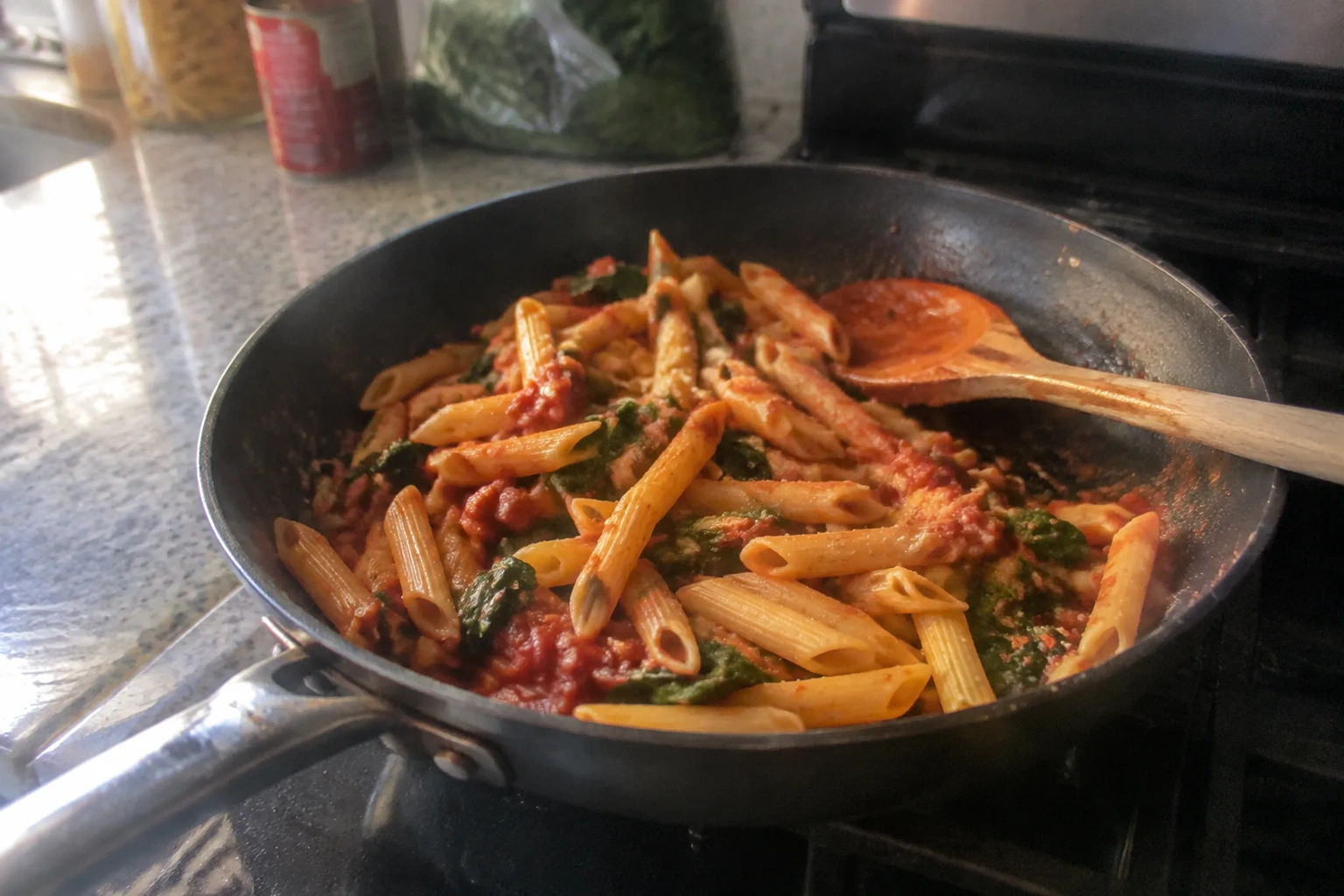
A single pound of rigatoni can absorb a can of tomatoes, a handful of wilted greens, and the last of a wedge of hard cheese and come out as a coherent dinner. The same pound, boiled and tossed with butter and black pepper, is cacio e pepe's humbler cousin and takes eleven minutes start to finish.
Buy one long shape and one short shape. Two boxes, rotated. The pantry gets simpler and the cooking gets faster.
Anchovies in oil do more work than their price suggests
A tin of anchovies costs a few dollars and keeps for months after opening if it is transferred to a small jar and covered with oil. Melted into hot olive oil, two or three fillets dissolve completely and leave behind a deep, savory base that reads as richness rather than fish. People who insist they dislike anchovies have usually eaten them without knowing it, in a sauce or a dressing that tasted unusually good.
The fillets go into the pot before the tomatoes, into the pan before the garlic, into the salad dressing before the vinegar. They are the cheapest way to make a plain vegetable taste like it was cooked by someone with more time than the cook actually had.
One caution: anchovy paste in a tube is convenient and much saltier than fillets. If the tube is what is on hand, use half of what a recipe calls for and taste before adding salt.
Lentils and dried beans reward a little foresight with a lot of dinner
Dried lentils need no soaking. Green or brown lentils simmer in about twenty-five minutes and hold their shape, which makes them useful in salads and in a pot with tomatoes, cumin, and a bay leaf. Red lentils collapse entirely in fifteen minutes and thicken a soup into something closer to a stew.
Dried beans are a longer project, requiring a soak or a long, slow simmer, and a can of chickpeas is a fair shortcut for a weeknight. A can of chickpeas, drained, tossed in oil and salt, and roasted at high heat until the edges go crisp, is a snack, a salad topping, and a filling for a folded flatbread. The same can, mashed with a fork and mixed with lemon and tahini, becomes hummus in four minutes.
Lentils and beans are the protein that does not need a freezer or a plan. They wait.
Rice is a cuisine, not a side dish
A bag of long-grain rice is a different pantry item than a bag of short-grain rice, and treating them as interchangeable produces mediocre results. Long-grain stays separate and fluffy, good under a stew or a stir-fry. Short-grain clumps and sticks, which is exactly what a bowl of rice with a fried egg and soy sauce wants.
The real value of rice is that it extends everything else. A cup of leftover rice, fried hard in a hot pan with an egg, a handful of frozen peas, and a splash of soy sauce, is a complete meal in seven minutes and costs less than a dollar. Rice absorbs the sauce from a can of tomatoes and a tin of fish and turns it into a full dinner for two.
Frozen peas and corn belong on the staple list even though they live in the freezer
Frozen vegetables are picked and frozen at peak ripeness, which means a bag of peas in February is often sweeter than a fresh pod shipped from a continent away. They also require zero planning, which is the whole point of a pantry staple. A cup of frozen peas stirred into a pot of pasta in the last two minutes of cooking adds color, sweetness, and a vegetable without a single extra pan.
Frozen corn does the same work in a skillet with butter and chili powder, or folded into a batch of cornbread. Neither is exciting on its own. Both are the difference between a bowl of starch and a meal with some range.
A hard cheese rind is a seasoning, and the freezer is where it should live
Parmesan or pecorino rinds, the tough ends that cannot be grated, are the most underused byproduct in a kitchen. Dropped into a pot of soup or a simmering tomato sauce, a rind melts into the liquid and gives it a savory depth that no amount of salt can replicate. The rind comes out at the end and gets discarded.
Keep the rinds in a bag in the freezer. When a soup or a sauce needs a lift, one goes in. This is the kind of habit that separates a pantry from a larder: a small reserve of flavor built from things that would otherwise be thrown away.
The autopilot meal is a formula, not a recipe
Once the shelf holds tomatoes, pasta, anchovies, lentils or beans, rice, frozen vegetables, and a hard cheese, dinner becomes a fill-in-the-blank exercise. Fat, aromatics, a tomato base or a broth, a starch, a protein, a vegetable, something sharp or salty on top. That is the architecture of most weeknight meals, and each slot has three or four interchangeable options on the shelf.
Oil and anchovy in a pan. Garlic until it smells like garlic. A can of tomatoes or a pot of water with a spoonful of paste. Lentils or pasta or rice. Peas or greens. A grated cheese or a squeeze of lemon at the end. The cook does not need a recipe; the cook needs the shelf to be stocked so the choice is already made.
This is why the autopilot meal fails in most kitchens. The individual ingredients are fine; they simply do not fit together. A shelf of specialty vinegars and exotic grains and a single can of something unfamiliar produces a cook who stands in front of the open cabinet at seven o'clock with no path forward.
Stock the shelf around six meals, not sixty ingredients
The instinct when building a pantry is to buy broadly: a little of everything, in case. That instinct produces a cabinet full of half-used jars and a cook who still cannot decide what to make. The better move is to pick six dinners the household actually likes, list the shelf-stable ingredients each one requires, and buy only the overlap.
Six meals built on the same dozen ingredients is not a limitation. It is a system. The pasta dish and the lentil soup share tomatoes and garlic. The rice bowl and the bean salad share lemon and oil. The cheese rind goes into the soup and gets grated over the pasta. Nothing sits unused, and nothing requires a trip to a specialty store.
The test of a good pantry is not how it looks on a shelf. It is what happens at 6:45 on a night when nobody planned anything and the refrigerator is nearly empty. If the answer is a pot of pasta with tomatoes and anchovies, or a bowl of rice with a fried egg and frozen peas, the pantry is working. If the answer is takeout, the shelf is telling the truth about itself.





















