







A jar of chicory root powder sits on a supermarket shelf next to the coffee, priced like a specialty item and marketed with the word "gut" in a friendly typeface. A bag of frozen raspberries costs less and does more. That gap between the marketed product and the ordinary food is where most prebiotic advice goes wrong. The useful conversation is not about supplements. It is about the handful of cheap, unglamorous foods that feed the bacteria already living in the digestive tract, and the small, repeatable ways they get onto a plate.
Prebiotics are a specific category, and the word gets stretched until it means almost nothing. A prebiotic is a substrate that gut microorganisms selectively ferment, producing a health benefit. The classic examples are inulin, fructooligosaccharides, resistant starch, and certain beta-glucans and galactooligosaccharides. Fiber and prebiotic are not synonyms. A bowl of oatmeal contains fiber but comparatively little of the fermentable material that feeds bifidobacteria. The distinction matters because adding "fiber" in general does not automatically do the prebiotic job, and the foods that carry real prebiotic load are narrower than the supplement aisle suggests.
The practical version of this is unromantic. Prebiotic foods are mostly things people already know how to cook: onions, garlic, leeks, asparagus, Jerusalem artichokes, chicory root, underripe bananas, cooked-and-cooled potatoes, oats, barley, legumes, and cocoa. The work is not discovery. The work is quantity, frequency, and the small logistics of getting these foods into ordinary meals without turning dinner into a clinical exercise.
The onion problem is a portion problem
Onions and garlic carry a meaningful prebiotic load, mostly as inulin and fructooligosaccharides. The catch is that the amount needed to matter is larger than a garnish. A few slivers of onion in a salad contribute flavor and almost nothing else. A half onion cooked down in a pan, softened until sweet, is a different proposition. The realistic move is to treat alliums as a volume ingredient rather than a seasoning: a full onion diced into a pot of beans, three or four cloves of garlic crushed into a tray of vegetables, leeks sweated down until they collapse.
Cooking changes the texture and the sweetness but does not destroy the fermentable carbohydrates, so a long, slow sweat is a fine delivery method. The hurdle is tolerance. A person who jumps from a quarter onion to a whole one in a single meal may notice gas and cramping within a few hours. The ramp matters more than the destination. Adding a little more allium each week, over a month or two, gives the gut population time to shift and usually softens the side effects.
Resistant starch hides in cold potatoes
Cook a potato, chill it overnight, and the starch retrogrades into a form the small intestine cannot digest. That resistant starch reaches the colon and ferments. The same happens with cooled rice and cooled pasta. The detail that trips people up is temperature: reheating a cold potato gently keeps most of the resistant starch intact, but a hard reheat or a long simmer can reverse some of the benefit. A cold potato salad, a bowl of chilled rice with vegetables, or leftover roast potatoes eaten at room temperature are all reasonable delivery systems.
Green bananas are the other easy source. A barely ripe banana, firm and starchy rather than sweet, carries resistant starch that disappears as the fruit ripens. Most people find green bananas unpleasant to eat raw, which is fair. Slicing a firm one into a smoothie or cooking plantains green rather than yellow gets the same material into the diet without the texture problem. The ripening window is short, so this is a food that rewards attention: the difference between a green banana and a spotted one is the difference between resistant starch and mostly sugar.
Legumes do the work if the cooking is right
Beans, lentils, and chickpeas are the most reliable everyday prebiotic food, and the most neglected for reasons that have nothing to do with nutrition. People avoid them because of gas, because of the soaking, because a can seems like cheating. Canned beans are not cheating. Rinsed canned chickpeas retain their fermentable carbohydrates and cut the prep to nothing. A half cup of chickpeas stirred into a salad or a pot of soup is a genuine prebiotic addition that takes seconds.
For dried beans, the soak-and-discard method removes some of the oligosaccharides that cause the worst gas, which is helpful for tolerance but also removes some of the prebiotic material. The trade-off is real. A person who finds beans difficult can start with lentils, which are smaller, cook faster, and tend to cause less distress, then work toward larger beans over time. Lentil soup, thick and slightly overcooked, is one of the least intimidating entry points into legume cooking for a household that has avoided them.
Oats and barley at breakfast
Oats contain beta-glucan, a fermentable fiber with a decent evidence base, and barley contains more of it per gram. A bowl of rolled oats in the morning is the most frictionless prebiotic habit available, provided it is actual oats and not a sweetened packet with a whisper of grain. Steel-cut oats take longer but hold their texture and tolerate a big batch cooked on Sunday and reheated through the week. Barley, added to soup or cooked like rice and tossed with vegetables, is underused and cheap.
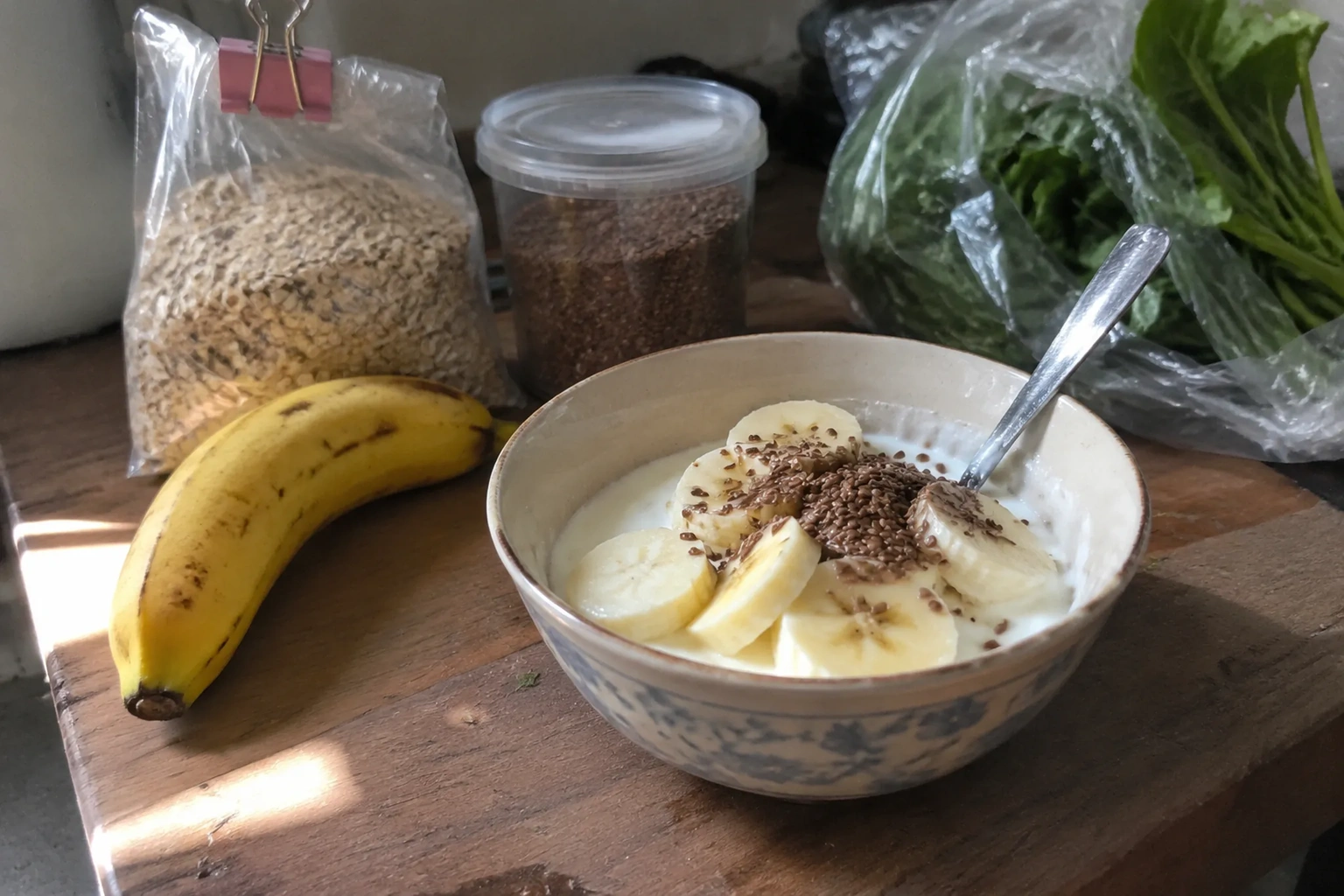
The catch with breakfast is monotony. The same bowl every day gets abandoned by the third week. Rotating oats with barley, or stirring a spoonful of cocoa into the oats (cocoa carries its own prebiotic fiber and adds flavor without sugar), keeps the habit alive long enough to become a habit. A person who eats oats five mornings a week for a year is doing more for the gut than someone who buys a prebiotic powder and takes it for a month.
Asparagus, leeks, and the seasonal window
Asparagus and leeks are strong prebiotic sources, and both have short seasons that make them easy to overlook. Asparagus roasted at high heat with olive oil until the tips crisp is a ten-minute side that carries inulin. Leeks, sliced and washed carefully (the grit hides in the layers), softened in butter or oil, become the base of soups and braises and deliver prebiotic fiber in a form most people do not notice they are eating.
The seasonal constraint is also an advantage. A person who eats asparagus in spring and leeks in autumn gets variety without effort, and the gut population responds to variety more than to any single food. Jerusalem artichokes, knobby and ugly and available in late autumn, are the highest-inulin vegetable in the produce aisle and also the one most likely to cause dramatic gas in the unaccustomed. Roasting them with root vegetables and eating a small portion the first time is the sensible approach.
The ramp matters more than the food
The single most common mistake with prebiotics is starting at full volume. A person reads that inulin feeds beneficial bacteria, buys a powder, and takes a heaping scoop. Within a day there is bloating and discomfort, and the conclusion is that prebiotics do not agree with them. The more accurate conclusion is that the dose was too high for the current gut population. Fermentation produces gas. That is what fermentation does. The bacteria need time to adjust, and the person needs to add food slowly enough that the adjustment is tolerable.
A workable ramp looks like this: one prebiotic food added at a modest portion, eaten most days for two weeks, then a second food added, then the portions increased. Onions go from a quarter to a half over a month. Beans go from a few spoonfuls to a half cup. The timeline is slow, and it is the timeline that makes the difference between a habit that lasts and a jar of powder abandoned in a cupboard.
What a week of additions looks like on a plate
Monday: oats with cocoa and a firm banana sliced in. Tuesday: lentil soup with a full onion and three cloves of garlic cooked down at the start. Wednesday: cold potato salad with a mustard dressing and a handful of chickpeas. Thursday: barley cooked like rice, tossed with roasted asparagus. Friday: leeks softened and folded into a frittata. Saturday: beans from a can, rinsed, warmed with cumin and olive oil. Sunday: leftover roast vegetables, including a Jerusalem artichoke or two, eaten at room temperature.
None of that is a protocol. It is a week of ordinary cooking with the prebiotic foods placed where they naturally fit. The total cost is lower than a single tub of supplement powder. The variety is higher than any single product can offer, and variety is what the gut population responds to. A person eating that week is not optimizing anything. They are eating, and the bacteria are being fed as a side effect.
The supplement shelf and the produce aisle
Prebiotic supplements are not worthless. Chicory root fiber in a powder form is convenient, and for a person who genuinely cannot eat onions or beans, it fills a gap. The problem is that the supplement shelf frames prebiotics as a product to be bought rather than a pattern of eating to be built. The framing sells powder and leaves the produce aisle untouched. A bag of dried chickpeas and a bunch of leeks cost less and deliver more, and they come with the cooking that makes them a meal rather than a dose.
The concrete consequence is this: a person who buys a prebiotic powder tends to take it for a few weeks and stop, because a powder is a task with no pleasure attached. A person who learns to sweat a full onion into a pot of beans, or to keep cold potatoes in the refrigerator for the week, has changed what dinner looks like. The bacteria get fed either way, but only one of those changes survives the second month.





















