







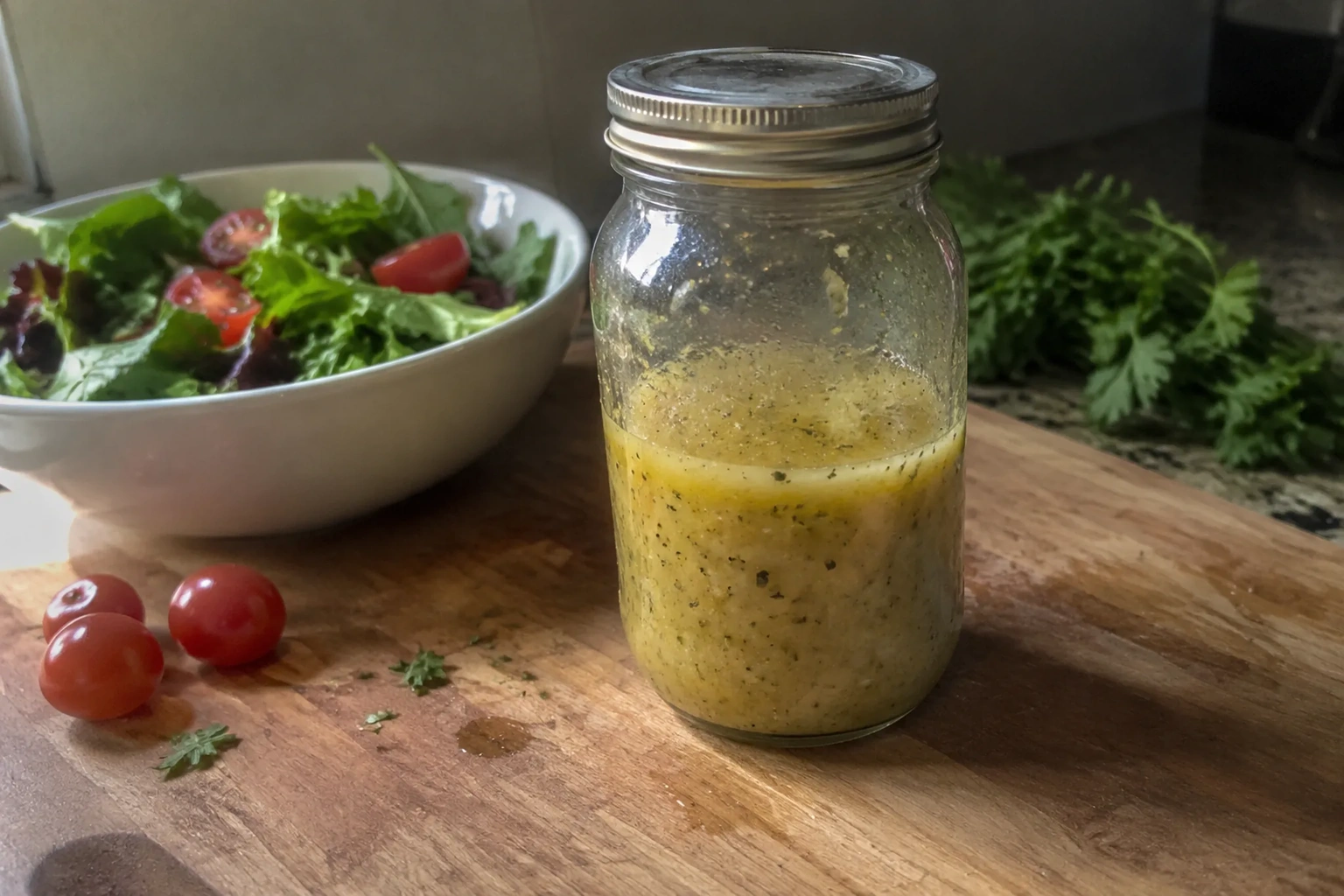
A pint deli container, the clear plastic kind with the snap lid, holds exactly enough vinaigrette for a week of lunches. That fact is not printed anywhere. It gets learned by filling one too full, watching the oil seep past the lid threads, and wiping down a fridge shelf at eleven at night. Jar dressings have their own version of that lesson: the lid seals, the glass is heavy enough to stay put, and the whole operation takes about ninety seconds if the ratios are right.
The appeal is narrower than the internet makes it sound. A shaken dressing is not automatically better than a whisked one, and a jar does not improve a bad recipe. What a jar does is remove the friction that keeps people from making dressing at all: no bowl to wash, no whisk to fish out of a drawer, no slow drizzle of oil while the other hand cramps around a fork. Ingredients go in, lid goes on, and the whole thing lives in the door of the fridge until it is gone.
That is the entire case. The rest is ratios, a few structural rules, and a handful of combinations worth keeping.
The 3-to-1 Ratio and Where It Breaks
Standard vinaigrette runs three parts oil to one part acid. It is a fine starting point and a poor universal law. Three to one works for a sharp, thin dressing meant to coat bitter greens lightly. It turns greasy on delicate lettuce and tastes flat on anything starchy. Two to one gives a dressing with more bite, which suits potatoes, grains, and roasted vegetables that need acid to cut through their own sweetness.
The ratio also shifts with the acid itself. Lemon juice is sharper and more aromatic than red wine vinegar, so a lemon dressing often wants closer to two and a half to one. Balsamic is sweeter and denser, and a three-to-one balsamic vinaigrette can taste like syrup on a summer tomato. Sherry vinegar sits in the middle and forgives sloppiness, which is why it belongs in the first jar a person makes.
Salt matters more than the ratio. A dressing undersalted by even a pinch tastes like oil and vinegar sitting next to each other rather than combined. Salting the acid first, before the oil goes in, lets the crystals dissolve instead of sinking to the bottom of the jar. A small thing. It changes the result.
Emulsions That Hold Without an Egg
Oil and water do not mix, and a shaken vinaigrette separates within minutes. That is normal and not a flaw. The dressing gets shaken again at the table, and the temporary emulsion is enough to coat leaves. Anyone who wants a dressing that stays thick and creamy without egg yolk has a few reliable options.
Mustard is the classic. A teaspoon of Dijon in a jar of vinaigrette adds enough mucilage to hold the emulsion for an hour or more, and it brings its own acidity and heat. Honey does something similar at a smaller scale, though it sweetens as it thickens. A spoonful of tahini turns a lemon dressing into something opaque and nutty that clings to cabbage. Mayonnaise, a shortcut that purists sniff at, makes a jar dressing that behaves like a bottled creamy one and tastes better than most of them.
The trick with all of these is order. Acid, salt, and the emulsifier go in first and get shaken hard until combined. Oil goes in last, in two or three additions if the jar is small, with a shake between each. Dumping everything in at once and shaking for ten seconds produces a dressing that splits before it reaches the table.
The Jar Itself: Size, Lid, and the Grinding Problem
A one-pint wide-mouth mason jar is the workhorse. Wide mouth because a spoon fits inside for scooping mustard and scraping out the last of a tahini dressing. Pint because a quart jar of dressing goes off before it gets used, and a half-pint is too small to shake vigorously without the contents hitting the lid and staying there.
Reused jars work if the lid is sound. Pasta sauce jars, jam jars, the glass jar from a good jarred salsa: all fine, provided the lid still seals and does not smell of its previous contents. A lid that held garlicky tomato sauce will perfume a delicate lemon dressing for days. Hot water and a soak help. Sometimes nothing helps, and the jar gets demoted to storing rice.
There is one real annoyance with jar dressings, and it is garlic. Minced garlic in a shaken dressing turns harsh and sulphurous after a day or two, and a jar of vinaigrette with garlic in it starts to taste like a punishment by the end of the week. Two fixes exist. Grate the garlic on a microplane so it disperses rather than sits in chunks, and use it only in dressings meant to be eaten within two days. Or infuse the oil with garlic and strain it out, which takes longer but keeps the dressing clean.
Herbs present a milder version of the same problem. Soft herbs like basil and parsley go dark and sludgy in an acidic dressing within a day. Hard herbs like rosemary and thyme hold up better, and a sprig dropped into a jar of red wine vinaigrette gives it a slow, pleasant herbaceousness over a week.
Five Combinations Worth Keeping in Rotation
Sherry vinaigrette with a minced shallot is the most useful dressing a person can keep on hand. Two parts olive oil, one part sherry vinegar, a teaspoon of Dijon, salt, and a shallot minced fine enough to almost dissolve. It goes on greens, potatoes, roasted chicken, and cold beans without complaint.
Lemon and tahini makes a dressing that turns a bowl of shredded cabbage and carrots into something worth eating. Three tablespoons of tahini, the juice of a lemon, a grated garlic clove, salt, and water shaken in until it loosens to a pourable consistency. It thickens in the fridge, so a splash of water and a shake revives it.
Maple and whole grain mustard with cider vinegar is the fall dressing. Two parts olive oil, one part cider vinegar, a teaspoon of whole grain mustard, a teaspoon of maple syrup, salt and pepper. The mustard seeds give texture, and the sweetness makes it work on roasted squash and bitter greens at the same time.
Ginger, soy, and rice vinegar with a neutral oil makes a dressing that suits cucumber salads and cold noodles. Equal parts rice vinegar and neutral oil, a teaspoon of soy, a knob of ginger grated fine, and a few drops of toasted sesame oil. The sesame oil is potent; a little goes a long way, and a heavy hand turns the whole jar into a single note.
A creamy buttermilk dressing with dill and a spoonful of mayonnaise needs no egg and no blender. Buttermilk, mayonnaise, lemon juice, salt, and chopped dill shaken in a jar. It is thin enough to pour and thick enough to cling, and it keeps for four or five days, which is about how long a jar of it lasts in a household that eats salad twice a week.
What Keeps and What Turns
Vinaigrettes built on vinegar keep for a couple of weeks in the fridge. Those built on fresh citrus juice keep for about five days before the juice starts to taste dull and slightly metallic. Creamy dressings with buttermilk or yogurt keep for four or five days. Anything with fresh herbs or garlic should be eaten within two or three.
Refrigeration changes texture. Olive oil solidifies at cold temperatures, so a jar of vinaigrette pulled from the fridge looks cloudy and thick. Five minutes on the counter fixes it, or a shake under warm water. Running the jar under hot tap water for thirty seconds before shaking is faster and does not warm the dressing enough to matter.
Glass beats plastic for one practical reason: plastic holds odors, and a plastic container that held a ginger soy dressing will taste faintly of it for months. Glass rinsed in hot water comes back neutral. The weight of glass also keeps the jar steady during an energetic shake, which matters more than it sounds.
The Jar Dressing That Earned a Permanent Spot
One dressing survived a full year of weekly rotation in a kitchen that tried dozens. It is a mustard-heavy vinaigrette built in a pint jar: two tablespoons of Dijon, one tablespoon of honey, three tablespoons of cider vinegar, salt, and half a cup of olive oil. Shake the first four until the mustard and honey dissolve, then add the oil in three pours with a hard shake between each. The result is thick, sharp, and sweet enough to make a plain bowl of greens feel like a decision rather than a default.
It keeps for two weeks. It coats a spoon. It makes a good sandwich spread in a pinch. And it takes less time to build than it takes to find the whisk in the drawer, which is the whole point of keeping a jar of dressing around in the first place.





















