







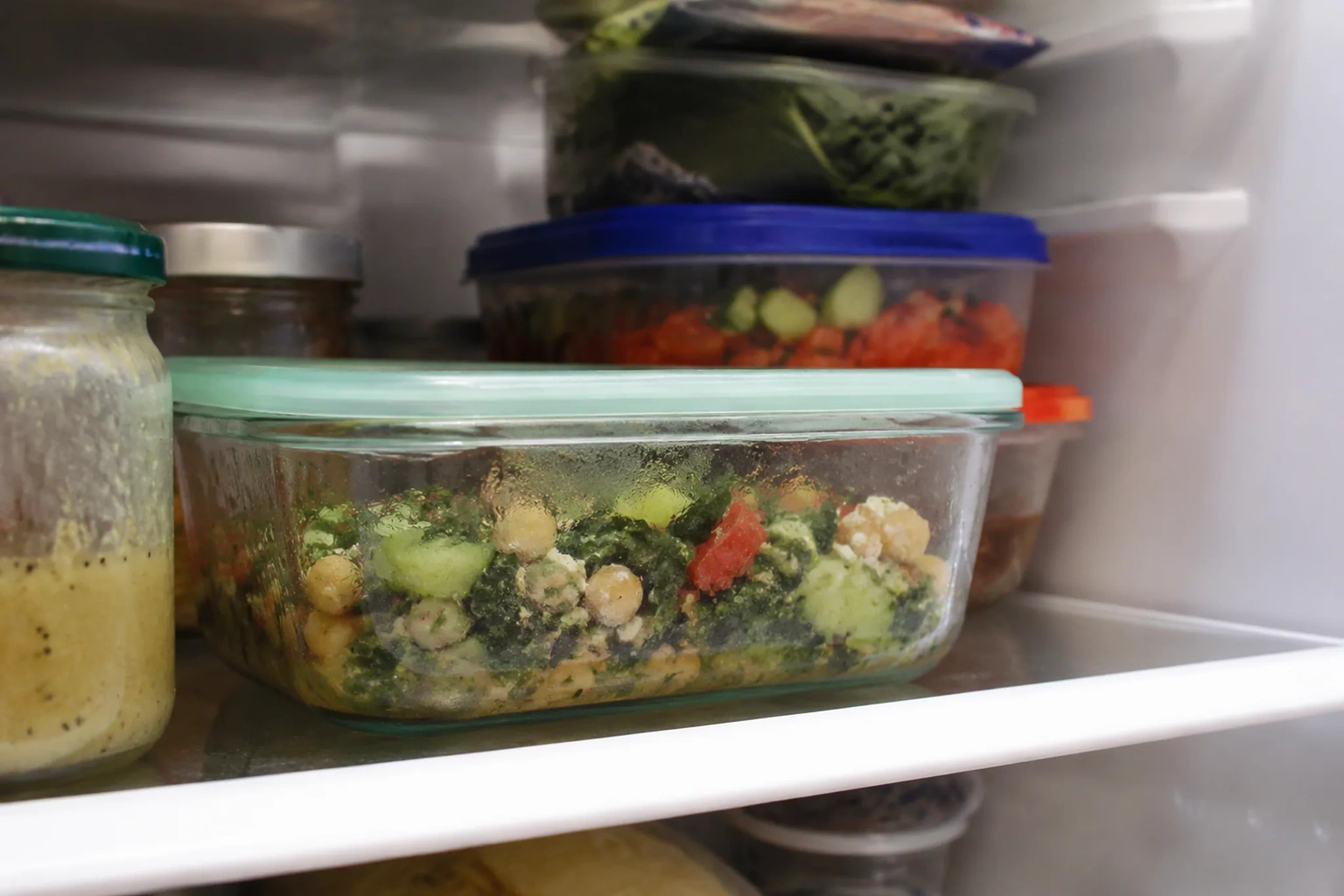
Most salad greens are already dead by the time they reach the crisper drawer. A head of romaine that was turgid at the farm stand spends two days in a warehouse, a day on a truck, and another two on a refrigerated shelf before it ever sees a kitchen. The cell walls have begun to slump. The cut edges have oxidized. What arrives home is a patient in stable condition, and the clock on the refrigerator door is already running.
This is why the salad that survives until Thursday is rarely the salad built on delicate leaves. It is the salad built on structure: cabbage, kale, sturdy roots, grains that hold their bite, and dressings engineered to cling rather than pool. The distinction matters because the alternative, a bowl of spring mix dressed at noon, becomes a brown, weeping mess by the next morning. Anyone who has opened a lunch container on a Wednesday and found a swamp of wilted arugula knows the specific disappointment.
The good news is that a handful of techniques, applied before the first leaf hits the bowl, push a salad's useful life from roughly eighteen hours to four or five days. None of them are complicated. All of them are unglamorous.
Cabbage Is the Backbone of the Weekday Salad
Green cabbage, shredded thin, will sit in a sealed container for a week and still crunch. Red cabbage holds even longer and bleeds a purple stain into everything it touches, which is either a flaw or a feature depending on the dressing. Napa cabbage is softer and more forgiving than either, good for a slaw that needs to feel tender by day three.
The reason cabbage endures comes down to density. Its leaves pack tightly, with less surface area exposed to air and a thicker cuticle than lettuce. It also holds up to salt, which is the second half of the equation. A cabbage salad dressed with salt, acid, and oil actually improves over the first twenty-four hours as the salt draws moisture out of the leaves and softens them without turning them to mush.
A slaw built on Thursday and eaten on Monday is a completely reasonable proposition. A salad built on spring mix and eaten on Monday is a science experiment.
Kale Needs a Massage, Not a Rinse
Raw kale straight from the bunch is tough in a way that feels punitive. The fix is to strip the leaves from the stems, tear them into bite-sized pieces, and work them with a pinch of salt and a drizzle of oil for about a minute, until the color deepens and the volume drops by a third. The leaves become silkier and, crucially, more resistant to breakdown, because the cell walls have been deliberately bruised into submission.
Massaged kale holds for four to five days dressed. It does not go limp the way lettuce does, and it does not brown at the cut edges the way spinach does. A kale salad with a lemon-tahini dressing and toasted seeds is arguably better on day three than on day one, once the dressing has soaked in and the seeds have lost their raw edge.
The one caveat: kale absorbs dressing like a sponge, so a heavy hand at the start leaves a dry, claggy salad by midweek. Dress it lightly and keep a small jar of extra dressing on the side.
The Case for Keeping Components Separate
The single most effective trick for a salad that lasts is also the least elegant: do not assemble it. Store the greens, the crunchy vegetables, the protein, the cheese, and the dressing in separate containers, and combine them at the moment of eating. This is what restaurant prep kitchens do, and it is why a composed salad ordered at a bistro tastes fresher than one built at home the night before.
Separate storage solves the moisture problem, which is the real enemy. Wet greens rot. A cucumber sliced and tossed with lettuce releases water into the bowl, and by the next day the lettuce sits in a puddle. Dressing accelerates the process, since oil and acid break down cell walls once they penetrate. Keeping everything apart means each component fails on its own timeline rather than dragging the rest down with it.
A stack of small glass containers, stacked in the fridge like a prep cook's mise en place, is a modest investment that pays for itself in salads not thrown away.
Dry Greens Are the Whole Ballgame
Water is the mechanism behind nearly every salad failure. A leaf with surface moisture will wilt faster, and any dressing applied to a wet leaf slides off rather than clinging. The fix is a salad spinner, used properly: wash the greens, spin them hard, then spread them on a clean kitchen towel and pat them dry before they go anywhere near a container.
The towel step is the one most people skip. It matters. A layer of paper towel at the bottom of the container and another on top absorbs the condensation that forms as the fridge cycles, keeping the leaves in a relatively dry microclimate. A container of greens stored this way will often last a full week, which is more than can be said for the same greens stored wet in a plastic bag.
Sturdier greens tolerate this treatment better than delicate ones. Spinach and arugula will still decline after three or four days. Romaine and iceberg, dried carefully, will hold longer.
Grains and Legumes Carry a Salad Through the Week
A grain salad built on farro, barley, or wheat berries is structurally different from a leaf salad, and it lasts far longer. Cooked grains, cooled and tossed with a vinaigrette while still slightly warm, absorb the dressing and stay tender for days without turning soggy. The grains act as a buffer, separating the vegetables and keeping the whole bowl from collapsing.
Legumes behave similarly. Chickpeas, white beans, and lentils, drained and rinsed, add bulk and protein and hold their shape for the better part of a week. A farro salad with roasted red peppers, chickpeas, and a lemon-oregano vinaigrette is a genuinely good lunch on day four, which is not something that can be said for most salads.
The key is to dress the grains while warm, let them cool completely before adding any fresh herbs or delicate vegetables, and store the finished salad in a wide, shallow container rather than a deep one, so the dressing does not pool at the bottom.
Dressings That Cling Instead of Pool
A thin vinaigrette, all oil and vinegar, slides to the bottom of the bowl and leaves the top of the salad dry. A dressing that clings, by contrast, coats each leaf and holds its position. The difference is emulsification: mustard, honey, tahini, or a spoonful of yogurt all act as emulsifiers, binding the oil and acid into a stable suspension that stays put.
A tahini-lemon dressing, loosened with water until it pours, coats kale and cabbage beautifully and does not separate in the fridge. A mustard-shallot vinaigrette, shaken hard in a jar, holds for days. A yogurt-based dressing, thinned with buttermilk or lemon juice, clings to sturdy greens and adds a creamy texture that survives refrigeration.
Store dressing in a small jar with a tight lid, and shake it before using. A dressing that has separated is not ruined; it just needs thirty seconds of agitation.
The Vegetables That Do Not Turn to Sludge
Not every vegetable belongs in a make-ahead salad. Cucumbers, tomatoes, and avocados release water and break down quickly once cut. They are fine for a salad eaten the same day, but they sabotage anything meant to last. The vegetables that hold up are the dense, low-moisture ones: carrots, radishes, bell peppers, red onion, fennel, and celery.
Each of these can be prepped on Sunday and stored separately, ready to be combined throughout the week. Carrots shaved into ribbons and radishes sliced thin add crunch and color without turning watery. Fennel, sliced thin and tossed with lemon, holds for days and improves as it sits. Red onion, sliced and soaked in cold water for ten minutes, loses its harsh bite and keeps for nearly a week.
Tomatoes deserve their own note. A cherry tomato, left whole, holds for days. A sliced tomato does not. Keep them whole until the moment of assembly, and the salad stays fresh.
The Thursday Test
By Thursday, a salad made on Sunday will have told the truth about itself. The cabbage will still crunch, the kale will have softened but not collapsed, the grains will be tender and flavorful, and the dressing will still cling. The lettuce, if there was any, will have given up days earlier, which is why it belongs in its own container and its own category.
The salad that survives the fridge until Thursday is the one that was built, from the first leaf, with Thursday in mind. That means choosing structure over delicacy, dryness over convenience, and separation over assembly. It means accepting that a salad is a system of components, each with its own shelf life, and treating the container of greens with the same care as the container of dressing.
None of this is difficult. It is simply a matter of deciding, before the first leaf is washed, that the goal is a salad that is still worth eating four days from now, and building backward from that.





















