







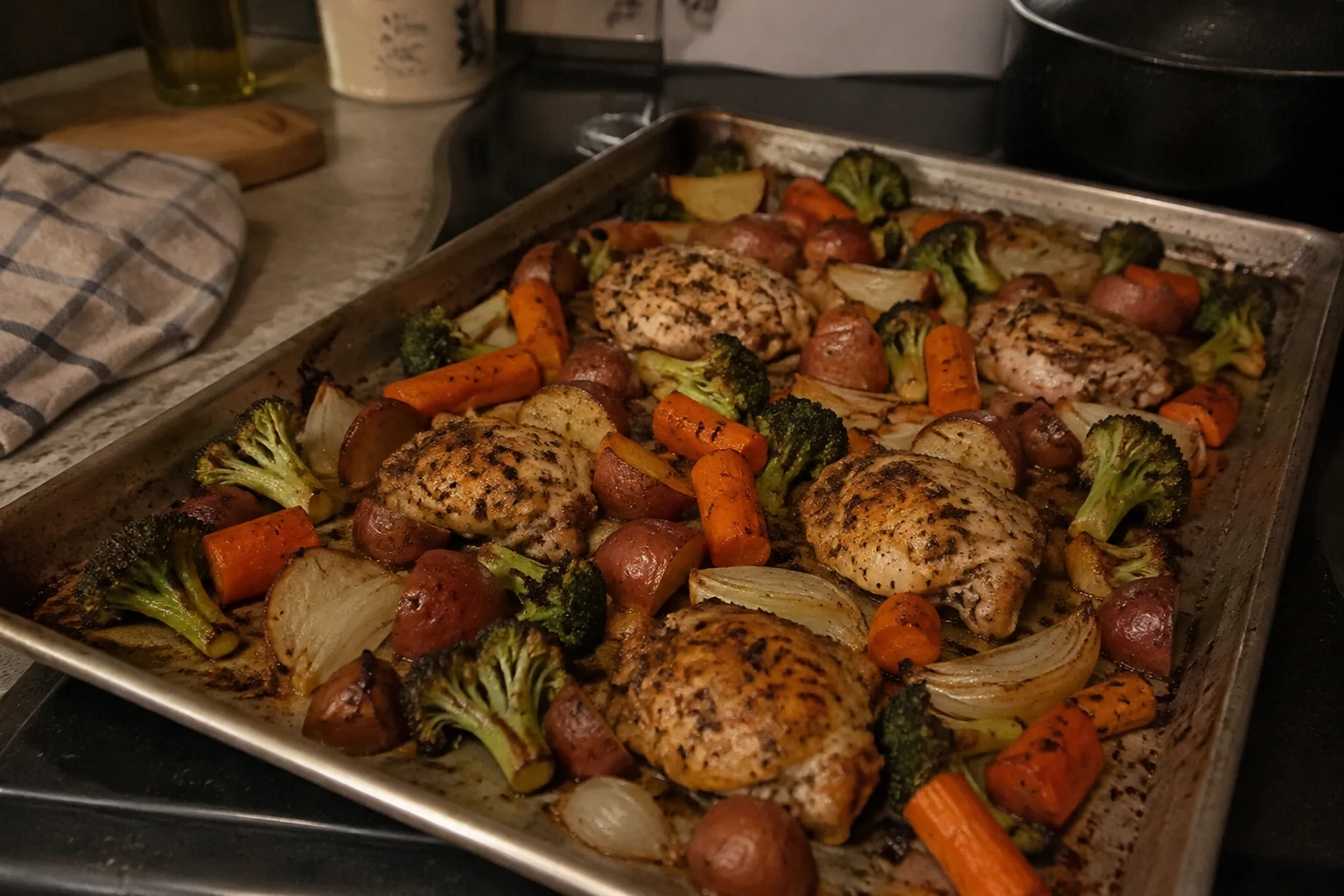
The sheet pan has a single virtue that explains its whole reputation: it is flat. A rimmed half sheet, roughly 18 by 13 inches, holds a full dinner in one layer with enough exposed surface that heat reaches everything at once. No stacking, no steaming, no pot to scrub. That flatness is the entire argument, and it is also the entire problem. Most sheet pan dinners fail because the pan is flat and the cook forgets it.
Restaurant kitchens run on these pans. They are called half sheets because they fit two to a standard home oven rack, and they are the workhorse of professional baking and roasting for the same reason they appeal at home: cheap, sturdy, stackable, and easy to move. The home cook who buys one good aluminum half sheet and a roll of parchment has already solved most of the cleanup problem before dinner is even planned.
The genre that grew up around them, the one-tray dinner, is a legitimate weeknight strategy. It is also the most overpromised category in home cooking writing, sold as a magic trick when it is really a discipline.
Why the Flat Pan Changes the Cooking
A sheet pan roasts. That sounds obvious, and it is the whole point. In a skillet, food sits in a pool of its own moisture and fat, and the parts touching the pan brown while the rest stew. In a Dutch oven, steam builds and meat braises. A sheet pan exposes nearly every surface to moving hot air, so a chicken thigh crisps on top and the potatoes beside it develop color on the side facing up.
Surface area is the resource. The pan can only brown what it can see. Crowd it and the vegetables release water faster than the oven can carry it away, the temperature in the pan drops, and everything goes pale and limp. Leave space and the same vegetables caramelize.
One pan, one layer, one temperature. The simplicity is real, and it comes with a bill: everything on the pan cooks at the same rate, or it should.
The Crowding Problem Nobody Warns About
Two pounds of vegetables on a half sheet is a heap. Spread across the surface, it becomes two layers in places, and the places that touch stay wet. The fix is either a bigger pan (a full sheet, if the oven fits it) or two batches, which defeats the premise. The honest move is to cut the quantity. A single tray of broccoli and sausage for two people is about one pound of vegetables and three quarters of a pound of sausage. That fits in one layer with room between the pieces.
Home ovens compound the crowding problem. Most run cooler than their dial suggests, and a pan loaded with cold food drops the oven temperature further when it goes in. A reliable oven thermometer costs less than a takeout dinner and tells a cook what the dial will not.
Staggering the Timing by Cut Size
One tray does not have to mean one moment of doneness. The trick is to use the knife instead of a second pan. Dense roots, carrots and parsnips and potatoes, go on first, cut small, and get a head start of 15 to 20 minutes. Faster vegetables, peppers and zucchini and cherry tomatoes, join later. A chicken thigh needs 35 to 40 minutes at 425 degrees, so it goes in with the roots.
This is not a second recipe. It is a two-step assembly, and it keeps the pan count at one while letting the cook control doneness. The alternative, throwing everything on at once and hoping, is how sheet pan dinners earn their bad name.
The Pan Itself: Aluminum, Not Dark Nonstick
A rimmed aluminum half sheet, the kind sold in restaurant supply stores for a few dollars, is the right tool. It heats evenly, it does not warp at high heat, and it lasts for years. Dark nonstick pans absorb more heat and brown the undersides of food faster than the tops, which makes timing unpredictable. Glass baking dishes are worse: they conduct heat slowly and can shatter under a hot broiler.
Parchment paper turns cleanup into a single crumple. It also slightly insulates the food from the pan, which slows browning. For vegetables that need deep color, skip the parchment and accept a short soak. For anything sticky, glazed, or cheesy, use it.
Salt Early, Oil Generously, and Do Not Stir
Three habits separate a good tray from a sad one. Salt the vegetables and meat before they go on the pan, ideally 20 to 30 minutes ahead, so the salt draws moisture out and seasons through. Toss everything in enough oil to coat, not drizzle, because oil carries heat and helps browning. Then leave it alone for the first 20 minutes. Stirring interrupts the contact between food and hot pan, which is where the color develops.
When the tray does get a stir, do it once, halfway, and spread everything back into a single layer before returning it to the oven.
What Actually Belongs on One Tray
Some combinations work because their components share a cooking time and a temperature. Chicken thighs, halved baby potatoes, and red onion at 425 degrees for 40 minutes is a reliable dinner. Salmon fillets, asparagus, and cherry tomatoes at 400 degrees for 12 to 15 minutes is another, though the fish goes on a separate corner or joins late.
Other combinations need negotiation. Shrimp cook in 6 minutes and will turn to rubber beside a 40-minute potato. The answer is to roast the potatoes first, then add the shrimp for the last few minutes. The pan stays one; the timing gets sequenced.
The Broiler Is the Finishing Move
When the centerpiece is cooked but the surface looks pale, two or three minutes under a hot broiler fixes it. Keep the rack 6 inches from the element and watch the pan, because the line between golden and burnt is short. This is where a sheet pan beats a pot: the whole surface is exposed and can be blasted at once.
A broiler finish also rescues the common failure of a tray that cooked through but never browned, which happens with a cool oven or a crowded pan.
Cleanup Is the Real Selling Point, With a Catch
The promise is one pan to wash. The catch is that the pan is large, and a rimmed aluminum sheet does not fit easily in a crowded sink. Parchment handles most of it. For the rest, a soak in hot water and a nylon scrubber works; steel wool dulls the surface over time but does not ruin it.
The broader cleanup win is the absence of a stovetop full of pans, splattered oil, and a cutting board buried under prep. The knife and board still need washing. The sheet pan dinner trims the pile; it does not eliminate it.
Where the Genre Goes Wrong
The failure mode is a recipe that piles a starch, a protein, and a vegetable onto one tray with a single oven temperature and a single time, then promises perfection. It rarely delivers, because those three things cook differently. A smarter approach treats the tray as a stage: some components enter early, some late, and the cook keeps a mental clock.
The genre also suffers from a portion problem. Recipes written for four crowd a standard half sheet, and the result is steamed food. Halving the recipe and using the full pan surface is often the better call.
A Weeknight Tray That Earns Its Place
One workable dinner: a pound of bone-in chicken thighs, a pound of halved baby potatoes, a red onion cut into wedges, and a head of garlic split across the top. Toss with oil, salt, pepper, and smoked paprika. Roast at 425 degrees for 40 minutes, stirring once at 25. Add a handful of green beans for the last 10 minutes. The chicken skin crisps, the potatoes brown at the edges, and the garlic squeezes out onto the tray.
It is not fancy. It is the kind of dinner that gets made on a Tuesday because the pan goes in the oven and the cook walks away, and because the sink afterward holds one sheet and one board.
The Tray Rewards Attention, Not Hope
The cooks who love their sheet pans are the ones who treat the pan as a tool with rules. They buy the cheap aluminum half sheet, they keep the layer thin, they salt ahead, and they sequence the timing instead of trusting a single number. The cooks who hate sheet pan dinners tried to make the pan do something it cannot: cook a crowded pile evenly and clean itself afterward.
The pan is flat, and flat is honest. It browns what it can see and steams what it cannot. A cook who respects that gets a crisp, caramelized dinner and a single tray to wash. A cook who ignores it gets a pale, watery one and blames the recipe.





















