







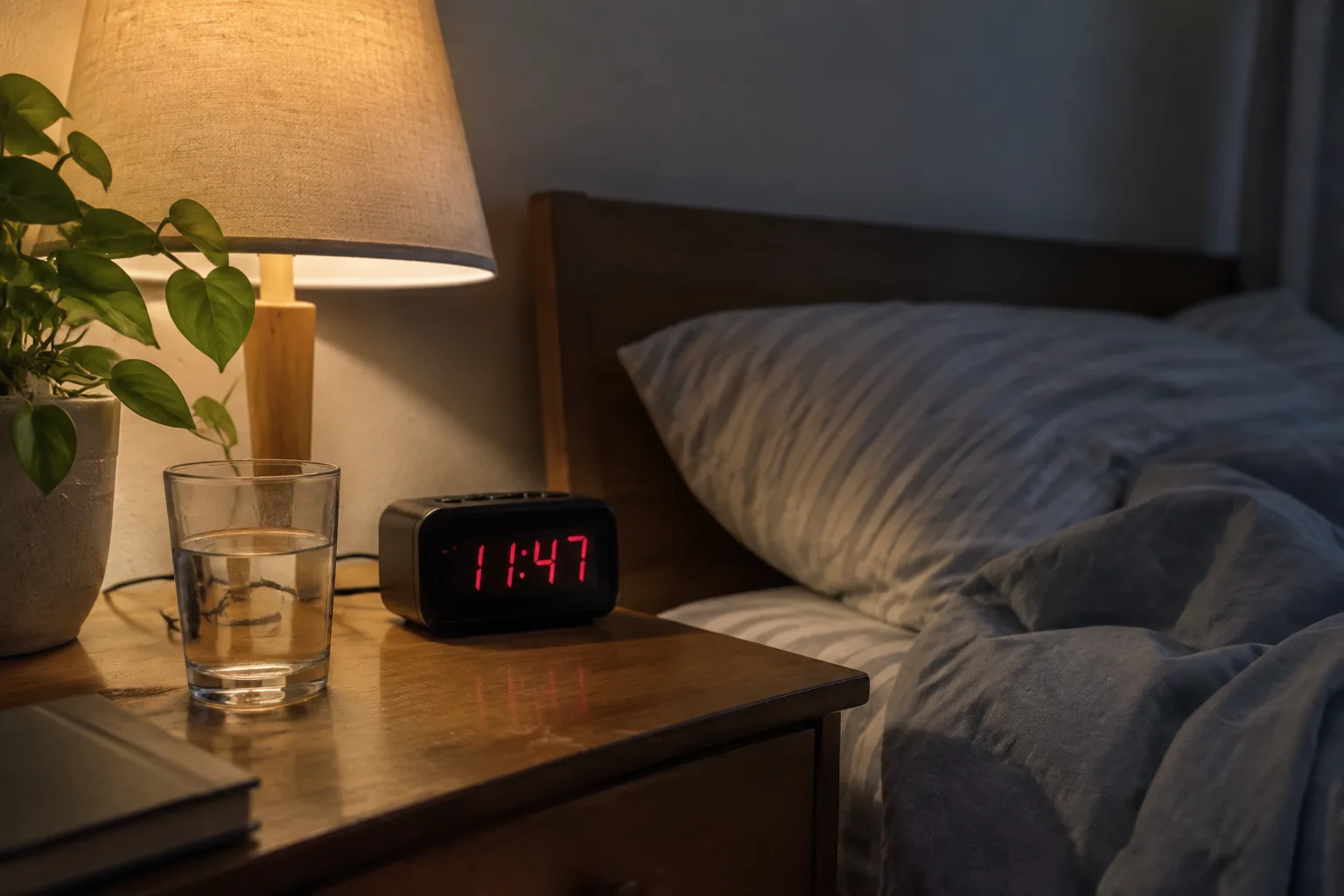
The thermostat wars that flare up in perimenopause and menopause get most of the attention, but the damage often shows up at 3 a.m. A woman who has slept soundly for decades suddenly finds herself wide awake, sheets kicked off, mind already drafting tomorrow's emails. The hormonal shifts behind this are real and well documented, and they do not care how badly a person needs eight uninterrupted hours.
Sleep architecture changes as estrogen and progesterone decline. Progesterone has a mild sedating effect, and when it falls, falling asleep and staying asleep both get harder. Hot flashes and night sweats interrupt the deepest stages of sleep. Anxiety and a racing mind do the rest. None of this is a character flaw, and none of it is solved by a single habit. What follows is a set of practical adjustments that target the specific ways hormonal shifts wreck sleep, drawing on how the body actually behaves during this transition.
Why the 3 A.M. Wake-Up Happens
Night sweats get blamed for most menopausal insomnia, and they deserve the reputation. A drop in estrogen throws off the body's internal thermostat, narrowing the range of temperatures it considers comfortable. The hypothalamus becomes trigger-happy, and a bedroom that felt fine at midnight can feel suffocating by two.
But the wake-up has a second engine. Cortisol, the stress hormone, normally dips overnight and rises before dawn. Hormonal upheaval can scramble that curve, so the body gets a jolt of alertness in the small hours. A woman wakes with her heart going and cannot explain why. The two problems feed each other: a sweat wakes her, the waking spikes her stress, and the stress makes the next sweat more likely.
Understanding that double mechanism matters because it points to two different sets of fixes. Cooling the body handles one. Calming the nervous system handles the other. Most advice only addresses the first.
Cool the Room Before Cooling the Body
The single most effective change is dropping bedroom temperature below what feels normal. Most sleep guidance lands around 65 to 68 degrees Fahrenheit, and for a woman in hormonal transition that range is not a suggestion. It is a buffer. A room at 65 gives the body somewhere to dump heat when a flash hits at 2 a.m.
Ceiling fans and a small bedside fan do more than move air. They evaporate moisture, which is the actual cooling mechanism. A fan pointed at the upper body can cut a sweat short before it fully wakes the sleeper. The cost is trivial next to a prescription.
Bedding deserves scrutiny too. Heavy comforters and memory foam that traps heat work against the body. Lightweight, breathable layers that can be kicked off one at a time give more control than a single thick duvet. Moisture-wicking sheets help, though the marketing on them runs well ahead of the evidence. The plain version, cotton or linen over polyester, is reliable enough.
What to Wear to Bed, and What to Strip Off
Sleepwear should be loose and made of something that breathes. This sounds obvious, but the number of women who sleep in fitted synthetic pajamas and then wonder why the night goes badly is large. Cotton, linen, or a moisture-wicking blend in a cut that does not cling will do more than any sleep supplement on the market.
There is a stronger option: sleep with less on. Skin against breathable sheets cools faster than fabric against fabric, and less clothing means fewer layers holding heat in. This is not a moral question, only a thermal one. A person who runs hot at night should test it for a week before dismissing it.
The same logic applies to the comforter. Many couples sleep under one shared duvet, which means the cooler sleeper and the warmer sleeper fight all night. Two separate blankets solve a problem that no thermostat can. It looks unromantic and sleeps far better.
Caffeine Has a Longer Half-Life Than Most People Assume
A cup of coffee at 2 p.m. is still measurably in the bloodstream at 8 p.m. Caffeine's half-life runs roughly five to six hours in most adults, longer in some. For a woman whose sleep is already fragile, that afternoon cup becomes a real obstacle.
The practical move is to push the cutoff earlier than feels necessary. Noon is a reasonable line for anyone in hormonal transition. The morning cup stays. The mid-afternoon pick-me-up is the one to trade for a short walk or a glass of water.
Alcohol is the other underestimated culprit. A glass of wine does help a person fall asleep faster. It then fragments the second half of the night, suppresses deep sleep, and makes night sweats worse by dilating blood vessels. A woman who cannot understand why she wakes at 3 a.m. after two glasses of wine has her answer. The drink is not a sleep aid. It is a loan taken out against the back half of the night.
Eat Earlier and Lighter in the Evening
A heavy meal close to bedtime forces the digestive system to work through the night, and it raises core body temperature right when the body needs to shed heat. The result is a hotter, more restless sleep. Finishing dinner three hours before bed gives digestion time to wind down.
Spicy food is worth flagging separately. It can trigger sweating and flushing in anyone, and for a woman already prone to hot flashes it stacks the deck. This does not mean a lifetime of bland dinners, but a person tracking her night sweats should watch what a late spicy meal does to the following night.
Evening hydration is a trade-off. Drinking plenty of water earlier in the day helps, but a large glass right before bed guarantees a bathroom trip at 2 a.m. Front-load the water and taper it after dinner.
Build a Wind-Down That Lowers Core Temperature
The body does not switch from alert to asleep on command. It needs a runway, and the best runway involves a gradual drop in core temperature. A warm shower an hour or two before bed sounds counterintuitive, but it works: the warmth pulls blood to the skin, and as the body releases that heat afterward, core temperature falls. That fall is the signal sleep is coming.
The rest of the wind-down should be dim and quiet. Bright overhead lights suppress melatonin, the hormone that tells the brain it is night. Lamps and low light preserve it. Screens are the usual villain, and the case against them is strong enough that a person serious about sleep should put the phone down an hour before bed.
A short, gentle routine beats an elaborate one. Ten minutes of reading, a few minutes of slow breathing, a cool room, and the same sequence every night. Consistency does most of the work. The brain starts to associate the routine with sleep and begins to prepare before the lights go out.
Handle the Racing Mind Separately
The hot flash and the racing mind need different tools. Cooling handles the body. The mind needs a way to discharge its load before the head hits the pillow.
A worry list is unglamorous and effective. Fifteen minutes before bed, write down whatever is circling: the undone task, the awkward conversation, the bill. The act of putting it on paper tells the brain it has been recorded and does not need to be rehearsed at 3 a.m. The list stays on the nightstand, not in the head.
If the wake-up happens anyway, the worst response is to lie there calculating how many hours of sleep remain. That math is a stressor. Getting up, keeping the lights low, and doing something dull for fifteen minutes often resets the system faster than fighting it in bed. The bed should stay associated with sleep, not with the struggle to find it.
When Habits Are Not Enough
These adjustments handle a great deal, but hormonal sleep disruption can outrun them. A woman who has cooled the room, cut the caffeine, moved dinner earlier, and built a wind-down, and still wakes drenched and exhausted night after night, has a medical issue rather than a habit problem.
That is the point to talk to a clinician. Hormone therapy, non-hormonal medications, and cognitive behavioral therapy for insomnia are all established options, and the choice among them depends on a person's history and priorities. None of it is a failure of discipline. Night sweats that soak through sheets and sleep that has collapsed for weeks are worth a real conversation, not another round of tweaking the thermostat.
The habits in this piece are the floor, not the ceiling. They make the nights better for most women and they make the medical conversation clearer when it is needed. A person who has already cooled the room to 65 and cut the afternoon coffee knows exactly what is left to fix, and can describe it to a doctor in plain terms. That is worth more than another night of guessing.





















