







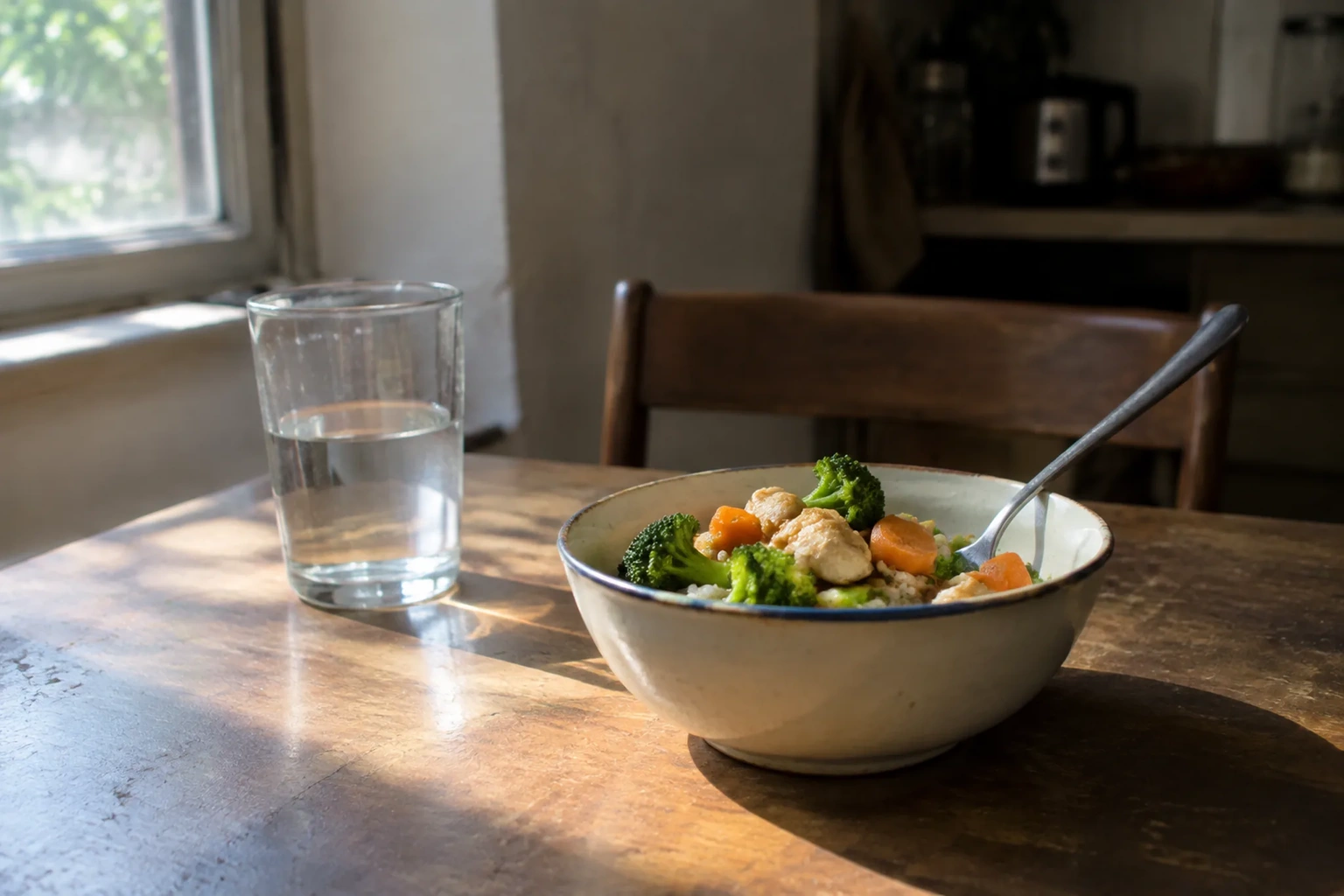
The first bite of a meal eaten in a hurry tends to arrive before the body has agreed to receive it. A fork lifts, the jaw closes, and somewhere below the collar there is a small, unheard objection. Most people have felt the aftermath of that objection: a heavy stomach, a low ache, a looseness in the gut that lasts longer than the meal did. The habit that prevents most of it costs nothing, requires no equipment, and is almost embarrassingly simple. It is the act of slowing down at the table until the meal takes roughly as long as the body needs.
This is not a piece about chewing gum, digestion supplements, or the latest fermented something. It is about pace, and the specific effects pace has on how food is broken down and absorbed. A number of small mechanical things happen when a person eats slowly, and each of them compounds. The result is a meal that sits better, a stomach that protests less, and a habit that carries over to almost every other part of the day.
What the Mouth Does That the Stomach Cannot
Digestion begins before anything reaches the stomach. The teeth do the coarse work, and saliva does the first chemical work. Saliva contains an enzyme that starts breaking down starches while the food is still in the mouth, which is why a piece of bread begins to taste faintly sweet if it is chewed long enough. A bite swallowed after two or three chews skips most of that step and hands the stomach a lump of food it must then spend extra time and acid breaking apart.
A slow eater gives the mouth time to do its job. The food arrives in the stomach already partly reduced, already mixed with saliva, already easier to process. The difference is not dramatic at any single meal, but it is cumulative across a week, then a month. People who eat at a measured pace tend to report less bloating and less of the vague discomfort that follows a rushed lunch.
The Stomach Has a Pace of Its Own
The stomach is not a passive bag. It expands, churns, and releases its contents into the small intestine in a controlled sequence. When food arrives too fast, the stomach is forced to stretch quickly, and that stretching is a direct source of the pressure and heaviness that follow a hurried meal. The organ can accommodate the volume; it simply does not enjoy the speed.
There is also a signaling issue. The stomach and the brain trade messages about fullness, and those messages travel on a delay. A person who eats quickly can finish a plate before the brain has registered that enough food has arrived. The result is a meal that ends with a slightly overfull feeling, and a body that has eaten more than it needed. Slowing the pace gives the signal time to catch up, which is one reason slow eaters tend to eat less without trying.
A Twenty-Minute Lunch Is Not a Virtue
Somewhere along the way, speed at the table became a marker of competence. The working lunch that lasts eleven minutes, the sandwich eaten standing over the sink, the meal finished before the coffee cools. These are worn as small badges of efficiency. The body pays for them quietly, and the payment shows up later as an afternoon slump or a stomach that feels distended for hours.
A meal eaten in twenty minutes is not automatically better than one eaten in thirty. The extra ten minutes are not wasted time; they are the time in which the mouth, the stomach, and the brain all do the work they were designed to do. Treating that time as a cost is a category error. It is closer to the time a musician spends tuning an instrument before playing, which is not part of the performance and is entirely necessary to it.
The Fork Set Down Between Bites
The single most reliable technique for slowing a meal is to set the fork down between bites. It sounds almost too small to matter, and yet it works because it interrupts the automatic rhythm that carries a fast eater through a plate. The hand reaches, the fork lifts, the food goes in, the fork returns. Each cycle takes a second or two. Putting the utensil down at the start of each cycle adds a beat of rest and forces the jaw to finish its work before the next load arrives.
There is a variant that works better for some: hold the fork in the non-dominant hand, or eat with chopsticks if the meal allows it. The awkwardness slows the whole operation without requiring any conscious effort. The person eating is not thinking about pace; the tool is enforcing it. A pair of chopsticks in the hands of someone who normally uses a fork will add several minutes to a meal and make the whole thing feel more deliberate.
Water, Bread, and the Space Between Bites
Another lever is the pause. A slow eater puts the fork down, chews, swallows, and then waits a moment before the next bite. That moment is where the body catches up. The hand rests. The shoulders drop. The meal becomes a series of small intervals rather than a continuous motion. Ten or fifteen seconds between bites is enough to change the character of a meal, and it costs nothing except the willingness to sit still for it.
A glass of water beside the plate helps here, not because hydration is the point, but because a sip is a natural pause. So does a piece of bread torn rather than bitten. So does the habit of putting the fork down entirely while chewing. These are small physical cues, and they do the work that willpower cannot sustain. The body follows the hands.
When Talking Replaces Chewing
There is a version of slow eating that is really just distracted eating, and it deserves a warning. A person deep in conversation may take forty minutes over a plate and still swallow most bites half-chewed, because the attention is on the story and not on the food. The meal is long, but the mouth is not doing its work. Pace without attention is not the habit this piece is describing.
The distinction matters because it points to what slow eating actually is. It is not merely a longer interval on the clock. It is attention paid to the mechanics of the meal: the size of the bite, the completeness of the chew, the moment of rest before the next forkful. A person can eat slowly and badly, or quickly and well. The habit being recommended here is the combination of a measured pace and a mind that stays with the food long enough to let the body use it.
The First Bite Sets the Tempo
Meals tend to establish their own rhythm in the first thirty seconds. A person who takes a large first bite and follows it immediately with a second will eat the rest of the plate at that tempo. A person who takes a small first bite, chews it fully, and lets the fork rest before the second will eat the rest of the plate at a different tempo. The opening move is the one that sets the pattern, and it is the easiest one to change.
This is why the advice to slow down tends to fail when it is applied halfway through a meal. By then the rhythm is set, and the body is already bracing for the pace. The intervention has to happen at the start, before the first bite is lifted, when the meal is still a decision rather than a habit. A small first bite, fully chewed, is the whole technique in miniature.
What a Slower Meal Does to the Rest of the Day
The effects of a slower meal extend past the plate. A lunch eaten at a measured pace tends to produce a steadier afternoon, with less of the heavy, foggy feeling that follows a rushed one. Blood sugar rises more gradually when food arrives in smaller, better-chewed portions, and the body has an easier time managing the load. None of this is dramatic, and none of it is a cure for anything. It is simply the difference between a body that is working with the meal and one that is working against it.
The habit also changes the shape of the day around the meal. A person who takes thirty minutes for lunch has to protect those thirty minutes, which usually means stepping away from the desk, which usually means a short walk and a change of scene. The meal becomes a small boundary rather than a task to be cleared. That boundary tends to improve the afternoon in ways that have nothing to do with digestion and everything to do with not spending eight straight hours in the same chair.
The Dinner Table as a Place to Sit
The evening meal is where the habit is easiest to build, because there is usually no meeting waiting at the other end. A plate set on an actual table, a chair pulled out, a fork set down between bites. The meal takes twenty-five minutes instead of twelve. The extra time is not empty; it is the time in which the body does the work the meal requires, and in which the day has a chance to end before the next thing begins.
A household that eats this way tends to notice a difference within a week. Less of the post-dinner heaviness. Fewer complaints of a stomach that feels tight. A general sense that the meal was a pause rather than an interruption. None of it is measurable on a scale, and none of it needs to be. The body registers the change in its own language, which is usually quiet, and usually right.
The fork goes down. The jaw finishes its work. The hand waits a moment before it lifts again. A meal is not a race, and the body has been saying so all along, in the only way it can.





















