







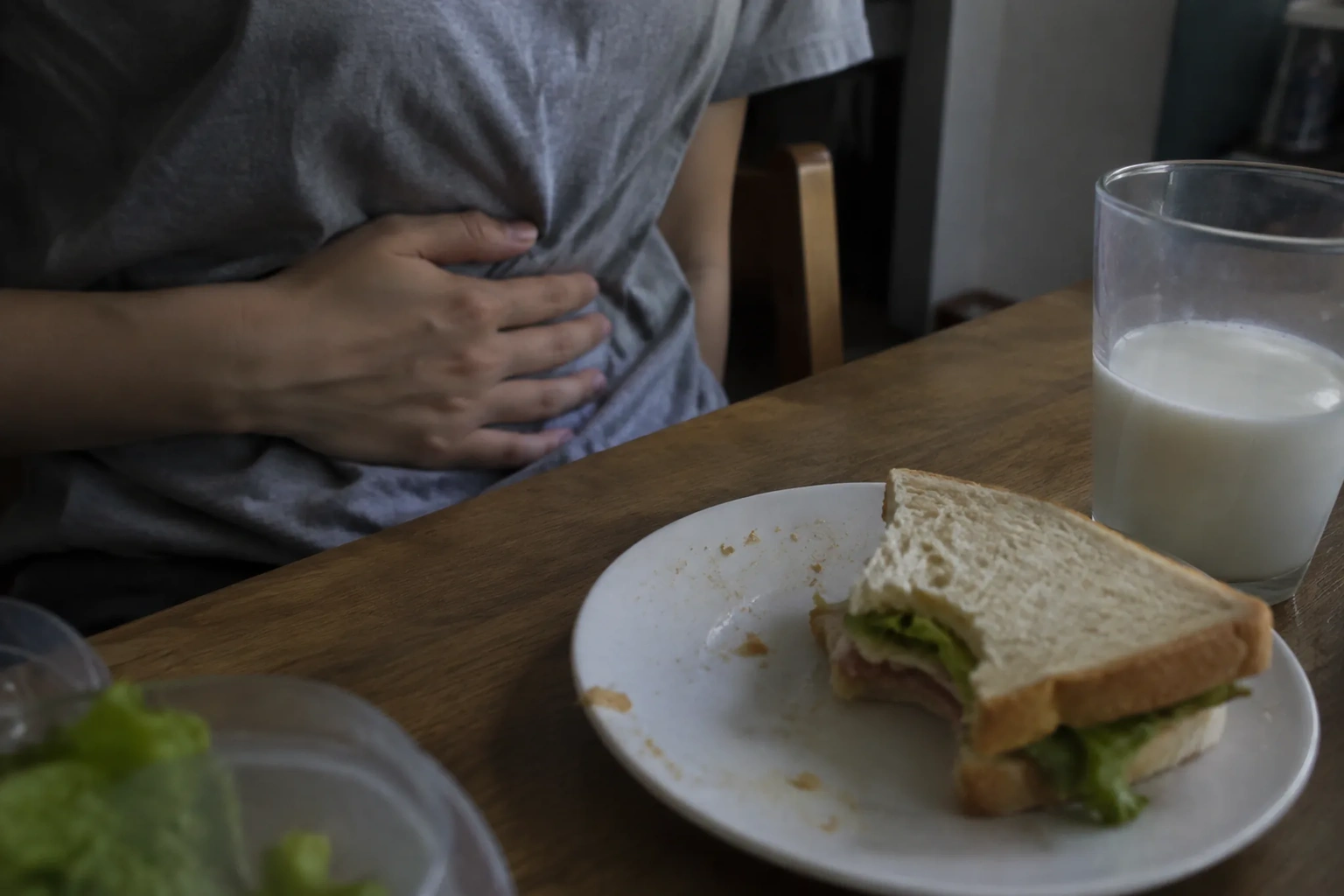
The list of things that quietly wreck digestion is long, and almost nothing on it is dramatic. No single item produces a headline. A person could commit every one of these small errors for months and feel only vaguely off: a little bloated after lunch, a little tired by mid-afternoon, a little irregular in ways that get blamed on age or stress or the weather. The trouble with gut health is that it rewards consistency in both directions. Small good habits accumulate. So do small bad ones, and the bad ones are harder to notice because they arrive without a signal.
What follows is a list of those quiet missteps, the ones that seem too minor to matter until they are stacked on top of each other for a year. None of them requires a doctor's visit. Most of them cost nothing to fix. The catch is that fixing them requires noticing them first, and the body is not generous with feedback in the early stages.
Chewing as an afterthought
Meals get eaten at a desk, in a car, while walking to a train. The fork moves at the speed of the task at hand rather than the speed of the mouth. Food arrives in the stomach in chunks that the stomach then has to break down with acid and muscle rather than with teeth, and that is work the stomach was never meant to do alone.
There is a homely test for this: a piece of bread chewed slowly will start to taste sweet, because saliva contains an enzyme that begins breaking starch down. A piece of bread swallowed in three bites never gets that far. The sweetness is a small proof that digestion starts in the mouth, and skipping that stage pushes a burden downstream. A person who slows down for a week often notices less heaviness after meals, and the change costs nothing but time.
Drinking large volumes with meals
Water is good. Water during a meal is mostly fine. Water by the tumbler, though, dilutes the acid bath the stomach has prepared and slows the whole process. The stomach can compensate, but it has to work harder to do it, and the result is often a slow, sloshing feeling that gets blamed on the food.
The fix is unglamorous: sip rather than gulp, and drink most of the day's water between meals rather than during them. A glass with a meal is not a problem. Three glasses because the food is salty is a different matter. This is one of those adjustments that seems trivial and then turns out to matter more to comfort than most people expect.
The standing lunch
Eating while standing, walking, or working compresses the time the body has to register fullness and to shift into the rest-and-digest mode that makes a meal go smoothly. The nervous system cannot be in commute mode and digestion mode at once, and it will always favor the commute. A sandwich eaten on the move is a sandwich the body treats as an interruption.
Ten minutes seated, without a screen, changes more than it should. It is not a ritual or a wellness practice. It is simply the minimum condition under which the body can pay attention to what just arrived. People who make this change often report that they eat less without trying, which makes sense: the signal that says enough has time to arrive.
Fiber added all at once
Fiber is the most recommended and most poorly introduced nutrient in the average diet. Someone reads that most people get too little, buys a bag of lentils, and eats them three days running. The result is gas, cramping, and a firm decision that fiber does not agree with them.
The gut's bacterial population adapts to what it is fed, and it adapts slowly. A sudden increase in fiber feeds a set of microbes that were not there in numbers a week ago, and the fermentation that follows is vigorous and gassy. The same amount of fiber introduced over a month, a little more each week, produces far less trouble. The fiber was never the problem. The pace was.
The same foods, week after week
A diet built on the same dozen foods is easy to shop for and easy to cook, and it quietly narrows the range of bacteria the gut supports. Different fibers feed different microbes. A person who eats the same breakfast, the same lunch rotation, and the same three vegetables is feeding a small and stable community, which is fine until it is not.
The correction does not require a new cuisine. It requires variety within the ordinary: a different grain once a week, a vegetable that has not been in the house for a month, a handful of nuts that are not the usual kind. Diversity in the diet is one of the few things that reliably shows up as diversity in the gut, and it is built from small swaps rather than overhauls.
Sleep debt and the gut clock
The gut runs on a schedule. Motility, acid production, and the composition of the bacterial population all shift across the day in a pattern that depends on sleep and on regular meal times. A person who goes to bed at wildly different hours and eats at wildly different hours is asking the gut to run a schedule it cannot predict.
Short sleep, in particular, tends to make the gut more permeable and the appetite less reliable, which is part of why a bad night often leads to a bad eating day. The two problems feed each other. A steady bedtime is not a cure for anything, but it is one of the few levers that affects digestion without touching the plate at all.
Stress eaten at the desk
Chronic low-grade stress keeps the body in a state that is hostile to digestion. Blood flows to the muscles and away from the gut. The result is slower emptying, more gas, and a general sense of discomfort that gets attributed to whatever was eaten. The food takes the blame for the mood.
This is the hardest item on the list to fix because it is not a food. But the small version of the fix is real: a few slow breaths before a meal, a walk after one, a moment of not looking at a screen while eating. None of these is a treatment for stress. They are small interruptions in the stress signal, timed to land when digestion needs the body to stand down.
The antibiotic without a follow-up
A course of antibiotics is sometimes necessary and always disruptive. It clears the infection and, along with it, a good deal of the gut's resident population. Most people finish the course, feel better, and move on, and the gut rebuilds on its own over the following weeks and months.
What slows the rebuild is everything else on this list continuing unchanged. A person recovering from antibiotics while eating the same narrow diet, sleeping badly, and eating on the run gives the gut little to work with. The follow-up is not a supplement. It is a stretch of ordinary, varied, unhurried eating, which is exactly the thing that is hardest to arrange in the middle of a busy season.
Ignoring the pattern of a bad week
Most gut trouble is not random. It clusters around specific weeks and specific habits, and the pattern is visible if anyone bothers to look. The bloating that shows up every Thursday. The sluggishness that follows the Sunday takeout. The irregularity that begins the week a deadline starts.
A short note kept for two weeks, just a line a day about what was eaten and how the gut felt, usually surfaces one or two culprits that were invisible in the moment. The note is not a diet. It is a way of catching the small missteps before they become the baseline, which is the whole difficulty: a habit that produces mild discomfort is easy to stop noticing, and once it stops being noticed it stops being fixed. The body keeps a ledger even when the mind does not, and the entries are all small.





















