







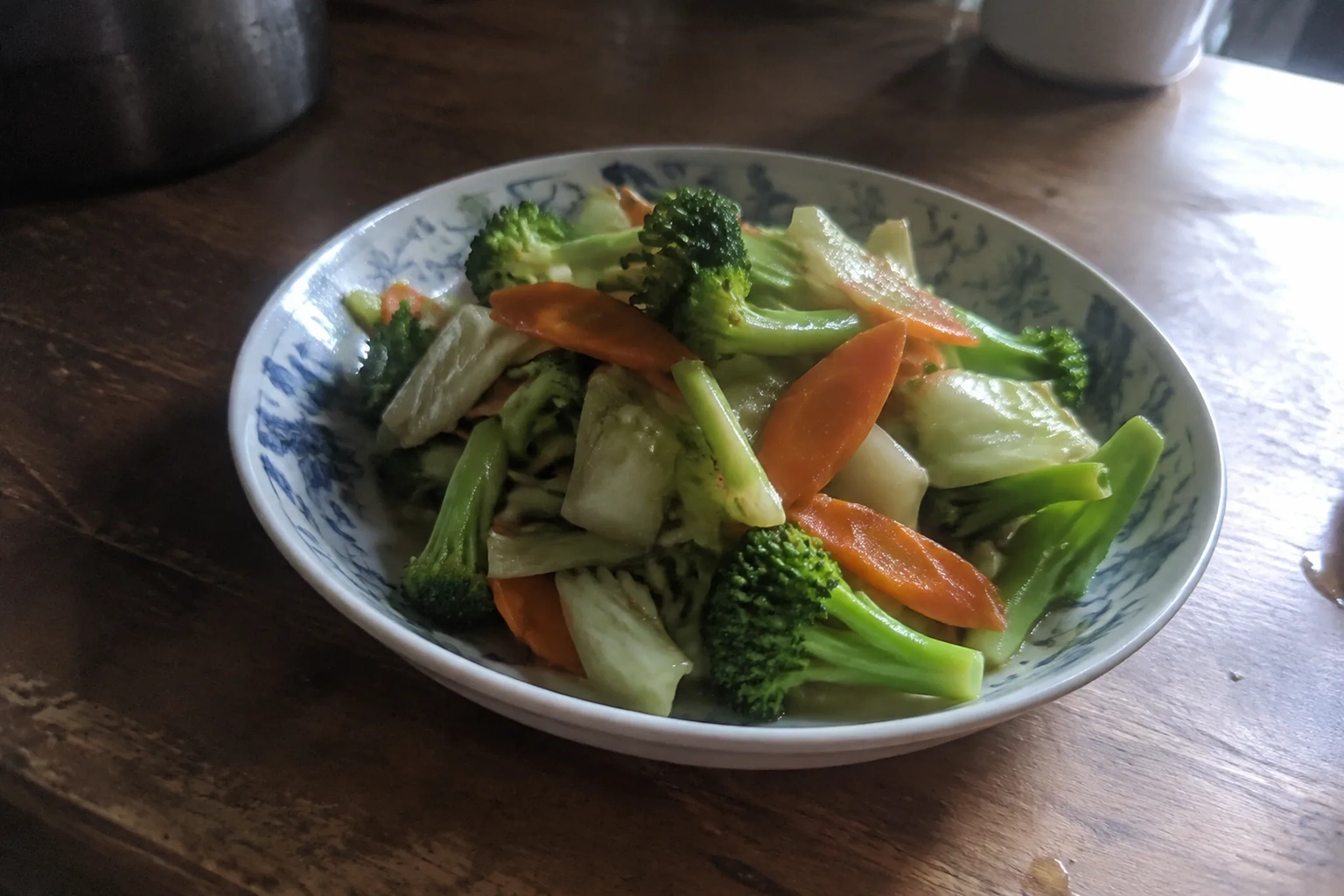
Most home cooks treat vegetables as a side dish problem: buy something green, cook it until soft, salt it. The result is edible and forgettable, a pile of fiber next to the protein. The upgrade rarely comes from buying fancier vegetables or learning a new cuisine. It comes from small, unglamorous adjustments to the vegetables already sitting in the fridge, the ones that get chopped the same way every week.
Take the onion. A home cook dices it into uniform little cubes because a recipe said to. Restaurant cooks often cut onions into wedges or thick slices for the same dish, because more surface area against a hot pan means more browning, and browning is where flavor lives. The uniform dice steams in its own moisture. The ragged wedge catches the oil and goes dark at the edges. Same onion, same pan, wildly different result.
That is the whole premise: the vegetable is rarely the problem. The treatment is. What follows are specific, repeatable upgrades for the vegetables a person is already cooking, arranged by the thing that most often goes wrong with each one.
Dry the vegetable before it hits the fat
Wet vegetables do not brown. They steam, and steamed vegetables taste like the water they released. A colander shake is not enough. Zucchini, mushrooms, eggplant, and cabbage all carry enough surface water to sabotage a hot pan, and the fix costs thirty seconds.
Cut the vegetable, spread it on a clean towel or a layer of paper towels, and press another towel over the top. Walk away for five minutes. For mushrooms, skip rinsing altogether and wipe them with a damp cloth, since they absorb water like sponges. For eggplant, salt the slices and let them sit for fifteen minutes, then pat them dry; the salt pulls out moisture and the flesh collapses into something silky instead of spongy.
The payoff is audible. A dry mushroom in a hot pan squeaks and then goes quiet as it browns. A wet one hisses and spits for ten minutes and never develops a crust.
Cut vegetables to the size the heat can handle
A carrot coin and a carrot baton are not interchangeable, even if the recipe pretends they are. Thick pieces need low, slow heat; thin pieces need high, fast heat. Mismatching the cut to the method is why roasted carrots sometimes come out charred outside and raw inside, or pale and limp after forty minutes in the oven.
For roasting, cut dense vegetables (carrots, parsnips, potatoes, squash) into pieces no larger than a thumb joint, and cut them all the same size. Uniformity matters more than the shape itself. A tray of mixed sizes roasts unevenly, and the small pieces burn while the big ones stay firm.
For a hot skillet, go thinner. Sliced cabbage, shaved Brussels sprouts, and thin green beans all cook in a few minutes at high heat and pick up char without turning to mush. The same vegetables cut thick need a lid and a longer time, which is a different dish entirely.
Salt in stages, not at the end
Salt added at the end sits on the surface and tastes sharp. Salt added early draws out moisture, seasons the interior, and changes the texture of the vegetable itself. This is the single largest upgrade available, and it costs nothing.
Salt sliced cabbage, zucchini, or eggplant about fifteen minutes before cooking and let it drain in a colander. The vegetable releases water, the flesh tightens, and it browns faster and seasons more evenly. For roasted root vegetables, salt them with the oil before they go in the oven and taste a piece halfway through; adjust then, not after.
Tomatoes are the exception worth knowing. Salt a sliced tomato and it weeps within minutes, which is fine for a salad but ruinous for a hot pan. Salt those after they have seared.
Give the pan more room than feels reasonable
Crowding is the most common home-kitchen mistake with vegetables, and it produces the same sad result every time: a pan of gray, steaming produce that never browns. The instinct is to use one pan for efficiency. The physics do not cooperate.
A single layer with visible gaps between pieces lets steam escape and lets the hot surface do its work. Two layers trap moisture and drop the pan temperature, and the vegetables essentially boil in their own liquid. For a family-sized batch of roasted broccoli or green beans, that usually means two sheet pans, or roasting in batches and keeping the finished ones warm in a low oven.
The same rule applies to a skillet. A pan of sliced onions meant for caramelizing needs to be stirred occasionally and left alone mostly, but it also needs to fit in a layer that is generous rather than packed. Onions crammed into a small pot turn soupy before they turn sweet.
Add acid after the heat, not during
A squeeze of lemon or a splash of vinegar is the cheapest way to make a vegetable taste like more than itself. The timing matters. Acid added early in cooking dulls and disappears; acid added off the heat keeps its brightness and cuts through the fat the vegetable was cooked in.
Roasted cauliflower, sautéed greens, grilled zucchini, and steamed green beans all benefit from a few drops of lemon juice or sherry vinegar just before serving. A little zest alongside the juice adds a floral note the juice alone does not have. For cabbage and other brassicas, a splash of cider vinegar at the end does something close to magic.
The amount is smaller than most people expect. A quarter of a lemon over a whole tray of vegetables is usually enough. Too much acid tastes like a mistake; just enough tastes like seasoning.
Cook the stems and leaves separately from the tender parts
Broccoli is a single vegetable with two cooking times built into it. The florets cook in three or four minutes; the stems need closer to eight. Cooking them together means either mushy florets or raw stems, and most home cooks choose mushy florets without noticing.
The fix is simple: cut the stems into smaller pieces than the florets, or start the stems in the pan a few minutes earlier. The same logic applies to kale (stems first, leaves after), chard (stems and leaves as two separate additions), and asparagus (thick ends peeled or snapped off).
A related upgrade: do not throw away the stems and leaves that recipes tell you to discard. Broccoli stems, peeled and sliced thin, are sweet and crunchy. Beet greens sauté in olive oil with garlic in three minutes. Radish tops make a peppery pesto. The parts that get binned are often the best-tasting parts of the vegetable, and using them costs nothing but a few extra minutes of prep.
Roast hotter than the recipe suggests
Most oven-roasting instructions call for 400 degrees, which is a compromise temperature that produces okay results for almost everything. Vegetables that should be blistered and sweet come out soft and pale instead. Raising the heat to 450 or even 475, and cutting the time, transforms the result.
At higher heat, the natural sugars in carrots, onions, squash, and peppers caramelize before the interior turns to mush. The edges char, which is where the flavor concentrates. The tradeoff is attention: vegetables at 450 degrees can go from perfect to burnt in a couple of minutes, so they need to be checked and turned.
This is also why a preheated sheet pan matters. A pan that goes into a cold oven with the vegetables on it heats up gradually, and the vegetables release moisture into a lukewarm surface. A pan preheated in the oven for ten minutes hits the vegetables with immediate heat, and that first contact is what starts the browning.
Finish with something raw and something crunchy
A cooked vegetable on its own is a single texture. The fastest way to make it feel like a finished dish is to add something raw and something crunchy at the end. This is not garnish for its own sake; the contrast is what makes the vegetable taste deliberate.
Roasted sweet potatoes with a handful of chopped cilantro and toasted pepitas. Sautéed green beans with sliced raw garlic and crushed peanuts. Charred cabbage with a spoonful of raw scallions and sesame seeds. Steamed broccoli with lemon zest and toasted breadcrumbs. Each takes under a minute and changes the whole plate.
The raw element should be sharp and bright (herbs, scallions, citrus zest, raw garlic, a little chili). The crunchy element should be toasted and salty (nuts, seeds, breadcrumbs, fried shallots). Both should go on after the vegetable comes off the heat, so they keep their texture and their edge.
Stop peeling what does not need peeling
Carrots, potatoes, cucumbers, zucchini, and apples all get peeled out of habit. The skin is where a lot of the flavor and texture sits, and scrubbing a carrot under running water takes less time than peeling it. Thin-skinned potatoes roasted with the skin on develop a crisper exterior and a more savory flavor than peeled ones.
The exceptions are real: thick-skinned winter squash, beets (unless they are roasted whole and slipped out of their skins afterward), and anything with a waxy or bitter coating. But for the everyday vegetables in the crisper drawer, the peeler is often doing more harm than good.
A carrot left unpeeled, cut into irregular chunks, salted before it hits a 450-degree pan, and finished with lemon juice and chopped parsley is a different vegetable from the peeled, boiled, buttered version that shows up on too many plates. The carrot did not change. The treatment did. That is the entire upgrade, repeated across every vegetable in the kitchen: fewer steps, done with more attention, at the moments that matter.





















