







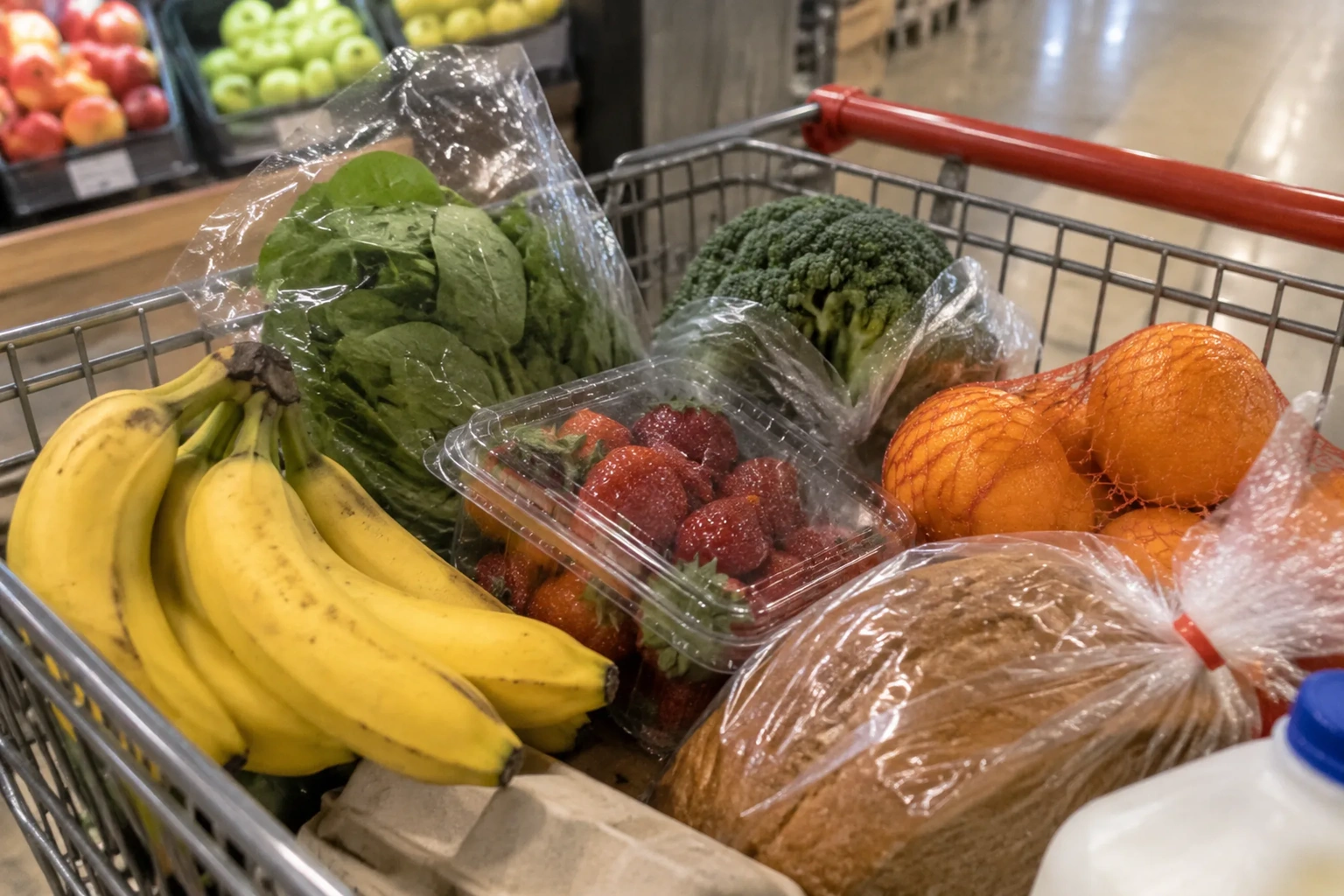
The cart is the first draft of the week's eating. Before anything gets cooked, packed, or skipped, it sits there in wire and fluorescent light: a decision already made. Most grocery advice aims at the list, as if a better list produces a better cart by itself. A list is a wish; the store is where wishes meet aisle geometry, endcaps, and the fact that the good bread runs out by ten on Saturday. Healthier carts get built by handling the trip as a set of physical decisions rather than a moral test of willpower.
The scale of the place matters first. A warehouse club rewards bulk buying and punishes anyone shopping for two; a corner market rewards frequency and punishes stockpiling. Neither is inherently healthier. What changes is the ratio of fresh to shelf-stable food a person can realistically carry home and use before it spoils. The cart that looks virtuous on Sunday and rots by Thursday is a failed cart.
The perimeter claim and why it half-works
Old supermarket wisdom says shop the perimeter, where produce, meat, and dairy live, and skip the center aisles. It is decent advice with a hole in it. The perimeter also holds the bakery, the prepared-foods counter, and the deli case, and a cart built entirely from those is not automatically healthier than one that includes a bag of dried lentils.
The center aisles contain beans, oats, rice, canned tomatoes, frozen vegetables, and spices, all of which do real work in a week's cooking. The perimeter rule survives because it pushes shoppers toward food with shorter shelf life, which tends to mean less processing. Treat it as a nudge, not a border.
Order of aisles as a practical tool
Sequence changes outcomes. Heavy items first, perishables last, frozen at the very end, is the standard route for a reason: it protects the cold chain on the drive home and keeps a cart from being crushed under a watermelon. The same logic applies to decisions. Entering through produce means the cart's volume is partly spoken for before reaching the snack aisle.
A shopper who starts in the chip aisle and works backward arrives at the checkout with a cart shaped by impulse and a shrinking amount of space. A shopper who starts with vegetables and fruit fills the same cart with items that need cooking, which quietly raises the odds that cooking happens.
Small markets make this harder. Some force a single path, produce at the entrance, dairy at the back, everything else in between. That layout is a gift, since it removes the choice.
The two-meal test for produce
Produce is where carts most often fail, and the failure is rarely about buying too little. It is about buying without a plan. A head of cabbage, a bag of carrots, and a bunch of parsley can each serve two different meals. A single bunch of radishes, bought for one salad, often serves none after the first three get eaten raw.
The practical filter: before an item goes in the cart, it should fit at least two meals the shopper can name on the spot. A bag of spinach works in a scramble and a pasta. A bunch of kale works in a soup and a salad. A single avocado works in one lunch and then becomes a deadline.
This test also cuts waste. The most common produce casualty is the item bought for a recipe that never got made. Naming the second meal at the point of purchase catches that before the money leaves the account.
Frozen vegetables earn a permanent slot
Frozen peas, corn, spinach, and broccoli are picked and frozen at peak, and they keep for months without a plan. They cost less per usable serving than fresh vegetables that get thrown out, and they do not collapse on a Wednesday when the week goes sideways. A bag of frozen peas is a backup meal waiting to happen.
The texture objection is real but limited. Frozen spinach will not work in a salad; it works beautifully in soup, curry, and eggs. Frozen broccoli is fine roasted at high heat and miserable steamed. Knowing which jobs each one can do is the whole trick.
A cart with a bag of frozen peas and a bag of frozen berries in it has already solved two future problems: a vegetable side on a night with no time, and breakfast on a morning with no fresh fruit.
Reading the first three ingredients
Ingredient lists are ordered by weight, so the first three entries tell most of the story. A jar of pasta sauce whose first ingredient is tomatoes and second is olive oil is a different product from one that opens with sugar or water. A loaf of bread whose first three ingredients are flour, water, and yeast is a different product from one that opens with flour, sugar, and oil.
This is faster than parsing a nutrition panel and usually more useful. A shopper can compare two cans of soup in ten seconds by reading the first line of each. The nutrition facts box rewards a calculator; the ingredient list rewards attention.
One caution: "natural flavors" and "spices" are legal catch-alls that reveal little. The first-three test works best on staples, where the list is short and the ingredients are recognizable.
Packaged snacks and the shelf-life trap
Snack foods are engineered for a long shelf life, which makes them easy to buy in quantity and easy to overeat. The cart problem is not that a bag of chips exists; it is that a bag of chips in the pantry at 9 p.m. is a decision already made. Buying one bag instead of three delays the next decision to the next trip.
A workable middle path: buy snacks that require some assembly. Popcorn kernels, nuts in shells, fruit that needs peeling. The friction is small, but it is enough to slow down absent-minded eating. A bag of pre-washed grapes disappears in a sitting; a bag of oranges lasts a week.
Endcaps, eye-level shelves, and the layout tax
Endcaps are rented space, sold to whichever brand wants the impulse buy. The same is true of eye-level shelving in the center aisles. None of this is sinister, but it does mean the cart reflects a store's priorities unless a shopper overrides them deliberately. The cheaper, plainer version of a staple often sits on the bottom shelf.
The practical response is to look down. Store brands and bulk staples tend to live low, where the rent is cheaper. The difference between two cans of chickpeas is often a few cents and a label.
A cart that survives the drive home
Bagging is the last decision and the one most often made badly. Raw meat goes in its own bag, at the bottom of the trunk or the coolest spot. Frozen items go together. Produce goes on top so it does not get crushed. A cooler bag in the trunk in summer is not fussiness; it is the difference between chicken that reaches the fridge safely and chicken that does not.
The trip ends when the groceries are put away, not when the car is unloaded. A cart that sat in a hot trunk for forty minutes has already lost some of its advantage. The bag of frozen peas bought as insurance against a bad Wednesday is only insurance if it is still frozen when it hits the freezer.
The receipt as a record of the week
A receipt is a surprisingly honest document. It shows what was actually bought, in what quantity, and at what price, without the filter of memory. Two weeks of receipts side by side reveal patterns a shopper cannot see from inside the aisle: the same snacks reappearing, produce bought and never replaced, the prepared meals creeping up the total.
Nothing needs to be tracked in a spreadsheet. Keeping the last few receipts in a drawer and glancing at them before the next trip is enough to make the pattern visible. The cart that gets built on the next visit is shaped by what the last one actually contained.
Somewhere between the produce misters and the checkout candy, a week of eating gets decided by a series of small physical choices made in a hurry. The shopper who names the second meal, looks at the bottom shelf, and keeps the frozen items cold until they reach the freezer is not being virtuous. That person is simply leaving the store with a cart that has a better chance of turning into dinner.





















