







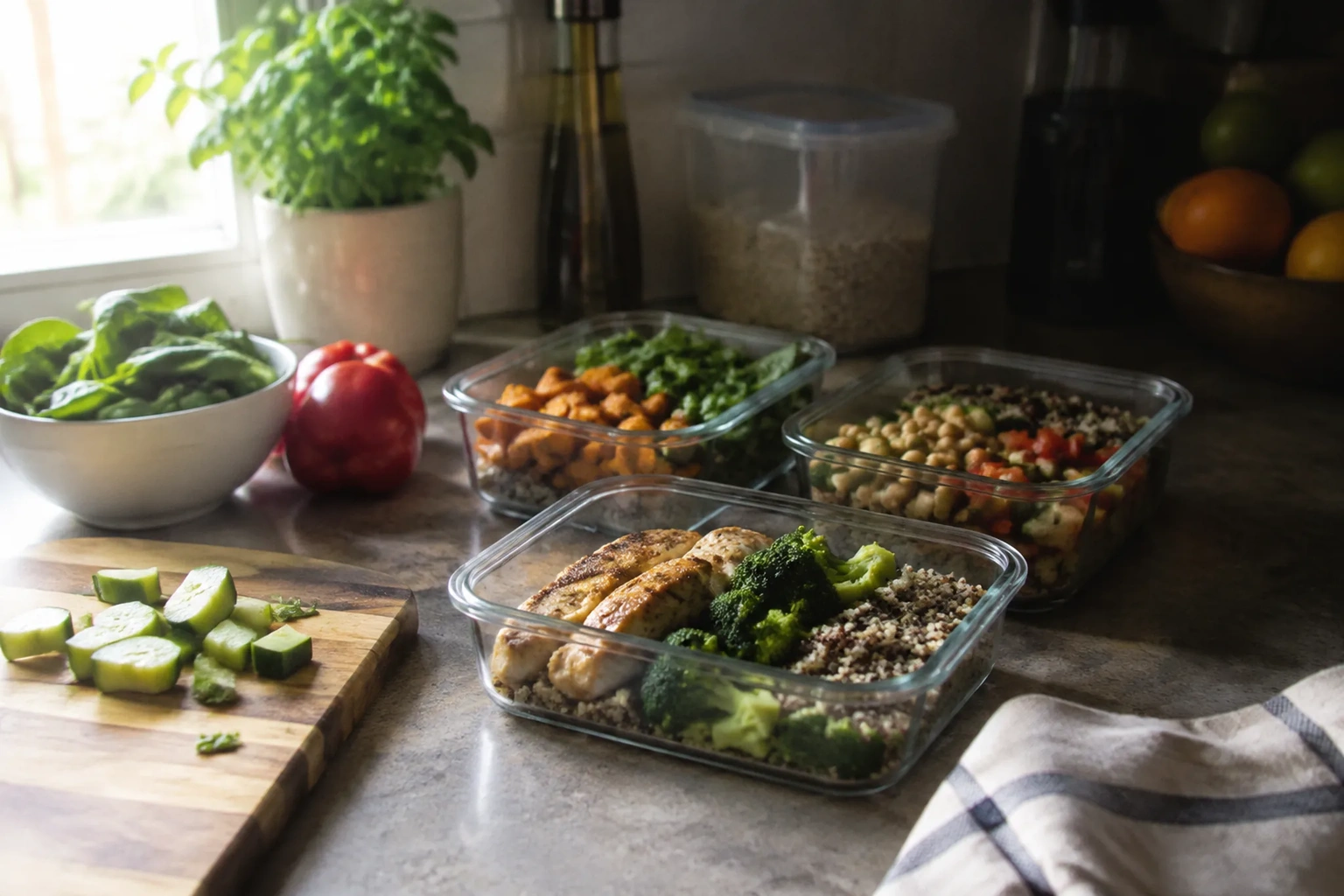
Sunday cooking has a reputation problem. It arrives dressed as virtue: eight identical containers of brown food, a afternoon surrendered to the stove, a week of meals that taste like obligation. The gut-friendly version of this ritual gets an even worse rap, since it tends to conjure images of steamed fish and sad rice and a person chewing very slowly while thinking about their microbiome.
There is a better way to spend the day, and it starts with a simple piece of arithmetic. A week contains roughly twenty-one meals. Nobody needs to prep all of them. The realistic target is lunch and dinner for five days, ten meals, which means the actual cooking can fit into about three hours if the plan respects heat, texture, and the fact that fermented foods should never see the inside of a microwave.
The gut itself is not a delicate flower that collapses at the first sign of a Tuesday. It is a dense, competitive ecosystem, and the foods that support it tend to be the ones that also taste good: fiber-rich vegetables, legumes, whole grains, yogurt and kefir with live cultures, fermented cabbage, and enough variety to keep the bacterial population from getting bored. Variety is the part most meal-prep plans miss. A week of the same chicken-and-broccoli combination feeds a person and starves the ecosystem.
The Sunday timeline that actually fits
The oven comes on first, at 425 degrees, because it takes the longest to heat and the longest to cook. A tray of root vegetables goes in, cut into pieces of roughly equal size: carrots, sweet potato, red onion, a whole head of garlic with the top sliced off. They will roast for forty minutes and then sit, unattended, while other things happen.
While the oven works, a large pot of grains goes on the stove. Farro is the good choice here. It has a chewy, nutty bite that survives five days in the refrigerator without turning to paste, and it holds a dressing without getting soggy. Cook a full pound, drain it, and spread it on a sheet pan to cool quickly. Hot grains trapped in a container steam themselves into mush.
The third burner belongs to a pot of beans. Canned chickpeas work fine, drained and rinsed, but dried beans are cheaper and better if Saturday night includes a few minutes of soaking. Either way, the beans get tossed with olive oil, cumin, smoked paprika, and salt, then spread on a second tray and roasted until the skins split and the edges crisp. Roasted chickpeas are the single most useful thing in a gut-friendly refrigerator: they add crunch to a grain bowl, they work as a snack, and they survive a lunch bag without turning sad.
Two trays, one pot, ninety minutes. That is the spine of the week.
Why the vegetables get two treatments
Roasted vegetables are delicious and also monotonous by Thursday. The fix is to leave half of the raw vegetables raw. Shredded red cabbage, grated carrot, sliced fennel, and thin ribbons of kale hold up well for days in the crisper, and they give every bowl a fresh, acidic counterpoint to the roasted sweetness underneath.
This dual treatment is the difference between a week of meals that feels assembled and a week that feels cooked. A lunch container with roasted sweet potato, cold shredded cabbage, farro, and a spoon of yogurt dressing has four distinct textures and temperatures. The same container with all-roasted components has one note, and by Wednesday the note is tiresome.
Keep the raw vegetables dry until the morning they are eaten. Moisture is the enemy of crispness, and a wet cabbage will wilt everything it touches. A layer of paper towel at the bottom of the container absorbs the excess and buys a couple of extra days.
The dressing that ties five days together
A single jar of dressing can make ten meals feel like ten different meals if it is sharp enough. The reliable formula: three parts olive oil, one part acid, a spoon of Dijon mustard, a grated clove of garlic, salt, and enough honey to round the edges. Shake it in a jar and it keeps for the week.
The acid matters more than people expect. Lemon juice is bright and disappears into a grain bowl; red wine vinegar is louder and holds its own against roasted vegetables; and a splash of the brine from a jar of sauerkraut adds a fermented tang that pairs naturally with the gut-friendly theme. Rotating the acid across the week, one jar of lemon vinaigrette, one of vinegar and mustard, keeps the palate from going numb.
Yogurt deserves its own small container. A plain, full-fat yogurt with live cultures, thinned with a little olive oil and lemon and seasoned with salt, cumin, and chopped herbs, becomes a sauce that works on grain bowls, roasted vegetables, and even eggs. It is also the easiest way to get a daily dose of live cultures without thinking about it, which matters because the gut does not care about good intentions, only about what actually gets eaten.
Fermented foods go in at the end, cold
Here is the rule that saves a week of cooking from becoming a week of wasted probiotics: fermented foods are added after cooking, at room temperature or cold, right before eating. Heat destroys the live cultures that make sauerkraut, kimchi, and yogurt worth eating. A spoon of kimchi stirred into a hot bowl of rice at the start of the week is fine; a jar of kimchi cooked into a stew on Sunday is not doing the job it was bought for.
Keep the fermented components separate. A small jar of sauerkraut, a container of kimchi, a tub of plain yogurt, and a bottle of kefir in the refrigerator door. Each gets added to a bowl at the moment of eating, which takes ten seconds and preserves everything that makes them useful.
Fermented foods also solve the flavor problem. A grain bowl with roasted vegetables and beans is fine. The same bowl with a spoon of kimchi on top is interesting, and interesting food gets eaten instead of thrown away on Thursday night.
The protein question, handled without drama
Beans and grains together provide plenty of protein across a day, and the gut prefers plant proteins anyway since they arrive with fiber attached. For anyone who wants more, a tray of chicken thighs roasted alongside the vegetables takes the same forty minutes and requires nothing more than salt, pepper, and a squeeze of lemon at the end.
Eggs are the other answer. A dozen hard-boiled eggs on Sunday morning take twelve minutes and provide grab-and-go protein for the entire week. They keep for a week in the shell and travel well. The person who has eggs in the refrigerator is a person who does not buy a sad sandwich on Wednesday because there was nothing to eat.
Tofu is worth a mention for anyone who wants it. Press a block, cube it, toss it in cornstarch and oil, and roast it at 425 degrees for twenty-five minutes. It comes out crisp and holds its texture for days, which is more than most tofu preparations can claim.
What the containers should look like on Sunday night
Five glass containers, each with a base of farro, a layer of roasted vegetables, a handful of roasted chickpeas, and a portion of raw shredded vegetables kept in a separate small container on top. A jar of dressing on the side. A tub of yogurt. A jar of kimchi. A bag of hard-boiled eggs. That is the refrigerator on Sunday night, and it is a good refrigerator to open on Monday morning.
The remaining farro goes into a large container of its own, because it will be needed for the meals that do not fit the container mold: a quick soup on Wednesday, a fried grain dish on Friday when the week has gone sideways and nobody wants another cold bowl.
The Wednesday slump and the fried rice solution
By Wednesday, every meal-prep plan meets the same enemy: the plan itself. The containers are still there, the food is still good, and the thought of eating another cold grain bowl produces a small, specific despair.
The fix is a hot pan, ten minutes, and the leftover grains. Fried rice, or fried farro, made with whatever roasted vegetables remain, a couple of eggs, a splash of soy sauce, and a spoon of kimchi stirred in at the end. It is a different meal from a different cuisine with the same ingredients, and it costs almost nothing in effort.
This is the quiet argument for prepping components instead of prepping meals. A container of assembled food is a decision already made. A refrigerator of components is a set of options, and options keep a person cooking through the part of the week when the plan gets old.
The freezer holds two things, and they are not meals
A bag of frozen edamame and a bag of frozen berries. The edamame goes into a bowl with salt as a snack or into a grain bowl for crunch and protein. The berries go into yogurt in the morning, which is the easiest live-culture delivery system available. Neither requires thawing ahead, both keep for months, and both fill the gap when the fresh produce runs out on Friday.
The freezer should not be full of prepped meals. Frozen-then-thawed grain bowls are a particular kind of disappointment, since the textures that made them good on Sunday do not survive the trip. Components freeze well; assembled meals do not.
The three-hour Sunday, honestly measured
Thirty minutes of chopping, ninety minutes of roasting and grain-cooking happening in parallel, twenty minutes of dressing and yogurt sauce, twenty minutes of container assembly, and a final ten minutes of cleanup while the last tray cools. Add another twenty minutes for the eggs and the tofu if both are happening. Three hours is a real number, and it includes time to answer a text message or two.
It is also a number that shrinks with practice. The second Sunday is faster because the chopping becomes routine and the oven temperature is already known. The third Sunday is faster still, because the refrigerator is already stocked with the jars and containers that make the whole system work.
The payoff arrives on a Thursday, when the week has been long and the alternative to a good lunch is a bad one. The refrigerator opens, and there is farro and roasted sweet potato and cold shredded cabbage and a spoon of kimchi and a jar of dressing that takes ten seconds to pour. The whole thing comes together in the time it takes to find a fork. That is the meal that makes the Sunday worth it, and it is the reason the containers get filled again the following week.





















