







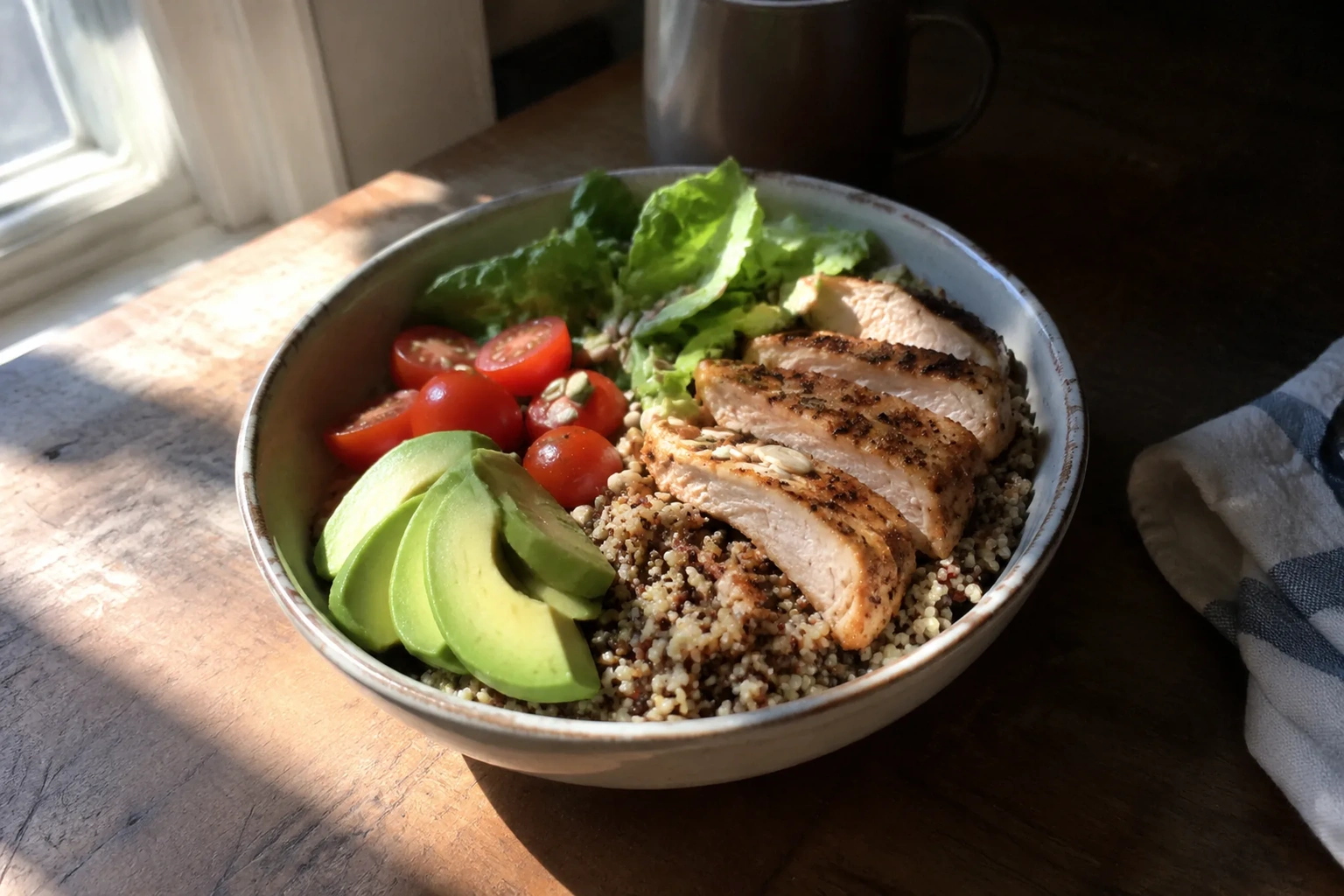
A grain bowl fails in a narrow, predictable band of ways. The rice goes gummy at the bottom, the vegetables weep into a puddle, the dressing vanishes into the starch, and by two in the afternoon the whole thing has collapsed into a beige slurry that tastes of nothing in particular. Most people blame their ingredients. The problem is almost always the ratio.
Grain bowls borrowed their logic from Japanese donburi, Korean bibimbap, and the grain-and-legume plates of the eastern Mediterranean, but the American lunch-counter version that took over office kitchens in the 2010s stripped out the discipline. What remained was a pile of unrelated components. A bowl built on a real formula holds together because each layer has a job and a proportion, and those proportions can be learned in an afternoon.
The working numbers are these: two parts cooked grain, one part protein, one part roasted or raw vegetable, a quarter part something crunchy or acidic, and a dressing at roughly one tablespoon per cup of finished grain. That is the skeleton. Everything interesting happens in how a cook bends it.
Why the grain layer needs to be undercooked by a hair
Most home grain bowls are too wet because the grain is cooked to eating texture and then sealed in a container while still steaming. The residual moisture keeps working overnight. By lunch the next day, barley has turned to porridge and farro has lost its chew.
Pull the grain off the heat about two minutes before it reaches the texture a person would want to eat plain. Spread it on a sheet pan to cool fast rather than letting it sit in the pot. The grain finishes cooking in its own heat and ends up firm enough to hold dressing without dissolving. This one adjustment fixes more bowls than any ingredient upgrade.
Grain choice matters less than people think, though it does set the ceiling. Long-grain rice stays separate and light. Short-grain rice clumps, which suits a bowl eaten with a spoon but punishes anyone hoping to fork through it. Farro and barley bring chew and a nutty edge that stands up to aggressive dressings. Quinoa cooks fast and holds shape, but it has a faintly soapy finish that needs acid to cover. A cook who wants a bowl that survives a commute should lean toward farro, barley, or long-grain rice and treat quinoa as a specialty rather than a default.
The protein portion is smaller than the appetite suggests
One part protein to two parts grain looks stingy on paper. It is not. A cup of cooked grain plus half a cup of protein is a substantial lunch, and the ratio keeps the bowl from turning into a meat dish with rice underneath.
Chicken thighs hold up better than breasts in a dressed bowl because the fat keeps them from drying out when cold. Cubed tofu benefits from a hard sear and a press before cooking, otherwise it releases water into the grain overnight. Chickpeas and lentils are the quiet workhorses here; a half cup of well-seasoned lentils costs almost nothing and binds the bowl together in a way sliced chicken never does.
The mistake is treating protein as the center of the plate. In a grain bowl it is a supporting player with a strong flavor. Salt it hard, char it a little, and let the grain and vegetables carry the volume.
Vegetables need to be cooked down, not piled raw
Raw cucumber and shredded carrot are fine as a garnish. They are a poor main vegetable because they release water and refuse to absorb dressing. Roasted vegetables, cooked until their edges darken and their interiors soften, behave completely differently. They soak up vinaigrette, they keep for days, and they taste like something.
A head of cauliflower roasted at 425 degrees until the florets are deeply browned will shrink to about half its raw volume. That shrinkage is the point. What looks like too much vegetable going into the oven becomes the right amount going into the bowl. Sweet potato cubes, red onion wedges, and halved Brussels sprouts all follow the same rule: high heat, enough oil to coat, and space between pieces so they brown instead of steam.
One raw or quick-pickled element earns its place for contrast. Thin-sliced radish, quick-pickled red onion, or a handful of herbs gives the bowl a bright note that roasted vegetables cannot provide. Keep it to a quarter part and treat it as seasoning rather than bulk.
Dressing at one tablespoon per cup of grain
The single most common failure in a homemade grain bowl is drowning it. Grain absorbs liquid slowly, so a bowl that looks well-dressed at noon is a swamp by three. The one-tablespoon-per-cup rule leaves the bowl slightly underdressed when it is packed and lets the grain drink what it needs by the time it is eaten.
A basic vinaigrette at three parts oil to one part acid works for most bowls, though the acid should be chosen to match the other ingredients. Lemon for anything with herbs and feta, sherry vinegar for farro and mushrooms, rice vinegar for anything leaning Asian. A spoonful of mustard or tahini helps the dressing cling to the grain instead of pooling at the bottom.
Dress the grain while it is still slightly warm, then pack the bowl and add the vegetables and protein on top. The grain absorbs the dressing evenly, and the components that should stay crisp stay crisp.
Building the bowl in the right order
Order of assembly matters more than most recipes admit. Grain goes in first, tossed with dressing. Protein and roasted vegetables go on top in separate zones rather than mixed together. The crunchy and acidic elements go in a small corner or a separate container so they do not soften against the grain.
This zoning is not aesthetic fussiness. It lets the person eating the bowl control the bite. A fork that catches grain, a piece of chicken, and a bit of pickled onion tastes different from a fork that catches only grain and dressing, and the eater gets to decide which they want.
For a packed lunch, keep wet components out of contact with dry ones until eating. A small jar of dressing on the side, added at the last minute, keeps a bowl fresh for three days instead of one.
Three ratios that fix the most common bowls
A farro bowl with roasted mushrooms and lentils runs heavy on the grain because farro is the star. Use two and a half parts farro to one part lentils and one and a half parts mushrooms, dressed with sherry vinegar and mustard.
A rice bowl with seared tofu and blistered green beans leans toward the vegetable. One and a half parts rice, one part tofu, one and a half parts green beans, dressed with rice vinegar and a little sesame oil.
A barley bowl with roasted sweet potato and chickpeas sits at the standard two-to-one-to-one. It is the most forgiving version and the best starting point for anyone learning the formula, because barley absorbs dressing slowly and forgives a heavy hand.
The container changes the ratio more than the recipe does
A wide, shallow container lets steam escape and keeps vegetables from sitting in their own moisture. A deep, narrow one traps heat and turns the bottom layer to mush. This detail gets ignored in every recipe that promises meal-prep success, and it ruins more bowls than bad dressing does.
Glass containers with a vented lid work well because they can go from fridge to microwave without the plastic smell that clings to reheated food. A layer of parchment between the grain and the toppings does the same job for a fraction of the cost.
None of this requires special equipment. A sheet pan, a pot, a sharp knife, and a jar for dressing cover the entire formula. The bowl that holds together at two in the afternoon is built on proportions decided before anything is cooked, and the cook who learns those proportions stops buying lunch out of resignation and starts packing a bowl worth eating.





















