







Travel disrupts digestion with a mechanical reliability that borders on rude. The body keeps time through light, meals, and movement, and a long flight or a night train upends all three at once. By the second day in a new city, the gut often reports in: bloating, irregularity, a low-grade queasiness that makes a plate of unfamiliar food feel risky. Most travelers treat this as an unavoidable tax on leaving home. It is not.
There are habits that reliably help, and they share a common logic. They all work by restoring rhythm rather than by attacking symptoms. A traveler who fixes the timing of meals, keeps the body moving, and shepherds the gut's bacterial population through the disruption will usually fare far better than one who waits for trouble and reaches for a pill. The habits are small and unglamorous. They also happen to be the difference between a trip spent managing discomfort and a trip spent eating well.
Why the Gut Loses Its Footing on the Road
Digestion runs on a circadian schedule that is easy to overlook. The stomach produces acid on a clock, the intestines move in waves timed to meals, and the gut's resident bacteria shift their populations by time of day. Shift that clock by few hours and the whole assembly runs out of sync. The consequence is not usually dramatic illness. It is a general sluggishness, a sense of things not moving, and occasional cramping as the system works against its own schedule.
Then there is the food itself. New cuisines introduce unfamiliar fiber, new spices, and preparation styles the gut has never encountered. This is not a defect in either party. A microbiome accustomed to certain foods needs a gradual introduction to others, and travel rarely offers that gradualness. A single adventurous dinner lands on a system already knocked off its clock.
Hydration is the third leg. Airport air is dry, airplane cabins drier, and many travelers drink less while moving than they do at home, simply because the cues that prompt drinking (a kitchen, a familiar tap) are gone. Dehydration slows intestinal transit and hardens stool, which is precisely the wrong direction during a trip.
Anchor Meals to Local Morning, Not the Old Clock
The single most effective habit is to eat the first meal at the destination's morning, even if the body insists it is still night. A traveler arriving from a long westward flight may feel no hunger until noon local time. Eating something modest at the local breakfast hour, whether or not appetite is present, pushes the gut's clock toward the new schedule within a day or two.
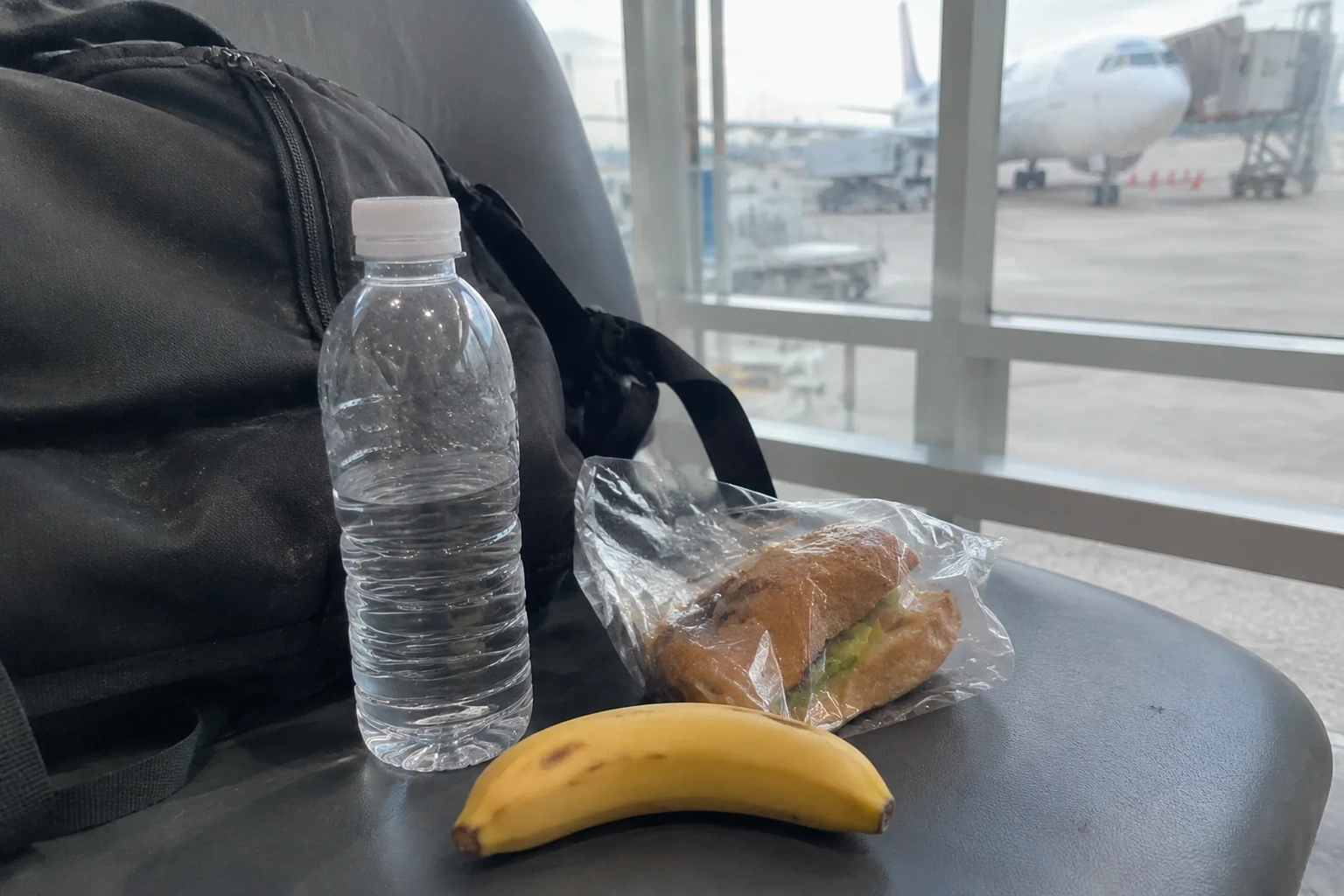
The meal itself matters less than its timing. A small bowl of plain rice, a piece of bread, a banana, a cup of tea served without milk: anything gentle and recognizable at the local morning hour does the work. The point is the signal, not the nutrition. It tells the digestive system that the day has begun, and the system is remarkably obedient to that cue.
Meal spacing rewards a similar discipline. Three modest meals at roughly local hours serve the gut better than two large ones eaten at erratic times. A traveler who grazes all day, eating whenever hunger appears, keeps the system guessing. A traveler who settles into the local pattern of eating gives it something to anticipate.
The Case for Walking After Eating
Most travel already involves walking, but the timing matters. A gentle walk after a meal, ten or fifteen minutes at an unhurried pace, does more for digestion than a vigorous workout earlier in the day. Movement stimulates the muscles of the intestinal wall and encourages the normal waves that move contents along. It also helps clear gas that accumulates when sitting for long stretches.
This is one place where the traveler has an advantage over the person at home. The point of being somewhere new is often to walk through it. A post-dinner stroll through unfamiliar streets serves the trip and the gut at the same time. The habit costs nothing and requires no equipment beyond a willingness to leave the table.
Long periods of sitting, by contrast, are the enemy. A full day of flights, trains, and bus rides leaves the abdomen compressed and the gut sluggish. Breaking up long stretches of sitting with a walk down the aisle or a stop at a station platform, even briefly, keeps things moving.
Water, Taken Deliberately
Thirst is a poor guide during travel. The body's signals lag behind actual need, and the distractions of a new place mask them further. The habit that works is deliberate: a glass of water with every meal, a bottle carried and finished within a set time, a conscious drink after every bathroom visit. The mechanism is unremarkable. The effect on regularity is not.
Temperature matters less than consistency. Some travelers find warm water or tea easier on the stomach than cold, especially upon arrival. Others prefer whatever is available. The point is volume and frequency, not ritual. A traveler who drinks a liter before noon has done more for the gut than one who drinks three liters in a single evening gulp.
Alcohol deserves a word here. It is dehydrating, it relaxes the valve at the top of the stomach, and it slows the normal emptying of the stomach into the intestine. A drink with dinner on vacation is a pleasure, not a crime, but a traveler who drinks at every meal and skips water in between is stacking the deck against digestion.
Feed the Gut's Residents Gradually
The gut's bacterial population is a community with its own preferences, and it responds to sudden change much as any community does: with unrest. A traveler who eats entirely unfamiliar food at every meal, especially in the first days, invites that unrest. The countermeasure is not to eat blandly for a whole trip. It is to introduce the new cuisine in stages, mixing familiar and unfamiliar within the same day.
Fermented foods help here, and many cuisines offer them naturally: yogurt, kefir, sauerkraut, kimchi, miso, certain cheeses. A serving or two a day supports the bacterial population through the disruption. So does fiber from fruits and vegetables that are familiar, alongside the new. The traveler who eats a banana and some rice alongside a plate of unfamiliar street food does the gut a quiet favor.
Probiotic supplements are often marketed for exactly this purpose, and the evidence is mixed enough to warrant caution. Some travelers find them helpful, others notice nothing. They are not a substitute for the broader habits, and they are not necessary for a healthy person taking reasonable care. A traveler who eats varied, mostly plant-based food and stays hydrated is already doing the essential work.
When the Local Water Is the Variable
In many destinations, tap water is safe and the local caution is unnecessary. In others, it is not, and the prudent habit is to drink bottled or filtered water, to avoid ice of uncertain origin, and to brush teeth with bottled water. This is a matter of local conditions rather than universal rule, and a traveler who checks the guidance for the specific destination is better served than one who applies a blanket policy.
The digestive upset that comes from contaminated water is a different problem from the sluggishness of travel itself, and the habits that prevent it are different too. Boiled water, sealed bottles, and peeled fruit cover most of the ground. A traveler who has done that groundwork can then focus on the rhythm habits without worrying that every meal is a gamble.
The Return Trip Deserves the Same Care
Most advice about travel digestion stops at arrival, but the return is where many travelers undo their good work. The body has adjusted to a new schedule, and the flight home shifts it again. The habits that helped on the way out, anchoring meals to local morning, walking after eating, drinking deliberately, apply with equal force on the way back. Arriving home and immediately resuming the old schedule leaves the gut to manage a second disruption in as many weeks.
A traveler who plans the return as carefully as the departure, eating a modest breakfast at the home time zone's morning and taking a walk after the first dinner back, will find the transition shorter and gentler. The gut is forgiving when it is given signals it can follow. The signals are the same whether the destination is new or familiar: eat at the hours the day keeps, move after meals, drink before thirst, and introduce change at a pace the body can absorb.
None of this requires a kit or a prescription. It requires attention to a few unglamorous rhythms, and the willingness to treat digestion as something that can be helped rather than something to be endured. A trip is short. The gut's memory of it can be shorter still, if the habits are good.





















