







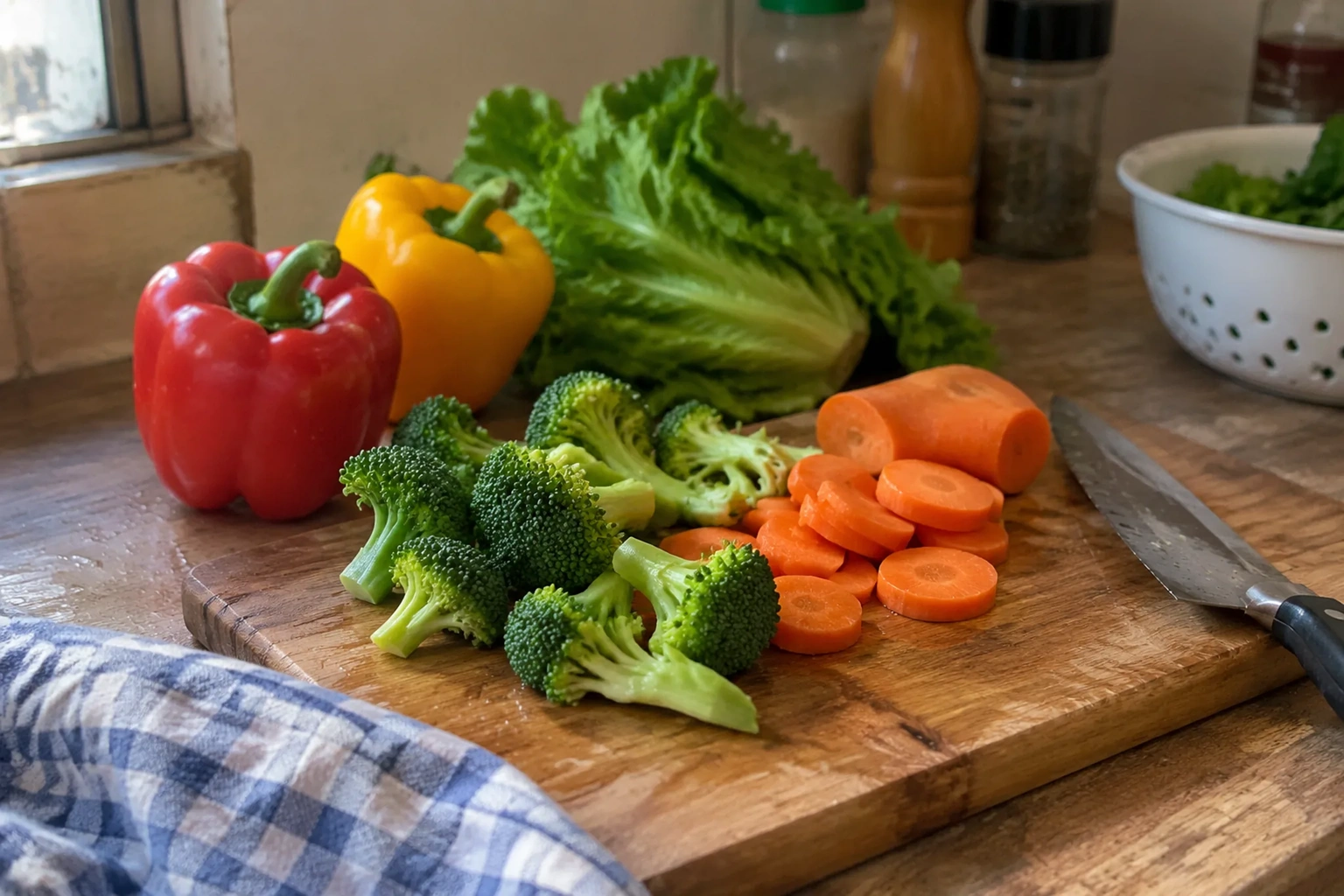
Boiled carrots, pale and limp, occupy a small circle of culinary hell. The same vegetable roasted at 220 degrees until the edges blacken and the interiors turn to sugar is a different food entirely. The distance between those two outcomes is not a matter of talent or expensive equipment. It is a matter of small decisions, applied consistently, that most home cooks skip because nobody ever told them the decisions existed.
The case for eating more vegetables has been made so many times that it has become background noise. The case for making them taste good is made far less often, and almost never in concrete terms. What follows is a collection of small, specific additions and adjustments, each one costing very little in money or effort, that compound into vegetables a person actually wants to eat twice a week rather than once a month out of obligation.
Salt in layers, not in a single dump
A common mistake with vegetables is treating salt as a finishing touch. Meat gets seasoned early because cooks understand that salt needs time to move through the flesh. Vegetables get a pinch at the end, often too late and too little.
The fix is almost embarrassingly simple. Salt the vegetables when they hit the pan, again when they come off the heat, and taste before serving. Three small additions instead of one large one. The first salt draws moisture and begins seasoning the interior. The second corrects for whatever was lost to evaporation and browning. The third catches the gap between seasoned and properly seasoned, which is wider than most cooks expect.
This matters most with dense vegetables: broccoli florets, Brussels sprouts, thick slices of zucchini. A pinch at the end sits on the surface and reads as salty without making the vegetable itself taste seasoned. Layering solves that, and it costs nothing.
Acid added after cooking, never during
A squeeze of lemon over a plate of roasted cauliflower transforms it. A squeeze of lemon into the roasting pan an hour earlier mostly disappears. Acid is volatile. Heat drives it off. The cook who adds vinegar at the start of cooking ends up with a faint ghost of what was intended.
The practical rule: finish with acid. A small amount of something sharp, added in the last thirty seconds or drizzled over the plated vegetable, does more than a larger amount added early. This works with lemon juice, sherry vinegar, red wine vinegar, even a spoonful of yogurt whisked with lime.
The other half of this is knowing which acid suits which vegetable. Green beans and lemon are a natural pair. Roasted root vegetables lean toward balsamic or a dark vinegar. Cabbage, especially charred, wants something bright and aggressive, like rice vinegar with a little mustard stirred in. These are small choices, but they are the difference between a side dish that gets eaten and one that gets pushed around the plate.
The dry surface rule before any hot pan
Wet vegetables steam. Dry vegetables brown. This single fact explains more disappointing stir-fries and soggy roasted trays than any other cause.
Vegetables come out of a colander or a rinse with water clinging to every surface. That water has to evaporate before the surface temperature can climb past 212 degrees, and browning does not begin until well past that point. A cook who adds wet vegetables to a hot pan spends the first several minutes steaming and the rest of the time wondering why nothing caramelized.
A quick pat with a towel, or ten minutes spread on a sheet pan before roasting, changes the outcome entirely. It is a small addition of time, maybe the least glamorous step in any vegetable recipe, and it does more work than most seasonings.
A hot pan and the patience to leave it alone
Vegetables need contact and stillness. Stirring is reassuring but counterproductive. Every time a piece of vegetable is moved, it loses contact with the hot surface and the browning process restarts.
A pan hot enough to make a drop of water sizzle and skitter, a thin film of oil, and then a few minutes of not touching anything. That is the whole technique. It feels wrong to a cook used to constant motion. It produces vegetables with actual color and flavor instead of a uniform pale softness.
Fat that carries flavor instead of just coating
Oil is not interchangeable. A neutral oil is a heat transfer medium. A fat with flavor, added at the right moment, is an ingredient in its own right.
A pat of butter melted over green beans off the heat, tossed until it emulsifies with the residual moisture, adds a richness that olive oil cannot replicate. A spoonful of bacon fat in the pan before roasting Brussels sprouts does more than any spice blend. Sesame oil, added at the very end rather than used for cooking, brings a toasted depth to quick-sauteed greens that disappears if it hits high heat.
The small addition here is timing and selection. The same fat applied at the wrong moment or chosen carelessly becomes grease. Applied with a little thought, it becomes the reason a person goes back for seconds.
Cutting for surface area, not for looks
Two heads of cauliflower, cut differently, produce entirely different dinners. Large florets have less surface area per bite and brown slowly. Small florets, or slices cut thin, brown fast and offer more crispy edges relative to their soft interiors.
This is a small decision with a large effect. Zucchini cut into half-moons brown on one face. Zucchini cut into thin coins brown on two. Carrots left whole take forty minutes and still taste raw in the center. Carrots cut into batons take twenty and caramelize properly.
The rule of thumb: cut vegetables smaller than instinct suggests, and cut them uniformly so they finish together. A few extra minutes with a knife is the cheapest flavor upgrade available.
The finishing garnish that is not decorative
Something raw and crunchy scattered over a hot vegetable at the last moment adds contrast that most home cooking lacks. Toasted breadcrumbs over roasted broccoli. A handful of chopped herbs over glazed carrots. Crushed peanuts over charred green beans.
These additions cost almost nothing and take seconds. They also solve a real problem: roasted and sauteed vegetables can blur into a single soft texture. A garnish reintroduces crunch, freshness, and a second flavor that makes the dish feel finished rather than merely cooked.
Keeping a jar of something sharp in the fridge
The single most useful habit for vegetable cooking is having a small jar of something sharp and fermented on hand at all times. Pickled onions, kimchi, sauerkraut, a quick pickle of cucumbers made on Sunday. These live in the refrigerator and get spooned over whatever vegetable comes off the heat.
The reason this works is that fermented and pickled things carry acid, salt, and glutamates all at once. A spoonful does the work of three separate additions. Roasted sweet potato with a forkful of kimchi is a complete side dish. Steamed green beans with pickled onions need nothing else.
Making a quick pickle takes ten minutes and a jar keeps for weeks. It is among the smallest possible additions, and it changes what a weeknight vegetable can become.
Roasting hotter than feels comfortable
Most oven recipes for vegetables call for 400 degrees. Many vegetables are better at 450 or even 475, especially when the goal is browning rather than tenderness. The higher heat drives off surface moisture faster and produces caramelization before the interior turns to mush.
There is a caveat: high heat demands attention. Vegetables can go from perfectly charred to acrid in a couple of minutes. The trade is worth making. A tray of broccoli at 450 degrees, tossed in oil and salted, needs about fifteen minutes and comes out with crisp edges and a sweetness that 400 degrees never quite reaches.
This is where the small additions accumulate. Dry the vegetable, cut it smaller, salt it early, roast it hotter, finish it with acid and something crunchy. Each step is minor. Together they produce a vegetable that a person would choose to eat, not one eaten out of duty.
A spoonful of something fermented at the end
There is one more addition worth naming separately because it is so often overlooked: a small amount of something fermented, stirred in at the very end of cooking, just before serving. A teaspoon of miso dissolved in a little warm water and tossed with green beans. A splash of fish sauce over roasted cabbage. A spoonful of gochujang thinned with vinegar and drizzled over cauliflower.
These ingredients carry salt, umami, and complexity in a single addition. They make vegetables taste like they were cooked by someone who knew what they were doing. The amount needed is tiny, often less than a tablespoon for a whole tray, and the effect is disproportionate.
The real work of making vegetables taste good is not a single technique or a single ingredient. It is the accumulation of small decisions, made consistently, that most recipes skip. Salt in layers. Acid at the end. A dry surface. A hot pan. A jar of pickles in the fridge. None of these are dramatic. All of them add up.





















