







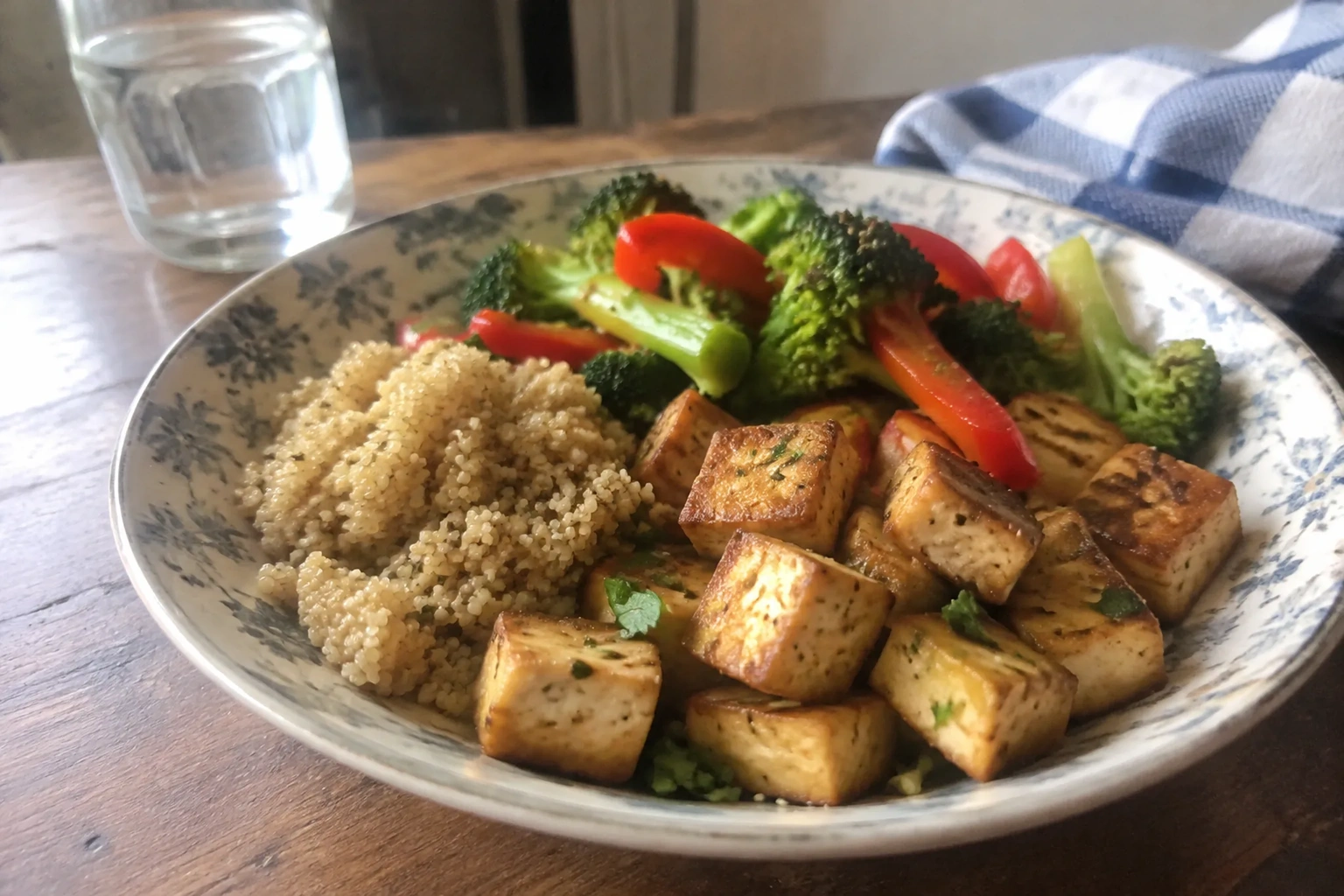
A block of firm tofu, pressed under a cast-iron skillet for twenty minutes, loses nearly a third of its water weight. That single number explains more about vegetarian cooking than any recipe title. The water goes, the spongy structure tightens, and what remains is a dense, sliceable slab that browns instead of steams. Most vegetarian dinners fail on this exact point: they are wet when they should be dry, soft when they should be crisp, and light on protein precisely when the cook meant to be generous with it.
Protein is the part of the vegetarian plate that gets promised and then quietly shortchanged. A bowl of roasted vegetables with a sprinkle of chickpeas carries maybe nine grams. The same bowl, rebuilt around a full cup of chickpeas and a handful of walnuts, crosses twenty. The difference is not virtue or discipline. It is arithmetic, and it is best solved at the shopping list and the pan, long before anything reaches the table.
Why tofu rewards a heavy hand
Firm and extra-firm tofu sit around eight grams of protein per three-ounce serving, and a proper dinner portion is more like six ounces. That is sixteen grams before a single vegetable joins the pan. The pressing matters for texture; the portion matters for protein. Half a block cubed into a stir-fry is a garnish. A whole block, torn into rough chunks and seared hard in a dry nonstick pan until the edges go gold, is dinner.
Tearing rather than cubing is a small trick with a real payoff. The ragged surfaces catch oil and heat, producing more crisp edge per bite than a clean knife cut ever will. Frozen tofu, thawed and squeezed, goes further still: the ice crystals leave behind a honeycomb that drinks sauce like a sponge and holds a chewier, meatier texture. It is the single best use of a block that sat forgotten in the freezer.
Tempeh's nutty density and the marinade problem
Tempeh carries roughly eighteen to twenty grams of protein per three-ounce serving, which makes it the heavyweight of the traditional vegetarian pantry. It also tastes like what it is: fermented soybeans bound into a dense cake, nutty and slightly bitter. A twenty-minute soak in soy sauce, maple, vinegar, and garlic does not make it subtle. It makes it good, which is enough.
The texture is where tempeh wins arguments. Sliced thin and pan-fried, it develops a crust that crunches against a tender interior, and it holds that crust under sauce in a way tofu never quite manages. A tempeh crumble, broken by hand into a hot pan with cumin and smoked paprika, fills a taco with more protein than most beef crumbles and a fraction of the fuss. The one rule: never boil it. Boiling turns the bitter note up and the nuttiness down.
Lentils and beans, weighed rather than guessed
A cup of cooked lentils lands near eighteen grams of protein. The trap is the soup bowl: a ladle of lentil soup is perhaps half a cup, and a dinner built on it is thin. Cooked lentils folded into a warm grain salad, or spooned over roasted sweet potato with a sharp yogurt and a scatter of toasted pumpkin seeds, put the legume where it belongs, at the center of the plate and in real quantity.
Beans do the same work with less attention. A can of black beans, drained and rinsed, is about fifteen grams per cup, and two cups makes a substantial dinner for two when they are smashed into a skillet with onion, cumin, and a little olive oil and eaten with warm tortillas and a crumble of cotija or feta. The cheese adds a few grams; the beans carry the rest. The meal costs less than four dollars and takes fifteen minutes.
Chickpeas deserve their own line. Roasted at 425 degrees until they rattle in the pan, they turn crisp and salty and make a fine snack, but as a dinner component they need a partner. A full can, smashed roughly with a fork and folded into a lemony tahini dressing with parsley and red onion, becomes a sandwich filling sturdy enough to hold a tomato slice. That is a legitimate dinner, and it is not apologizing to anyone.
The grain that quietly carries twenty grams
Quinoa has become a cliché and it still works. One cup cooked holds about eight grams of protein, and it is a complete protein besides, which matters less than the fact that it cooks in fifteen minutes and takes to almost any dressing. The cliché problem is the portion: a quarter-cup mound under a salad is decoration. A full cup, tossed warm with olive oil, lemon, scallions, and a can of drained chickpeas, is a bowl that holds a person until morning.
Wheat berries and farro are slower and more interesting. Farro cooked like pasta, drained while still chewy, then dressed with roasted mushrooms and a handful of walnuts, delivers a plate that feels autumnal and substantial. The protein per cup is modest, around seven grams, but the chew is the point. A grain that requires chewing slows the meal down, and slow meals are more satisfying than fast ones, which is a small mercy when the cook is trying to convince a skeptic that vegetarian food fills a belly.
Eggs and dairy as the third pillar
A vegetarian dinner does not have to be vegan, and pretending otherwise is where a lot of home cooks lose heart. Two eggs over a bowl of seasoned black beans and rice add twelve grams of protein and a runny yolk that does the work of a sauce. A frittata with six eggs, a bag of spinach wilted down, and a sharp cheese feeds four with roughly fifteen grams per serving and takes twenty minutes start to finish.
Greek yogurt, thicker and higher in protein than the tub stuff, works as a sauce base where sour cream used to sit: whisked with lemon, garlic, and salt, it turns a roasted cauliflower steak into a plate with a real center. A cup of cottage cheese blended smooth and folded into a warm pasta with black pepper and parmesan makes a high-protein sauce that tastes richer than its ingredients suggest. These are the quiet tools of the vegetarian kitchen, and they are cheaper than any protein powder.
A dinner that names its grams
A concrete plate: one whole block of extra-firm tofu, pressed and torn, seared until golden. One cup of cooked lentils, warmed with cumin and a spoon of tomato paste. A pile of quickly wilted greens. A drizzle of tahini thinned with lemon and water. The tofu brings sixteen grams, the lentils eighteen, the tahini two or three, and the greens a token. That is a plate in the mid-thirties, which is a serious dinner by any standard, and it takes about thirty minutes once the tofu has pressed.
The order of operations matters more than the recipe. Press the tofu first, because the clock runs while it sits. Start the lentils or open the can. Get the heaviest pan hot before anything touches it. Sear the protein hard, remove it, and build the rest of the plate in the same pan so the fond seasons everything that follows. This is how restaurant kitchens move, and it is how a vegetarian dinner stops feeling like a side dish assembled from leftovers.
The pan that is too small and the plate that is too cold
Two failures recur in home kitchens attempting this kind of cooking. The first is crowding. Tofu and tempeh need space between pieces to brown; packed together, they steam and stay pale and soft, and the cook concludes that vegetarian protein cannot crisp. It can. The pan was simply too small. Cook in two batches and accept the extra four minutes.
The second is temperature at the table. A grain bowl assembled on a cold plate goes lukewarm in ninety seconds, and lukewarm food reads as leftover food no matter how well it was cooked. Warm the bowls, warm the plates, and serve the hot components last. It sounds fussy. It is the difference between a dinner that lands and one that merely exists.
What a skeptic notices at the second helping
The person who doubts vegetarian food can satisfy usually doubts it on volume and staying power, not on ethics. The answer is not a lecture about complementary amino acids. It is a plate piled higher than expected, with a crisp edge somewhere, a sauce that clings, and enough protein that the second helping is a choice rather than a necessity. That plate exists, and it is built from a whole block of tofu, a full can of beans, a cup of cooked lentils, or six eggs in a pan.
The arithmetic is not glamorous, but it is honest, and it holds up on a Tuesday night when the cook is tired and the fridge is thin. A block of tofu in the press, a can of chickpeas on the counter, and a hot pan waiting. That is the whole argument, and it ends at the table with a fork in hand.





















