







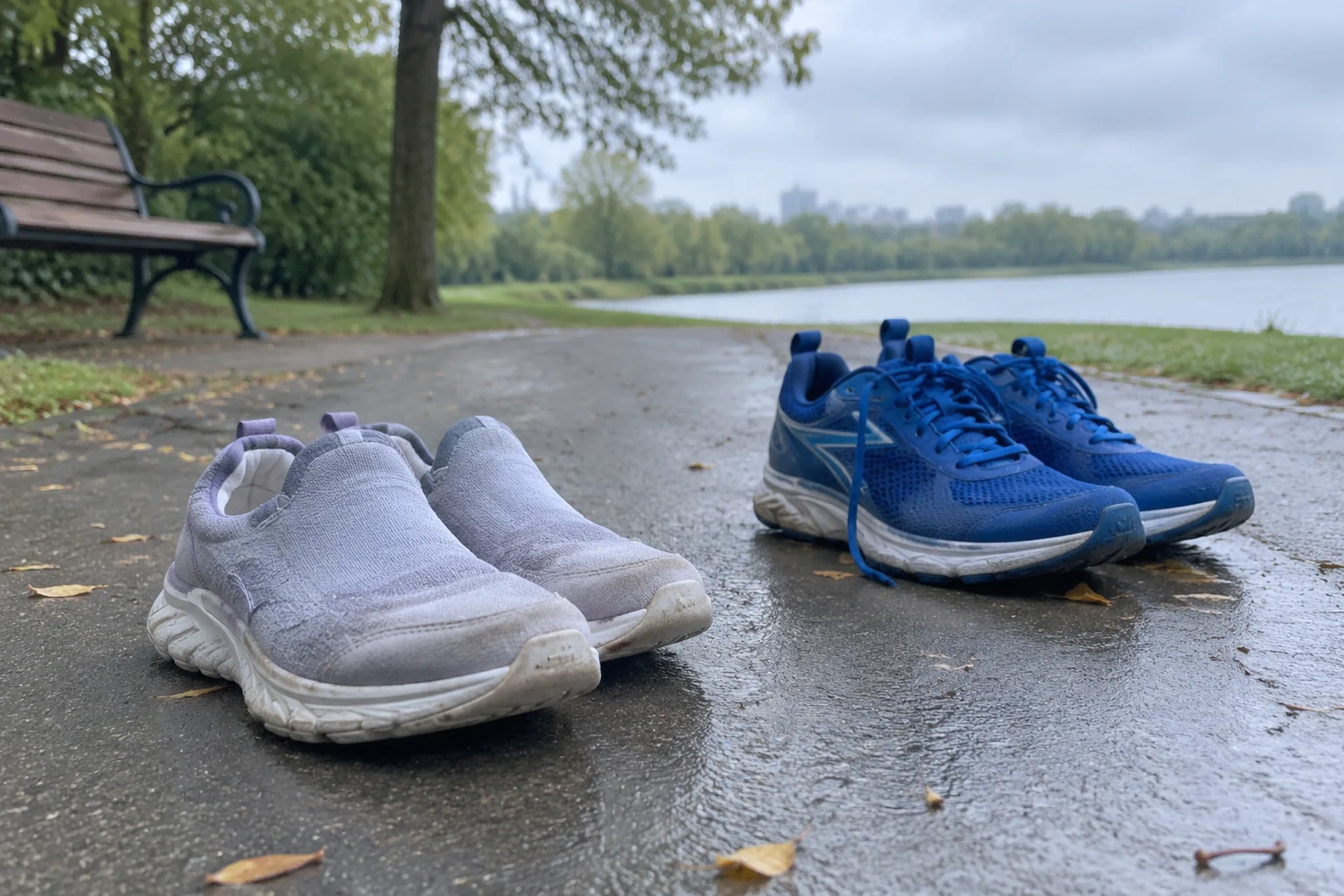
Walking and running are the same motion performed at different speeds, which is exactly why the choice between them trips people up. One foot lands, the body vaults over it, the other foot lands. The mechanics rhyme. The costs do not. A mile walked and a mile run cover identical ground but draw on different systems, recover on different timelines, and leave different marks on knees, shins, and enthusiasm. Picking a starting point means deciding which of those differences actually matters for the body and schedule in question.
The default advice, repeated in running stores and on health websites, is to start by walking and graduate to running. That advice is fine as far as it goes, but it hides a real fork in the road. Some people should walk for months and never feel the urge to run. Others should run from the first week, slowly, and treat walking as recovery. The fork depends on age, joint history, weight, and what the person actually wants out of the effort. The starting point is a decision, not a rung on a ladder.
The physical load difference between the two gaits
Walking keeps at least one foot on the ground at all times. Running has a flight phase, a moment when both feet are airborne. That flight phase is the whole story. It means the body lands with more force, absorbs more impact per step, and spends more energy controlling the landing. A walker's peak force on each foot is roughly comparable to body weight. A runner's can be two to three times that, depending on pace and stride. The number is not precise, and it varies wildly, but the direction is clear: running asks more of the legs per step.
That extra load is the reason running builds bone density and cardiovascular fitness faster than walking does. It is also the reason running produces more soreness, more shin splints in the first months, and more Achilles complaints in people who ramp up too quickly. Walking distributes the same total distance across more steps and more time, so each step is a smaller transaction. The bill arrives more slowly.
Why walking deserves more respect than it gets
Walking has a branding problem. It sounds like the thing people do when they cannot run, which is a shame, because a brisk walk is a genuinely serious form of exercise. A person walking at a clip, say 3.5 to 4 miles per hour, gets meaningful cardiovascular benefit, meaningful calorie burn, and almost none of the recovery cost of running. The heart rate rises, the lungs work, the legs move, and the next day the body is ready to do it again.
The repeatability is the underrated part. A walk can happen every day, twice a day, in street clothes, without a shower afterward. A run cannot. The person who walks 45 minutes daily accumulates more total movement across a month than the person who runs three times a week and spends the other days recovering on the couch. Consistency beats intensity over a long enough timeline, and walking is the most consistent form of movement available to most bodies.
Walking also has a lower barrier to entry in every sense. No special shoes required beyond something comfortable. No pace targets. No watch. No route planning beyond stepping outside. The friction is nearly zero, and low friction is what keeps habits alive past the third week.
The case for running as the starting point
Running earns its reputation for efficiency. Thirty minutes of running does more for cardiovascular fitness than thirty minutes of walking, roughly speaking, because the heart works harder and the body covers more ground. For people with limited time and healthy joints, running is the better use of a tight schedule. A 20 minute run fits into a lunch break in a way a 60 minute walk does not.
Running also has a psychological pull that walking lacks. The runner's high is real enough, a post-run calm that many people describe as the main reason they keep going. The sense of having done something hard, of having pushed, satisfies a certain temperament. Walkers rarely report the same feeling. A person who needs the effort to feel like effort may find walking too gentle to sustain.
The catch is that running punishes bad starts. The classic mistake is going out too fast, too far, too soon, feeling fine for two weeks, then developing a cranky knee or a sore shin that sidelines the whole project. Running rewards patience in a way walking does not require. A person who starts running needs a plan for restraint, or the body will impose one.
The run-walk method as a legitimate third option
There is a middle path that gets dismissed as a beginner's compromise but works as a permanent strategy. Alternating short running intervals with walking breaks, say one minute of running to two minutes of walking, keeps the heart rate elevated while cutting the per-step impact and the total fatigue. The method has a long history in beginner running programs, and plenty of experienced runners use it on long days or hilly routes without apology.
The run-walk approach solves the main problem with starting to run: the body's systems develop at different rates. The heart and lungs adapt within weeks. Tendons, ligaments, and bones take months. A new runner often feels cardiovascularly ready to run 30 minutes straight long before the connective tissue is ready for it. Walk breaks buy time for the slower systems to catch up.
For anyone unsure where to start, the run-walk method is the safest first move. It delivers some of running's fitness benefit, some of walking's recoverability, and a clear structure that removes the guesswork. It also makes the transition to continuous running gradual rather than abrupt.
Joint history and body weight as deciding factors
Two variables shape the decision more than any other: prior joint health and current body weight. A person with a history of knee or hip trouble should lean toward walking, or toward run-walk with very short running intervals, and should treat running as something to earn slowly rather than start with. The impact forces are not a moral failing; they are physics, and damaged cartilage does not negotiate.
Body weight matters for a similar reason. Higher body weight means higher impact forces per step during running, which raises the strain on knees, ankles, and feet. Walking carries far less of that penalty. Many heavier people find that walking builds fitness and reduces weight steadily, and that running becomes comfortable only after some of that weight comes off. Starting with walking and revisiting running later is a sensible sequence for that group.
Age fits into the same calculus. Younger bodies tolerate the learning curve of running with fewer consequences. Older bodies can absolutely run, and plenty do, but the ramp-up needs to be slower and the recovery days longer. The starting point shifts with age, not because running becomes impossible but because the margin for error narrows.
What the first four weeks actually look like
A walking start looks like 30 to 45 minutes most days at a pace that raises the heart rate and makes conversation slightly harder than usual. The pace matters more than the distance. A stroll does little; a purposeful walk does a lot. The first four weeks should feel sustainable to the point of being almost too easy, because the goal is to establish the habit before adding intensity.
A running start looks like three runs per week, each no longer than 20 to 25 minutes, at a pace slow enough to hold a conversation. That last part gets ignored constantly. New runners run too fast because slow running feels wrong, and then they burn out or get hurt. The first month of running is a patience exercise disguised as a fitness plan. The distance should stay short even when the body feels capable of more, because the connective tissue lags behind the enthusiasm.
A run-walk start splits the difference: three sessions per week, alternating one minute of running with two minutes of walking for 25 to 30 minutes total, adding a minute of running each week as the body tolerates it. This is the most forgiving entry point and the one most likely to survive contact with a real schedule and a real body.
The shoes and surface question for each path
Walking needs almost nothing. A supportive pair of shoes with some cushioning and a comfortable fit covers it. The surface barely matters; sidewalks, paths, and treadmills all work. Running is fussier. Shoes matter more because the impact forces are higher, and worn-out shoes are a common cause of new aches. A running shoe should be replaced every few hundred miles, a number that surprises people who have been running in the same pair for years.
Surface matters for runners too. Concrete is the hardest common surface, asphalt is slightly softer, and dirt or grass is softer still. New runners often do best on a track, a treadmill, or a smooth path rather than a cracked sidewalk, because the consistent surface reduces the small stabilizer muscles' workload while the body adapts. Walkers can ignore most of this. Runners cannot, at least not in the first months.
Matching the starting point to the goal
The goal matters as much as the body. A person who wants to finish a 5K race should start running, or run-walking, because the event demands running-specific adaptation. A person who wants to lose weight, improve mood, and lower blood pressure can do all of that with walking and never run a step. A person who wants to run a marathon someday should still start with walking or run-walking, because the base matters more than the early pace.
The worst outcome is starting too hard in either direction and quitting. Walking too gently produces no fitness and gets abandoned as pointless. Running too aggressively produces injury and gets abandoned as painful. The starting point that works is the one the person will still be doing in three months. That often means walking, sometimes means run-walking, and occasionally means running slowly with strict limits.
A person who has never exercised consistently should walk for a month before considering anything else. A former runner returning after years away should run-walk for a month before attempting continuous running. A healthy young person with a clear goal and no joint history can start running slowly from week one, provided the pace stays conversational and the weekly mileage stays modest. The decision is less about which activity is superior and more about which one fits the body and the calendar in front of it.
The pavement outside the front door does not care which gait is chosen. It will take the steps either way. The choice that lasts is the one that gets made again tomorrow, and the day after, and the week after that, long past the point when the initial enthusiasm has burned off and only the habit remains. Walking builds that habit more easily. Running tests it more sharply. Both are honest ways to move.





















