







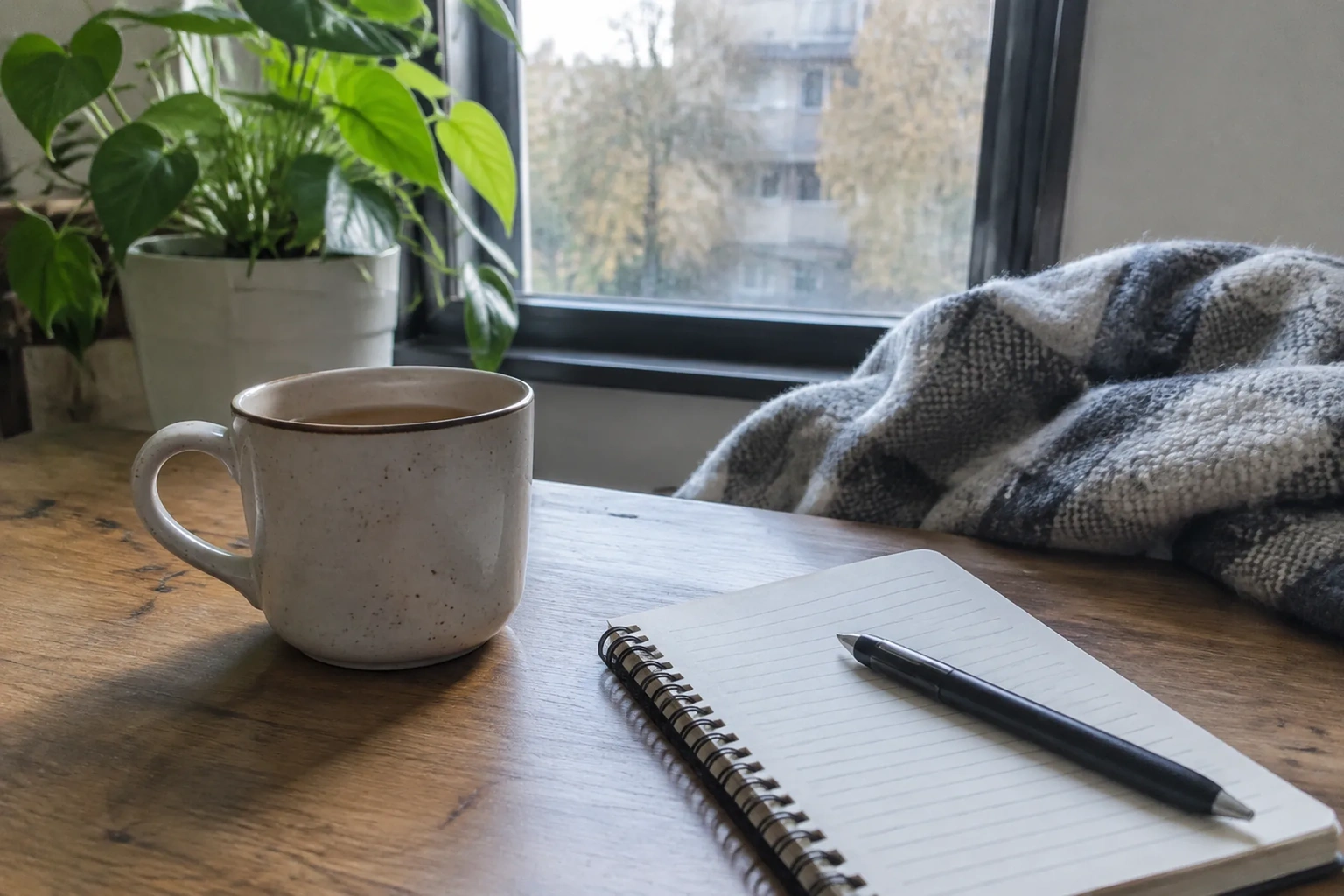
The weekend has a way of collapsing into a list of chores dressed up as rest. Laundry gets done. Errands get run. A screen gets scrolled. By Sunday night the body is tired in that specific way that comes from sitting still too long, and Monday arrives before any actual recovery has taken place. The habits that genuinely recharge a person tend to be smaller, stranger, and less photogenic than the wellness industry suggests.
Most advice about weekend recovery assumes the problem is a lack of discipline. Sleep more. Exercise harder. Meditate for twenty minutes. The advice is not wrong so much as it is generic, and generic advice fails because it ignores what a particular week actually took out of a particular person. A week spent in meetings drains differently than a week spent on a factory floor. The recharge has to match the drain.
What follows is a set of habits that hold up under that scrutiny. None of them require an app, a subscription, or a personality transplant. They share one quality: each one interrupts a pattern the working week has carved into the body, rather than adding one more task to a list.
The commute that never happened
Remote work removed a ritual that did quiet physiological work. The walk to the train, the drive with the radio on, the ten minutes standing on a platform: these were transitions. The body used them to shift gears. Without them, Friday evening arrives and the desk is still three feet away, laptop lid half open, the same chair holding the same posture.
A substitute transition costs almost nothing. A short walk around the block before logging off on Friday. A change of clothes. Closing the laptop and putting it in a drawer, physically, so the room stops being an office. The point is a clean edge between the week and the weekend, because a weekend that bleeds into Friday night and leaks into Sunday afternoon is not a weekend at all. It is a slightly slower Tuesday.
Sleeping to a schedule instead of a debt
The instinct on Saturday morning is to sleep until the body stops asking. For some people that works. For many, it produces a groggy, disoriented half-day and pushes bedtime so late that Sunday night becomes a small crisis.
A gentler approach keeps wake-up within an hour of the weekday time and protects the earlier part of the night instead. Going to bed a little earlier on Friday and Saturday does more for the accumulated sleep pressure of a hard week than a long lie-in does. The body likes rhythm. Weekend sleep that respects the rhythm tends to leave a person clearer by Sunday evening than the binge-and-crash version ever does.
One meal that takes real time
Weeknight cooking is an exercise in compression. Something fast, something from a bag, something eaten standing at the counter between tasks. The weekend offers a rare chance to cook in a way that has nothing to do with efficiency: a pot of beans simmering for two hours, a loaf proofing on the counter, a stock that fills the kitchen with steam.
The value is not the food itself, though the food tends to be good. It is the tempo. Cooking slowly forces a person to be somewhere for a while, checking, tasting, waiting. That kind of low-stakes attention is a form of rest that scrolling cannot replicate, because scrolling demands nothing and therefore gives nothing back. A pot on the stove asks for a stir every so often. That small, concrete demand is the point.
The phone left in another room
Weekends are when the phone becomes a slot machine. Notifications from work, group chats that never quite stop, the endless refresh of a feed that has nothing new in it. The device does not rest, and neither does the hand that keeps reaching for it.
A simple rule helps: one room in the house where the phone does not go. The bedroom is the obvious candidate, but a kitchen drawer works too. The habit is not about digital detox rhetoric. It is about giving the nervous system a stretch of time when nothing might arrive. The relief that follows is disproportionate to the effort, which is roughly ten seconds of walking and a small internal argument.
Movement that is not exercise
There is a difference between training and moving. Training has a plan, a target, a heart-rate zone. Moving is what happens on a long walk with no destination, a swim that is mostly floating, a bike ride to a bakery two neighborhoods over. The body needs both, but the weekend is usually the only slot available for the second kind.
A walk of forty minutes with no podcast and no step goal does something specific: it lets the mind wander in the loose, associative way that rarely happens at a desk. Problems that seemed stuck on Friday often loosen by Saturday afternoon, not because they were worked on but because they were left alone while the legs moved. The fix is rarely found by trying harder. It arrives on the second mile, uninvited.
A small project with a visible end
Knowledge work has a cruel feature: nothing is ever finished. The document gets revised, the email thread continues, the project rolls into next quarter. A weekend habit that produces a finished object, however small, restores a sense of completion that the week denies.
It can be almost anything. A shelf put up. A drawer sorted. A plant repotted. A batch of bread baked and eaten. The size does not matter; the closure does. Standing back from something that is actually done, even something as minor as a tidy cupboard, quiets a part of the mind that has been running on an unfinished loop since Monday. The satisfaction is real and slightly embarrassing in its smallness, which is part of why it works.
Time outdoors before the day fills up
By Saturday afternoon the calendar tends to be crowded with obligations that appeared reasonable on Wednesday. Morning is the reliable window. Getting outside within the first hour or two of waking, even for fifteen minutes, sets a different tone for the whole day. The light is better in the morning, the streets are quieter, and the mind has not yet been colonized by the day's logistics.
This is not a cure for anything. It is a small anchor. A person who has already been outside, even briefly, tends to make slightly better choices for the rest of the day, because the day has already been marked as theirs.
The Sunday evening that is not a countdown
Sunday night carries a specific dread for anyone with a demanding week ahead. The dread is usually worse than the actual Monday. A useful habit is to make Sunday evening deliberately pleasant and slightly boring: a warm meal, a bath, a book, an early night. Nothing that requires decision-making. Nothing that involves the inbox.
The goal is to end the weekend on a note of calm rather than a scramble. Clothes laid out. Bag packed. A short walk after dinner. The small preparations remove the friction that otherwise greets Monday morning and make the transition feel less like a cliff edge.
What the weekend is actually for
There is a temptation to treat the weekend as a productivity problem to be optimized. The habits above are not a system. They are small interruptions to the patterns that make rest feel impossible. None of them requires perfection. A person who manages two of them on a given weekend is doing well.
The larger point is that recovery is not passive. It does not happen simply because the calendar says Saturday. It happens when the body and mind are given something the week did not provide: a clean edge, a slow meal, a walk with no purpose, a finished shelf, a phone in another room. These are unremarkable things. Their unremarkableness is exactly why they work.
By Sunday night, the measure of a good weekend is not how much was accomplished or how rested a person feels in the abstract. It is whether Monday morning arrives as a manageable fact rather than a looming threat. That is a low bar, and meeting it consistently is harder than it sounds. The habits that help are small, specific, and almost always available.





















