







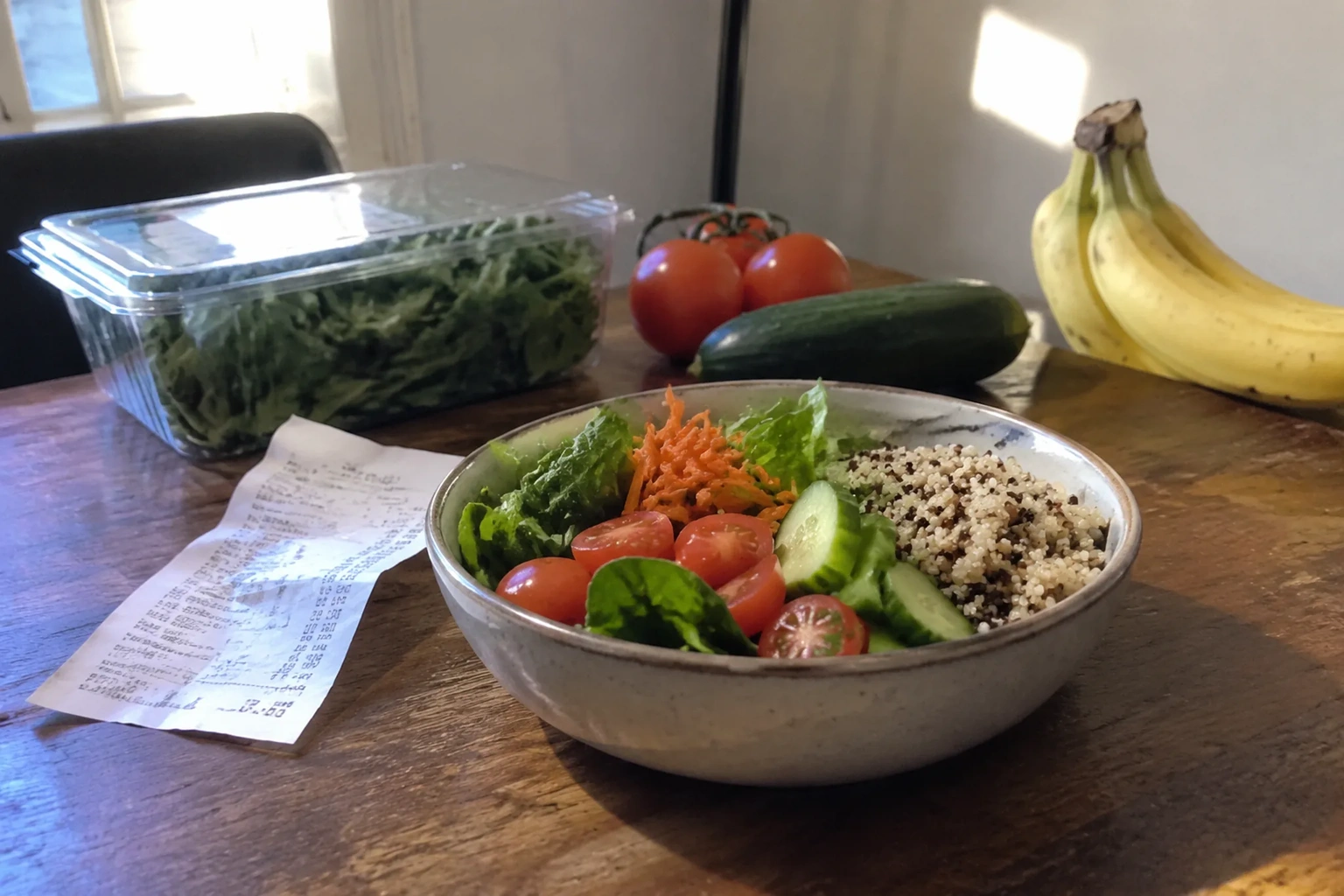
Forty dollars a week is the number that tends to surface first when the receipts get added up. That is roughly what a grocery basket built around fermented foods, fiber-dense vegetables, and single-ingredient snacks costs above the ordinary middle-American shopping trip, and it is not a figure that arrives with a label on it. The gut-health shelf does not announce its overhead. It sits there in the refrigerated case, kefir next to the yogurt, kimchi in squat jars, and each item looks like a small, reasonable addition. The cost accumulates in the cart, not in the aisle.
Gut health has become a category, and categories have price tags. The question worth pulling apart is where those dollars actually go, which parts of the bill are doing real work, and which parts are the modern equivalent of buying a branded vitamin C chew. The answer is uneven. Some of the expense is honest and unavoidable. Some of it is a tax on anxiety.
The refrigerator case is where the bill starts
Fermented foods carry a premium because they are perishable and slow to make. A quart of plain kefir runs four to six dollars. A jar of refrigerated sauerkraut with live cultures, the kind that must stay cold, costs seven or eight dollars and holds maybe four servings. Kimchi of decent quality lands in the same range. Kombucha, sold in single bottles, is three to five dollars a pop, and a daily habit alone can run past a hundred dollars a month.
Compare that to the shelf-stable versions sitting a few feet away. The pasteurized sauerkraut in the canned goods aisle costs two dollars and has been heat-treated until the bacteria are dead. It still tastes like sauerkraut. It does nothing for the gut flora, because there is nothing alive left in it. The price difference between the two jars, one cold and one shelf-stable, is the price of the cultures themselves. That gap is real. It is also the single clearest line item in the whole budget.
A person can make sauerkraut at home for the price of cabbage and salt. A head of cabbage costs two dollars and yields a quart or more. The catch is time and a cool corner where the jar can sit for two weeks without being disturbed. Home fermentation is the cheapest route into live cultures, and it is also the route most people abandon after one moldy batch. The savings are genuine. So is the failure rate.
Fiber is cheap until it gets packaged
Here is where the accounting gets interesting, because the most effective gut inputs are also the least expensive. Lentils, black beans, oats, cabbage, onions, carrots, and potatoes feed the microbiome at a cost of cents per serving. A pound of dried lentils costs about two dollars and makes six or seven meals. Rolled oats are pennies a bowl. The fiber that gut bacteria ferment into short-chain fatty acids, the whole mechanism the expensive products are trying to imitate, comes from the bulk bin.
The premium version of the same thing arrives in a pouch. Fiber powders and prebiotic blends sell for twenty to fifty dollars a month, and their active ingredient is often psyllium, inulin, or chicory root, all of which are inexpensive in bulk. The convenience is real for people who will not eat beans. But it is worth naming what the money buys: it buys the removal of cooking, not the fiber itself. The fiber was always cheap.
This is the pattern that runs through most of the gut-health aisle. The biology is accessible at low cost. The products sell accessibility, not biology. A bag of frozen mixed vegetables costs less than three dollars and delivers more fermentable fiber than most supplement tubs. Nobody puts that on a label because there is no margin in it.
Probiotic capsules and the premium on certainty
Probiotic supplements are the most expensive recurring purchase in the category and the one with the least settled return. A decent multi-strain capsule runs thirty to sixty dollars a month. The evidence for specific strains helping specific conditions exists but is narrow; the evidence for a generic capsule improving general health in a healthy person is thin. The money here buys a feeling of control, a labeled dose, and a shelf-stable promise.
There is a case for supplements after antibiotics or during a specific digestive flare, and a doctor may recommend one. That is a targeted purchase with an endpoint. The subscription model, the one that ships a bottle every month forever, is a different transaction. It sells permanence to people who have been told their gut is a project requiring constant upkeep. The upkeep is the product.
The hidden cost of variety
Gut health advice tends to emphasize diversity: thirty different plants a week, many colors, many textures. That advice is sound and it is also expensive in a specific way that rarely gets counted. Variety means buying small quantities of many things, and small quantities are the most expensive way to buy food. A single avocado, a handful of walnuts, a punnet of berries, a bunch of herbs that wilt before they are used: each is a small purchase, and together they add up faster than a bag of rice ever will.
The waste is part of the bill. Fresh produce bought for diversity spoils at a rate that a household of one or two cannot keep up with. The half-used bunch of parsley, the soft cucumber at the back of the drawer, the berries that went fuzzy on day four: that is money in the bin. Counting it honestly changes the math on the whole project, because the effective cost per serving of a varied diet is higher than the sticker price suggests.
Frozen produce closes much of that gap. Frozen berries, spinach, and mixed vegetables cost less per serving than fresh, keep for months, and retain their fiber. A person building a gut-healthy basket on a budget should treat the freezer aisle as the primary stop, not the backup. It is the least glamorous advice in the category and probably the most useful.
What the cheap version of this actually looks like
A workable low-cost gut-health week is boring and specific. Oats for breakfast with frozen berries and a spoon of ground flax. Lentil soup with carrots and onions for two dinners. Cabbage, either raw in slaw or fermented at home, alongside most meals. A can of beans in the pantry for the nights when cooking does not happen. Plain yogurt, the large tub, not the single-serve cups, because the cups cost twice as much per ounce and carry more sugar. That basket feeds a person well for well under what the supplement-and-kombucha version costs, and it delivers most of the same fermentable fiber and live cultures.
The gap between the two baskets is the real subject. The expensive version is not a scam, exactly. The kefir is real kefir. The refrigerated kraut has live cultures. But the premium is being paid for packaging, perishability, and the reassurance of a product that says gut on the front. The cheap version asks more of the cook and less of the wallet.
The time budget nobody puts on the receipt
Money is only half the ledger. The cheap version of gut health costs time: soaking beans, chopping cabbage, tending a fermenting jar, cooking lentils that were dried rather than canned. A person working two jobs will find the supplement and the single-serve yogurt cheaper in the currency that matters most, which is the hour between getting home and going to bed. That trade is legitimate and it deserves to be named rather than moralized about.
The honest accounting, then, is not a number but a tradeoff curve. At one end sits the fully packaged approach: high monthly cost, low time cost, moderate biological benefit. At the other sits the bulk-and-home-ferment approach: low monthly cost, high time cost, similar biological benefit. Most people land somewhere in the middle, and the middle is where the marketing gets loudest.
A household that spends eighty dollars a month on probiotic capsules and kombucha and eats mostly white bread and takeout has bought the label without the fiber. A household that spends nothing extra and eats beans, oats, and cabbage has bought the fiber without the label. The second household is, by most of what is known about the gut, further ahead. That is the uncomfortable arithmetic of the category: the expensive products are not where the benefit concentrates.
Where the money is genuinely well spent
Some premium purchases earn their price. Refrigerated, live-culture fermented foods are worth the extra dollars for anyone who will not ferment at home, because the shelf-stable versions are dead. Plain, full-fat yogurt in a large tub is one of the best value items in the store and one of the few gut-health products where the cheap and expensive versions are close to equivalent. Frozen produce is worth every cent over wilted fresh. And a single consultation with a dietitian, while costly upfront, can replace months of trial-and-error supplement buying with a plan built around what a specific person will actually eat.
The rest of the shelf, the powders and the pills and the pretty bottles, is mostly a convenience tax. It is payable, and some people will choose to pay it, and that is a fair decision for a busy life. But it should be paid with open eyes, not with the belief that the price is the proof.
A shopping cart tells the truth about priorities better than any intention does. The cart with the big yogurt tub, the bag of lentils, the frozen berries, and the cabbage is a gut-health cart, and it costs less than the one with the kombucha and the capsules. The difference between them is not biology. It is packaging, and time, and the quiet premium charged for a word printed on the front of a box.





















