







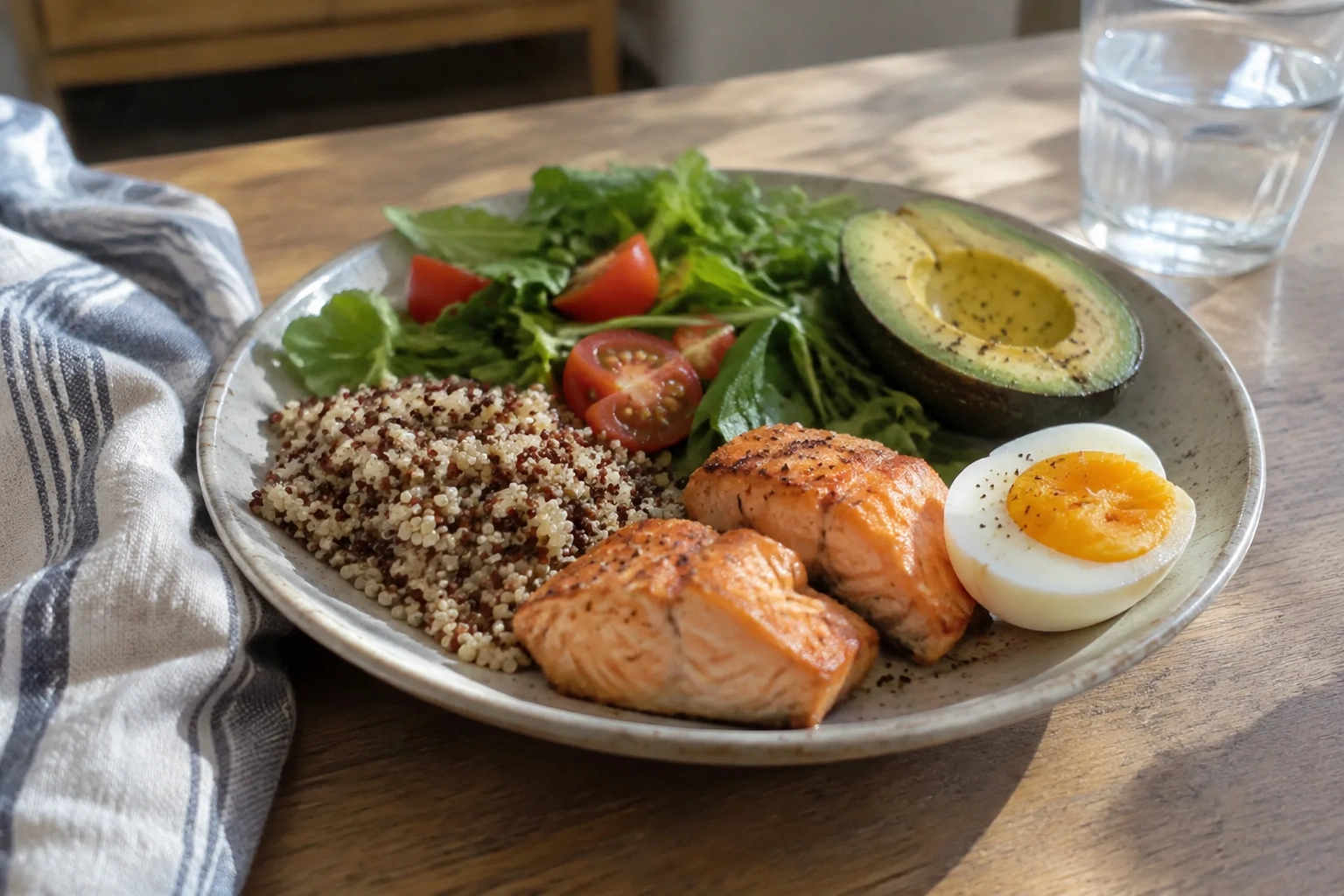
Breakfast is where most hormone-support eating plans quietly fall apart. A bowl of cereal and coffee at 7 a.m. sets a blood sugar curve that spikes, dips, and leaves a person ravenous and irritable by 10:30, which is exactly the pattern that makes cortisol and insulin do uncomfortable things. The plate described in this piece is built to flatten that curve without turning breakfast into a science project.
Hormones are chemical messengers, and the food on a plate does not act like a drug that targets one of them. What it does is supply the raw materials, steady the fuel supply, and reduce the noise from stress and blood sugar swings that makes hormonal systems work harder than they need to. That distinction matters because it keeps expectations honest. No meal fixes a thyroid. A well-built plate gives the body fewer emergencies to manage.
The practical version fits on a dinner plate with no app, no tracker, and no list of forbidden foods. Three components, in a rough ratio, repeated across the day with enough variation that eating does not become a chore.
Protein First, and Enough of It
Most people who feel their hormones are out of whack are eating far less protein than they think. A single egg at breakfast and a handful of nuts at lunch does not cover the amino acids needed to build the enzymes and carrier proteins that shuttle hormones around the body. The common target of 20 to 30 grams of protein per meal sounds clinical until it is translated: three eggs and a half cup of cottage cheese, or a palm-sized piece of fish with a cup of Greek yogurt on the side.
Protein earns its place for a second reason. It slows digestion and blunts the glucose response to whatever carbohydrate sits beside it, which means the insulin curve after lunch looks more like a gentle hill than a cliff. For anyone whose energy crashes at 3 p.m. and who reaches for sugar to fix it, adding protein to lunch is usually the single most effective change, and it costs nothing but a slightly larger grocery bill.
Fiber From Plants, Spread Across the Day
Fiber is the part of plant food that humans cannot digest, and it is also the part that feeds the gut bacteria responsible for metabolizing estrogen and other hormones once the liver has finished with them. A person eating two servings of vegetables a day, both at dinner, is likely falling short. The plate approach spreads fiber deliberately: a cup of berries at breakfast, half an avocado or a handful of chickpeas at lunch, two fists of vegetables at dinner.
There is a texture argument here too. Fiber-rich food requires chewing, and chewing slows the pace of a meal, which gives the body time to register fullness before the plate is empty. A rushed lunch eaten in six minutes produces a different hormonal response than the same food eaten in twenty, because satiety signals need time to travel. The plate is not just a list of ingredients. It is a pace.
Fat That the Body Can Use
Dietary fat has spent decades being treated as the villain, and the result is a generation of people eating low-fat yogurt and fat-free salad dressing while wondering why their skin, mood, and cycles feel off. Cholesterol is the precursor to steroid hormones, including cortisol, testosterone, and estrogen. The body makes its own, but it needs raw material and a functioning system to do it, and a chronically low-fat diet gives that system less to work with.
The practical move is to include a thumb-sized portion of fat at each meal: olive oil on the vegetables, a few walnuts in the yogurt, salmon instead of tilapia twice a week, an egg yolk left intact. Fat also carries flavor and makes vegetables taste like something worth eating, which is not a small consideration when the goal is a way of eating that survives past February.
The Breakfast That Sets the Day
A workable breakfast looks like this: two or three eggs scrambled in butter, a cup of berries, and a slice of whole-grain toast with a thin layer of avocado. Protein, fiber, fat, and a modest amount of carbohydrate, all on one plate, eaten sitting down. It takes twelve minutes to make and about the same to eat.
The alternative that fails is the smoothie. A smoothie can be built well, but most are fruit juice, banana, and a scoop of flavored powder, which is a sugar delivery system with a health halo. If a smoothie is the only breakfast that fits a morning, it should contain a full serving of protein (Greek yogurt or a plain unflavored powder), a source of fat (nut butter, flax), and more vegetables than fruit. Otherwise it is a dessert with a straw.
Lunch as the Meal Most People Skip Badly
Lunch is where the plate model earns its keep. A grain bowl assembled at home the night before, with a base of quinoa or farro, a protein, roasted vegetables, and a dressing made with olive oil, hits every component in one container. The version bought at a counter often does too, provided the dressing is not sweetened and the portion of grain does not dwarf everything else.
The common failure is the desk lunch of crackers and cheese, or a granola bar eaten standing up. That is not a meal, and the body treats it as a snack, which means the hormonal signals for satiety never fully arrive and the afternoon becomes a search for something else to eat. A person who eats a real lunch is less likely to raid the office kitchen at 4 p.m., and that single shift does more for steady energy than any supplement on the market.
Dinner, and the Case for Eating It Earlier
The composition of dinner should mirror lunch: protein, vegetables, a modest carbohydrate, fat. What changes is the timing. The body handles glucose less efficiently in the evening, and a large meal eaten at 9 p.m. produces a higher and longer blood sugar rise than the same meal eaten at 6:30. For anyone who wakes at 3 a.m. with a racing heart or finds sleep elusive, moving dinner earlier by ninety minutes is a low-cost experiment worth running for two weeks.
A plate that works at dinner: a fillet of salmon, a large pile of roasted broccoli and carrots, half a sweet potato, and a squeeze of lemon. Or a bowl of lentil soup with a poached egg on top and a side of sautéed greens. The pattern repeats, the ingredients rotate, and the meal stays interesting enough to repeat.
What Does Not Belong on the Plate
The plate model has no room for foods that are engineered to be eaten quickly and in large quantities. Chips, most breakfast cereals, sweetened yogurt, flavored coffee drinks, and the entire category of snack bars that advertise themselves as healthy. These foods are not morally bad. They simply deliver carbohydrate fast, without the protein, fiber, and fat that would slow the response, and they are easy to eat past fullness.
Alcohol deserves its own line. It disrupts sleep architecture and puts the liver to work processing ethanol instead of the hormones it normally clears, and the effect is dose-dependent, meaning even two glasses of wine several nights a week adds up. A person does not need to quit. They need to notice the pattern: worse sleep, lower patience, stronger cravings the next day, and decide whether the trade is worth it.
The Plate Over a Month, Not a Day
Hormones move on a slower clock than digestion. A single good meal does not change anything measurable. Four weeks of breakfasts with adequate protein, lunches that are actual meals, and dinners eaten before 7 p.m. is the smallest unit of time in which a person is likely to notice a difference in energy, mood, or cycle regularity. The plate is a practice, not a prescription, and it works because it is repeatable on a Tuesday when nobody has time to think.
The most useful test is not a lab value. It is whether the plate can be assembled on a weeknight in under half an hour with ingredients already in the kitchen. A person who can do that has built something sustainable. A person who needs a recipe, a special shopping trip, and an hour of prep has built a project that will last until the first busy week. The plate should fit the life, not the other way around.
One more thing belongs on the plate, and it is not a food. Eating while standing, scrolling, or driving removes the body from the meal, and the hormonal signals that say enough never get a chance to land. Sitting down, even for ten minutes, changes the meal as much as the ingredients do. The plate is a place to put food. It is also a place to stop.





















