







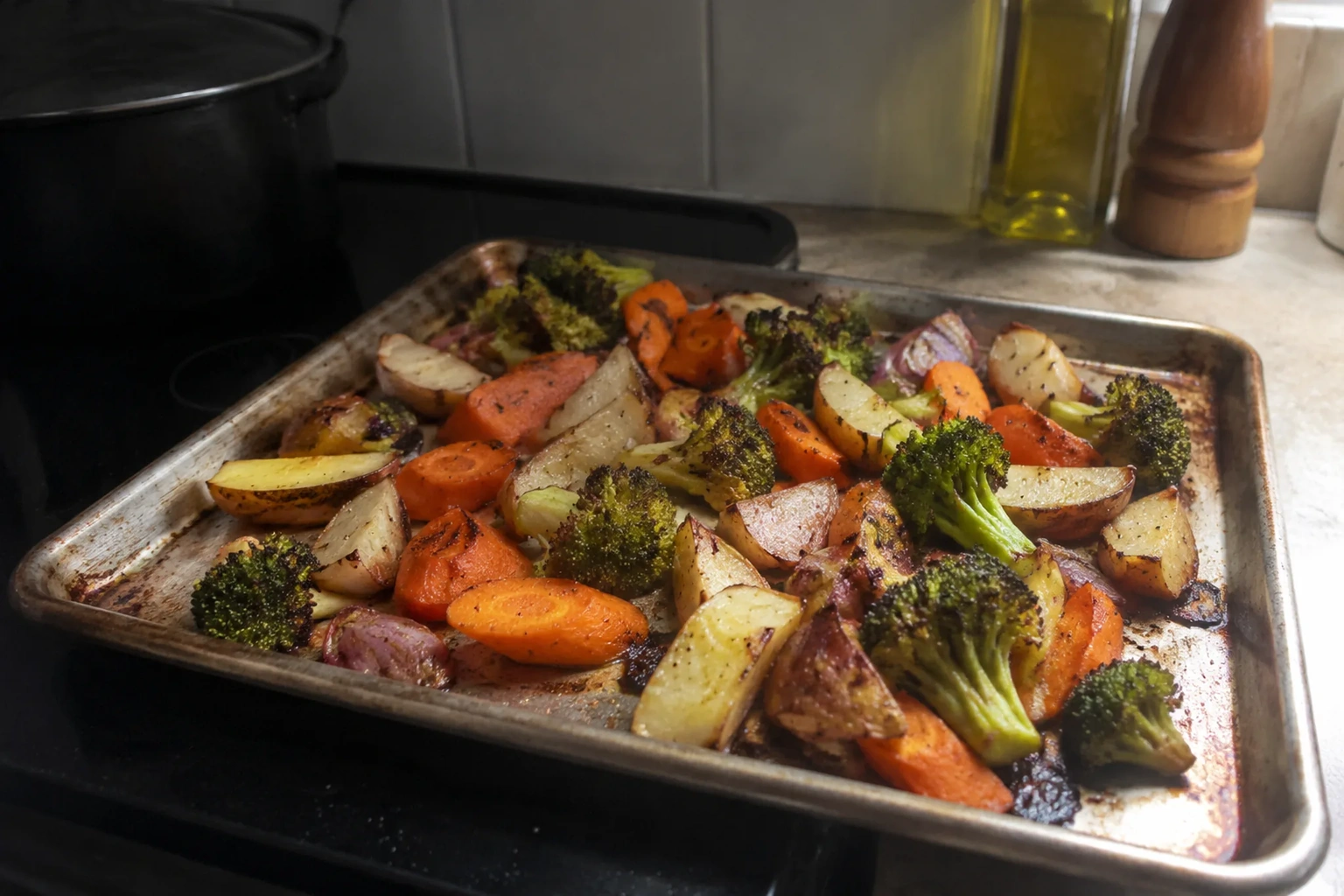
Roasted vegetables that have spent a night in the refrigerator are not the same food as roasted vegetables pulled hot from the oven. The difference is texture, and it runs in both directions: some vegetables improve, some collapse, and a few turn actively unpleasant. The question worth answering is which ones survive the wait and which ones should never be asked to.
Ahead-of-time cooking has become the default rhythm in a lot of kitchens, and roasting is the technique most often pushed forward. The tray goes in on Sunday, the containers stack in the fridge, and the week eats from them. That plan works or fails almost entirely on vegetable selection, and the selection logic is not obvious.
The divide is structural. Cell walls, starch, sugar, and water content decide everything. High-water vegetables go limp and soggy; dense, starchy ones firm up or at least hold their shape. Sugar matters too, because a vegetable that caramelized in the oven can keep tasting sweet cold, while a lean green vegetable mostly tastes like wet fiber the next day.
Root vegetables that hold their structure for days
Carrots are close to the ideal case. They are dense, low in water relative to their mass, and full of sugar that browns beautifully at high heat. A carrot roasted at 425 degrees until the edges blacken slightly will still be sweet and firm three days later, and the caramelized surfaces keep their character instead of dissolving. They also reheat without turning to mush, which is rarer than it sounds.
Parsnips behave much the same way, though they carry more starch and a stronger sweetness that can get almost candied in the oven. Cold parsnips are arguably better than hot ones, because the sweetness settles and the texture tightens. Beets are the sturdiest of the lot: a roasted beet left whole and peeled later will keep for the better part of a week, and its color and texture barely shift. Cubed roasted beets lose a little more, but still hold.
Potatoes deserve their own paragraph because they are the most misunderstood candidate. Roasted potatoes do not keep well in the way people hope. The crisp exterior that made them worth roasting goes soft in the refrigerator, and reheating brings back heat but rarely brings back crunch. The flavor survives; the texture does not. A roasted potato eaten cold the next day is a decent salad ingredient and a poor imitation of a roasted potato.
Winter squash and the starch question
Butternut, acorn, and delicata squash all roast into something sweet and soft, and all of them hold up reasonably well overnight, with a caveat. The cut surfaces dry out slightly and the interior gets denser. That is usually fine, even pleasant, for a squash destined to be reheated or folded into a grain bowl. Delicata is the most forgiving because its thin skin keeps the pieces intact. Butternut cubes can shed water and go slightly slack, so they are better roasted in larger pieces and cut later.
Sweet potatoes sit between squash and potato in behavior. They hold their shape better than white potatoes and their sweetness deepens overnight in a way that many cooks find improved. The texture gets denser and slightly chewier, which is a fair trade. Roasted sweet potato cubes are one of the few things in a meal-prep container that taste deliberate rather than reheated.
Onions, garlic, and the allium exception
Roasted onions are a special case, and a good one. Halved or quartered onions roasted until the edges charred and the layers softened will keep for days and arguably improve, because the sugars concentrate as they sit. They turn almost jammy. Red onions lose some of their sharpness and gain a mellow sweetness that works cold in salads and sandwiches.
Whole heads of garlic roasted until soft are excellent to have on hand, and they keep better than the cloves. Squeeze the softened garlic out of the skins and store it in a small jar; it holds for a week and improves everything it touches. Individual peeled cloves roasted dry are the ones that dry out and turn leathery, so keep them in their skins.
Cabbage and the brassicas, split verdict
Cabbage is the surprise winner of the category. Thick wedges of green or red cabbage roasted at high heat until the outer leaves crisp and the cores soften will sit in the refrigerator for four or five days and get better, not worse. The charred edges stay chewy rather than going soggy, the interior stays sweet, and the whole thing reheat well enough to serve alongside something else. It is the vegetable most underrated for advance roasting.
Broccoli and cauliflower are a different story. Roasted broccoli has a narrow window: hot, it is excellent; cold, it goes limp and develops a sulfurous edge that some people find unpleasant. Reheating helps but never restores the original texture. Cauliflower holds slightly better than broccoli because it is denser, but its surfaces still soften and shed water. Both are best roasted close to when they will be eaten. If they must be done ahead, roast them darker than usual so the browned flavor carries the reheated version.
Brussels sprouts sit in the middle. Halved and roasted hard, they keep for a couple of days with acceptable results, though the outer leaves soften and the cut faces lose their crispness. They are fine cold in a salad the next day and merely decent reheated. Not a disaster, not a triumph.
Peppers and tomatoes, the soft-flesh group
Bell peppers roast into something silky and sweet, and they keep well enough, though the skin loosens and the flesh gets softer. Roasted red peppers stored in their own juices for a few days are useful and pleasant, especially in sandwiches. The texture change is real but not ruinous.
Tomatoes are trickier. Halved and slow-roasted until shriveled, they concentrate into something almost like candy and keep for a week in oil. Roasted quickly at high heat, they release water and collapse, and the leftovers are a wet, sad mess. The slow method is the one worth doing ahead, and the difference between the two is not a nuance: it is the difference between a pantry staple and a container of disappointment.
Green beans and asparagus, the short shelf life
These two are the clearest losers in the advance-roasting game. Green beans roasted hot and fast are excellent fresh, but refrigerated they go dull olive and develop a squeaky, fibrous texture. Asparagus is worse: the tips soften, the stalks go limp, and the whole spear loses the snap that made it worth cooking. Neither reheats well. Both are worth roasting only for the meal in front of them.
Why the crisping matters more than the cooking
There is a mechanical reason some vegetables keep and some do not, and it is worth understanding because it changes how a person roasts for the week. The crispness of a roasted vegetable comes from surface moisture driven off during cooking and from structural cell walls that stay intact. In the refrigerator, moisture redistributes: dry surfaces pull water from the interior and from the surrounding air, and cell walls that were firm slowly relax. Dense, low-water vegetables resist this. Wet, tender ones do not.
That means the roasting method for advance cooking should differ from the method for same-night eating. Roast harder and darker than feels comfortable. Pull the vegetables at the point where a few edges are genuinely black, not golden. That extra browning creates a barrier and a flavor reserve that survives a few days of cold storage. Undercooked roasted vegetables are the ones that turn to mush.
Storage temperature matters too. A refrigerator set very cold slows the softening but also dulls flavor; a warmer drawer speeds the decline. Airtight containers trap moisture and accelerate sogginess, so a container lined with a paper towel or left slightly vented is a better choice for anything that was roasted crisp. Glass holds up better than plastic for the same reason: no lingering odor transfer.
Reheating decisions that protect texture
Reheating is where many good roasted vegetables are lost. A microwave steams them from the inside, which is exactly the wrong move for anything meant to stay crisp. A hot oven at 400 degrees for eight to ten minutes restores some surface dryness and is worth the extra time for carrots, cabbage, and squash. A skillet with a little oil is even better for root vegetables, because it re-crisps the cut faces directly.
Some vegetables should simply be eaten cold rather than reheated. Roasted beets, onions, and peppers are all better at room temperature than warmed in a microwave. Cold roasted carrots are genuinely good in a salad with something acidic. The decision of how to bring a vegetable back is nearly as important as the decision to roast it ahead in the first place.
The tray that earns a place in the weekly rotation
A practical answer, then, in the form of a shopping list rather than a rule. Carrots, beets, parsnips, onions, whole garlic, cabbage, and winter squash are the vegetables that reward roasting in advance. They can share a tray, roast at the same temperature for roughly the same time with a little staggering, and come out of the refrigerator days later still worth eating.
Potatoes, broccoli, asparagus, and green beans are the ones to roast for tonight. They are not worse vegetables; they are simply the wrong candidates for a container in the fridge. A cook who roasts cabbage on Sunday and asparagus on Wednesday has learned the real lesson: the advance-roasting habit works when the tray is chosen for the week, not for the meal.





















