







Whole wheat flour is a bully. It announces itself in every loaf, every muffin, every pancake, with that faint bitter edge and a texture that can read as damp sand if the recipe is not built for it. Anyone who has tried to smuggle a full cup of the stuff into a family dinner knows the negotiation that follows. So most households settle for a quiet compromise: white flour most days, a token whole wheat loaf on the counter that nobody actually eats until it goes stale.
That compromise is unnecessary, and it is also backwards. The swaps that work are the ones where the whole grain never gets to dominate, where it hides inside a food whose structure or seasoning already does the heavy lifting. There are perhaps a dozen of these hiding in plain sight on ordinary grocery shelves. Most people have already made several of them without noticing, and the rest are easy to make now.
The pasta box that stopped being a compromise
Whole wheat pasta used to be genuinely bad. It cooked up mealy and gray, and it tasted like something a dentist recommended. The version on shelves now is a different product, largely because millers grind the flour finer than they did a decade ago, and because more brands cook the pasta in a way that keeps the bran from sloughing off into the water. The result holds its bite.
The trick is pairing it with a sauce that has enough fat and enough acid to cover the residual earthiness. A tomato sauce with a knob of butter and a lot of grated cheese does it. So does a puttanesca with its olives and capers. The pasta itself fades into the background, which is exactly what a good swap should do.
What nobody mentions is the cooking water. Whole wheat pasta releases more starch than white, and that cloudy water thickens a pan sauce faster. A cook who has been throwing it down the drain has been discarding the best thing in the pot.
Bread that keeps its crust and loses its sawdust reputation
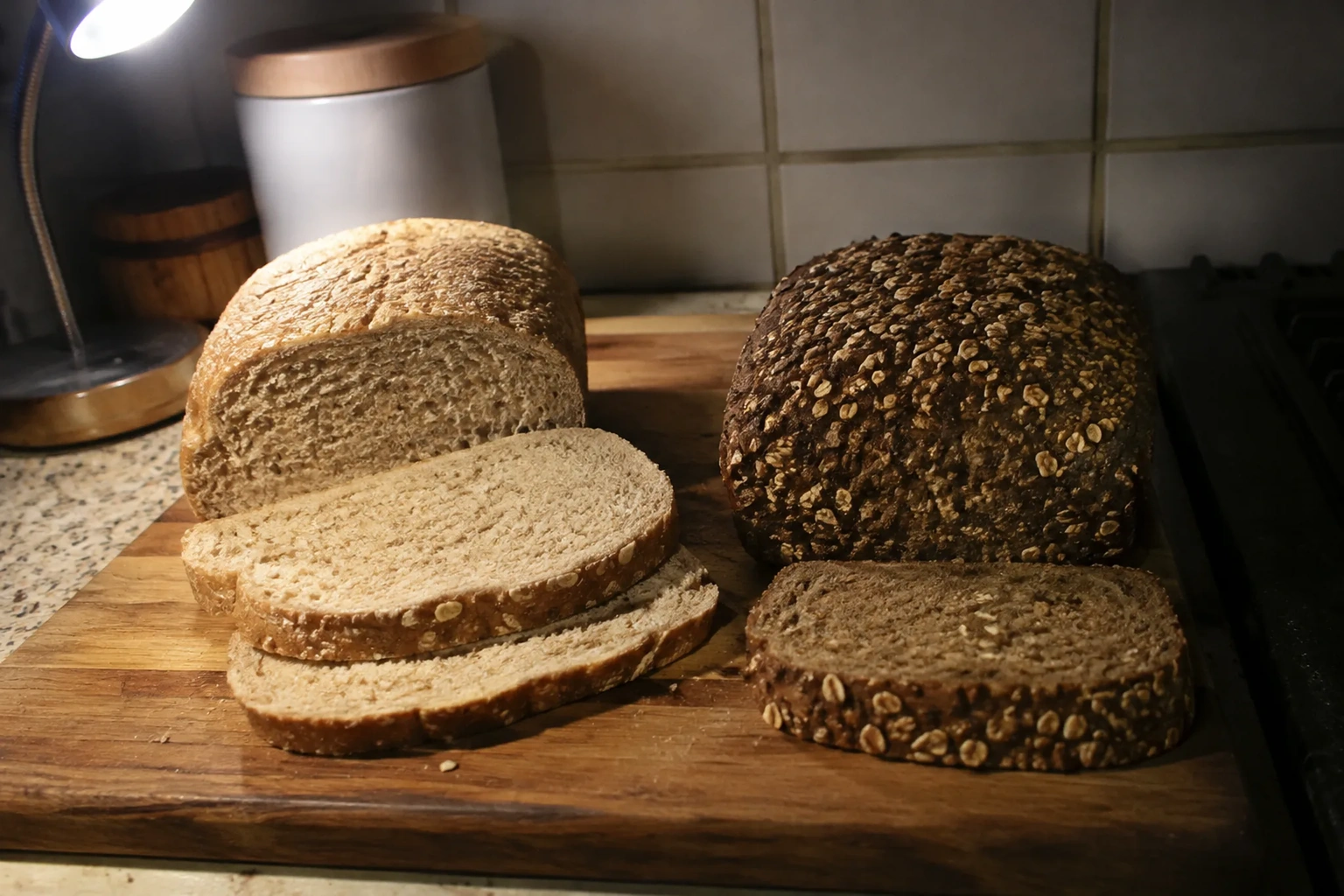
The whole wheat sandwich loaf of twenty years ago was a punishment. It crumbled, it tasted faintly of cardboard, and it went moldy in the time it took to eat half the bag. The current generation of supermarket whole wheat bread is better on every count, mostly because bakers now add a soaker, a pre-cooked mash of the whole grain that softens the bran before it ever hits the dough.
A shopper looking for a loaf that behaves like white bread should read the ingredient list for the word "soaker" or "mash" or "cracked wheat" near the top. Those are the tell. A loaf without them will still taste fine toasted, but it will fall apart in a lunchbox by Wednesday.
There is a second, less obvious bread swap: the whole wheat English muffin. The nooks and crannies are deeper, the toasting is more forgiving, and the flavor difference is nearly undetectable under butter and jam. It is the single easiest substitution in the bread aisle, and almost nobody talks about it.
Brown rice, but only the right brown rice
Brown rice has a reputation problem that is mostly deserved in one specific form: the long-grain variety that cooks up chewy and separate, with a nutty flavor that fights with whatever is on the plate. That rice has its place under a stir-fry. It does not belong under a curry or beside a piece of fish.
Short-grain brown rice is the swap that actually works. It cooks up sticky and rounded, closer to sushi rice than to the long-grain stuff, and its flavor is milder. It absorbs sauce the way a good risotto rice does. A bowl of it under a stew is not a compromise. It is the better choice.
The catch is time. Short-grain brown rice needs about forty-five minutes of simmering, and it will not forgive a rushed cook. The workaround is to cook a large batch on a Sunday and reheat it through the week, which is what most people who eat it regularly already do.
The tortilla that changed the taco without anyone noticing
Whole wheat tortillas are, by a wide margin, the most successful whole grain swap on the market, and the reason is structural. A tortilla is a delivery system for filling. The wrapper's job is to hold together and stay out of the way. Whole wheat flour does both, and the slightly denser texture actually helps a burrito keep its shape when it is overstuffed.
The flavor difference is real but small, and it mostly reads as a faint toasted note that gets lost under beans, cheese, and salsa. A blind taste test between a good whole wheat tortilla and a white one, with fillings, would fool most eaters. That is the definition of a swap worth making.
One warning: the tortillas that market themselves as "low carb" or "keto" are a different product entirely, and they tend to be gummy and strange. The plain whole wheat version is the one to buy.
Crackers, where the swap is nearly free
Wheat crackers have been on cheese boards for generations, and most people who eat them have never thought of them as a whole grain food. They are. A wheat cracker is essentially a white cracker with the bran left in, and the resulting flavor is more complex and less sweet, which is exactly what a sharp cheddar wants underneath it.
The swap costs nothing in texture. Wheat crackers are crisp, they hold up to a soft cheese, and they do not crumble into dust the way some of the seed-heavy "multigrain" crackers do. The only thing to watch is sodium, which runs high in most brands regardless of the grain.
Popcorn, which was never white in the first place
Whole grain popcorn is a strange phrase, because all popcorn is whole grain. The kernel is the whole seed. The distinction people are actually making when they reach for a "whole grain" snack is about everything else in the bag: the oil, the salt, the coating.
Which means the swap here is not a swap at all. It is a permission slip. Popcorn made at home, in a pot with a little oil, is a whole grain snack that costs pennies and takes three minutes. It has been sitting in the pantry the whole time while people bought expensive puffed quinoa snacks with a whole grain claim on the front of the box.
The only real decision is the topping. Butter and salt is fine. A drizzle of olive oil and nutritional yeast is better than it sounds. Either way, the grain was never the problem.
The pancake problem and the oat solution
Whole wheat pancakes are where most people's good intentions go to die. The flour is too thirsty, the batter seizes, and the finished pancake is dense enough to use as a coaster. The fix is not more liquid. It is oats.
Oat flour, which is just rolled oats ground fine in a blender, makes a pancake that is tender, slightly sweet, and nearly indistinguishable from a white flour one when it is stacked with syrup and fruit. It is a whole grain. It also happens to be gluten-free, which matters to some cooks and not at all to others.
The ratio that works is about three parts oat flour to one part white, with an extra quarter cup of buttermilk for insurance. The pancakes come out tall and soft, and the family will not ask what changed.
Where the swap fails and why it is worth knowing
Not every whole grain substitution is invisible, and pretending otherwise is how people end up with a pantry full of abandoned bags. Whole wheat pastry flour in a delicate cake will produce something that tastes like a health food store in 1994. Whole wheat bread flour in a sourdough will fight the starter and produce a loaf with a tight, unhappy crumb.
The rule of thumb is structural. Swaps work when the whole grain is playing a supporting role, when there is fat or acid or salt to cover the bran's edge, and when the recipe has enough liquid to account for the flour's thirst. They fail when the grain is the star and the recipe has no room to adjust.
Which points toward the most useful thing a cook can do with this list. Pick the two or three swaps that fit the meals already on the weekly rotation, the pasta and the tortillas, the crackers and the rice, and leave the rest alone. A pantry that quietly shifted a third of its grain to whole wheat without a single complaint at the table is a success. The bag of whole wheat pastry flour at the back of the shelf is a reminder that the goal was never purity. It was dinner.





















